
By the HMNDP Editorial Team. Last reviewed: June 2026.
What hardscaping services include
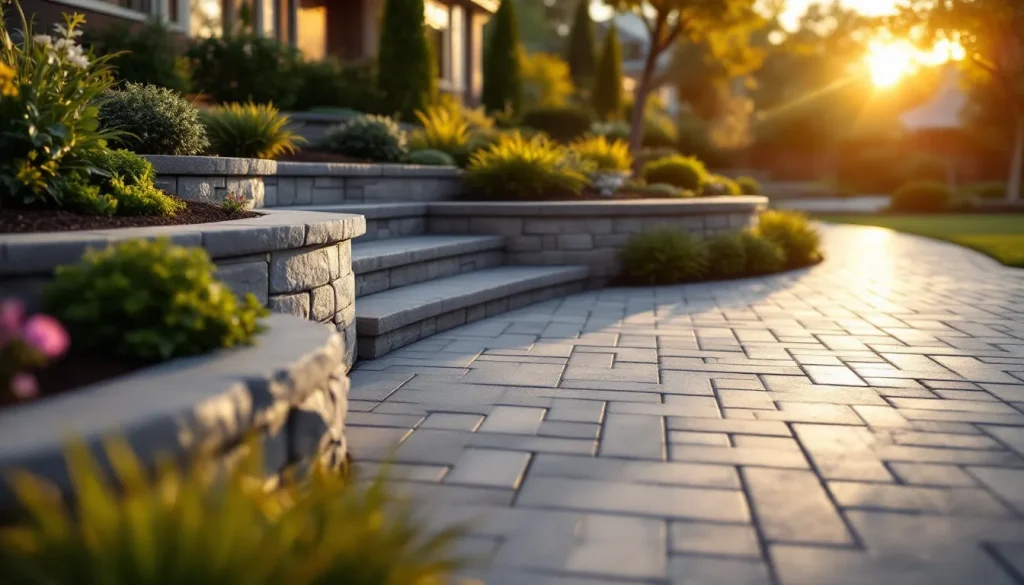
Hardscaping services design and install the non-living, structural parts of a landscape: patios, walkways, retaining walls, driveways, steps, and drainage. The materials are pavers, natural stone, brick, and concrete (including stamped concrete). A hardscape contractor handles design, permitting, excavation, base preparation, installation, and finishing, tailored to your property’s grade and soil.
The term separates the hard, built elements from softscape, which is the living material: grass, plants, trees, and soil. Most full outdoor projects combine both, but hardscaping is the structural layer that everything else is arranged around.
Common service lines you will see quoted:
- Patios: paver patios and stamped concrete patios for seating and dining areas.
- Walkways and pathways: stone, paver, or poured-concrete routes connecting driveway, door, and yard.
- Retaining walls: block or stone walls that hold back soil on sloped lots and prevent erosion.
- Driveways and paving: concrete, asphalt, or paver driveways sized for vehicle loads.
- Drainage solutions: French drains, channel drains, and proper grading to move water away from structures.
- Steps, fire pits, outdoor kitchens, and seat walls as add-on features.
For a deeper definition of the category, see our explainer on what hardscape means.
How much do hardscaping services cost per square foot
Hardscaping services typically cost $15 to $50 per square foot installed in 2026, depending on material and site conditions. Basic poured concrete sits at the low end. Premium natural stone and intricate paver patterns reach the high end. Retaining walls are priced per square face foot ($25 to $75) because they involve engineering, not just surface area.
Price is driven by four things: material grade, site grade (slope and access), drainage needs, and labor rates in your region. A flat, easy-access yard with standard concrete pavers costs far less than a steep lot needing excavation, a base rebuild, and water management.
| Project type | Typical installed cost (2026) | Common size | Ballpark total |
|---|---|---|---|
| Poured concrete patio | $8 to $18 / sq ft | 300 sq ft | $2,400 to $5,400 |
| Stamped concrete patio | $12 to $25 / sq ft | 300 sq ft | $3,600 to $7,500 |
| Paver patio | $15 to $35 / sq ft | 300 sq ft | $4,500 to $10,500 |
| Natural stone patio | $25 to $50 / sq ft | 300 sq ft | $7,500 to $15,000 |
| Walkway (pavers/stone) | $12 to $30 / sq ft | 100 sq ft | $1,200 to $3,000 |
| Retaining wall | $25 to $75 / sq face ft | 200 sq face ft | $5,000 to $15,000 |
| Paver driveway | $15 to $40 / sq ft | 600 sq ft | $9,000 to $24,000 |
| Drainage (French drain) | $25 to $60 / linear ft | 50 linear ft | $1,250 to $3,000 |
These are national U.S. ranges and can run higher in high-cost metros or on difficult sites. Always confirm with a written estimate. Costs shown are illustrative and may vary by region, material availability, and labor market.
What drives the price up
The same patio can double in cost based on conditions. Three factors move the number most.
- Material: concrete is cheapest, pavers are mid-range, natural stone (bluestone, flagstone, travertine) is priciest.
- Site grade: sloped or hard-to-reach lots need more excavation, retaining structure, and sometimes machinery, adding 20 percent to 40 percent.
- Drainage: poor soil drainage or runoff toward the house can require a French drain or regrading, often $1,000 to $4,000 on top of the surface work.
Hardscaping vs landscaping: the budget split and ROI
Hardscaping is the built, non-living structure (patios, walls, walkways). Landscaping, more precisely softscape, is the living material (lawn, plants, trees, mulch). On a complete outdoor renovation, designers commonly split the budget roughly 60/40 hardscape to softscape, because the structural elements cost more per square foot and define the layout the plants fill in.
Sequence matters. Hardscape goes in first: grading, drainage, and hard surfaces are installed before softscape, so heavy equipment and base work do not damage new plantings. Softscape is the finishing layer.
| Factor | Hardscape (structural) | Softscape (living) |
|---|---|---|
| Examples | Patio, retaining wall, walkway, driveway | Lawn, shrubs, trees, flower beds, mulch |
| Typical budget share | ~60% | ~40% |
| Cost per sq ft | Higher ($15 to $50) | Lower (varies widely) |
| Maintenance | Low (occasional sealing, cleaning) | Ongoing (water, prune, mow) |
| Install order | First | Last |
On resale value, well-built hardscape tends to recover a meaningful share of cost. Industry remodeling cost-versus-value reporting has generally placed quality outdoor structural projects in the 50 percent to 80 percent cost-recoupment range, depending on the local market and build quality. A clean paver patio or a sound retaining wall also speeds a sale by signaling a low-maintenance, finished yard. Resale figures depend on region and market conditions.
How to choose a hardscaping contractor
Choose a hardscaping contractor by verifying licensing, insurance, a real portfolio, written estimates, warranty terms, and who handles permits, before any deposit. The cheapest bid often skips base preparation or drainage, the two things that determine whether the work lasts 5 years or 25. Vet on process and proof, not price alone.
Run every candidate through this checklist:
- License: confirm a contractor license valid in your state or county where required.
- Insurance: request current general liability and workers’ compensation certificates. Without them, you may be liable for on-site injuries.
- Portfolio and references: ask for photos of completed jobs and at least three local references from the past two years.
- Written estimate: require an itemized scope listing base depth, materials, drainage, and cleanup. Vague one-line quotes hide cut corners.
- Warranty: ask for the workmanship warranty in writing (1 to 5 years is common) plus any manufacturer material warranty.
- Permit handling: confirm who pulls permits and schedules inspections (see below).
- Base and drainage plan: a qualified installer specifies base depth (often 4 to 12 inches of compacted aggregate) and how water will drain. This is the single best quality signal.
For a deeper walkthrough, use our hardscape contractor vetting guide and keep our broader homeowner project playbook on hand while you collect bids.
Do hardscaping projects need permits?
Many hardscaping projects need permits, depending on size, location, and structure type. Retaining walls above a threshold height (often 3 to 4 feet) usually require a permit and sometimes an engineer’s stamp. Driveways tied to a public road, large impervious surfaces, and work near property lines or easements also commonly trigger review. Rules vary by city and state.
A reputable contractor knows local code and either pulls the permit or tells you clearly that you must. Skipping a required permit can mean fines, forced removal, or problems at resale. Confirm requirements with your local building department; this is general information, not legal advice.
How long does a typical hardscaping project take?
A typical residential hardscaping project takes 1 to 3 weeks of on-site work, after a design and permitting phase that can add 2 to 8 weeks. A small walkway may finish in 2 to 3 days. A large patio with a retaining wall and drainage can run 3 weeks or more. Weather, permit timing, and material lead times are the usual delays.
The standard workflow follows a fixed order:
- Consultation: site visit, goals, rough budget (1 to 2 hours).
- Design and estimate: layout, material selection, itemized quote (3 to 14 days).
- Permits: application and approval where required (1 to 6 weeks).
- Excavation: clearing, digging, and grading the area (1 to 3 days).
- Base preparation: compacted aggregate base plus drainage (1 to 3 days). This hidden step decides longevity.
- Installation: laying pavers, stone, or pouring concrete (2 to 10 days).
- Curing and finishing: concrete cures about 7 days before full use; pavers get jointing sand and sealing. Final cleanup and walkthrough.
After installation, surfaces need basic upkeep. Periodic power washing and resealing keep pavers and stamped concrete looking new and protect the joints.
Finding local hardscaping services
Find local hardscaping services through contractor directories, manufacturer installer locators, and review platforms, then shortlist three to five for written quotes. Brands like Belgard, Techo-Bloc, and Unilock publish authorized-contractor finders, which screen for product training. Pair those with local review history before booking site visits.
Get at least three itemized bids and compare scope, not just totals. The lowest number frequently signals a thinner base or omitted drainage. Use the vetting checklist above on each finalist before you sign anything or pay a deposit.
Frequently Asked Questions
What do hardscaping services include?
Hardscaping services cover the design and installation of non-living, structural landscape elements: patios (paver and stamped concrete), walkways, retaining walls, driveways, steps, and drainage. Contractors use pavers, natural stone, brick, and concrete. Work includes excavation, base preparation, installation, and finishing, tailored to your property’s grade, soil, and water flow.
How much do hardscaping services cost per square foot?
Hardscaping services typically run $15 to $50 per square foot installed in 2026. Poured concrete is cheapest, pavers are mid-range, and natural stone is priciest. Retaining walls are priced per square face foot ($25 to $75) due to engineering. Price depends on material, site slope, drainage needs, and regional labor. Always get a written estimate.
What is the difference between hardscaping and landscaping?
Hardscaping is the built, non-living structure: patios, walls, walkways, and driveways. Landscaping, specifically softscape, is the living material: grass, plants, and trees. Most full projects combine both, often around a 60/40 hardscape-to-softscape budget split. Hardscape is installed first so heavy work does not damage plantings, with softscape added as the finishing layer.
How do I choose a hardscaping contractor?
Verify licensing and insurance (liability plus workers’ comp), review a portfolio with local references, and require an itemized written estimate listing base depth and drainage. Confirm the workmanship warranty in writing and who handles permits. The base-and-drainage plan is the best quality signal. Compare three bids on scope, not just price, before paying a deposit.
How much does a paver patio or retaining wall cost?
A 300-square-foot paver patio commonly costs $4,500 to $10,500 installed in 2026, at $15 to $35 per square foot. A retaining wall runs $25 to $75 per square face foot, so a 200-square-face-foot wall lands around $5,000 to $15,000. Walls cost more because they involve engineering, drainage, and sometimes a permit. Figures vary by region and site.
Do hardscaping projects need permits?
Often, depending on size and structure. Retaining walls above roughly 3 to 4 feet, driveways connecting to public roads, large impervious surfaces, and work near property lines or easements commonly require permits. Rules vary by city and state. A reputable contractor pulls the permit or tells you clearly. Confirm with your local building department; this is general information, not legal advice.
How long does a typical hardscaping project take?
On-site work usually takes 1 to 3 weeks, after a design and permitting phase of 2 to 8 weeks. A small walkway can finish in 2 to 3 days; a large patio with a retaining wall and drainage may exceed 3 weeks. Concrete cures about 7 days before full use. Weather and material lead times are common delays.
Does hardscaping increase home value?
Quality hardscaping often increases home value and resale appeal. Cost-versus-value reporting has generally placed well-built outdoor structural projects in the 50 percent to 80 percent cost-recoupment range, depending on market and build quality. A sound paver patio or retaining wall also signals a finished, low-maintenance yard, which can speed a sale. Actual returns vary by region and conditions.