
By the HMNDP Editorial Team. Last reviewed: June 2026.
What a lawn roller is (and why you should think twice before using one)
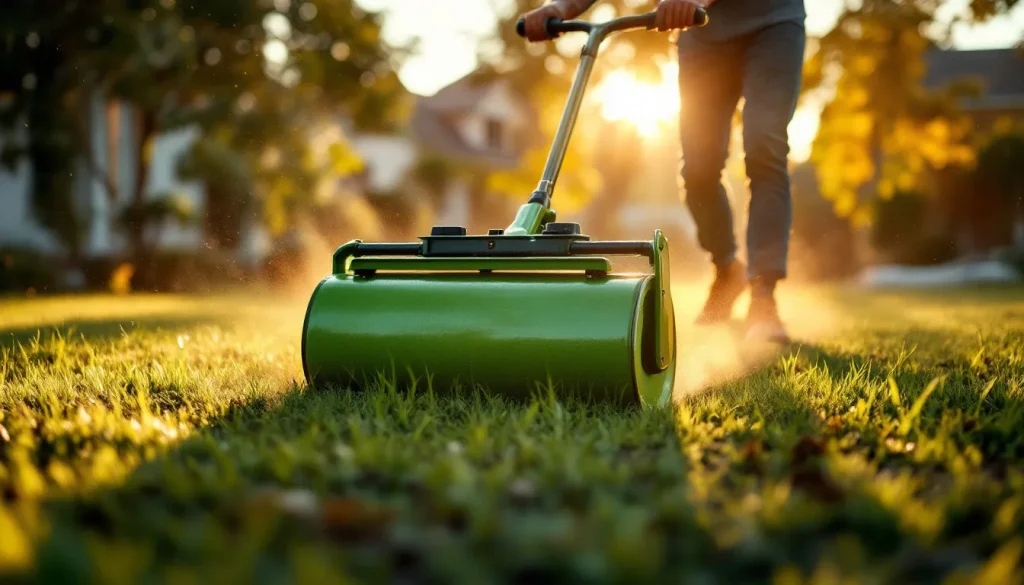
A lawn roller is a hollow steel or polyethylene drum on a frame that you fill with water or sand to add weight, then push or tow across turf to flatten it. A common size is an 18 x 36 inch drum holding roughly 28 to 30 gallons, weighing about 400 pounds when filled with water. Despite the marketing, most established lawns should not be rolled, because the same weight that flattens bumps also compacts soil and stresses grass roots.
Rolling has a narrow set of legitimate jobs: pressing new grass seed into soil, settling fresh sod, and tamping down minor frost heave in early spring. It does not fix a chronically bumpy lawn, and it cannot remove established ruts or mounds caused by drainage or grading problems.
Retailers that sell rollers rarely mention the downside. We do, because the wrong roll on the wrong soil can do more damage than the bumps you were trying to fix.
Should you roll your lawn at all?
For most established lawns, no. Rolling an existing lawn to chase a smoother look usually compacts the soil, reduces the air and water pore space roots need, and can thin the turf over a season. The legitimate uses are narrow: pressing newly broadcast seed into the soil, settling new sod, and flattening soil lifted by winter frost heave. If your goal is a bumpy lawn that mows unevenly, rolling rarely fixes the root cause.
The decision comes down to two questions: what is your soil type, and why is the lawn bumpy?
- Sandy or loamy soil, new seed or sod: Rolling can help by improving seed-to-soil contact. Reasonable use.
- Heavy clay soil: Avoid rolling. Clay compacts easily and is slow to recover. A 400 lb drum can press out the pore space and leave roots gasping.
- Bumps from moles, frost heave, or loose fill dirt: A light roll on moist (not soggy) soil can level minor surface lifting.
- Ruts, mounds, or drainage dips: Rolling will not fix these. They need topdressing, regrading, or fixing the underlying drainage.
If your lawn is already thin, mossy, or slow to drain, those are signs of existing compaction. Rolling makes that worse. Consider core aeration instead, which does the opposite of rolling by pulling plugs and opening the soil.
Will rolling cause soil compaction?
Yes, it can, and this is the caveat retailers leave out. A lawn roller works by applying concentrated downward weight, which is exactly what causes soil compaction. On clay soils especially, a single heavy pass can collapse the pore space that holds air and water, restrict root growth, and increase runoff. The risk is highest when soil is wet, the drum is overfilled, or you roll the same ground repeatedly.
Compaction is the reason lawn-care professionals roll sparingly and aerate often. Symptoms of an over-compacted lawn include water pooling after rain, grass that wilts fast in heat, thatch buildup, and bare or thinning patches.
To keep risk low: roll only when soil is moist but not soggy, fill the drum only one-third to two-thirds full, and make a single light pass rather than several. If you must improve a compacted lawn, aerate first and overseed, then skip the roller entirely.
When is the best time to use a lawn roller?
The best time to use a lawn roller is early spring, when soil is moist but not waterlogged, typically right after the ground thaws and any frost heave has lifted the surface. Spring rolling presses heaved soil back down and improves contact for new seed. Roll within a day or two of planting seed or laying sod. Never roll on soggy ground, during a drought, or in summer heat.
| Timing | Roll? | Why |
|---|---|---|
| Early spring, soil moist after thaw | Yes | Best window; presses frost heave, aids seed contact |
| Right after seeding or sodding | Yes (light) | Improves seed-to-soil or sod-to-soil contact |
| Soil soggy or saturated after rain | No | Highest compaction risk; wet soil molds and packs |
| Summer heat or drought | No | Stresses grass; soil too hard to benefit |
| Bone-dry hard soil | No | Drum just rides over; no leveling, only stress |
A simple field test: squeeze a handful of soil. If it forms a ball that crumbles when poked, it is ready. If water beads out or it stays a sticky lump, it is too wet to roll.
Tow-behind vs push (walk-behind) lawn rollers
The two main lawn roller types are push (walk-behind) and tow-behind. A push roller has a handle and you walk it across the lawn by hand, suited to small and mid-size yards. A tow-behind roller has a hitch that attaches to a lawn tractor, riding mower, or ATV, suited to large properties over a quarter acre. Both use the same fillable drum design; the difference is how they move.
| Feature | Push (walk-behind) | Tow-behind |
|---|---|---|
| Best for | Small to mid-size yards under 1/4 acre | Large yards, acreage, sod farms |
| Power source | Your own effort | Tractor, riding mower, or ATV |
| Typical drum | 18 x 24 to 18 x 36 in | 24 x 48 in and larger |
| Effort on slopes | Hard; 400 lb is a lot to push uphill | Easy; engine does the work |
| Typical price | $92 to $250 | $200 to $799 |
Honest note: a filled push roller weighing 400 pounds is genuinely heavy to maneuver, especially on any slope. Many homeowners fill these only halfway for this reason, which also reduces compaction risk. If you have a riding mower already, the tow-behind is far less work.
Steel vs poly drum, and fill material: water vs sand
Lawn roller drums come in steel or polyethylene (poly), and you fill them with either water or sand. Steel drums are heavier empty, more durable, and resist dents, but can rust if water sits inside over winter. Poly drums are rust-proof, lighter to handle empty, and cheaper, but can crack in hard use or freezing temperatures. Water is the standard fill; sand is for when you need maximum weight.
Fill material changes the weight a lot. Water weighs about 8.34 pounds per gallon. Sand weighs roughly 12 to 13 pounds per gallon of volume. A 28-gallon drum filled with water weighs about 230 pounds of fill plus the drum; the same drum packed with sand can exceed 350 pounds of fill alone.
| Choice | Pick this if |
|---|---|
| Steel drum | You want durability and will drain it before winter |
| Poly drum | You want rust-proof, lighter, lower cost |
| Water fill | Standard use; easy to fill and drain, adjustable weight |
| Sand fill | You need maximum weight (large sod jobs); harder to empty |
How heavy should a lawn roller be, and how full should you fill it?
For most homeowner jobs, you do not want a fully loaded roller. Fill the drum only one-third to two-thirds full. For pressing seed or settling sod on a mid-size yard, a partially filled 28 to 30 gallon drum (roughly 100 to 200 pounds of water) is plenty. A fully filled drum near 400 pounds is for large sod operations and risks compacting home lawns. More weight is not better; it is the most common beginner mistake.
Why under-fill? The lighter you can go while still doing the job, the lower your compaction risk. Start light, make one pass, and check the result before adding water. You can always add weight; you cannot un-compact soil quickly.
- New seed, sandy or loam soil: 1/3 full of water.
- Settling new sod: 1/3 to 1/2 full.
- Minor frost heave, spring leveling: 1/2 full, single pass.
- Clay soil: avoid; if you must, 1/3 full at most, soil barely moist.
If you are rolling after putting down seed, time it with your overseeding plan. Our guide to overseeding a lawn covers seed rates and timing so the roll actually helps germination.
Use cases: what a lawn roller actually does well
A lawn roller does three jobs well: improving seed-to-soil contact after overseeding, settling new sod so roots meet soil, and flattening minor surface lifting from frost heave or shallow mole tunnels. It packs loose dirt after grading or filling small low spots. It does not remove established ruts, level a chronically bumpy lawn, or fix drainage dips, which require topdressing or regrading instead.
- Seed-to-soil contact: A light roll presses broadcast seed into the top layer so it does not dry out or wash away, improving germination.
- Settling sod: Rolling new sod removes air pockets so roots reach the soil below.
- Frost heave and mole tunnels: Spring rolling presses raised soil back to grade.
- Packing loose dirt: After spreading fill soil, a roll firms it before seeding.
What it will not do: cure deep ruts (topdress and reseed), fix a lumpy lawn from years of foot traffic (aerate and topdress), or correct a yard that floods (a drainage problem). After seeding and rolling, feeding matters more than rolling does; see our fall fertilizer guide for the follow-up that builds turf density.
Lawn roller cost: buy vs rent breakeven
Lawn rollers cost about $92 to $799 to buy, with a typical 18 x 36 inch push model around $229. Renting runs roughly $15 to $40 per day at home-improvement and equipment-rental outlets. The breakeven is simple: if you will roll more than about three to six times total over the life of the tool, buying wins. If rolling is a one-time job (new seed or sod once), renting is the smarter spend.
| Option | Cost | Best for |
|---|---|---|
| Rent (per day) | ~$15 to $40 | One-time seeding or sodding job |
| Buy push roller | ~$92 to $250 (typical $229) | Mid-size yard, occasional use |
| Buy tow-behind | ~$200 to $799 | Acreage, repeat use, has a tractor |
Breakeven math: at $30 per rental day, a $229 roller pays for itself after about 8 rentals. But most homeowners roll once a year at most, and many roll once ever. If that is you, rent. If you are establishing a new lawn in stages, reseed yearly, or own acreage, buy. Storage also favors renting: a drained roller still takes up garage space, and a steel one needs draining before winter to avoid rust.
Where to buy or rent: rollers are sold through Amazon, Lowe’s, Home Depot, Tractor Supply, and manufacturers including Brinly-Hardy and FIMCO. Rentals are commonly available at Home Depot Tool Rental and local equipment-rental yards. Compare the empty weight and drum size, not just price.
How to use a lawn roller correctly (step by step)
Used correctly, a lawn roller takes one moist-soil morning and a single light pass. The process: confirm the soil is moist not soggy, fill the drum only one-third to two-thirds, roll in straight overlapping lines at a steady walking pace, make one pass, then water and let the lawn recover. Avoid turning sharply with a loaded drum, which tears turf.
- Check the soil. Squeeze a handful; it should form a ball that crumbles. Too wet means wait.
- Fill partially. Add water to one-third or one-half. Resist filling it fully.
- Roll in straight lines. Overlap each pass slightly. Walk, do not run.
- One pass only. Repeated passes compact more without leveling better.
- Avoid sharp turns. Lift or make wide turns to prevent tearing the grass.
- Drain and store. Empty the drum after use, especially steel ones before winter.
For deeper turf-care context and seasonal sequencing, the HMNDP Learn hub covers seeding, aeration, and fertilizing so rolling fits a full plan rather than standing alone.
Frequently Asked Questions
Should I roll my lawn, and is it actually good for the grass?
For most established lawns, no. Rolling adds concentrated weight that compacts soil and stresses grass roots, which can thin turf over time. It is only genuinely helpful for pressing new seed into soil, settling fresh sod, and flattening minor frost heave. If your lawn is just bumpy from age or traffic, rolling rarely helps and aeration is usually the better choice.
When is the best time to use a lawn roller?
Early spring is best, when soil is moist but not soggy after the ground thaws and frost heave has lifted the surface. Roll within a day or two of seeding or sodding to improve contact. Never roll on saturated soil, during summer heat, or on bone-dry hard ground. A squeeze test helps: soil should form a crumbly ball, not a sticky lump.
Are lawn rollers worth it, or should I rent one instead?
If you will roll only once or twice, renting at roughly $15 to $40 per day is smarter than buying. A typical $229 push roller pays for itself after about 8 rentals, which most homeowners never reach since they roll once a year at most. Buy only if you own acreage, reseed regularly, or already have a tractor for a tow-behind unit.
Should I fill a lawn roller with water or sand?
Water is the standard fill for most homeowners: it is easy to add, easy to drain, and lets you adjust weight. Water weighs about 8.34 pounds per gallon. Use sand only when you need maximum weight for large sod jobs, since sand weighs roughly 12 to 13 pounds per gallon and is much harder to empty afterward. For home lawns, partially filled with water is plenty.
How heavy should a lawn roller be for my yard?
Lighter than you think. Fill the drum only one-third to two-thirds full rather than the full 400 pounds. For pressing seed or settling sod on a mid-size yard, about 100 to 200 pounds of water is enough. More weight does not level better; it just compacts soil. Start light, make one pass, check the result, and add water only if needed.
Will rolling my lawn cause soil compaction?
It can, especially on clay soils or wet ground. A lawn roller works by applying downward weight, which is the same force that causes compaction, collapsing the pore space roots need for air and water. Reduce the risk by rolling only on moist soil, filling the drum one-third to two-thirds, and making a single pass. On heavy clay, skip the roller and aerate instead.
What is the difference between a tow-behind and push lawn roller?
A push (walk-behind) roller has a handle you move by hand, best for yards under a quarter acre and priced around $92 to $250. A tow-behind roller attaches by hitch to a lawn tractor, riding mower, or ATV, best for large properties and priced around $200 to $799. Both use the same fillable drum; the difference is whether you or an engine provides the pushing power.
How much does a lawn roller cost to buy or rent?
Buying a lawn roller costs about $92 to $799, with a typical 18 x 36 inch push model around $229. Renting runs roughly $15 to $40 per day at outlets like Home Depot Tool Rental and local equipment yards. Buy if you will use it many times or own acreage; rent for one-time seeding or sodding jobs where storage and winter draining are not worth the hassle.