
By the HMNDP Editorial Team. Last reviewed: June 2026.
What is hardscape?
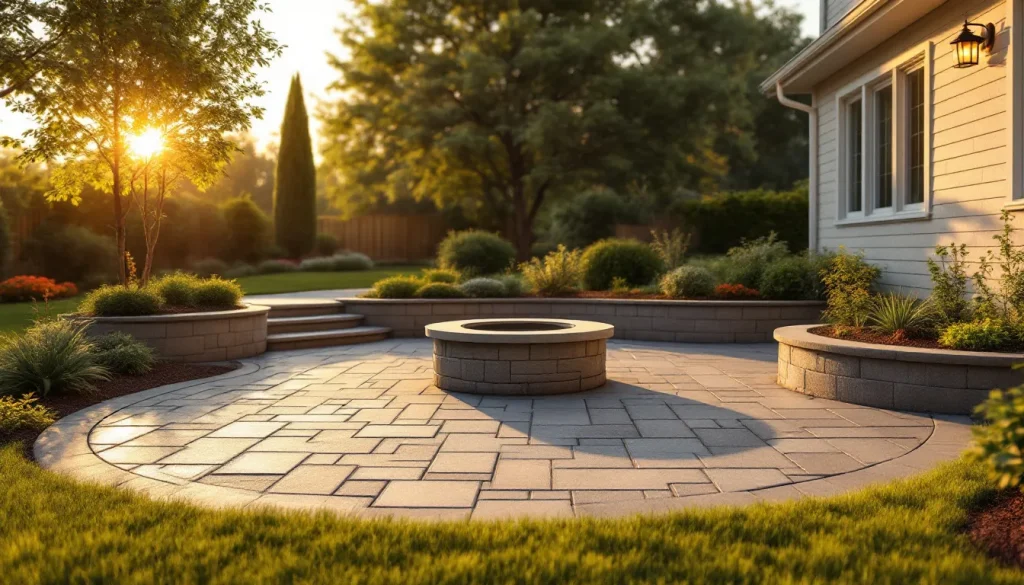
Hardscape is the hard, non-living (inorganic) part of a landscape: the built structures and paved surfaces made from materials like stone, concrete, brick, pavers, and gravel. Patios, walkways, retaining walls, driveways, fire pits, and arbors are all hardscape. It contrasts with softscape, the living elements such as grass, plants, and trees. Together they form a complete landscape design.
The word combines “hard” (durable, constructed) with “scape” (from landscape). Designers and contractors use it as the umbrella term for anything in a yard that is built rather than grown.
If you are early in planning a patio, wall, or walkway, the rest of this guide covers the examples, materials, real 2026 costs, the right balance against plantings, and whether to hire a pro. For vetting help once you reach that stage, see our guide to choosing a hardscape contractor.
Hardscape vs softscape: the core distinction
Hardscape is the non-living, built portion of a landscape (stone, concrete, pavers, wood structures). Softscape is the living portion (lawn, flowers, shrubs, trees, mulch beds). The simplest test: if it grows or needs water and sunlight, it is softscape. If it was installed and stays put, it is hardscape. A good yard layers both.
| Element | Hardscape (non-living) | Softscape (living) |
|---|---|---|
| Examples | Patios, walls, walkways, fire pits, pergolas, fountains | Grass, perennials, shrubs, trees, groundcover |
| Material | Stone, brick, concrete, pavers, gravel, metal, wood | Plants, soil, mulch, compost |
| Maintenance | Cleaning, sealing, occasional repair | Watering, mowing, pruning, replanting |
| Lifespan | 15 to 100+ years depending on material | Seasonal to decades; needs ongoing care |
| Changes over time | Static (intentional structure) | Grows, spreads, and shifts each season |
Mulch sits on the border. Organic mulch breaks down and feeds soil, so most pros count it as softscape. Decorative stone or gravel used as ground cover is hardscape. For more on how the two work together in a full plan, see our hardscaping overview.
Examples of hardscape elements
Common hardscape elements include patios, walkways, driveways, retaining and garden walls, steps, fire pits, outdoor kitchens, pergolas, arbors, fountains, and edging. Each is a built, non-living feature that shapes how you move through and use an outdoor space. They define rooms, manage grade changes, and create the framework that plantings fill in around.
- Patios and decks: flat gathering surfaces, usually adjacent to the house.
- Walkways and paths: connect entry points, beds, and seating areas.
- Driveways: the largest single hardscape on many properties.
- Retaining walls: hold back soil on slopes and prevent erosion.
- Fire pits and fireplaces: anchor an outdoor living zone.
- Arbors, pergolas, and trellises: vertical structures for shade and climbing plants.
- Water features: fountains, ponds with built edges, and rills.
- Edging and steps: small elements that finish and connect the larger ones.
What materials are used for hardscaping?
The most common hardscape materials are concrete pavers, brick, natural stone (flagstone, granite, limestone), poured concrete, and gravel. Newer porcelain pavers have grown into a major commercial category since 2020. Each material trades off price, durability, freeze-thaw resistance, and look. Your climate and budget usually narrow the field faster than style does.
| Material | Best for | Durability | Notes |
|---|---|---|---|
| Concrete pavers | Patios, walkways, driveways | 25 to 50 years | Interlocking, repairable unit by unit, wide style range |
| Brick (clay) | Walkways, accents, edging | 50 to 100+ years | Classic look, color is fade-resistant, can chip in hard freeze |
| Natural stone | High-end patios, walls, steps | 50 to 100+ years | Flagstone, bluestone, granite; premium price, irregular fit |
| Poured concrete | Driveways, slabs, modern patios | 20 to 40 years | Lowest material cost; can crack with freeze-thaw if not jointed |
| Gravel / decomposed granite | Paths, informal patios, drainage | 5 to 15 years (top-up) | Cheapest, permeable, needs edging and periodic refresh |
| Porcelain pavers | Modern patios, rooftops | 30 to 50 years | Stain and frost resistant, very low maintenance, higher unit cost |
Porcelain and paver products: the commercial subtopic
Porcelain pavers are large-format, kiln-fired tiles (commonly 24 by 24 inches at around 3/4 inch thick) marketed for patios and rooftop decks. Brands like Belgard, Techo-Bloc, and Unilock have expanded porcelain and premium concrete paver lines since roughly 2020. They cost more per unit than standard concrete but resist stains, frost, and fading, which lowers long-term maintenance.
How much does hardscaping cost in 2026?
Hardscaping in 2026 typically runs $15 to $50 per square foot installed for paver and stone work, with gravel paths as low as $5 and natural-stone patios reaching $60+. A simple paver patio often lands between $3,000 and $12,000, while a retaining wall or driveway can exceed $20,000. Material, site prep, and labor each drive a large share of the total.
These ranges reflect typical US installed pricing as of mid-2026 and vary by region, site access, and contractor demand. Material alone is often only 40 to 60 percent of the bill; excavation, base preparation, and labor make up the rest.
| Project / material | Installed cost per sq ft (2026) | Typical project total |
|---|---|---|
| Gravel path or patio | $5 to $12 | $700 to $3,000 |
| Poured concrete patio | $8 to $18 | $2,000 to $6,500 |
| Concrete paver patio | $15 to $30 | $3,000 to $12,000 |
| Brick walkway | $18 to $35 | $1,500 to $5,000 |
| Natural stone (flagstone) patio | $25 to $60 | $6,000 to $18,000 |
| Porcelain paver patio | $25 to $50 | $6,000 to $15,000 |
| Retaining wall (segmental block) | $25 to $60 | $5,000 to $25,000+ |
| Paver driveway | $15 to $40 | $10,000 to $30,000 |
| Fire pit (built-in) | n/a | $1,000 to $5,000 |
Two cost drivers surprise most first-time buyers. Sloped or hard-to-reach sites add excavation and machine time. And freeze-thaw climates require a deeper compacted gravel base (often 6 to 12 inches), which adds material and labor that flat-climate quotes skip.
The hardscape-to-softscape ratio and drainage (the part most guides skip)
A widely cited design guideline is roughly a 1:2 hardscape-to-softscape ratio, meaning hardscape should cover about one-third of a yard and plantings the other two-thirds. Going past 40 to 50 percent hardscape often looks barren, raises surface temperature, and increases stormwater runoff. Balance is both an aesthetic and a drainage decision.
Why the ratio matters beyond looks: every square foot of solid hardscape is a square foot that no longer absorbs rain. A 600 square foot impervious patio can shed hundreds of gallons during a one-inch storm, pushing water toward foundations, neighbors, or storm drains. Too much paving also stores heat, making patios uncomfortable in summer.
Three practical ways to keep the balance healthy:
- Cap solid hardscape near one-third of the usable yard and reserve the rest for lawn and beds.
- Use permeable pavers or gravel for low-traffic areas. Permeable systems let water filter through the joints into a stone reservoir below, cutting runoff and often easing local stormwater rules.
- Grade hardscape to drain away from structures at roughly a 1 to 2 percent slope, and direct runoff to planted areas or a dry well rather than the street.
Heavy paving on a slope without drainage planning can also accelerate soil loss downhill. If your site slopes, read our primer on what causes erosion before finalizing a layout.
Hardscape in the built and construction context
In construction and civil terms, hardscape refers to the paved and structural built environment: sidewalks, plazas, retaining structures, curbs, and impervious surfaces specified on a site plan. Engineers and municipalities track hardscape (often as “impervious surface coverage”) because it affects stormwater load, heat, and zoning limits. Many US towns cap impervious coverage per lot.
That regulatory angle matters for homeowners too. Depending on your municipality and lot size, adding a large patio or driveway may push you past a local impervious-coverage limit and require a permit or variance. Check local rules before you build, since requirements vary by city and state.
The role of hardscape in landscape design and outdoor living
Hardscape provides the structure and “bones” of a landscape: the floors, walls, and pathways that make outdoor space usable year-round. It defines rooms, guides movement, manages grade, and creates the durable framework that softscape decorates. Well-placed hardscape extends living space outdoors and works in winter when plantings have died back.
Designers usually plan hardscape first because it is permanent and expensive to change. Plantings can be swapped seasonally; a retaining wall cannot. For a step-by-step approach to sequencing an outdoor project, our landscaping playbook walks through planning order.
How to plan and prepare for a hardscape project
Plan a hardscape project in this order: define the use and budget, check local permits and utility lines, mark the layout, excavate and build a compacted base, then install the surface. The base (excavation plus 4 to 12 inches of compacted gravel) is the single most important step. Skipping it is the top cause of sunken, cracked, or heaving hardscape.
- Define purpose and budget. Decide the function (dining, walking, parking) and a number, then size the project to fit both.
- Call 811 and check permits. The free US utility-locate service marks buried lines. Patios and walls may need a permit depending on size and your municipality.
- Mark and measure. Lay out the shape with paint or string and confirm drainage slopes away from the house.
- Excavate and build the base. Remove soil, add and compact gravel in lifts, then a sand or screening setting bed.
- Install and finish. Lay pavers or stone, cut edges, add edge restraint, then sweep in polymeric sand or joint material.
For deeper how-to material and project guides, the HMNDP learn hub collects step-by-step references.
Maintenance, durability, and resale value
Hardscape is low maintenance compared with lawn, but it is not zero maintenance. Expect to clean surfaces yearly, re-sand paver joints every few years, and seal porous stone or concrete on a 2 to 5 year cycle. Quality hardscape lasts decades and can return value at resale, though ROI depends on the project and local market.
Durability varies by climate. In freeze-thaw regions, water that seeps into cracks expands when frozen and lifts or splits surfaces, so a proper base and drainage matter more than the material brand. Sealing helps porous concrete and sandstone resist staining and moisture but is optional for dense porcelain and most clay brick.
On resale, industry remodeling surveys have long shown that a well-built patio or defined outdoor living space can recover a meaningful share of its cost, often cited in the 50 to 80 percent range depending on the project and region. Treat any single ROI figure as an estimate; appraisers value quality, integration, and condition more than the raw dollar amount spent.
Can I install hardscape myself, or do I need a contractor?
Small, flat, low-stakes projects (gravel paths, a modest paver patio under about 200 square feet, simple edging) are realistic DIY jobs for a fit homeowner with a weekend and a plate compactor rental. Hire a contractor for retaining walls over 3 to 4 feet, driveways, anything on a slope, or projects needing permits, since structural failure or bad drainage is costly to fix.
| Project type | DIY-friendly? | Why |
|---|---|---|
| Gravel path | Yes | Forgiving, low cost, no structural load |
| Small paver patio (flat) | Often | Doable with base prep and a rented compactor |
| Brick walkway | Often | Time-consuming but low risk |
| Retaining wall over 3-4 ft | No | Structural; many areas require engineering and permits |
| Driveway | No | Heavy loads, deep base, large area |
| Sloped or drainage-sensitive site | No | Grading and runoff errors are expensive |
If you go the pro route, get three itemized bids and confirm base depth and drainage in writing. Our hardscape contractor vetting guide covers the questions that separate a solid installer from a cheap quote that fails in two winters.
Frequently Asked Questions
What is hardscape?
Hardscape is the hard, non-living (inorganic) part of a landscape: built structures and paved surfaces made from materials like stone, concrete, brick, pavers, and gravel. Patios, walkways, retaining walls, driveways, fire pits, and pergolas all count. It is the permanent framework of a yard, contrasted with softscape, the living plants and lawn that fill in around it.
What is the difference between hardscape and softscape?
Hardscape is the non-living, built portion of a landscape, such as patios, walls, and walkways made of stone, concrete, or pavers. Softscape is the living portion: grass, flowers, shrubs, and trees. The simple test is whether it grows. If it needs water and sunlight, it is softscape; if it was installed and stays put, it is hardscape. Good design uses both.
What are examples of hardscape?
Examples of hardscape include patios, walkways, driveways, retaining and garden walls, steps, fire pits, outdoor kitchens, pergolas, arbors, fountains, and decorative gravel or stone edging. Each is a built, non-living feature that shapes how an outdoor space is used. They create structure, manage grade changes, and form the durable framework that plantings and lawn fill in around.
What materials are used for hardscaping?
Common hardscape materials are concrete pavers, clay brick, natural stone (flagstone, bluestone, granite, limestone), poured concrete, and gravel or decomposed granite. Porcelain pavers have become a major category since around 2020. Choice depends on budget, climate, and look. Pavers and stone resist freeze-thaw well; poured concrete is cheapest but can crack in cold climates without proper joints and base.
How much does hardscaping cost in 2026?
In 2026, hardscaping typically costs $15 to $50 per square foot installed for paver and stone work, with gravel paths from $5 and natural-stone patios reaching $60+. A simple paver patio runs roughly $3,000 to $12,000; retaining walls and driveways can exceed $20,000. Material is often only 40 to 60 percent of the bill, with excavation, base, and labor making up the rest. Prices vary by region.
What is the ideal ratio of hardscape to softscape in a yard?
A common design guideline is a 1:2 hardscape-to-softscape ratio, meaning hardscape covers about one-third of the yard and plantings two-thirds. Exceeding 40 to 50 percent hardscape often looks barren, raises heat, and increases stormwater runoff. Using permeable pavers and grading surfaces to drain toward planted areas helps keep a yard balanced and reduces water pushed toward foundations or storm drains.
Does hardscaping increase home value?
A well-built patio or defined outdoor living space can increase home value and is often cited as recovering 50 to 80 percent of its cost, depending on the project, quality, and local market. Appraisers reward integration and condition more than dollars spent. Poorly drained or failing hardscape can hurt value, so build quality matters more than size. Treat any single ROI figure as an estimate.
Can I install hardscape myself or do I need a contractor?
You can often DIY small, flat projects: gravel paths, paver patios under about 200 square feet, and simple edging, given a weekend and a rented plate compactor. Hire a contractor for retaining walls over 3 to 4 feet, driveways, sloped sites, or anything needing permits. Structural failure and drainage errors are expensive to fix, so high-stakes projects justify a professional and itemized bids.