
By the HMNDP Editorial Team, independent reporting on lawn care, landscaping, and the green industry.
Last reviewed: June 2026
What landscaping a garden actually means
Landscaping a garden means shaping an outdoor space with plants, hardscape (paths, edging, patios), and grading so it looks intentional and works for how you live. It combines design (layout, focal points, flow) with horticulture (choosing plants that fit your climate, sun, and soil). Gardening is the ongoing act of growing plants. Landscaping is the bigger plan those plants sit inside.
For a DIY homeowner, that distinction matters. You can garden without landscaping, but a landscaped garden holds its shape year-round because the bones (beds, borders, hardscape, evergreen structure) stay put even when flowers fade.
The rest of this guide is an ordered roadmap. Follow it top to bottom and you move from a blank yard to a planted, low-maintenance garden without hiring a contractor.
Basic landscape design principles every beginner needs
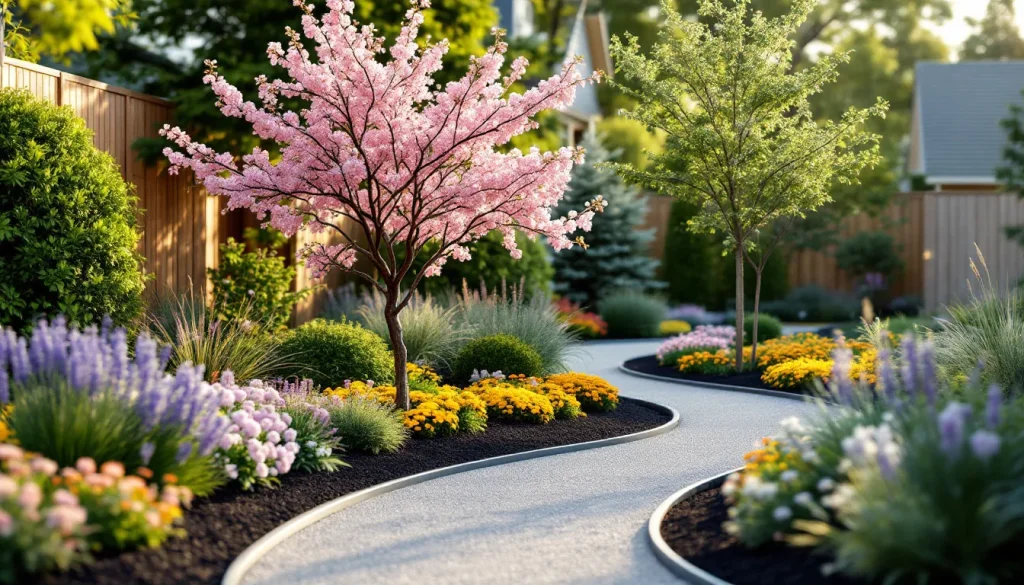
Good landscape design rests on four principles: layering, focal points, balance, and repetition. Layering stacks plants by height (tall at the back, low at the front) so nothing hides. A focal point (a tree, a bench, a boulder) gives the eye a place to land. Balance spreads visual weight evenly. Repetition of one or two plants ties the whole garden together.
Layering by height
Layering means arranging plants in tiers so each is visible. Put tall plants (4 feet and up) at the back of a border or the center of an island bed, mid-height perennials (1 to 3 feet) in the middle, and groundcovers or edging plants at the front. This mimics how plants grow in nature and makes a small bed read as full and deep.
Focal points and balance
A focal point is the single element that anchors a view: a specimen tree, a water feature, a painted door, or a large container. Place one per sightline. Balance does not mean symmetry. A large shrub on one side can be balanced by a cluster of three smaller plants on the other, which is called asymmetrical balance and reads more natural than a mirror image.
Repetition and unity
Repetition is the cheapest way to make a garden look designed. Repeat one plant (say, a grass like Karl Foerster) or one color three or more times across a space and the eye connects them into a rhythm. Beginners often buy one of everything, which reads as clutter. Buy fewer varieties in larger groups instead.
The best order to landscape a garden (step by step)
Landscape in this order: plan, clear, hardscape, grade and prep soil, plant trees and shrubs, then perennials, then mulch, then finishing touches. Doing hardscape before planting prevents you from digging up new plants to run a path. Planting trees before perennials means you set the sun-and-shade structure before you commit smaller plants around it.
- Measure and sketch. Draw your yard to scale on graph paper. Mark the house, existing trees, sun patterns, and utilities. Call 811 (in the US) before any digging to locate buried lines, a free service.
- Clear and edge. Remove weeds, unwanted turf, and debris. Cut clean bed lines with a spade or edger.
- Install hardscape. Lay paths, edging, patios, and borders now. See our guide to backyard hardscape ideas for budget-friendly options.
- Grade and improve soil. Slope soil away from the house (about 1 inch per foot for the first 6 feet). Mix 2 to 3 inches of compost into beds.
- Plant trees and large shrubs. These set the structure and shade. Plant them first so you can arrange everything else around their eventual size.
- Plant perennials and groundcovers. Work front to back so you do not trample finished areas.
- Mulch. Apply 2 to 3 inches of wood or bark mulch to suppress weeds and hold moisture.
- Water in and finish. Deep-water everything, then add lighting, containers, or seating.
Choosing plants for your climate, sun, and soil
Pick plants by matching three things: your USDA Hardiness Zone (which sets what survives winter), the sun exposure of each spot, and your soil type. Native and drought-tolerant plants cut watering and replacement costs. Trees give structure and shade, shrubs give year-round mass, and perennials give color that returns each year without replanting.
Start with your USDA zone and sun
The USDA Plant Hardiness Zone Map (updated in 2023) divides the US into zones by average winter low. Find yours by ZIP code at planthardiness.ars.usda.gov, then buy only plants rated for it. Next, watch each bed for a day: full sun is 6 or more hours of direct light, part sun is 3 to 6 hours, and full shade is under 3. Matching plant tags to these two facts prevents most beginner losses.
Trees, shrubs, and perennials by role
| Plant type | Role in the garden | Beginner-friendly examples |
|---|---|---|
| Trees | Structure, shade, focal point | Serviceberry, redbud, crabapple, river birch |
| Shrubs | Year-round mass, hedging, screening | Ninebark, hydrangea, boxwood, spirea |
| Perennials | Returning seasonal color | Coneflower, black-eyed Susan, daylily, sedum |
| Grasses | Texture, movement, repetition | Little bluestem, Karl Foerster, switchgrass |
Native and drought-tolerant choices
Native plants (species that evolved in your region) usually need less water, fewer chemicals, and no winter protection because they already fit the local climate. Drought-tolerant natives like coneflower (Echinacea), yarrow, and little bluestem thrive on rainfall alone once established, roughly after the first year. They also feed pollinators, which many all-hybrid gardens do not. Check the National Wildlife Federation Native Plant Finder for options by ZIP code.
Designing beds and borders
A bed is a planted area you view from multiple sides; a border runs along an edge (a fence, path, or lawn) and is viewed mainly from the front. Curve bed lines gently rather than making tight wiggles, keep borders at least 3 to 4 feet deep so you have room to layer, and finish every edge with a clean line or physical edging to keep grass out.
Plant in odd-numbered groups (3, 5, 7) of the same variety. Odd groupings read as natural drifts, while pairs and single specimens read as spots. Space each plant for its mature width, not its nursery-pot size, even though it looks sparse at first. Fill the temporary gaps with mulch or annuals for the first season or two.
For sloped or wet ground, a planted swale can double as drainage and design. Our walkthrough on a backyard rain garden build shows how to turn a runoff problem into a feature bed.
How much it costs to landscape a garden
DIY garden landscaping can run from about $100 for a single refreshed bed to $1,000-plus for a full small-yard makeover, depending on plant sizes, hardscape, and how much you do yourself. Buying small plants, splitting perennials, and sourcing bulk mulch cut cost sharply. Labor is the biggest expense a DIYer removes, often 50 to 70 percent of a contractor quote.
| Budget | What you can realistically do | Where the money goes |
|---|---|---|
| ~$100 | Refresh one bed: 5 to 8 small perennials, bulk mulch, clean new edge | Small (quart/1-gal) plants, one mulch load, hand tools you own |
| ~$500 | Full front border: 1 small tree or large shrub, 15 to 20 perennials, edging, mulch | Mid-size plants, edging material, soil amendment, delivered mulch |
| ~$1,000 | Small-yard makeover: several shrubs, a gravel path, layered beds, lighting | Hardscape materials, larger plants, low-voltage lights, gravel or pavers |
Two habits stretch any budget. First, buy plants in the smallest pot you have patience for; a $12 one-gallon shrub catches up to a $45 five-gallon one within two or three seasons. Second, time purchases for fall, when nurseries discount stock 30 to 50 percent and cooler soil helps roots establish.
Should you DIY or hire a landscaper?
Do it yourself when the work is planting, mulching, edging, small beds, and light hardscape you can lift and level. Hire a pro when the job involves grading, retaining walls, drainage, large trees, irrigation, or anything structural where mistakes are expensive to fix. Many homeowners split the difference: DIY the planting, hire out the heavy hardscape.
| Do it yourself | Hire a professional |
|---|---|
| Planting beds, borders, perennials | Retaining walls over 2 to 3 feet |
| Mulching, edging, gravel paths | Grading, drainage, regrading near foundations |
| Small trees and shrubs | Large tree planting or removal |
| Container gardens, raised beds | Irrigation systems, electrical for lighting |
If you do hire for hardscape, vet the contractor before signing. Our checklist on how to vet a hardscape contractor covers licensing, references, and quote red flags, and our overview of hardscape installation explains what a proper install should include.
When to plant: seasonality and timing
The best planting windows are spring and fall, when soil is warm but air is cool, which lets roots establish before heat or frost stress. Fall is often the single best time for trees, shrubs, and perennials in most US zones because roots keep growing after top growth stops. Avoid planting in midsummer heat or frozen winter ground unless the plant is dormant and balled-and-burlapped.
- Early spring: plant bare-root trees and shrubs, cool-season perennials, and divide existing clumps.
- Late spring (after last frost): plant tender perennials and warm-season annuals.
- Fall (6 weeks before first hard frost): the prime window for most trees, shrubs, and perennials, plus spring-flowering bulbs.
- Winter: plan, sketch, order seeds, and prune dormant deciduous trees.
Low-maintenance landscaping for the long term
Low-maintenance landscaping means designing so the garden mostly cares for itself: native and drought-tolerant plants, generous mulch, dense planting that crowds out weeds, and less lawn. The goal is fewer inputs (water, mowing, replacement plants) over years, not a garden that never needs a hand. Right plant, right place is the rule that prevents the most future work.
- Plant natives and perennials that return yearly instead of annuals you replant every spring.
- Mulch 2 to 3 inches to cut watering and weeding; refresh once a year.
- Group plants by water needs (called hydrozoning) so you never overwater one to satisfy another.
- Shrink the lawn and replace turf edges with beds or groundcover, which cuts mowing time.
- Install drip irrigation on a timer for beds, which uses less water than sprinklers and targets roots.
Ten tips for a better-looking garden on any budget
Small moves make a garden look designed rather than accidental. The tips below apply whether you spend $100 or $1,000, and most cost little beyond time. Combine a few and a plain yard starts to read like a plan.
- Define crisp bed edges; a clean line does more visual work than expensive plants.
- Repeat one or two plants across the space for rhythm.
- Plant in odd-numbered drifts, not single specimens.
- Add one focal point per view.
- Layer heights so nothing hides behind anything.
- Use mulch generously; it unifies beds and suppresses weeds.
- Add evergreen structure so the garden holds shape in winter.
- Limit your color palette to two or three main colors plus green.
- Include one flowering plant for each season for year-round interest.
- Leave room; plants grow, and a crowded bed looks worse in year two.
Frequently Asked Questions
How do I start landscaping my garden as a beginner?
Start by measuring and sketching your yard to scale, noting sun, shade, and existing trees. Then clear one area, improve the soil with compost, and plant a single well-designed bed rather than tackling the whole yard at once. Call 811 before digging in the US. Working in one bed at a time keeps cost and effort manageable while you learn.
What are the basic principles of good landscape design?
The core principles are layering (tall plants back, short plants front), focal points (one anchor per view), balance (even visual weight, often asymmetrical), and repetition (repeat a plant or color to create rhythm). Add unity through a limited color palette. These four ideas turn a random collection of plants into a garden that reads as intentional and stays coherent through the seasons.
How much does it cost to landscape a garden?
DIY costs range from roughly $100 to refresh a single bed to $1,000-plus for a small-yard makeover with hardscape and lighting. Buying small plants, sourcing bulk mulch, and shopping fall sales (often 30 to 50 percent off) cut costs sharply. Doing your own labor removes the biggest line item, typically 50 to 70 percent of a contractor quote for planting work.
What plants are best for a low-maintenance garden?
Native and drought-tolerant perennials are best because they fit the local climate and need little water once established. Coneflower, black-eyed Susan, daylily, sedum, yarrow, and grasses like little bluestem return yearly and resist pests. Match every plant to your USDA zone and the spot’s sun exposure. Add 2 to 3 inches of mulch to cut watering and weeding further.
Should I hire a landscaper or do it myself?
Do it yourself for planting, mulching, edging, and light hardscape you can lift and level. Hire a professional for grading, retaining walls over 2 to 3 feet, drainage, irrigation, and large-tree work, where mistakes are costly. Many homeowners DIY the planting and hire out heavy hardscape. If you hire, vet licensing, references, and quotes before signing any contract.
What is the best order to landscape a garden in?
Work in this sequence: plan and sketch, clear and edge, install hardscape (paths, patios, borders), grade and improve soil, plant trees and large shrubs, then perennials and groundcovers, then mulch, then finishing touches like lighting. Hardscape before planting avoids digging up new plants later. Trees before perennials sets the sun-and-shade structure before you commit smaller plants.
How do I landscape a small garden or backyard?
In a small space, keep the palette tight, use vertical layers and containers to add depth, and pick one focal point so the eye is not overwhelmed. Curved bed lines and a single path can make a small yard feel larger. Choose compact plant varieties sized to the space and avoid crowding, since plants grow into their mature width.
What is the difference between landscaping and gardening?
Landscaping is the overall design and construction of an outdoor space, including layout, hardscape, grading, and plant placement. Gardening is the ongoing act of growing and tending plants within that space. Landscaping sets the bones (beds, borders, paths, structure), while gardening is the seasonal care that keeps it alive. A landscaped garden holds its shape year-round because the structure stays put.