
By the HMNDP Editorial Team. Last reviewed: June 2026.
What a flame thrower for weeds actually is
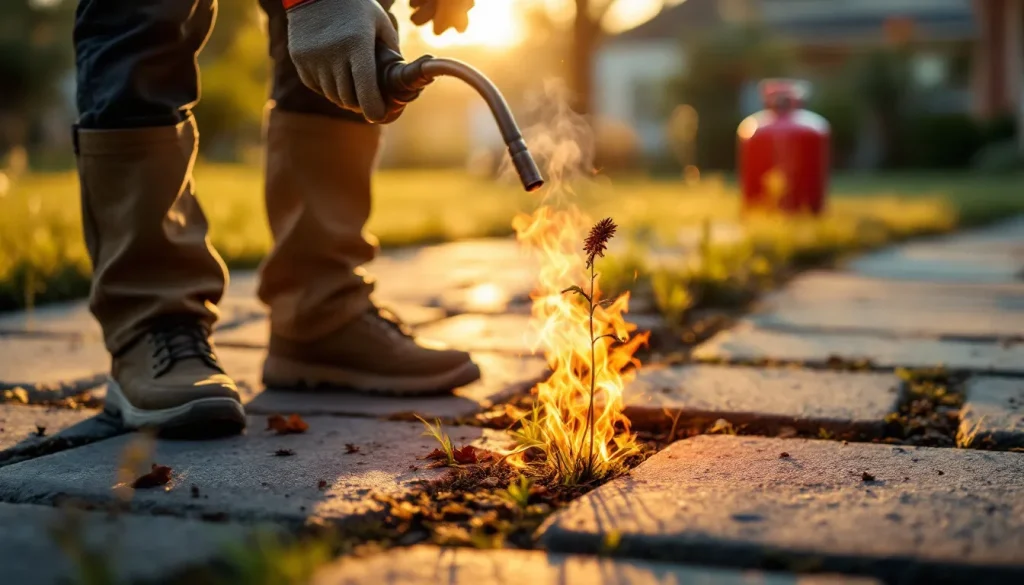
A flame thrower for weeds, sold as a flame weeder or weed torch, is a propane wand that applies a burst of intense heat to a plant for a second or two. It is not a military flamethrower and it does not shoot liquid fire. Most units are a steel wand, a hose, and a control valve that screw onto a standard refillable BBQ propane cylinder.
The goal is a quick pass, not a bonfire. You hold the flame near the weed long enough to wilt it, then move on. Popular models like the Weed Dragon push around 100,000 BTU of output, enough to heat a plant fast without you lingering over it.
How flame weeding works (flash heat, not incineration)
Flame weeding works by flash heat. A one-to-two second pass raises the water inside plant cells past roughly 130 degrees Fahrenheit, which ruptures the cell membranes and destroys the plant’s ability to move water. The leaf does not need to turn to ash. It only needs enough heat shock to collapse.
You are cooking the weed, not cremating it. Within hours the foliage wilts, darkens, and dies back. This is the same principle behind pouring boiling water on weeds, just delivered as dry heat from a propane flame instead of hot liquid.
Does a flame thrower actually kill weeds?
Yes for annual weeds, and only partly for perennials. One properly heated pass reliably kills young annual weeds and their exposed tops. Perennials like dandelion, bindweed, and Bermuda grass survive the first burn because their energy is stored in deep roots and rhizomes, so they push new growth within one to three weeks.
The difference comes down to what the plant is protecting. Annuals keep everything above ground, so destroying the top destroys the plant. Perennials treat a burn like mowing: they regrow from the root crown until you exhaust it through repeat treatment.
The flame weeding protocol that actually exhausts weeds
Effective flame weeding follows a rhythm: a 2-3 second pass per weed, a wilt-don’t-char target, and repeat treatment every 2-3 weeks until perennial roots run out of stored energy. Charring the leaf black is wasted fuel and wasted time. The plant is already dead at wilt.
- Pass, do not hover. Hold the flame 1 to 2 inches above the weed for 2 to 3 seconds, then move to the next one.
- Use the wilt test. Press a heated leaf between two fingers (through a glove). If it leaves a dark thumbprint and stays crushed, it is cooked. That is your signal to stop, not a blackened stem.
- Skip the ash. Burning to ash means you held the flame far too long and raised your fire risk for no added kill.
- Repeat every 2 to 3 weeks. For dandelions and other perennials, each burn drains root reserves. Three to five cycles across a season usually starves the crown.
- Time it early. Torch seedlings under 4 inches. Small weeds die faster and use less propane.
Flame weeding vs vinegar, glyphosate, and hand-pulling
Flame weeding is chemical-free and fast on hardscapes, but it is not the cheapest or the most root-effective option. The table below compares four common driveway and patio methods on cost, effort, and whether they reach the root. Costs are rough 2026 estimates for treating a typical driveway and patio across one season.
| Method | Cost per season | Speed | Kills roots? | Chemical-free? |
|---|---|---|---|---|
| Propane flame weeder | $15 to $40 propane after torch purchase | Fast on cracks and gravel | Annuals yes, perennials only after repeat burns | Yes |
| Horticultural vinegar (20%) | $30 to $60 | Moderate, needs sun | No, burns tops only | Yes |
| Glyphosate (Roundup) | $20 to $45 | Slow, 1 to 2 weeks to die | Yes, systemic to roots | No |
| Hand-pulling | $0 | Slow, labor heavy | Yes if full root comes up | Yes |
Flame wins on speed and zero chemicals for cracks and gravel. Glyphosate still beats it on one-pass perennial control because it travels to the root. For gardeners avoiding synthetic herbicide, flame competes with other heat and pantry methods such as salt and baking soda, though those can leave residue in soil where flame does not.
Best flame thrower for weeds: named products
The Weed Dragon VT 2-23 C is the most-cited option, rated near 100,000 BTU with a long wand that keeps you upright. Budget handheld kits from Sondiko and Houseables run under $30 and screw onto a small propane bottle, which suits small patios but forces you to bend down. Longer wands with a squeeze-trigger igniter are worth the extra spend for larger driveways.
| Product | Type | Approx. output | Best for |
|---|---|---|---|
| Weed Dragon VT 2-23 C | Long wand, BBQ cylinder | ~100,000 BTU | Driveways, large areas |
| Sondiko / Houseables torch | Handheld, small bottle | Lower, variable | Small patios, spot use |
| Flame King / Bison torch kits | Wand with hose | Mid to high | Gravel, fence lines |
You can buy flame weeders at Home Depot, Lowes, Tractor Supply, and Amazon, usually in the weed-control or propane aisle. Prices in 2026 range from about $25 for a handheld to $70 for a long-wand kit.
Where to use a propane weed torch
Flame weeding is safest and most effective on non-flammable surfaces: driveways, concrete and paver patios, gravel beds, and cracks in sidewalks. These spots have no lawn to scorch and little to catch fire. Bare soil paths and fence lines also work well.
Avoid using a torch inside garden beds near desirable plants, over dry bark mulch, or on top of weed-barrier landscape fabric, which melts and can ignite. Gravel and stone are ideal because the heat kills the weed and the surface does not burn.
Fire safety and legality
Treat a weed torch like open flame, because it is. Never flame weed during a drought or an active burn ban, and check your county fire rules first, since many western and southern counties restrict open flame in summer. Keep a hose or extinguisher within reach and never walk away from a smoldering spot.
- Never torch poison ivy, poison oak, or poison sumac. The smoke carries urushiol oil and can cause severe lung reactions if inhaled.
- Skip dry mulch and landscape fabric. Both smolder and reignite after you leave.
- Avoid dry brush and mid-summer parched grass near the target. Early morning, when dew is present, is the safest window.
- Wear closed shoes and gloves, and never point the wand toward yourself, siding, or fences.
Chemical-free does not mean risk-free. The hazard shifts from herbicide drift, the concern behind methods like bleach on weeds, to open-flame fire risk instead.
The multi-use angle: one torch, several jobs
A propane weed torch doubles as a general-purpose heat tool, which softens the purchase cost. The same wand that wilts driveway weeds can light charcoal or a fire pit in seconds, thaw ice on steps and gutters in winter, strip old paint, and sterilize garden tools. That year-round use is part of why owners keep them past weed season.
For more heat-based and no-spray weed control, see the HMNDP guides hub.
Frequently Asked Questions
Does a flame thrower actually kill weeds, or do they just grow back?
It kills annual weeds outright and knocks perennials back. A 2-3 second heat pass ruptures plant cells and destroys annuals completely. Perennials like dandelion and bindweed regrow from deep roots within one to three weeks, so you need to repeat the burn every 2 to 3 weeks to exhaust the root’s stored energy.
Does burning weeds kill the roots?
Not in one pass. Flame heat kills the leaves and stem at the surface but rarely penetrates deep enough to destroy an established root system. Annual roots die because the whole plant dies. Perennial roots survive the first burn and require several repeat treatments across a season to starve them out.
How long do you hold the flame on a weed?
Two to three seconds per weed, no longer. The target is wilt, not char. Hold the flame 1 to 2 inches above the plant until the leaves darken and go limp, then move on. If a leaf crushes and leaves a dark thumbprint, it is cooked. Burning it to ash wastes propane and raises fire risk.
Is a propane weed torch safe on a driveway or gravel?
Yes, driveways and gravel are among the safest surfaces because they do not burn. Concrete, pavers, and stone hold no fuel to ignite. The cautions are avoiding dry mulch, landscape fabric, and parched brush nearby, checking for local burn bans, and keeping water within reach. Early morning with dew present is the safest window.
Is flame weeding better than chemicals like Roundup?
It depends on the goal. Flame weeding is chemical-free, works instantly on hardscapes, and leaves no soil residue. Glyphosate (Roundup) is slower but travels systemically to kill perennial roots in one application. For chemical-free control on driveways and gravel, flame often wins. For one-pass perennial root kill, glyphosate is more thorough.
What are the disadvantages of flame weeding?
The main drawbacks are fire risk, poor perennial root control, and ongoing propane cost. It cannot be used safely near desirable plants, over mulch, on landscape fabric, during burn bans, or on poison ivy, whose smoke is toxic. Perennials require repeat treatments, and unlike systemic herbicide, a single burn does not reach deep roots.
What is the best flame thrower for weeds?
The Weed Dragon VT 2-23 C, rated near 100,000 BTU with a long wand, is the most widely cited pick for driveways and larger areas. Budget handheld torches from Sondiko run under $30 for small patios and spot use. Choose a long-wand model with a trigger igniter if you have a large area to cover.
Can you buy a flame weeder at Home Depot?
Yes. Flame weeders are sold at Home Depot, Lowes, Tractor Supply, and Amazon, usually in the weed-control or propane section. As of 2026, handheld torch kits start around $25 and long-wand models like the Weed Dragon run roughly $50 to $70. Most connect to a standard refillable BBQ propane cylinder.