
By the HMNDP Editorial Team | Independent reporting on lawn care and landscaping.
Last reviewed: June 2026
Does pulling weeds actually work, or is it a waste of time?
Pulling weeds works, but only if you remove the whole root and stop there before the soil scars over with new seedlings. For taproot weeds like dandelion, one clean pull that gets the full root usually ends that plant. The reason people call it a waste of time is that they pull the top, leave the root, disturb the soil, and watch a fresh crop appear within two weeks.
The complaint is not that hand-pulling fails. It is that most people pull incorrectly and skip the step after. Done right, pulling is the most selective weed removal method there is, because you target one plant and leave the grass and soil around it intact.
Hand-pulling is best for small patches and scattered weeds. For anything larger than a few square feet of dense growth, see our guide on the best way to remove weeds from a large area, where pulling stops being practical.
Why do more weeds grow after you pull them?
More weeds appear after pulling because disturbing the soil brings dormant weed seeds up to the surface, where light and air trigger them to germinate. A single square foot of garden soil can hold thousands of viable weed seeds sitting in a seed bank, most of them dormant until they reach the top inch. Every pull that churns the ground is effectively planting the next batch.
This is the mechanism no gimmick page mentions. It is not that the weed you pulled came back. It is that you woke up its neighbors. Research on the soil seed bank, including long-running work summarized by the University of California Statewide Integrated Pest Management Program, shows weed seeds can stay viable for years and germinate the moment they are lifted into light.
Two rules follow directly. First, disturb the soil as little as possible: pull straight up, do not dig and flip the bed. Second, pull before weeds set seed, not after, so you are not adding fresh seed on top of the buried bank. To attack the buried seeds long term, read how to prevent weeds from growing back.
How to pull weeds by hand correctly and get the whole root
Correct hand-pulling means loosening the soil first, gripping the weed low at the base, and drawing it out slowly and straight so the root slides free instead of snapping. Speed is the enemy. A fast yank breaks the stem at ground level and leaves the root to regrow, which is the single most common reason weeds return.
- Weed after rain or watering. Moist soil releases roots; dry, compacted soil grips them.
- Loosen first. Slide a hand weeder or hori-hori blade down alongside the taproot to break the grip before you pull.
- Grip low. Hold the weed at the crown, right where stem meets soil, not by the leaves.
- Pull slow and straight up. Steady upward pressure, no twisting, so the root comes out whole.
- Check the root tip. A clean taproot ends in a fine point. A blunt, torn end means a fragment stayed behind and will resprout.
- Firm the soil back down. Press the disturbed spot flat to deny buried seeds the loose, lit surface they need.
Should you pull weeds when the soil is wet or dry?
Pull weeds when the soil is moist but not soaking, ideally one to two days after rain or a deep watering. Moist soil lets roots slide out intact, which is the whole game. Dry, hard soil grips the taproot so it snaps off below the crown. Waterlogged mud, on the other hand, is slippery and tears the stem while your hand loses grip.
| Soil condition | What happens when you pull | Verdict |
|---|---|---|
| Bone dry / compacted | Root snaps off, top comes away only | Water first, wait a day |
| Moist (1 to 2 days after rain or watering) | Full root slides out clean | Best window |
| Soaking wet mud | Stem tears, hands slip, soil compacts | Wait for it to drain |
If you cannot wait for rain, soak the target patch for 10 to 15 minutes, then pull the next morning.
Which weeds should you not pull by hand?
Do not hand-pull weeds that regrow from root fragments, because every broken piece you leave becomes a new plant and pulling actively spreads them. Taproot weeds respond well to pulling. Creeping, rhizomatous, and stoloniferous weeds do not, and tugging at them multiplies the problem instead of solving it.
| Weed type | Examples | Pull by hand? |
|---|---|---|
| Single taproot | Dandelion, dock, plantain, thistle seedlings | Yes, get the full taproot |
| Shallow fibrous / annual | Chickweed, purslane, young crabgrass | Yes, pull before they seed |
| Creeping / rhizome / runner | Bindweed, ground ivy, Bermuda grass, quackgrass, established crabgrass mats | No, fragments resprout; smother or spot-treat instead |
For bindweed and similar spreaders, repeated pulling can help only if you are relentless and remove every shoot the moment it appears, starving the root over a full season. Most people are better off smothering these with cardboard and mulch.
How do you get the full taproot on dandelions?
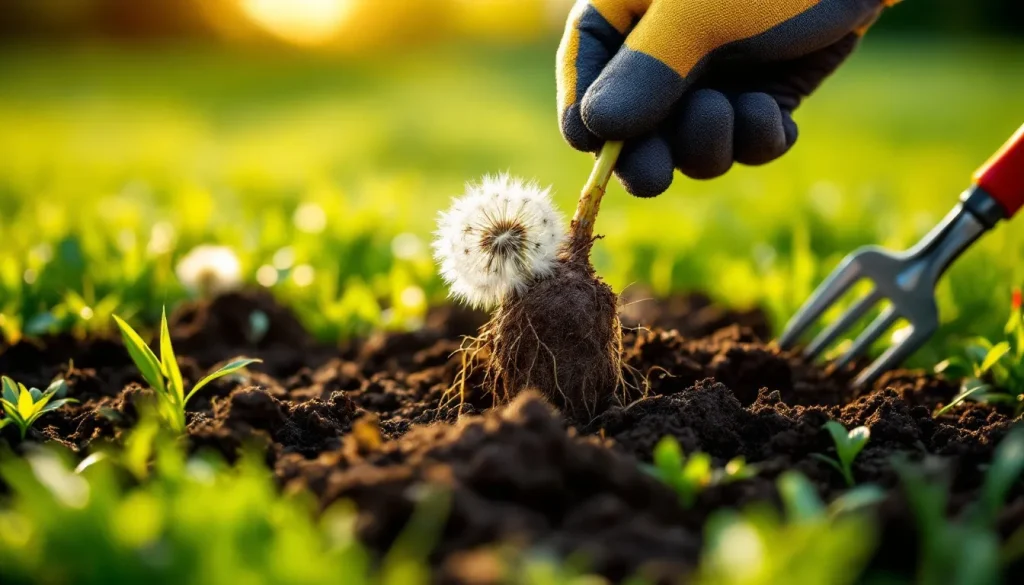
To get a dandelion’s full taproot, drive a fishtail or dandelion weeder straight down beside the crown to a depth of 4 to 6 inches, lever the tool back to pop the root, then lift the whole plant out. Dandelion taproots commonly run 6 to 10 inches deep, and any tip left in the ground can regenerate a new rosette.
The forked notch on a fishtail weeder slides down the length of the root and cuts through side soil, so the taproot releases instead of snapping. Go deep before you lever. Shallow prying just tears the top off and guarantees regrowth from the base.
What tools make hand-pulling weeds easier and faster?
The right tool matches the weed and saves your back. A hand weeder handles small taproots, a fishtail or dandelion weeder digs deep single roots, a stand-up weed puller spares your knees on lawn dandelions, and a hori-hori knife does nearly everything by loosening soil around any root before you lift.
| Tool | Best for | Why it helps |
|---|---|---|
| Hand weeder (forked) | Small taproots, tight beds | Levers roots out of loosened soil |
| Fishtail / dandelion weeder | Deep single taproots | Notched blade slides down the root to release it |
| Stand-up weed puller | Lawn dandelions, large areas | Foot-and-claw action, no kneeling |
| Hori-hori knife | All-purpose weeding | Serrated blade cuts, digs, and loosens roots |
Removing weeds from a lawn by hand without killing the grass
To pull lawn weeds without damaging grass, loosen the soil right at the weed’s base and lift straight up so surrounding grass roots stay in place. The risk to a lawn is not the pull itself but the bare hole left behind, which is prime real estate for the next weed seed to germinate.
Fill every hole. Press the turf back flat, drop a pinch of grass seed matched to your lawn, and firm it down so weeds do not claim the gap first. A thick, healthy lawn is the best weed barrier there is, which is why aerating a compacted lawn and overseeding thin spots do more to stop weeds than any amount of pulling. If bare, shaded patches keep filling with green fuzz rather than weeds, that may be a moss problem instead; see how to get rid of moss in a lawn.
The step that stops the regrowth cycle: mulch or overseed
The missing step after pulling is to immediately cover the disturbed soil, either with 2 to 3 inches of mulch in beds or with grass seed on a lawn. Bare, freshly turned soil is a germination trigger for the seed bank you just exposed. Cover it and you block the light those seeds need, which is what finally breaks the pull-and-regrow loop searchers complain about.
Alternative non-pull methods handle what pulling cannot. Boiling water kills weeds in cracks and paths on contact but scorches nearby plants and grass. Smothering with cardboard and mulch starves creeping weeds over 6 to 8 weeks. Persistent, repeat weeding every 10 to 14 days through a season is what actually exhausts stubborn perennial roots. Pulling is not a one-time event. It is a rhythm, and the mulch or seed is what makes each pass the last one for that spot.
Frequently Asked Questions
Is pulling weeds a waste of time?
No, pulling weeds is effective when you remove the entire root and cover the disturbed soil afterward. It feels like a waste because most people snap off the top, leave the root, and expose the seed bank, which sprouts a new crop within two weeks. Get the full root, firm the soil, and mulch or overseed, and pulled weeds stay gone.
Why do more weeds grow after I pull them?
Disturbing the soil lifts dormant weed seeds to the surface, where light and air trigger germination. A square foot of soil can hold thousands of buried seeds waiting in the seed bank. Every dig-and-flip pull plants the next batch. Pull straight up with minimal disturbance, firm the ground back down, and cover it so the exposed seeds never get their light cue.
What is the best way to pull weeds by hand so they don’t come back?
Pull when soil is moist, loosen it around the root first, grip the weed low at the crown, and draw it slowly straight up so the full root slides out. Check that the root tip is intact, not torn. Then firm the soil flat and add mulch or grass seed. That last cover step is what stops the regrowth cycle.
Should you pull weeds when the soil is wet or dry?
Pull when soil is moist, ideally one to two days after rain or a deep watering. Moist soil lets roots slide out whole. Dry, compacted soil grips the root so it snaps off and regrows. Soaking mud is too slippery and tears the stem. If soil is dry, water the patch and wait a day before pulling.
How do I pull weeds from my lawn without damaging the grass?
Loosen the soil at the weed’s base with a hand weeder and lift straight up so surrounding grass roots stay put. The bigger risk is the bare hole left behind, which invites the next weed. Press the turf flat, drop matched grass seed into the gap, and firm it down. A dense lawn crowds out weeds better than repeated pulling.
What tools make hand-pulling weeds easier and faster?
A forked hand weeder handles small taproots, a fishtail or dandelion weeder digs deep single roots, a stand-up weed puller spares your knees on lawn dandelions, and a hori-hori knife loosens soil around any root. All of them share one job: releasing the root from the soil so it lifts out whole instead of snapping at the crown.
How do you get the whole root when pulling weeds like dandelions?
Drive a fishtail or dandelion weeder straight down beside the crown to 4 to 6 inches, lever it back to pop the root, then lift the whole plant. Dandelion taproots run 6 to 10 inches deep, and any tip left behind grows a new rosette. Moist soil and a deep tool are the two things that get the full root.
Which weeds should you not pull by hand?
Avoid hand-pulling creeping and rhizomatous weeds like bindweed, ground ivy, Bermuda grass, and established crabgrass, because they regrow from every root fragment you leave, so pulling spreads them. Taproot weeds like dandelion and dock and shallow annuals like chickweed and purslane pull well. For the spreaders, smother with cardboard and mulch or spot-treat instead of tugging.