
By the HMNDP Editorial Team, independent reporting on lawn care, landscaping, and the green-industry business.
Last reviewed: June 2026
What a wood and wire fence is (and why people build one)
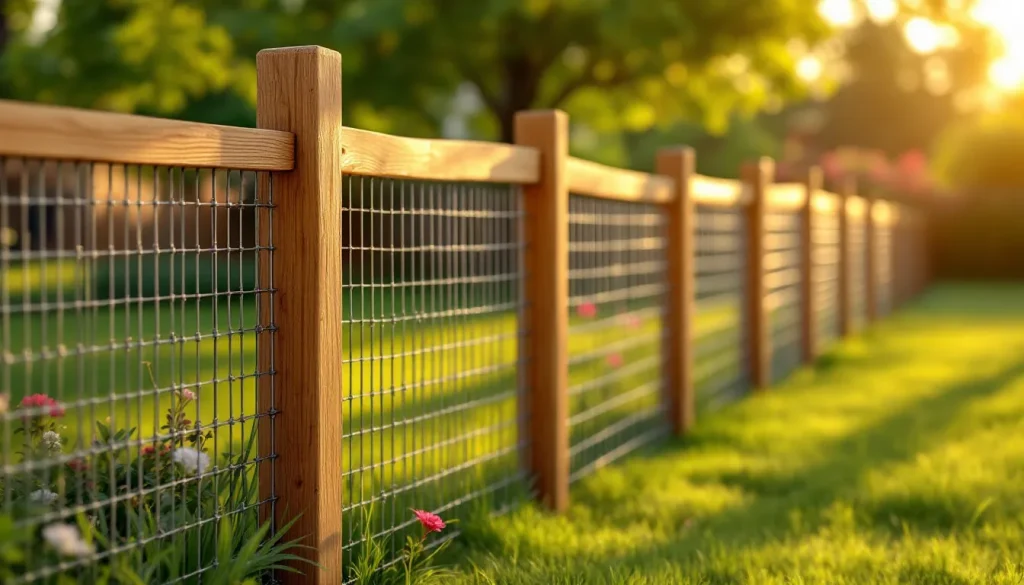
A wood and wire fence is a wood-framed structure (posts and horizontal rails) with a wire mesh infill stretched across or inside the frame. It gives you the rustic, semi-open look of farm fencing with the strength of a built frame. DIY homeowners choose it for yards, gardens, pastures, and pet or deer barriers because it costs less than solid wood, blocks animals without blocking the view, and is buildable with basic tools.
The wire does the containing. The wood does the structure and the styling. That split is why the fence works for both a suburban backyard and a rural paddock, and why the same build can look modern, farmhouse, or agricultural depending on the lumber and wire you pick.
How much does a wood and wire fence cost per linear foot?
A DIY wood and wire fence runs roughly $8 to $25 per linear foot in materials, depending mainly on the wire type and lumber grade. Professionally installed, expect $18 to $45 per linear foot including labor. Pressure-treated pine posts with a welded-wire roll sit at the low end; cedar posts with rigid cattle panels sit at the high end. Below is a full materials list priced for a 100-foot, 4-foot-tall run.
| Material | Spec (100 ft, 4 ft tall) | Qty | Est. cost |
|---|---|---|---|
| Line and end posts | 4×4 pressure-treated, 8 ft, set 8 ft on center | ~13 | $150 to $210 |
| Rails | 2x4x8, top and bottom rail per section | ~24 | $120 to $170 |
| Wire infill (roll) | Welded wire, 4 ft x 100 ft, 14 to 16 gauge | 1 roll | $120 to $190 |
| Wire infill (panels, alt.) | Hog/cattle panel, 16 ft x 50 in, 4 gauge | ~7 | $180 to $260 |
| Fasteners | Galvanized fence staples or poultry staples, exterior screws | 1 to 2 lb | $25 to $45 |
| Concrete | 60 lb fast-set, 2 bags per post | ~26 bags | $120 to $180 |
| Stain/sealer (optional) | Exterior semi-transparent | 1 to 2 gal | $40 to $90 |
That totals roughly $600 to $900 in materials for 100 feet, or about $6 to $9 per foot with a welded-wire roll and pressure-treated pine. Swapping in cedar posts and rigid panels can push it past $20 per foot. Sealing the wood is optional up front, but budgeting for it matters, and you can compare products in our guide to choosing a fence stain.
Wire infill options compared: welded wire vs. hog panel vs. field wire vs. hardware cloth
The wire you pick decides what the fence contains, how rigid it is, and half the cost. The four common choices are welded wire (rolled mesh), hog or cattle panels (rigid livestock panels), woven or field wire (rolled agricultural fencing), and hardware cloth (fine galvanized mesh). Match the wire to your smallest target animal and your budget. The matrix below breaks down the tradeoffs.
| Wire type | Typical gauge / gap | Rigidity | Best for | Price signal |
|---|---|---|---|---|
| Welded wire (roll) | 14 to 16 ga, 2×4 in openings | Flexible, needs a taut frame | Dogs, general yard, garden | Low ($1 to $2/ft) |
| Hog / cattle panel | 4 ga, 4×4 to 6×8 in openings | Rigid, self-supporting | Modern look, goats, cattle, large dogs | Medium ($2 to $4/ft) |
| Woven / field wire | 9 to 12.5 ga, graduated spacing | Semi-flexible, needs stretching | Long pasture runs, deer with taller frame | Low to medium |
| Hardware cloth | 19 to 23 ga, 1/4 to 1/2 in openings | Flexible, fine mesh | Rabbits, chickens, predator/rodent exclusion | Higher per sq ft |
For small predators or rabbits, only hardware cloth or fine welded wire closes the gap. For a clean, contemporary panel look, rigid hog panels frame up flat and stay flat. For deer, the wire matters less than height: plan for a 6 to 8 foot frame, because deer clear a 4-foot fence easily. If you want a full metal option instead, see our overview of metal fencing types.
How to build a wood and wire fence: step by step
Building a wood and wire fence is a beginner-to-intermediate weekend project for a short run and a multi-weekend job for a long one. The core sequence is: set posts in concrete, attach rails to make sections, stretch or fasten the wire, then trim and finish. Follow these steps in order.
- Mark the line and locate posts. Run a string line, then mark post holes at 6 to 8 feet on center. Call 811 (or your local one-call service) to flag utilities before digging.
- Dig and set posts. Dig holes about one-third the post height, commonly 24 to 36 inches deep. Set each 4×4 in fast-set concrete, plumb it, and let it cure at least 4 hours before adding load.
- Attach top and bottom rails. Screw 2×4 rails between posts to form each section. The rails give the flexible wire something to pull tight against.
- Hang the wire. Unroll welded or field wire along the frame, or set rigid panels in place. Start at an end post and keep the mesh square to the rails.
- Stretch and fasten. Pull rolled wire taut (a come-along helps on long runs), then staple it to posts and rails every 4 to 6 inches. Rigid panels only need screws or fence clips at each contact point.
- Trim and finish. Cut excess wire flush with bolt cutters, add a top cap rail or trim board to hide raw edges, then stain or seal the wood.
Wood frame construction: post spacing, depth, and rail specs
The frame is what keeps a wood and wire fence tight and square for years, so the specs are not optional. Space posts 6 to 8 feet on center, set them 24 to 36 inches deep in concrete, and use 2×4 rails top and bottom (add a middle rail on runs taller than 4 feet). Rigid panels can stretch spacing toward 8 feet; flexible rolled wire holds tension better at 6 feet.
| Element | Recommended spec | Notes |
|---|---|---|
| Post spacing | 6 to 8 ft on center | Match to panel width; 8 ft for 16 ft panels cut in half |
| Post depth | 1/3 of above-ground height, 24 to 36 in | Deeper in frost-prone soil; below your local frost line |
| Post size | 4×4 (yard) or 4×6 / 6×6 (livestock, gates) | Pressure-treated or cedar rated for ground contact |
| Rails | 2×4, top and bottom minimum | Third rail on fences over 4 ft |
| Concrete | 1 to 2 bags (60 lb) per post | Crown the top to shed water off the post |
Set corner, end, and gate posts deeper and beefier than line posts, because those carry the tension and the swing load. If you plan to hang a gate, size the gate posts first and read our notes on building and hanging fence gates before you pour concrete.
Attaching the wire so it stays tight
Wire stays tight when it is stretched before fastening and stapled at close intervals into solid wood. For rolled welded or field wire, pull it taut across the whole section first, then drive 1.5 to 2 inch galvanized fence staples (or barbed poultry staples) every 4 to 6 inches along posts and rails. Do not fully seat every staple until the section is stretched, or you lock in slack.
Use galvanized or stainless fasteners only. Plain steel staples rust and bleed streaks down the wood within a season. For rigid hog or cattle panels there is no stretching: fasten them flat to the frame with exterior screws and washers or panel clips at every rail contact point.
On long runs, a come-along or fence stretcher between end posts removes the sag that hand-pulling leaves behind. Fasten from one end toward the stretched end so tension carries through the whole section.
Framing the panels to hide raw wire edges
The difference between an agricultural fence and a finished one is trim. Raw cut wire edges look unfinished and can snag, so the clean approach is to sandwich the wire: fasten it to the frame, then cap the exposed edges with a thin trim board or a top rail that overlaps the wire. This hides the cut ends and pins the mesh at the same time.
For a built-panel look, construct each section as a self-contained wood frame (four boards mitered or butt-jointed), staple the wire to the back of that frame, then mount the finished frame between posts. The wire sits recessed, the edges are covered on all four sides, and the fence reads as intentional joinery rather than stapled mesh.
A pocket or dado cut into the rail lets the wire tuck inside the wood entirely, the most finished result and the most work. Choose the level of trim that matches your yard and your patience.
Design and style ideas: modern, rustic, and farmhouse
The same wood and wire recipe reads three different ways depending on lumber, orientation, and wire. Modern uses clean cedar or painted-black frames with horizontal rigid panels and hidden fasteners. Rustic leans on rough-sawn or natural-aged wood with visible welded wire. Farmhouse pairs white or gray posts with woven or hog-panel infill and a flat top cap.
- Modern: square cedar posts, horizontal 2×6 rails, black or raw hog panels, screws hidden behind trim.
- Rustic: pressure-treated or reclaimed posts, welded wire, exposed staples, left to weather gray.
- Farmhouse: painted posts and rails, cattle-panel infill, a broad top cap board, often used as a garden or entry fence.
Stain choice drives the whole mood. A semi-transparent finish keeps grain visible for rustic and modern looks, while solid paint delivers the crisp farmhouse contrast. If you want a solid-wood look elsewhere on the property, compare it against a full privacy fence build.
Panels vs. rolls, and pre-built vs. building your own
Wire comes two ways: flexible rolls (welded, woven, field wire) or rigid panels (hog and cattle panels). Rolls are cheaper per foot and bend around corners but need stretching and a tight frame. Rigid panels cost more, come in fixed 16-foot lengths, and stay flat with minimal fastening. Pre-built wood-and-wire panels save labor but cost the most and limit your dimensions.
| Option | Upfront cost | Labor | Best when |
|---|---|---|---|
| Wire by the roll | Lowest | Highest (stretch and staple) | Long runs, tight budget, uneven ground |
| Rigid panels + your frame | Medium | Medium | Modern flat look, livestock, speed |
| Pre-built wood-and-wire panels | Highest | Lowest (mount and go) | Short runs, standard heights, minimal tools |
Most DIY builders get the best value framing their own sections around rolled welded wire or rigid panels, because pre-built panels charge a premium for assembly you can do yourself in a weekend.
Residential vs. commercial and agricultural use
Residential and agricultural wood and wire fences share a frame but differ in scale and spec. A backyard or garden fence is typically 3 to 4 feet tall with 4×4 posts and welded wire, focused on pets and looks. Agricultural fencing runs taller and heavier, with 4×6 or 6×6 posts, field or cattle-panel wire, and priority on containment and durability over appearance.
For livestock, gauge and gap size are set by the animal: goats and pigs need small openings and rigid panels, cattle tolerate wider field wire. For a residential deer barrier, height carries the job, so plan 6 to 8 feet regardless of wire choice. Commercial and farm runs also justify heavier posts because the tension over long distances is far greater than a short yard section.
Longevity, maintenance, and permit considerations
A wood and wire fence lasts 15 to 20 years or more when built with pressure-treated or cedar posts, galvanized wire, and galvanized fasteners. The wood ages first: expect to re-stain or reseal every 2 to 4 years and to reset or replace a post or two over the fence’s life. Galvanized wire commonly outlasts the wood frame.
Maintenance is light but real. Check post bases for rot, re-tension sagging rolled wire, and swap any rusting fasteners before they streak the wood. Keeping the bottom rail a few inches off the soil slows rot and saves the most costly repairs.
Permits and setbacks vary by jurisdiction. Many areas cap front-yard fence height (often around 3 to 4 feet) and back-yard height (often 6 feet) and require the fence to sit inside your property line, so rules may differ depending on your city, county, and HOA. Check local code and locate your property line before digging, and confirm you are not fencing over an easement.
Frequently Asked Questions
How much does a wood and wire fence cost per linear foot?
A DIY wood and wire fence costs roughly $8 to $25 per linear foot in materials, or about $600 to $900 for a 100-foot, 4-foot run. Professionally installed, it typically runs $18 to $45 per linear foot with labor. Pressure-treated posts with welded-wire rolls sit at the low end; cedar posts with rigid cattle panels sit at the high end.
What kind of wire is best: welded wire, hog wire, or field wire?
It depends on what you are containing. Welded wire (14 to 16 gauge) suits dogs and gardens at the lowest cost. Rigid hog or cattle panels (4 gauge) give a modern flat look and hold livestock. Woven field wire covers long pasture runs. For rabbits or predators, use fine hardware cloth. Match the wire opening to your smallest target animal.
Can I build a wood and wire fence myself, and how hard is it?
Yes. A short run is a beginner-to-intermediate weekend project with basic tools: post-hole digger, level, drill, staple gun, and bolt cutters. The steps are setting posts in concrete, attaching 2×4 rails, then stretching and stapling the wire. Long runs take multiple weekends and a come-along to tension rolled wire. Rigid panels are the easiest wire to install.
How far apart should the posts be on a wood and wire fence?
Space posts 6 to 8 feet on center. Use 6 feet for flexible rolled wire, which holds tension better with closer supports, and up to 8 feet for rigid hog or cattle panels. Set posts 24 to 36 inches deep, about one-third of their above-ground height, in concrete, and below your local frost line to prevent heaving.
How do you attach the wire so it stays tight?
Stretch rolled wire taut before fastening, then drive 1.5 to 2 inch galvanized fence staples every 4 to 6 inches into posts and rails. On long runs, use a come-along or fence stretcher between end posts to remove sag. Use only galvanized or stainless fasteners so they do not rust. Rigid panels need no stretching, just screws or clips at each rail.
Is a wood and wire fence good for dogs and will it keep out deer?
It works well for dogs when the wire openings are small enough that they cannot push through, and the bottom is secured to the ground for diggers. For deer, height matters more than wire: deer clear a 4-foot fence easily, so plan a 6 to 8 foot frame if deer exclusion is the goal, regardless of wire type.
Should I buy wire by the roll or use pre-made panels?
Rolls (welded, woven, field wire) cost the least per foot and bend around corners, but need stretching and a tight frame. Rigid panels cost more, stay flat, and install fast. Pre-built wood-and-wire panels save the most labor but cost the most and lock you into set dimensions. Most DIY builders get the best value framing their own sections around rolls or panels.
How long does a wood and wire fence last and what maintenance does it need?
Built with pressure-treated or cedar posts and galvanized wire and fasteners, a wood and wire fence lasts 15 to 20 years or more. The wood ages first: reseal or re-stain every 2 to 4 years, check post bases for rot, re-tension sagging wire, and replace any rusting fasteners. Keeping the bottom rail off the soil slows rot and prevents the costliest repairs.