
By the HMNDP Editorial Team. Last reviewed: June 2026.
What is a panel fence?
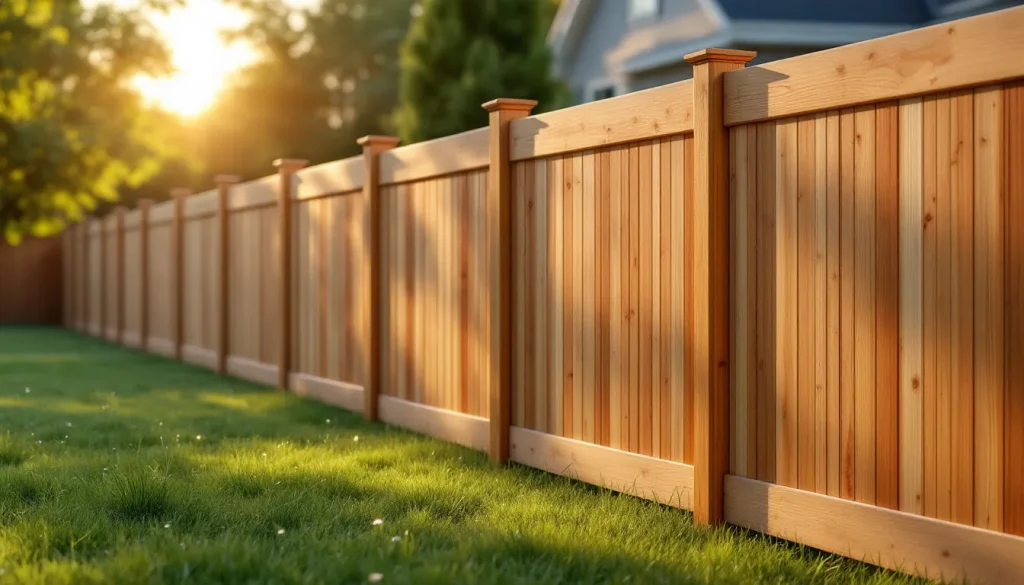
A panel fence is a fence built from pre-assembled sections, called panels, that ship as one flat unit and drop between posts on site. Each panel already has its boards, pickets, or metal bars fixed to a frame at the factory. You set the posts, then hang or screw the panels into place. This is the main difference from a stick-built fence, where each board is nailed on one at a time.
A picket or board fence can be either style. A panel fence specifically means the infill arrives finished. That prefabrication is the selling point: less cutting, less measuring per board, and a faster install for a homeowner working alone. Panels also give a uniform look because every section is made to the same jig.
Panel fence materials compared: wood, metal, vinyl, and composite
The four common panel fence materials are wood, metal, vinyl, and composite. Wood is cheapest upfront and needs the most upkeep. Metal lasts longest. Vinyl and composite cost more but need almost no maintenance. The table below shows typical 2026 US ranges for a 6-foot-tall panel plus honest installed cost per linear foot.
| Material | Price per panel (6 ft tall) | Installed cost per linear ft | Lifespan | Maintenance |
|---|---|---|---|---|
| Pressure-treated pine | $30 to $55 | $15 to $30 | 15 to 20 years | Stain or seal every 2 to 3 years |
| Cedar | $55 to $110 | $20 to $40 | 15 to 25 years | Stain or seal every 2 to 4 years |
| Aluminum (ornamental) | $90 to $250 | $30 to $70 | 30 to 50 years | Rinse only, no rust |
| Steel (welded) | $80 to $220 | $30 to $65 | 25 to 40 years | Check coating for rust every few years |
| Vinyl (PVC) | $100 to $300 | $25 to $60 | 20 to 30+ years | Rinse with a hose |
| Composite | $120 to $400 | $35 to $70 | 25 to 30 years | Rinse, no stain needed |
Read the two cost columns together. A pine panel is cheap to buy but costs you a weekend of staining every couple of years. A vinyl or aluminum panel costs more at the register and then asks for almost nothing. Over 20 years the gap narrows.
Wood fence panels
Wood fence panels are the most common and the cheapest to buy, usually pressure-treated pine or cedar in dog-ear, flat-top, or lattice-top styles. A standard 6×8 pine privacy panel runs about $30 to $55. Cedar costs more but resists rot and warping better and holds stain longer. Wood suits backyards, gardens, and any owner who wants a warm, natural look on a budget.
The trade-off is upkeep. Wood needs a fresh coat of stain or sealer every two to three years to fight rot, gray-out, and cupping. Skip it and a $40 panel can fail in ten years instead of twenty. Our guide to choosing and applying fence stain covers the products and timing that stretch panel life.
Metal fence panels: welded and ornamental
Metal fence panels come in two families: welded panels (steel or wire mesh sections joined at the factory) and ornamental panels (aluminum or steel with spaced vertical pickets). Welded steel and wire panels are popular for security, pasture, and commercial runs. Ornamental aluminum panels give a wrought-iron look with no rust and are common around pools, front yards, and boundaries where you want to see through.
Aluminum is the low-maintenance choice because it does not rust and carries a powder-coat finish that lasts decades. Steel is stronger and cheaper but the coating must stay intact to prevent rust. For the classic decorative look, see our overview of wrought iron fence panels and the broader options in our metal fencing guide.
Privacy panels vs boundary and decorative panels
Panel fences split into two jobs: privacy or boundary. Privacy panels use solid or tightly spaced boards with no gaps, standing 6 feet tall to block sight lines, common in backyards. Boundary and decorative panels use spaced pickets or open metal, marking a line without hiding the view, common for front yards, gardens, and pasture edges.
Match the panel to the job before you shop by price. A homeowner who wants privacy but buys a spaced-picket panel because it was cheaper ends up disappointed. Pick the function first, then compare materials within that function.
Standard fence panel sizes, including 6×8
The standard panel fence size in the US is 6 feet tall by 8 feet wide, written as 6×8. Panels also come 4 feet and 5 feet tall for gardens and front yards, and some run 6 feet wide instead of 8. Metal ornamental panels usually come in 6-foot or 8-foot widths to match post spacing. The 8-foot width is the volume seller because it means fewer posts and faster installs.
When a listing says “6×8 wood fence panels,” the first number is height and the second is width. Cheap 6×8 pine panels are the budget default for backyard privacy runs. Confirm actual dimensions before buying, since some panels measure slightly under 8 feet to leave room for the post.
How many fence panels do I need for my yard?
To find panel count, divide your total fence length in feet by the panel width, usually 8 feet, then round up. Posts equal panels plus one. Subtract gate widths from your total first, since gates replace panels. This math is what every retail page skips, so here is the full method.
- Measure the full run in linear feet, all sides that will get fence.
- Subtract each gate opening (a single gate is about 4 feet, a double or drive gate 10 to 12 feet).
- Divide the remaining length by 8 (the panel width) and round up. That is your panel count.
- Add one post per panel, plus one to close the last section. Corners and gates need their own posts too.
Worked example: a backyard needs 200 linear feet of fence with one 4-foot gate. Subtract the gate, leaving 196 feet. Divide by 8, which is 24.5, round up to 25 panels. Posts are 25 plus 1, so 26 line posts, plus extra posts for corners and the gate. Planning gate openings early avoids buying a panel you have to cut down. Our fence gates guide covers sizing those openings.
Honest cost: panels, posts, and labor
The real cost of a panel fence is three parts: panels, posts and concrete, and labor. Retail pages quote only the panel. A pro install typically runs $25 to $70 per linear foot depending on material, while a DIY build cuts labor and lands closer to the material cost per foot. Below is where a 200-foot fence lands.
| Material | DIY total (200 ft, materials) | Professional install (200 ft) |
|---|---|---|
| Pressure-treated pine | $1,600 to $3,000 | $3,000 to $6,000 |
| Cedar | $2,400 to $4,500 | $4,000 to $8,000 |
| Vinyl | $3,000 to $6,000 | $5,000 to $12,000 |
| Aluminum ornamental | $3,500 to $7,000 | $6,000 to $14,000 |
Posts, concrete, brackets, and gate hardware add roughly $10 to $25 per linear foot on top of the panels themselves, which is why the DIY totals sit above simple panel price times count. Labor is often 40 to 60 percent of a professional quote, so hanging panels yourself is where the biggest savings live.
Can I install pre-assembled fence panels myself?
Yes, most homeowners can install pre-assembled panels on flat ground with basic tools. Because the panels arrive finished, the job is mostly setting posts straight and level, then hanging or screwing panels between them. Level terrain and standard 8-foot spacing make it a realistic weekend project for two people. Slopes and rocky soil are where it gets harder.
- Call 811 to mark buried utilities before you dig, and check local permit and setback rules.
- Set corner and end posts first, then run a string line and set line posts on 8-foot centers in concrete.
- Let the concrete cure, usually 24 to 48 hours, before hanging panels.
- Attach panels with brackets or screws, keeping each level as you go.
Slope is the main obstacle. On a grade you either “rack” the panel (skew it to follow the ground, which racking-capable metal and vinyl panels allow) or “step” it (keep each panel level and leave a triangular gap under the downhill edge). Rigid pre-built wood panels rack very little, so steep yards may need custom stick-building instead. If the ground is rocky or the slope is severe, a pro is worth the labor cost.
Where to buy fence panels: Home Depot, Lowe’s, or a fence company
Home Depot and Lowe’s stock in-store wood, vinyl, and metal panels at the lowest sticker prices and suit budget DIY buyers. Specialty fence manufacturers and dealers cost more but offer more heights, colors, racking-capable panels, and better warranties. Buy from the box stores for standard 6×8 wood privacy; buy from a fence company for ornamental metal, matched gates, and sloped or large-acreage jobs.
| Source | Best for | Trade-off |
|---|---|---|
| Home Depot / Lowe’s | Cheap standard wood, vinyl, basic metal; fast pickup | Limited sizes, colors, and slope options |
| Fence manufacturer / dealer | Ornamental metal, custom heights, racking panels, warranties | Higher price, lead time for orders |
| Local fence contractor | Full install, permits, slope and terrain work | Highest cost from added labor |
For a plain backyard privacy run on flat ground, the box stores usually win on price. For a decorative front yard, a pasture, or any sloped lot, a fence dealer or contractor gives you the panel styles and install skill that a stocked aisle cannot.
Frequently Asked Questions
What is a panel fence and how is it different from a picket or board fence?
A panel fence uses pre-assembled sections that arrive with boards or pickets already fixed to a frame, so you only set posts and hang panels. A traditional picket or board fence is built board by board on site. A panel fence can look like a picket fence; the difference is that the infill is prefabricated at the factory rather than nailed up piece by piece.
How much do fence panels cost per panel and installed?
A 6-foot panel runs about $30 to $55 for pressure-treated pine, $55 to $110 for cedar, $100 to $300 for vinyl, and $80 to $250 for metal. Installed, expect roughly $15 to $70 per linear foot depending on material and whether you hire out labor. A 200-foot pine fence lands near $1,600 to $3,000 in DIY materials or $3,000 to $6,000 installed by a pro.
What are the cheapest fence panels?
Cheap 6×8 pressure-treated pine privacy panels are the least expensive option, usually $30 to $55 each at Home Depot or Lowe’s. Dog-ear pine is the budget default for backyard privacy. The low sticker price comes with the highest upkeep, since pine needs staining every two to three years. Over 15 to 20 years, that maintenance narrows the gap against pricier low-maintenance materials.
Metal vs wood fence panels: which is better for a backyard?
Wood wins on upfront cost and privacy; metal wins on lifespan and low maintenance. For a private backyard on a budget, solid wood panels block sight lines cheaply but need regular staining. For a see-through boundary that lasts 30 to 50 years with only a rinse, ornamental aluminum is better. Choose wood for privacy and price, metal for durability and minimal upkeep.
What standard sizes do fence panels come in?
The standard panel fence size is 6 feet tall by 8 feet wide (6×8). Panels also come 4 and 5 feet tall for gardens and front yards, and some measure 6 feet wide instead of 8. Metal ornamental panels usually come in 6-foot or 8-foot widths to match post spacing. In a listing, the first number is height and the second is width.
How many fence panels do I need for my yard?
Divide your total fence length in feet by the panel width, usually 8, then round up. Posts equal panels plus one. Subtract gate openings first, since a gate replaces a panel. For a 200-foot run with one 4-foot gate: 196 feet divided by 8 is 24.5, rounded to 25 panels, plus 26 line posts and extra posts for corners and the gate.
Can I install pre-assembled fence panels myself?
Yes, most homeowners can install pre-assembled panels on flat ground. Because panels arrive finished, the work is setting posts level on 8-foot centers in concrete, then hanging panels with brackets or screws. Call 811 first and check permits. Slopes are the hard part: metal and vinyl panels can rack to follow a grade, while rigid wood panels usually must be stepped or custom-built.
Where should I buy fence panels: Home Depot, Lowe’s, or a fence company?
Buy standard 6×8 wood, vinyl, or basic metal panels at Home Depot or Lowe’s for the lowest price and fast pickup. Buy from a specialty fence manufacturer or contractor for ornamental metal, custom heights, matched gates, racking-capable panels for slopes, and stronger warranties. Box stores win for flat-ground privacy runs; fence companies win for decorative, sloped, or large-acreage projects.