
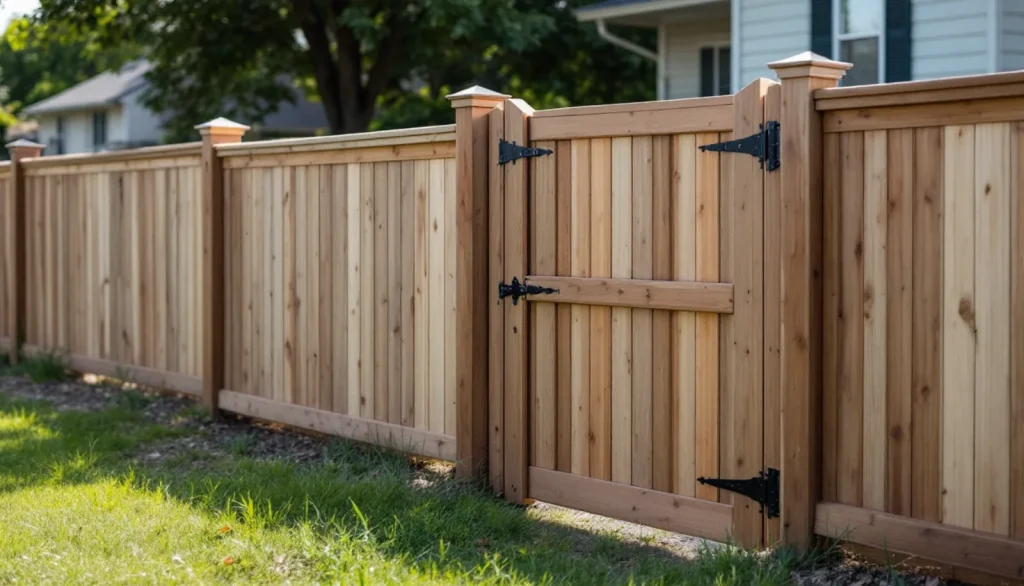
Privacy Fence: Materials, Cost, Height, and Lifetime Value
A privacy fence is a solid-panel barrier, usually 6 feet tall, built to block sightlines and noise along a property boundary, and in 2026 it runs most homeowners $25 to $60 per linear foot installed, or roughly $3,000 to $9,000 for an average yard. This guide covers the four materials worth your money (wood, vinyl, composite, metal), the height and permit rules that decide what you can legally build, real cost-per-foot ranges from current installer pricing, and the one tradeoff every buyer gets wrong: paying for privacy you do not need or skipping the prep that makes a fence last. HMNDP does not sell fence, so the numbers here are not a quote. They are the math you should walk into a contractor meeting already knowing.
What does a privacy fence cost per foot in 2026?
Most privacy fences cost $25 to $60 per linear foot installed in 2026, with material doing most of the work in that spread. Pressure-treated pine sits at the bottom near $13 to $38 per foot, cedar runs $25 to $55, vinyl lands $30 to $60, and composite tops out at $40 to $80. Labor is typically about half the total, so a fence is roughly material plus an equal amount of install.
For a real number, multiply by your boundary length. A 150-linear-foot backyard, the figure most installers use as the national average lot, runs about $4,700 for a 6-foot fence and closer to $6,300 at 8 feet, per HomeGuide and Scheiderer Fence 2026 pricing. Going from 4 feet to 6 feet adds 30 to 50 percent to material and labor, because you are adding both picket area and longer posts set deeper.
| Material | Installed cost per linear foot | Lifespan | Maintenance | Best for |
|---|---|---|---|---|
| Pressure-treated pine | $13 to $38 | 15 to 20 years | Stain or seal every 2 to 3 years | Lowest upfront budget |
| Cedar (board-on-board) | $25 to $55 | 15 to 20 years | Seal every 2 to 3 years to hold color | Best-looking wood, rot resistance |
| Vinyl (PVC) | $30 to $60 | 20 to 30+ years | Wash with a hose, no sealing | Install-and-forget, long-term value |
| Composite | $40 to $80 | 25 to 30+ years | Occasional cleaning, no stain | Wood look without the upkeep |
| Ornamental aluminum or steel | $30 to $90+ | 30+ years | Touch up coating on scratches | Security and looks, partial privacy |
Beyond the per-foot price, budget for the extras that show up on every real quote: a permit ($40 to $200), a walk gate ($150 to $400), a double drive gate ($400 to $1,200), old fence removal ($3 to $8 per foot), and a property survey ($300 to $600) if your boundary line is uncertain. Sloped or rocky ground adds a 15 to 30 percent terrain premium. Our 2026 lawn and landscape cost benchmarks put these line items next to the rest of a yard budget.
Which privacy fence material is best for you?
The best material depends on how long you plan to own the home and how much weekend maintenance you tolerate. Wood is cheapest to install but costs you a stain job every 2 to 3 years. Vinyl costs 10 to 20 percent more upfront and asks for nothing but a hose. Composite costs the most but mimics wood grain and lasts 25 to 30 years. Metal gives security and looks but only partial privacy unless you add slats or panels.
Wood remains the most-installed privacy fence in the US because cedar and pressure-treated pine deliver full screening at the lowest entry price. Cedar resists rot and insects better than pine and holds a board-on-board layout cleanly, but both grey out and need sealing to keep their color. In wet climates, untreated or poorly sealed wood invites mold, mildew, and warping, which is the most common reason a 15-year fence dies at 10.
Vinyl is the install-and-forget pick. It will not rot, fade, or feed insects, and it survives rain, humidity, and fungus that wreck wood. The catch is weather extremes: high heat can warp thin panels and hard freezes can crack them, so panel thickness and UV stabilizers matter when you compare quotes. Composite splits the difference, made largely from recycled wood fiber and plastic, with slightly higher wind ratings than vinyl, but its fiber content can absorb moisture and stain in wet regions, so it needs more cleaning than buyers expect.
Metal is the outlier in a privacy conversation. Ornamental aluminum and steel give you a 30-plus year boundary with strong security, but standard ornamental panels are see-through. To get real screening you add privacy slats, solid infill, or decorative panels into the frame. If you want the security and curb appeal of metal with added screening, our guide to wrought iron fence panels covers where solid and semi-solid infill makes sense and where it does not.
How tall can a privacy fence be, and do you need a permit?
Most US residential codes allow a 6-foot privacy fence in back and side yards without a permit, limit front-yard fences to 3 to 4 feet for sightlines, and require a permit (often with a survey and engineered footings) to go above 6 feet, typically up to 8 feet. There is no national fence-height standard, so the only authority that matters is your local building department and, if you have one, your HOA.
Height drives cost and legality together. A 6-foot fence clears the line of sight from a standing neighbor and is the default privacy height. An 8-foot fence usually triggers a building permit, a property survey, and sometimes an engineered footing plan, which is why installers quote it 30 to 35 percent higher than 6 feet. Front yards and corner-lot visibility triangles carry tighter limits, and pool enclosures have their own safety codes.
HOAs frequently override the city. An association can cap height at 6 feet even where the municipality allows 8, dictate approved materials and colors, and require the finished (smooth) side to face the street or your neighbor. Build outside the rules and you risk fines plus a teardown-and-rebuild order at your expense, so confirm three documents before ordering material: the municipal fence code, the HOA covenants, and your property survey. The same boundary-and-setback discipline applies whether you DIY or hire out, and it is the first thing a good contractor checks, as covered in our contractor vetting checklist.
Privacy versus cost: where to spend and where to stop
The privacy-versus-cost tradeoff comes down to one question: how much of the boundary actually needs screening? Full board-on-board cedar or solid vinyl gives complete privacy at full price across every foot. Semi-privacy styles (shadowbox, spaced pickets, lattice-top) cut material and cost while still blocking casual sightlines. Spending solid-panel money on a stretch no one sees is the most common overspend.
Match the style to the sightline, not the whole perimeter. A common approach is solid panels along the patio and pool side where you sit, and a cheaper shadowbox or even a slatted chain link along the back where the screening only has to block a distant view. Privacy slats woven into chain link add just $4 to $7 per foot and turn an existing fence into a screen without a full rebuild.
| Privacy goal | Style to specify | Relative cost |
|---|---|---|
| Full block, every angle | Board-on-board wood or solid vinyl panel | Highest, full per-foot rate |
| Block sightlines, allow airflow | Shadowbox or vinyl semi-privacy | 10 to 25 percent less than solid |
| Soften an existing fence | Privacy slats in chain link | Add $4 to $7 per foot to current fence |
| Security plus partial screen | Metal frame with privacy panels or slats | Mid to high, depends on infill |
Gates are the other place cost hides. You will likely want at least one walk gate, and a wide drive or equipment gate runs $400 to $1,200 on its own. Plan gate placement before posts go in, since a gate opening changes post spacing and hardware. Our overview of fence gate options and hardware walks through swing versus slide and the latch and hinge specs that decide whether a gate sags in two years.
Should you install a privacy fence yourself or hire a pro?
DIY makes sense for a flat, straight wood fence on clear ground; a 150-foot wood fence runs $850 to $2,200 in materials, roughly half the installed price, but takes a weekend crew 4 to 8 days versus a pro’s 2 to 4. Hire out for vinyl and composite (panel systems are unforgiving of error), for slopes and rock, and any time a permit demands inspected footings. Labor is about half the total, so that is what you are buying back.
If you do build it yourself, the post work decides whether the fence lasts. Set posts at 6 to 8 foot spacing, dig each hole one-third the post height (a 6-foot fence needs a 2-foot hole and an 8-foot 4×4), and use a hole roughly three times the post width.
- Confirm the code, HOA rules, and boundary line, then call 811 to mark utilities before any digging.
- Lay out the line with string and mark post centers every 6 to 8 feet, accounting for gate openings.
- Dig each hole one-third the post height and about three times the post width, then add 3 to 4 inches of gravel for drainage.
- Set each post plumb with a post level and brace it, using at least 60 pounds of concrete per hole mixed to a thick batter.
- Slope the concrete a few inches below grade away from the post, then let posts cure 24 hours before adding load.
- Attach rails level with deck screws, hang the pickets or panels, then mount gates and seal or stain wood if applicable.
One DIY trap: skipping the gravel base and the concrete cure. A post set in dirt or rushed before the concrete hardens is the leading cause of a fence that leans within a few seasons. Drainage at the post base matters as much for fences as it does for the rest of your yard, the same reason we push it in our drip irrigation install guide.
The buyer math nobody runs: cost over the life of the fence
The number that should drive the decision is not install price, it is cost per year of service. A cedar fence that costs less upfront but needs sealing every 2 to 3 years and dies at 15 to 20 years can cost more over its life than vinyl that lasts 30 with zero maintenance. This is the gap most cost guides skip: they rank materials by per-foot price and stop there.
Here is the same 150-foot fence priced over its expected life, using midpoint installed costs plus realistic maintenance. Treat these as planning estimates, not quotes, since regional labor and your own upkeep habits move the totals.
| Material | Install (150 ft, midpoint) | Lifetime upkeep estimate | Expected life | Rough cost per year |
|---|---|---|---|---|
| Pressure-treated pine | $3,800 | $1,800 (sealing ~7 times at $1.50 to $3/ft) | 18 years | About $310 |
| Cedar board-on-board | $6,000 | $1,500 (sealing to hold color) | 18 years | About $415 |
| Vinyl | $6,800 | Near $0 (wash only) | 27 years | About $250 |
| Composite | $9,000 | $300 (periodic cleaning) | 28 years | About $330 |
Read it this way. If you will sell inside 5 to 7 years, pressure-treated pine is the rational pick because you never reach the maintenance bills or the replacement. If this is your forever home, vinyl often wins on cost per year despite the higher sticker, because it skips both the sealing labor and the mid-life teardown. Composite buys the wood look at vinyl-plus pricing. Cedar is the choice when appearance outranks the spreadsheet. The point is to choose on holding period, not on the install quote alone.
Before you sign anything, confirm the contractor pulls the permit, verify the property line with a survey if there is any doubt, and get the material grade in writing (vinyl panel thickness, wood species and grade, composite brand). For the full pre-signature routine that applies to any outdoor contractor, see our reputable landscaper verification steps.
Last reviewed: June 2026
HMNDP Editorial Team, reviewed by HMNDP turf and horticulture editors.
Frequently asked questions
How much does it cost to fence a 150-foot backyard?
A 150-linear-foot privacy fence runs about $4,700 for a 6-foot fence and around $6,300 at 8 feet, per 2026 installer pricing. Material drives the spread: pressure-treated pine lands near the low end at $13 to $38 per foot, while vinyl ($30 to $60) and composite ($40 to $80) push the total higher. Labor is roughly half the bill.
Do I need a permit to install a privacy fence?
It depends on height and location. Most US municipalities allow a 6-foot fence in back and side yards without a permit but require one to exceed 6 feet, often with a property survey and engineered footings. A fence permit typically costs $40 to $200. Always confirm with your local building department and HOA before ordering material.
How tall can a privacy fence be?
Most residential codes allow 6 feet in back and side yards and limit front yards to 3 to 4 feet for sightlines. With a permit, many jurisdictions allow up to 8 feet. There is no national standard, and HOAs can cap height below the city limit, so check the municipal code, HOA covenants, and your survey first.
Which privacy fence material is best?
It depends on your holding period and tolerance for maintenance. Wood (pine or cedar) is cheapest upfront but needs sealing every 2 to 3 years and lasts 15 to 20 years. Vinyl costs more but lasts 20 to 30+ years with no upkeep. Composite mimics wood at the highest price. Metal adds security but only partial privacy without slats.
Is vinyl cheaper than wood in the long run?
Often yes. Vinyl costs 10 to 20 percent more to install but skips the staining wood needs every 2 to 3 years and lasts 27 to 30+ years versus wood’s 15 to 20. Priced per year of service, vinyl frequently beats cedar despite the higher sticker. If you plan to sell within 5 to 7 years, cheaper pressure-treated pine usually wins instead.
Should I install a privacy fence myself or hire a pro?
DIY suits a flat, straight wood fence on clear ground and can save about 50 percent (a 150-foot wood fence runs $850 to $2,200 in materials), but takes 4 to 8 days versus a pro’s 2 to 4. Hire out for vinyl and composite panel systems, slopes, rocky ground, and any permit that requires inspected footings.
What is the cheapest privacy fence per foot?
Pressure-treated pine is the cheapest full-privacy option, installed at roughly $13 to $38 per linear foot in 2026. Adding privacy slats to an existing chain link fence is cheaper still at $4 to $7 per foot. Chain link and post-and-rail cost less but provide little or no screening, so they are not true privacy fences on their own.
How far apart should privacy fence posts be?
Set posts 6 to 8 feet apart for a standard privacy fence. Dig each hole about one-third the post height (a 6-foot fence needs a 2-foot hole and an 8-foot 4×4) and roughly three times the post width. Add gravel for drainage, use at least 60 pounds of concrete per hole, and let posts cure 24 hours before loading them.