
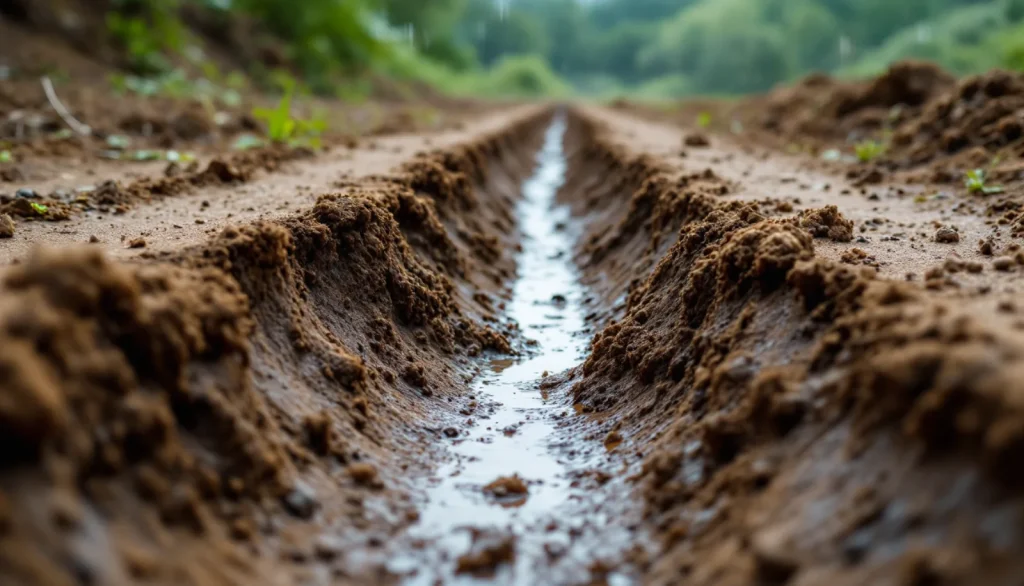
What Is Erosion? Types, Causes, and Prevention
Erosion is the natural process in which soil, rock, and sediment are worn away from one place and carried somewhere else by water, wind, ice, or gravity. That last part is what separates erosion from weathering: weathering breaks rock down where it sits, while erosion is the transport that moves the loosened material away. Most erosion on Earth is the slow work of moving water, but wind, glaciers, and gravity all do measurable damage, and human activity has sped the whole process up by 10 to 40 times the natural background rate, according to figures cited by National Geographic.
What is erosion, in one sentence
Erosion is the movement of weathered earth material (soil, sand, rock fragments) from one location to another by a natural agent. The key word is movement. A raindrop that loosens a soil particle has done weathering; the runoff that carries that particle into a ditch has done erosion. The two work as a pair, which is why most explanations cover them together.
Once the material reaches a place where the moving force runs out of energy, it drops, and that final step is called deposition. Erosion and deposition together build and reshape almost every landform on the planet, from the Grand Canyon to the Mississippi Delta.
Erosion vs weathering: the difference
Weathering breaks rock apart in place; erosion moves the pieces. A freeze-thaw crack that splits a boulder is weathering. The river that washes the broken gravel downstream is erosion. The National Park Service draws the line the same way: if a particle is loosened but stays put, that is weathering, and only when it is transported does it become erosion.
The distinction matters because the two have different fixes. You slow weathering by protecting a surface from sun, water, and temperature swings. You slow erosion by stopping the moving water or wind before it picks the material up, or by holding the soil in place with roots.
The four agents of erosion
Erosion has four natural agents: water, wind, ice (glaciers), and gravity. Water is the dominant force on Earth, responsible for most soil and landscape erosion through rain, rivers, and waves. Wind matters most in dry, exposed regions. Glaciers carve mountains over thousands of years. Gravity pulls material straight downhill in landslides and slow soil creep.
The table below lays out each agent, the main erosion types it produces, how fast it tends to act, and a real example. This side-by-side view is the part most science-class definitions skip, and it is the fastest way to tell the types apart.
| Agent | Main erosion types | Speed | Real example |
|---|---|---|---|
| Water | Splash, sheet, rill, gully, streambank, coastal | Fast to gradual; the leading cause worldwide | Grand Canyon, Arizona: carved over 1,600 m deep by the Colorado River |
| Wind | Deflation, abrasion, dune formation | Fast in dry, bare conditions | Dust Bowl, 1935: about 850 million tons of topsoil blown off the Southern Plains in one year |
| Ice (glacial) | Plucking, abrasion, U-shaped valleys | Very slow, roughly 0.5 cm per year in polar ice | Finger Lakes, New York: gouged by Pleistocene glaciers |
| Gravity (mass wasting) | Landslides, rockfall, slumps, soil creep | Sudden (landslide) to imperceptible (creep) | Hillslope landslides after heavy rain across the U.S. West |
The types of water erosion, from mild to severe
Water erosion on bare soil moves through four stages that get worse as runoff concentrates: splash, sheet, rill, then gully. Britannica and NRCS describe the same progression. Splash is the least damaging and gully the most, and you can often read the stage straight off the ground by how channeled the flow has become.
- Splash erosion: raindrop impact knocks soil particles loose and can throw them up to 0.6 m, breaking down surface structure before any water even flows.
- Sheet erosion: a thin, even layer of soil washes off a slope as shallow runoff, often unnoticed until the topsoil thins.
- Rill erosion: runoff concentrates into small, finger-width channels you can still smooth out with normal tillage or raking.
- Gully erosion: rills deepen into channels too large to drive or mow across, the most severe and expensive stage to repair.
Two more water types sit outside that yard-scale progression. Streambank erosion eats away the edges of rivers and creeks as the current undercuts the bank. Coastal erosion is wave and tide action wearing back shorelines and cliffs, the force behind sea stacks like the Twelve Apostles in Victoria, Australia, and the reason the Cape Hatteras Lighthouse in North Carolina had to be moved 880 m inland in 1999.
Wind, ice, and gravity erosion explained
Wind erosion lifts and carries loose, dry, bare soil, then sandblasts surfaces with the particles it picks up. It builds sand dunes and sculpts rock into ventifacts, and it caused the 1930s Dust Bowl when plowed Great Plains topsoil lost its plant cover during a long drought. Wind erosion is worst on flat, dry, unplanted ground.
Glacial erosion is the slowest agent but among the most powerful at scale. Moving ice plucks rock from valley floors and grinds it with embedded debris, carving the broad U-shaped valleys, fjords, and lake basins left behind after the last ice age. The Finger Lakes and much of the northern U.S. landscape are glacial erosion features.
Gravity erosion, called mass wasting, is the direct downhill pull on rock and soil. It ranges from sudden landslides and rockfalls to soil creep so slow you only spot it in tilted fence posts and curved tree trunks. Saturated soil after heavy rain is the most common trigger, which is why slope drainage matters so much on a property.
What causes erosion to speed up
Erosion is natural, but people accelerate it sharply by stripping the plant cover that holds soil in place. Agriculture, deforestation, overgrazing, construction, and overwatering all expose bare ground to rain and wind. National Geographic cites estimates that human activity has raised the global soil erosion rate 10 to 40 times above the natural pace.
On a smaller scale, the same drivers show up in a yard: a slope mowed to bare dirt, a downspout dumping onto unplanted ground, compacted soil that sheds water instead of soaking it in. If you are fighting thin grass and washouts on a grade, our guide to growing grass on slopes and compacted soil covers the root cause.
How much soil does erosion actually move?
In the United States, cropland lost an average of 4.63 tons of soil per acre in 2017, split between 2.67 tons from water (sheet and rill) and 1.96 tons from wind, according to the USDA Natural Resources Conservation Service 2017 National Resources Inventory. That total is down 35 percent from 1982, a measurable result of conservation practices.
To judge whether a given rate is sustainable, the NRCS uses a soil loss tolerance value, the T value, set between 1 and 5 tons per acre per year. Shallow, fragile soils get a T of 1; deep soils more than 5 feet to bedrock get a T of 5. Anything above the T value means soil is leaving faster than it can rebuild, and natural topsoil takes roughly 500 years to regenerate a single inch.
How to prevent erosion on your property
The single best erosion control is living plant cover: roots bind soil and leaves break the force of rain before it hits the ground. Beyond planting, the proven tools are slowing water down, spreading it out, and armoring the spots where it concentrates. Match the method to the agent and the slope.
| Method | Best against | Where it fits |
|---|---|---|
| Dense turf or groundcover | Sheet and rill (water) | Lawns and gentle slopes |
| Windbreaks and shelterbelts | Wind | Open, dry, exposed yards |
| Riparian buffer strips | Streambank (water) | Edges of creeks, ponds, ditches |
| Rain garden or swale | Concentrated runoff | Downspout outlets, low spots |
| Mulch and erosion blanket | Splash and sheet | New plantings, bare beds |
| Gabions or riprap | Gully, streambank, wave | Steep grades, shorelines |
| Terracing | Water on steep grades | Hillside yards and gardens |
For a homeowner, the highest-value moves are usually keeping a thick stand of grass, redirecting downspouts, and capturing runoff before it cuts a channel. A backyard rain garden turns the runoff that drives erosion into something your landscape uses. On bare or shaded patches that keep washing out, our guide to fixing bare spots in a lawn walks through reseeding so the ground holds.
Erosion examples you have probably seen
Erosion built many of the landmarks people recognize. The Grand Canyon is river erosion over millions of years. The Dust Bowl was wind erosion of plowed prairie. Coastal sea stacks, U-shaped mountain valleys, river deltas, and sand dunes are all erosion (and deposition) at work. The same forces, at a smaller scale, are what wash gullies into a hillside lawn after a storm.
Recognizing the type tells you the fix. A rill across a slope is early water erosion that mulch and seed can still catch. A dust-blown bed is wind erosion that a windbreak and groundcover will calm. For watering and runoff decisions tied to your region, the HMNDP lawn and landscape learn hub links the seasonal and regional guides.
Last reviewed: June 2026
HMNDP Editorial Team, reviewed by HMNDP turf and horticulture editors.
If you want to go deeper on the four agents covered above, our breakdown of every erosion type with real-world examples walks through splash, sheet, rill, and gully stages plus wind, glacial, and gravity forms in detail.
Frequently asked questions
What is erosion in simple terms?
Erosion is the natural process of soil, rock, or sediment being worn away from one place and carried somewhere else by water, wind, ice, or gravity. The defining feature is movement: the loosened material is transported and then dropped in a new spot, a final step called deposition. Water is the leading cause worldwide.
What is the difference between erosion and weathering?
Weathering breaks rock down where it sits; erosion moves the broken pieces away. A freeze-thaw crack splitting a boulder is weathering. The river washing that gravel downstream is erosion. The National Park Service uses the same line: a loosened particle that stays put is weathering, and only transport makes it erosion. The two work as a pair.
What are the four types of erosion?
The four agents of erosion are water, wind, ice (glaciers), and gravity. Water is dominant on Earth, acting through rain, rivers, and waves. Wind matters most in dry, exposed areas. Glaciers carve valleys over thousands of years. Gravity pulls soil and rock straight downhill in landslides and slow soil creep.
What causes erosion?
Erosion is caused by water, wind, ice, and gravity moving loosened soil and rock. People accelerate it by removing the plant cover that holds soil in place through farming, deforestation, overgrazing, and construction. National Geographic cites estimates that human activity has raised the global erosion rate 10 to 40 times above the natural pace.
What are examples of erosion?
The Grand Canyon is river (water) erosion over millions of years. The 1930s Dust Bowl was wind erosion of plowed prairie, losing about 850 million tons of topsoil in 1935 alone. The Finger Lakes are glacial erosion. Coastal sea stacks and a gully washed into a hillside lawn after a storm are erosion too.
How do you prevent erosion?
The best erosion control is living plant cover, because roots bind soil and leaves soften rainfall. Beyond planting, slow the water down and armor where it concentrates: dense turf, windbreaks, riparian buffers, rain gardens, mulch, erosion blankets, gabions, and terracing. Match the method to the agent and the slope steepness.
How much soil does erosion remove each year?
U.S. cropland lost an average of 4.63 tons of soil per acre in 2017 (2.67 from water, 1.96 from wind), per the USDA NRCS 2017 National Resources Inventory, down 35 percent from 1982. The NRCS sets a tolerable soil loss (T value) of 1 to 5 tons per acre per year; natural topsoil takes roughly 500 years to rebuild one inch.
Is erosion a fast or slow process?
It depends on the agent. A single storm can cut a gully or a landslide in minutes, and the Dust Bowl moved hundreds of millions of tons of soil in one year. At the other extreme, glacial erosion advances around 0.5 cm per year and soil creep is too slow to see, showing up only as tilted fence posts and curved tree trunks.