
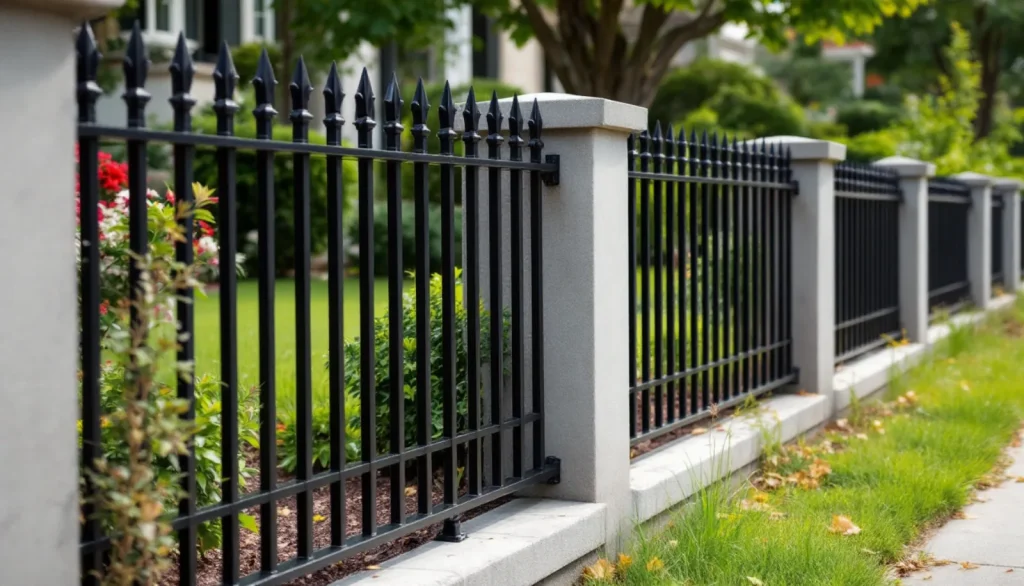
Wrought Iron Fence Panels: Cost, Steel vs Iron, and Care
Wrought iron fence panels run roughly $25 to $35 per linear foot for materials and $50 to $85 installed, but the first thing to know is that almost nothing sold today as “wrought iron” is actually wrought iron. True wrought iron (a low-carbon iron alloy hand-forged by a blacksmith) has not been produced on a commercial scale since steel took over the market in the early 20th century. What stocks the panel aisle now is mild steel formed by machine and welded, sold under the wrought iron name. This guide covers how to tell the difference, what the panels actually cost, how to size and space them, and how to keep them from rusting out, so you buy on facts instead of a marketing label.
Is it real wrought iron, or steel sold as wrought iron?
In nearly every case it is steel. Genuine wrought iron contains less than 0.05 percent carbon and is hand-forged; commercial production effectively ended decades ago, so the panels at fence yards and big-box stores are mild steel (about 0.25 percent carbon) formed by machinery and welded into shape. The “wrought iron” label survives as a style description, not a material spec. This matters for price and maintenance, not for whether you are being cheated, because steel panels are the legitimate modern product.
The practical tells: genuine forged iron shows hammer marks, slight irregularities, and solid (not hollow) pickets, and a true blacksmith fabricator will say so and charge for it. Machine-formed steel is uniform, often uses tubular pickets, and arrives in pre-welded panels. If a seller insists a mass-produced panel is “real” forged wrought iron, treat that as a sales claim, not a fact.
| Material | What it is | Rust behavior | Installed cost per ft | Maintenance |
|---|---|---|---|---|
| True wrought iron (forged) | Hand-forged low-carbon iron, solid pickets; rare, custom only | Rusts; needs sealing | Highest, often custom-quote only | Highest |
| Steel (“wrought iron”) | Machine-formed mild steel, welded panels, usually powder-coated | Rusts if coating breaks | $50 to $85 | Repaint every 5 to 7 years |
| Aluminum (ornamental) | Hollow extruded aluminum, powder-coated, screwed together | Does not rust | Roughly 20 to 40 percent less than steel | Wash only, no repainting |
If the ornate black look is the goal but rust upkeep is not, ornamental aluminum mimics the profile, weighs under 20 pounds per section, assembles with screws, and never rusts. Steel wins on strength and a more authentic heft; aluminum wins on maintenance and cost. Choose steel for security and curb-appeal authenticity, aluminum for low-traffic decorative runs where you never want to pick up a paintbrush.
How much do wrought iron fence panels cost?
Plan on $25 to $35 per linear foot for panels alone and $50 to $85 per linear foot installed, with labor adding roughly $15 to $25 per foot. Plain black steel sits at the bottom ($24 to $30 per foot for materials), ornamental scrollwork styles run $27 to $34, and a galvanized finish adds about $2 to $4 per foot. A walk gate starts near $300 installed; a custom drive gate can exceed $9,000. These ranges come from 2026 cost data aggregated by HomeGuide and Angi.
| Project length | Materials estimate | Notes |
|---|---|---|
| 30 ft | $720 to $1,020 | Small side yard or garden run |
| 70 ft | $1,680 to $2,380 | Front yard, single elevation |
| 102 ft | $2,400 to $3,500 | Typical full front and one side |
| 135 ft | $3,200 to $4,600 | Larger lot perimeter section |
Installed totals add labor of roughly $30 to $80 per hour, and a 150 to 200 foot job often runs 20 to 35 hours. Cost climbs with height, gates, sloped ground (which forces stepped or racked panels), and hard digging where caliche or rock slows post holes. Get the panel price and the install price as separate line items so you can compare bids fairly. For broader yard budgeting context, see our 2026 lawn care and landscape cost benchmarks.
What panel size and height should you buy?
Match height to the job: 3 feet for decorative garden borders, around 5 feet for pet containment, and up to 8 feet for security. Panels typically come in 5 to 8 foot widths, and residential posts should sit no more than 8 feet apart so each panel is fully supported. Measure your run, divide by panel width, and account for a post at every panel joint plus the bracket gap.
Before ordering, confirm three local constraints that change your sizing. First, your municipal code or HOA may cap front-yard fence height (often 3 to 4 feet) and rear-yard height (often 6 feet), so verify before you buy. Second, on a slope you choose between stepped panels (square panels stepped down, leaving triangular gaps) or racked panels (designed to follow grade); racked costs more but looks cleaner. Third, measure with the same care you would for any yard project; our guide to measuring your yard accurately applies to perimeter runs too.
How do you install wrought iron fence panels?
Steel and iron panels are heavy, so installation is post-set concrete work, not a screw-together afternoon. The core sequence is set posts in concrete, let them cure, then bracket the panels. Cold climates require holes below the frost line. Most homeowners hire this out because of panel weight and the cure wait, but the steps are straightforward if you have the tools.
- Mark the line and post locations, spacing posts to your panel width (commonly 5 to 8 feet, never more than 8 on residential runs).
- Dig post holes 24 to 36 inches deep (below the frost line in cold regions) and 8 to 12 inches wide; add about 2 inches of gravel at the bottom for drainage.
- Set each post in the hole, pour concrete to within about 4 inches of the top, and level the post true in both directions before the mix sets.
- Let the concrete cure fully, ideally about a week, before hanging any panels so post movement does not throw the line off.
- Line each panel to its post brackets and screw it on, fastening the top bracket first, then the bottom.
- Touch up any scratched coating with rust-inhibiting primer and matching paint so bare steel never sits exposed.
Sources for these specs include installation guidance from Viking Fence, Angi, and the Iron Fence Shop installation manual. If you would rather not handle heavy panels and wet concrete, our checklist on vetting a hardscape contractor covers the questions that separate a clean install from a leaning fence.
How do you stop wrought iron panels from rusting?
Steel and iron rust wherever the coating breaks, so rust control is the whole maintenance story. Powder coating is the best factory defense because it forms a thicker, more even barrier than paint and lasts longer. After install, the job is inspection and touch-up: catch scratches early, sand and prime any rust spots, and repaint roughly every 5 to 7 years, sooner in coastal or humid air.
Four habits extend panel life. Wash with mild soap and water a few times a year to remove the grit and salt that hold moisture against the metal. Inspect at least once a year and treat any rust bloom immediately with a rust inhibitor or primer. Keep shrubs and sprinkler spray off the fence, because daily dew and irrigation overspray accelerate corrosion at the base. Where a wax sealant is used instead of paint, reapply it once or twice a year depending on exposure. Done consistently, a coated panel run can last decades; neglected, the same steel pits and weeps rust streaks within a few seasons.
Should you choose wrought iron, steel, or aluminum?
Pick by maintenance tolerance and budget, since all three deliver the same open ornamental look. Steel sold as wrought iron gives the heaviest, most authentic feel and the best security strength, at $50 to $85 per foot installed and a repaint every 5 to 7 years. Aluminum costs roughly 20 to 40 percent less, never rusts, and needs only washing, but feels lighter and dents more easily. True forged wrought iron is a custom, premium-price choice for restoration or high-end design.
A simple rule: if the fence is structural or security-rated, or you want genuine heft and are willing to maintain a coating, buy steel. If it is decorative, in a wet or coastal climate, or you refuse to ever repaint, buy ornamental aluminum. Reserve true forged iron for historic homes and bespoke gates where the craftsmanship is the point. Whatever you choose, you can pair the fence with matching gate hardware; see our coverage of fence gates and entry hardware for sizing and lock options.
Regional climate should weight the call. In humid Southeast and coastal salt-air zones, aluminum or heavily galvanized-plus-powder-coated steel pays off because uncoated steel corrodes fast. In dry interior climates, steel’s rust risk drops and its strength advantage stands out. Local soil also matters for install: rocky or caliche ground slows post holes and raises labor, a factor a good local contractor will price in.
Last reviewed: June 2026
HMNDP Editorial Team, reviewed by HMNDP turf and horticulture editors.
Frequently asked questions
How much do wrought iron fence panels cost?
Panels run $25 to $35 per linear foot for materials and $50 to $85 installed, with labor adding $15 to $25 per foot. Plain black steel is cheapest at $24 to $30 per foot, ornamental styles run $27 to $34, and a galvanized finish adds $2 to $4. A walk gate starts near $300 installed, per 2026 HomeGuide and Angi cost data.
Is wrought iron fence actually wrought iron?
Almost never. True wrought iron is hand-forged low-carbon iron, and commercial production effectively ended decades ago when steel took over. Panels sold today as wrought iron are machine-formed mild steel, welded and usually powder-coated. The name is a style description, not a material spec, so steel panels are the legitimate modern product, not a substitution scam.
What is the difference between wrought iron and steel fence panels?
True wrought iron is forged by hand with solid pickets and less than 0.05 percent carbon. Steel panels are mild steel (about 0.25 percent carbon) formed by machine and welded, often with hollow pickets. Steel is stronger, cheaper, and more available; forged iron is rare, custom, and pricier. Both rust and need a protective coating.
How long do wrought iron fence panels last?
A properly coated and maintained steel or iron fence can last decades, sometimes a lifetime. Longevity depends entirely on rust control: repaint every 5 to 7 years, sand and prime rust spots early, and wash off grit and salt. Neglected panels pit and weep rust within a few seasons, so upkeep, not the metal itself, sets the lifespan.
How do you stop a wrought iron fence from rusting?
Start with powder coating, which forms a thicker barrier than paint. Then wash with mild soap and water a few times a year, inspect annually and treat rust spots with primer immediately, and repaint every 5 to 7 years (sooner in coastal or humid air). Keep shrubs and sprinkler overspray off the fence to slow corrosion at the base.
What size and height should wrought iron fence panels be?
Use 3 feet for decorative garden borders, around 5 feet for pet containment, and up to 8 feet for security. Panels come in 5 to 8 foot widths, and posts should sit no more than 8 feet apart. Check local code and HOA height caps first, since front-yard limits often run 3 to 4 feet and rear-yard limits around 6 feet.
How do you install wrought iron fence panels?
Set posts in concrete first, then bracket the panels. Dig holes 24 to 36 inches deep (below the frost line) and 8 to 12 inches wide, add gravel, pour concrete to within 4 inches of the top, and level each post. Let the concrete cure about a week before hanging panels, then screw each panel to its brackets, top bracket first.
Is aluminum or wrought iron fencing better?
It depends on maintenance tolerance. Steel sold as wrought iron is stronger, heavier, and more authentic but rusts and needs repainting every 5 to 7 years. Aluminum costs roughly 20 to 40 percent less, never rusts, and needs only washing, though it feels lighter and dents more easily. Choose steel for security and heft, aluminum for low-upkeep decorative runs.