
By the HMNDP Editorial Team. Last reviewed: June 2026.
What mosquito pest control is and why mosquitoes matter
Mosquito pest control is the set of methods used to reduce mosquito populations and bites around a home, combining source reduction (removing standing water), barrier sprays on resting sites, larvicides in water, and adulticides for flying mosquitoes. It matters because mosquitoes are both a nuisance and disease vectors carrying West Nile virus, Zika, dengue, and chikungunya in the United States.
The U.S. Centers for Disease Control and Prevention (CDC) reports West Nile virus as the leading mosquito-borne illness in the continental U.S., with cases recorded in nearly every state most years. Dengue and Zika risk is concentrated in the Gulf states, Florida, and the Southwest, carried mainly by Aedes aegypti and Aedes albopictus.
Effective control is rarely one product. The CDC and most state extension services recommend integrated pest management: kill larvae in water, treat resting sites, and reduce the breeding habitat that lets the cycle restart. A single barrier spray without source reduction usually fails by mid-season.
Source reduction: eliminate standing water first
Source reduction means removing or emptying any standing water where mosquitoes lay eggs, and it is the single most effective free step you can take. Female mosquitoes need only a bottle cap of water to breed, and most yard species develop from egg to biting adult in 7 to 10 days. Empty or treat water weekly and you break that cycle before sprays are even needed.
Walk the property once a week and check the usual culprits. The eggs hatch fast, so a Sunday habit beats a monthly deep clean.
- Gutters: clear leaf dams that hold water in the trough.
- Containers: buckets, watering cans, kids’ toys, and plant saucers.
- Birdbaths: refresh every 3 to 4 days or add an agitator.
- Tires, tarps, and lids: classic Aedes breeding spots; drill drainage holes or store under cover.
- Low spots and clogged drains: regrade or improve drainage where puddles linger more than a week.
For chronic wet areas, a planted basin can absorb runoff instead of pooling. Our backyard rain garden build walks through grading a low spot so it drains within 24 to 48 hours, below the window mosquitoes need to breed.
Larvicides vs adulticides: treating water vs adult mosquitoes
Larvicides kill mosquito larvae in standing water before they become biting adults, while adulticides kill flying adult mosquitoes on contact or where they rest. Larvicides are preventive and longer-lasting in water you cannot drain; adulticides give faster relief but wear off in days to a few weeks. Most effective programs use both.
| Factor | Larvicides | Adulticides |
|---|---|---|
| Target | Larvae in standing water | Flying or resting adults |
| Common products | Bti (Bacillus thuringiensis israelensis) dunks, methoprene | Pyrethroids (bifenthrin, permethrin) |
| Speed of relief | Slow (prevents next generation) | Fast (knocks down adults) |
| Duration | Up to 30 days in treated water | 2 to 4 weeks on foliage; less after heavy rain |
| Best for | Ponds, rain barrels, drains you cannot empty | Pre-event knockdown, seasonal yard barrier |
Bti dunks (sold as Mosquito Dunks and similar) are widely available, target only mosquito and fungus gnat larvae, and are considered low risk to pets, fish, and pollinators when used as labeled. They are a strong DIY choice for water features you want to keep.
Barrier sprays and perimeter treatments: how they actually perform
A barrier spray is a residual insecticide (usually a pyrethroid like bifenthrin) applied to the places mosquitoes rest: shrubs, tall grass, fence lines, and shaded foliage. It typically lasts 2 to 4 weeks and can cut adult mosquito activity by 70 to 90 percent in treated zones, but rain, irrigation, and new growth shorten that window.
Here is the part the sales pages skip. Pyrethroids bind to leaf surfaces, so a heavy rain (roughly half an inch or more) within 24 hours of application can wash off a meaningful share of the product and trigger an early reapplication. New leaf growth is also untreated, which is why coverage fades over a few weeks even in dry weather.
Apply to where mosquitoes hide during the day, not open lawn. The undersides of dense shrubs, ivy, ornamental grasses, the shaded north side of the house, and the base of fences are the high-value targets. Open sunny turf holds few resting adults and rarely needs spraying.
How to get rid of mosquitoes in your yard: a step-by-step plan
Getting rid of mosquitoes in the yard works best as a layered routine, not a single spray. Combine weekly source reduction, larvicide in standing water, a perimeter barrier on resting sites, and personal protection. Most homeowners see a noticeable drop within one to two weeks of starting all four layers together.
- Drain and dump weekly: empty every container and clear gutters (free, highest impact).
- Larvicide the water you keep: drop Bti dunks in ponds, rain barrels, and low drains.
- Treat resting sites: apply a labeled barrier spray to shrubs, tall grass, and shade every 3 to 4 weeks.
- Reduce habitat: mow tall grass, thin dense plantings, and improve drainage on chronic wet spots.
- Protect the patio: run a box fan on the deck (mosquitoes are weak fliers) and use EPA-registered repellents with DEET, picaridin, or oil of lemon eucalyptus.
Grub-damaged turf and thin lawns can hold moisture and harbor pests too; keeping the lawn healthy supports the whole effort, the same way grub control for your lawn protects root systems from soil-dwelling damage.
Professional mosquito control: how it works and what it costs
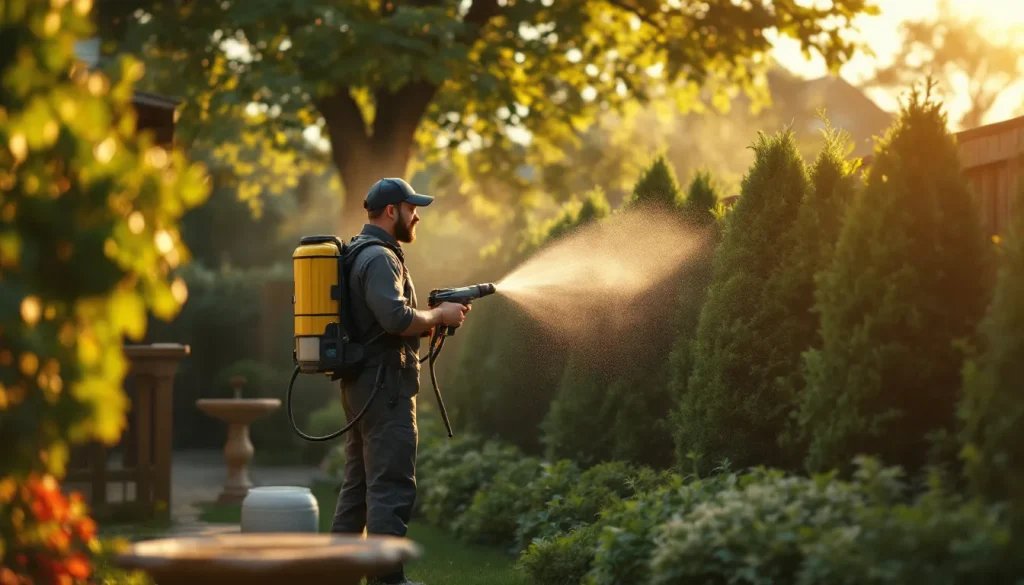
Professional mosquito control services such as Mosquito Joe, Orkin, and Terminix apply a barrier treatment (typically backpack mist blowers with pyrethroids) to your yard’s resting sites, usually returning every 3 to 4 weeks during mosquito season. Pricing is the gap competitors hide: expect roughly $70 to $150 per treatment, or $400 to $1,200 for a full season, depending on yard size and region.
The work itself is similar to a thorough DIY barrier spray, but pros bring commercial-grade mist blowers that reach high foliage, scheduled reapplication, and often a free re-spray between visits if mosquitoes return. The convenience and consistency are the real product, not a secret chemistry.
| Option | Typical cost (2026 ranges) | Cadence | Notes |
|---|---|---|---|
| DIY barrier spray (hose-end or pump) | $20 to $60 per season in product | Every 3 to 4 weeks, self-applied | Lowest cost; your time and reapplication |
| DIY larvicide (Bti dunks) | $15 to $30 per season | Replace ~every 30 days | Targets breeding water |
| Automated misting system (installed) | $2,000 to $4,000 install, plus refills | Timed daily/auto bursts | Costly; pollinator concerns from frequent spraying |
| Professional per-treatment | $70 to $150 each | Every 3 to 4 weeks | Pay as you go; some require minimum visits |
| Professional seasonal contract | $400 to $1,200 per season | ~6 to 9 visits, April to October | Often includes free re-treats and guarantee |
Ranges vary by yard size, density of foliage, region, and local pricing. Always request a written quote tied to your specific property rather than a phone estimate.
DIY vs professional: an honest decision framework
DIY mosquito control is enough for small to mid-size yards with manageable foliage when you will commit to weekly source reduction and reapply on schedule. Hire a professional when the yard is large or heavily wooded, when you lack the time to reapply every few weeks, or when a serious bite problem persists despite consistent DIY effort.
| If your situation is… | Lean DIY | Lean professional |
|---|---|---|
| Yard size | Small to medium, open | Large, dense, or wooded |
| Time available | Can reapply every 3 to 4 weeks | No time for routine reapplication |
| Severity | Seasonal nuisance | Heavy, persistent biting |
| Budget | Under $100 per season | $400 plus, values convenience |
| Equipment reach | Low shrubs and fence lines | Tall tree canopy and slopes |
A practical middle path: do the free source reduction yourself (no service can substitute for emptying your own gutters) and hire out the barrier treatment if reaching high foliage or staying on schedule is the sticking point.
Do natural mosquito control methods actually work?
Most popular “natural” mosquito fixes have weak evidence. Citronella candles, bug zappers, and ultrasonic repellent devices show little to no real-world reduction in bites in peer-reviewed testing. The natural options with genuine support are spatial repellents and source reduction, not gadgets. Manage expectations before spending money on them.
- Bug zappers: studies, including work from the University of Delaware, found mosquitoes were a tiny fraction of the catch; zappers mostly kill harmless and beneficial insects.
- Ultrasonic devices: multiple Cochrane-reviewed trials found no effect on biting rates. Skip them.
- Citronella candles: modest, very short-range effect that fades in any breeze.
- What does help: oil of lemon eucalyptus (an EPA-registered active ingredient) as a skin repellent, a box fan on the patio, and Bti larvicide for breeding water.
Plant-based yard sprays (rosemary, cedar, garlic oils) can give short knockdown but rarely match a pyrethroid barrier for duration. Treat them as a lower-residue option, not a magic alternative.
Buyer due diligence: what to ask a mosquito control company
Before signing with any mosquito control company, confirm the products are EPA-registered, ask how rain reapplication and the satisfaction guarantee work, and verify pollinator and pet safety practices. The brand pages rarely volunteer this, so put it in writing during the quote. A reputable provider answers all of it without hesitation.
- EPA registration: ask for the product name and EPA registration number; legitimate adulticides carry one.
- Guarantee terms: is there a free re-treat between visits, and is the contract cancelable mid-season?
- Pollinator protection: do they avoid spraying flowering plants and treat in early morning or evening when bees are inactive?
- Pet and kid re-entry: how long until the yard is safe (typically 30 minutes to a few hours once dry)?
- Licensing: is the applicator licensed by your state pesticide agency?
Is mosquito control safe for pets, kids, and pollinators?
EPA-registered pyrethroid barrier sprays are considered low risk to people and pets once the treated foliage has dried, usually within 30 minutes to a few hours. The real concern is pollinators: pyrethroids are toxic to bees. A responsible application avoids flowering plants and treats when bees are not foraging.
To reduce pollinator harm, ask that flowering shrubs and gardens be skipped, and that treatment happen at dawn or dusk. Keep pets and children off treated areas until surfaces are dry. These are the same precautions you should follow with DIY products: read the EPA label, which is the legal use instruction.
Recurring treatment cadence through the season
Barrier treatments should be reapplied every 3 to 4 weeks during mosquito season, which in most of the U.S. runs from April or May through September or October. Cadence matters because pyrethroid residue degrades and new plant growth goes untreated, so a one-time spray loses most of its effect within a month.
In the Gulf states and Florida, where Aedes stays active longer, the season can stretch nearly year-round and may need treatments into November. In northern states, the first hard frost typically ends the need for treatment. Pair every barrier visit with a quick standing-water check to keep results consistent.
Mosquito control is one piece of broader home pest management; for indoor and structural pests, our guide to pest control for mice covers a similar prevention-first approach, and you can find more seasonal yard guidance in the HMNDP learning library.
Frequently Asked Questions
How much does mosquito pest control cost (DIY vs professional)?
DIY mosquito control typically runs $35 to $90 per season in products (barrier spray plus Bti larvicide dunks). Professional service runs roughly $70 to $150 per treatment, or about $400 to $1,200 for a full season contract of 6 to 9 visits, depending on yard size and region. Installed misting systems cost $2,000 to $4,000 plus refills.
How do I get rid of mosquitoes in my yard?
Use four layers together: empty standing water weekly (gutters, buckets, birdbaths), add Bti larvicide dunks to water you keep, spray a labeled barrier treatment on shrubs and shaded resting sites every 3 to 4 weeks, and protect patios with a box fan plus EPA-registered repellent. Most homeowners see a clear drop within one to two weeks.
How does professional mosquito control work and is it worth it?
A technician uses a backpack mist blower to apply a pyrethroid barrier to resting sites (shrubs, tall grass, shade), returning every 3 to 4 weeks. It is worth it for large, wooded, or heavily infested yards, or when you cannot reapply on schedule yourself. For small open yards, consistent DIY can match results at a lower cost.
How long does a mosquito barrier spray last and does rain wash it off?
A pyrethroid barrier spray typically lasts 2 to 4 weeks. Heavy rain (about half an inch or more) within 24 hours of application can wash off a significant share and warrant early reapplication. New plant growth after spraying is also untreated, which is why coverage fades over a few weeks even in dry weather.
What is the best mosquito yard treatment?
There is no single best treatment; the most effective approach layers source reduction (removing standing water), Bti larvicide in water you keep, and a pyrethroid barrier spray on resting sites every 3 to 4 weeks. Source reduction is the highest-impact and free. Barrier spray gives the fastest adult knockdown. Used together, they outperform any one method alone.
Do natural mosquito control methods (citronella, bug zappers, ultrasonic) actually work?
Mostly no. Bug zappers kill mainly harmless insects, not mosquitoes. Ultrasonic devices show no effect on biting in Cochrane-reviewed trials. Citronella candles give only a weak, short-range, breeze-sensitive effect. Methods with real support include oil of lemon eucalyptus repellent, a patio fan, and Bti larvicide for breeding water, plus diligent removal of standing water.
Is professional mosquito control safe for pets, kids, and pollinators like bees?
EPA-registered pyrethroid sprays are low risk to people and pets once the foliage dries (about 30 minutes to a few hours). They are toxic to bees, so reputable applicators avoid flowering plants and treat at dawn or dusk when bees are inactive. Ask any company about EPA registration, re-entry timing, and pollinator precautions before signing.
How often should mosquito control be applied during the season?
Reapply barrier treatments every 3 to 4 weeks during mosquito season, generally April or May through September or October across most of the U.S. Pyrethroid residue degrades and new growth stays untreated, so a single spray loses most effect within a month. Gulf and Florida seasons run longer; northern states usually end at the first hard frost.