
Aerating a Lawn: When, How, and Core vs Spike
Aerating a lawn means perforating compacted soil so air, water, and nutrients reach the root zone, and the single best version pulls real soil plugs (core aeration) rather than poking holes (spike aeration). Most homeowners aerate once a year, in early fall for cool-season grass and late spring through early summer for warm-season grass, after a screwdriver test confirms the soil is hard. This guide covers when to aerate by grass type, how core, spike, and liquid methods actually compare, the signs that say you need it, the step-by-step, and how to pair it with overseeding.
What does aerating a lawn actually do?
Aerating relieves soil compaction. Compacted soil packs solid particles too tightly, which chokes off the air, water, and nutrient movement roots need, so the grass thins, puddles after rain, and roots stay shallow. Removing or opening small channels lets roots grow deeper and the lawn recover. The University of West Virginia Extension and TruGreen both describe it as the most direct fix for hardpan caused by foot traffic, pets, and construction.
Compaction builds quietly over a few seasons. Clay soils, heavily used play areas, and lawns mowed when wet compact fastest. Once roots are confined to the top inch or two of soil, fertilizer and irrigation deliver diminishing returns because the inputs cannot reach where they would do the most good.
How do I know if my lawn needs aerating?
Run the screwdriver test: water the lawn lightly, then push a 6-inch screwdriver straight into the soil. If it stalls before 3 to 4 inches or takes real force, the soil is compacted and ready to aerate. Other reliable signs are water pooling after rain, hard ground underfoot, thinning or patchy grass, and roots that pull up less than 2 inches deep.
Not every lawn needs it every year. Sandy, loose soils that drain well may go two or three years between sessions, while clay soils and high-traffic yards (kids, dogs, parking on the verge) often need it annually. Pull a small plug or wedge with a trowel and look at root depth: roots concentrated in the top inch are the clearest cue.
Core vs spike vs liquid: which aeration method works?
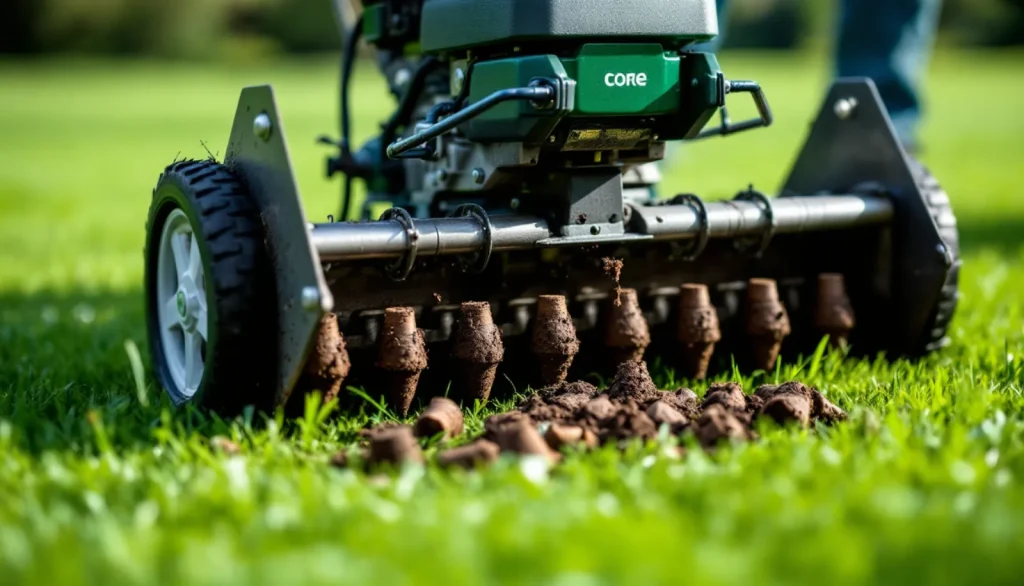
Core aeration is the method most extension services and pros recommend because it physically removes plugs of soil, which is the only approach that reverses real compaction. Spike aeration pokes solid holes and can compress soil sideways. Liquid aeration uses soil surfactants and helps mild compaction but does not replace plug removal. The table below maps each method to soil condition, what it does, frequency, and rough cost.
| Method | How it works | Best for | Hole depth / reach | Frequency | Typical cost |
|---|---|---|---|---|---|
| Core (plug) aeration | Hollow tines pull soil plugs to the surface | Moderate to severe compaction, clay, heavy traffic, lawns not aerated in 12+ months | Plugs roughly 2 to 3 inches deep, about 0.75 to 1 inch wide, spaced 2 to 4 inches apart | Once a year; spring and fall for badly compacted clay | DIY rental near $98 per day; pro service averages $75 to $206, roughly $0.10 to $0.35 per sq ft |
| Spike aeration | Solid tines or spikes punch holes without removing soil | Small lawns, sandy or loose soil, mild compaction, thatch under 0.5 inch | Shallower than core; displaces soil sideways | More often than core, since each pass does less | Manual spike tools and tow spikers are inexpensive; sandal spikes generally not worth it |
| Liquid aeration | Sprayed surfactants break surface tension to open micro-channels | Mild to moderate compaction, maintenance between core sessions | Claims reach of 6 to 12 inches; works gradually | Reapplied through the season | Low per-application cost; results take 4 to 8 weeks vs 2 to 4 for core |
On liquid aeration, be honest about the evidence. It can ease light compaction and maintain soil between core treatments, but Colorado State University research indicates no chemical loosens packed soil the way physically pulling plugs does. For a genuinely compacted clay lawn, core aeration remains the method that delivers measurable results, and liquid is a supplement, not a substitute.
If you are weighing renting a machine against hiring out, our lawn aerator rental guide breaks down the machine types, deposits, and day rates, while this page stays focused on the how, why, and when. For broader budgeting, see current lawn care cost benchmarks for 2026.
When is the best time to aerate by grass type?
Aerate during the active growing season so the grass heals and fills the open holes. For cool-season grasses (Kentucky bluegrass, tall fescue, perennial ryegrass), early fall is the prime window, with early spring as a backup. For warm-season grasses (Bermuda, zoysia, St. Augustine, buffalograss), aerate in late spring through early summer once the lawn is actively greening up.
Timing matters because aerating during dormancy or heat stress opens the canopy to weeds and slows recovery. Fall aeration for cool-season lawns also lines up with the strongest root-growth period and pairs naturally with overseeding. Match your calendar to your grass first, then to the soil moisture window below.
| Grass type | Examples | Best aeration window | Backup window |
|---|---|---|---|
| Cool-season | Kentucky bluegrass, tall fescue, perennial ryegrass, fine fescue | Early fall | Early spring |
| Warm-season | Bermuda, zoysia, St. Augustine, centipede, buffalograss | Late spring to early summer | Early summer as the lawn peaks |
Unsure which grass you have or when your region transitions? Our year-round grass maintenance schedule sorts the calendar by cool-season versus warm-season turf, and a warm-season homeowner in the Southwest can cross-check timing against local advice on our Phoenix lawn care page.
How do I aerate my lawn, step by step?
Core aeration is straightforward with a rented machine or a pro. Soil must be moist, not soaked, so the tines penetrate and pull clean plugs. Aerate the day after a light rain or a day after watering. Make two passes in different directions so the holes overlap, since most machines only cover a fraction of the surface per pass.
- Water lightly one to two days ahead so the soil is damp to 3 to 4 inches, not muddy.
- Mark sprinkler heads, shallow irrigation lines, and invisible-fence wires before you start.
- Mow to normal height and rake off heavy debris so plugs land cleanly.
- Run the core aerator in one direction, then make a second pass perpendicular to the first.
- Leave the soil plugs on the surface to dry, then break them up with a rake or mower in a week or two.
- If overseeding, spread seed and starter fertilizer right after aerating so seed drops into the open holes.
- Water consistently for the next two to three weeks to help recovery and germination.
Skip aeration on brand-new sod or seed until the lawn has rooted and gone through at least one full mowing season. For a lawn with heavy surface thatch over half an inch, dethatching may be the first job; aeration helps thatch break down over time but is not a substitute for removing a thick mat.
Should I overseed after aerating?
Yes, aerating then overseeding is one of the most effective renovation combinations, especially for thin cool-season lawns in early fall. The fresh holes give seed direct soil contact and protection, which lifts germination compared to broadcasting seed onto compacted ground. Pros call the sequence aerate, seed, feed, water.
Spread quality seed matched to your grass type and sun exposure immediately after the final pass, follow with a starter fertilizer, and keep the surface consistently moist until seedlings establish. For lawns with bare or shaded trouble spots, pair this with our guides on filling bare spots and growing grass in shade so you seed the right cultivar in the right place.
How often should I aerate?
Most lawns benefit from aeration once a year. High-traffic yards on clay soil may need it twice, in spring and fall, while sandy, well-draining lawns can stretch to once every two or three years. Let the screwdriver test and root depth decide rather than the calendar alone. If the soil still resists a screwdriver after a recent session, the compaction is deeper than one pass solved.
Track results year over year. A lawn that drains faster, greens up sooner, and pushes roots past 2 inches is responding, and you can ease the frequency. A lawn that keeps puddling and thinning needs annual core aeration plus attention to the cause, whether that is traffic patterns, drainage, or mowing wet.
Last reviewed: June 2026
HMNDP Editorial Team, reviewed by HMNDP turf and horticulture editors.
Frequently asked questions
When is the best time to aerate your lawn?
Aerate during the active growing season so the grass heals over the holes. Cool-season grasses like Kentucky bluegrass and tall fescue do best with early-fall aeration, with early spring as a backup. Warm-season grasses like Bermuda, zoysia, and St. Augustine should be aerated in late spring through early summer once the lawn is actively greening up.
Is core aeration or spike aeration better?
Core aeration is better for most lawns because hollow tines pull plugs of soil out, which actually reverses compaction. Spike aeration just punches solid holes and can compress soil sideways, so it suits only small lawns with sandy, loose soil and mild compaction. Most extension services and lawn pros recommend core aeration for clay and high-traffic yards.
How do I know if my lawn needs aerating?
Use the screwdriver test: water the lawn, then push a 6-inch screwdriver into the soil. If it stalls before 3 to 4 inches or needs real force, the soil is compacted. Other signs include water pooling after rain, hard ground underfoot, thinning or patchy grass, and roots that pull up less than 2 inches deep.
How often should you aerate a lawn?
Most lawns benefit from aeration once a year. High-traffic yards on clay soil may need it twice, in spring and fall, while sandy, well-draining lawns can stretch to once every two or three years. Let the screwdriver test and visible root depth guide the schedule rather than relying on the calendar alone.
Does liquid aeration really work?
Liquid aeration helps with mild to moderate compaction by spraying surfactants that open micro-channels, and it works well to maintain soil between core sessions. Colorado State University research indicates no chemical loosens packed soil the way physically pulling plugs does. For genuinely compacted clay, core aeration is still the method that delivers measurable results.
Should you overseed after aerating?
Yes. Aerating then overseeding is one of the most effective renovation combinations, especially for thin cool-season lawns in early fall. The fresh holes give seed direct soil contact, which improves germination over broadcasting onto compacted ground. Spread seed and starter fertilizer right after the final pass, then keep the surface consistently moist until seedlings establish.
How much does lawn aeration cost?
Professional lawn aeration averages about $75 to $206 per service, or roughly $0.10 to $0.35 per square foot, with quarter-acre yards often running $150 to $250. Renting a core aerator for DIY typically costs around $98 per day plus a deposit. Pricing varies by region, lawn size, and whether overseeding is bundled in.
Do you aerate before or after mowing?
Mow to your normal height before aerating so plugs land on a clean surface and seed makes good contact if you overseed. The soil should be moist, not soaked, so aerate a day or two after light watering or rain. Make two passes in different directions, since most machines only cover a fraction of the surface per pass.