
By the HMNDP Editorial Team, independent reporting on lawn care, landscaping, and the green-industry business.
Last reviewed: June 2026
Gate installation cost: what you actually pay in 2026
Gate installation in 2026 typically runs $500 to $1,500 for a manual walk gate and $2,500 to $12,000 for an automatic driveway gate, installed. Price depends on gate type (walk vs. driveway), material (wood, aluminum, steel, wrought iron), automation, and site prep like new posts or a concrete pad. Custom and dual-swing driveway systems can exceed $15,000.
The single biggest cost driver is automation. Adding a motorized opener, safety sensors, and a control system to a driveway gate often adds $1,500 to $5,000 on top of the gate and posts. A manual gate you push by hand skips all of that.
The second driver is the opening width. A driveway gate spanning 12 to 16 feet needs heavier framing, deeper footings, and a stronger operator than a 3 to 4 foot walk gate, which is why driveway jobs cost several times more.
| Gate type | Typical installed cost (2026) | What drives the price |
|---|---|---|
| Walk / pedestrian gate (manual) | $500 to $1,500 | Material, posts, hardware |
| Single swing driveway gate (manual) | $1,500 to $4,000 | Width, material, footings |
| Single swing driveway gate (automatic) | $3,000 to $8,000 | Opener, sensors, wiring |
| Dual (double) swing automatic gate | $5,000 to $12,000 | Two operators, wider span |
| Sliding / rolling driveway gate (automatic) | $4,000 to $12,000 | Track or cantilever, motor |
| Custom wrought iron or ornamental | $6,000 to $15,000+ | Fabrication, weight, finish |
These are national mid-range figures. Actual quotes vary by region, soil conditions, and contractor. Always confirm whether a quote includes posts, footings, electrical hookup, and permit fees, because “gate only” numbers can look cheaper until the add-ons appear.
Gate installation as part of fence installation
Gate installation is usually offered by fence contractors as a paired service, since a gate is an opening in a fence line that needs matching material, heavier posts, and its own hardware. Most residential landscaping and fencing companies quote the gate and adjacent fence together. Bundling often lowers the per-project cost because crews mobilize once.
A gate carries loads a fence panel never does. It swings or rolls hundreds of times a year, so installers set larger, deeper gate posts (often in concrete footings) to prevent sag. This is why a standalone gate added to an existing fence sometimes costs more per foot than the fence itself.
If you are refreshing the whole property, ask your contractor to spec the gate posts before the fence goes in. Retrofitting a heavy automatic gate onto posts sized only for fencing is a common, avoidable expense.
Types of gates: driveway, swing, slide, and automatic systems
The main gate types are walk gates (pedestrian), driveway gates (vehicle), swing gates (hinged, open like a door), sliding gates (roll sideways on a track or cantilever), and automatic gates (any of these motorized with an opener). Your choice depends on the opening width, available side clearance, slope, and whether you want to operate it from a vehicle.
Swing gate vs. sliding gate
Swing gates hinge on posts and open inward or outward; they suit level driveways with room for the gate to travel. Sliding gates roll parallel to the fence and suit sloped driveways, short driveways where a swing would block cars, or tight urban lots. Swing systems cost less on flat sites; slide systems win where clearance or slope is a problem.
| Factor | Swing gate | Sliding gate |
|---|---|---|
| Best for | Level, wide-open driveways | Slopes, short driveways, tight lots |
| Space needed | Arc clearance to swing | Side clearance along the fence |
| Typical cost | Lower on flat ground | Higher (track or cantilever) |
| Snow / debris | Can jam if ground heaves | Cantilever clears the ground |
| Opening speed | Slower per cycle | Often faster for wide spans |
Gate openers and automation components
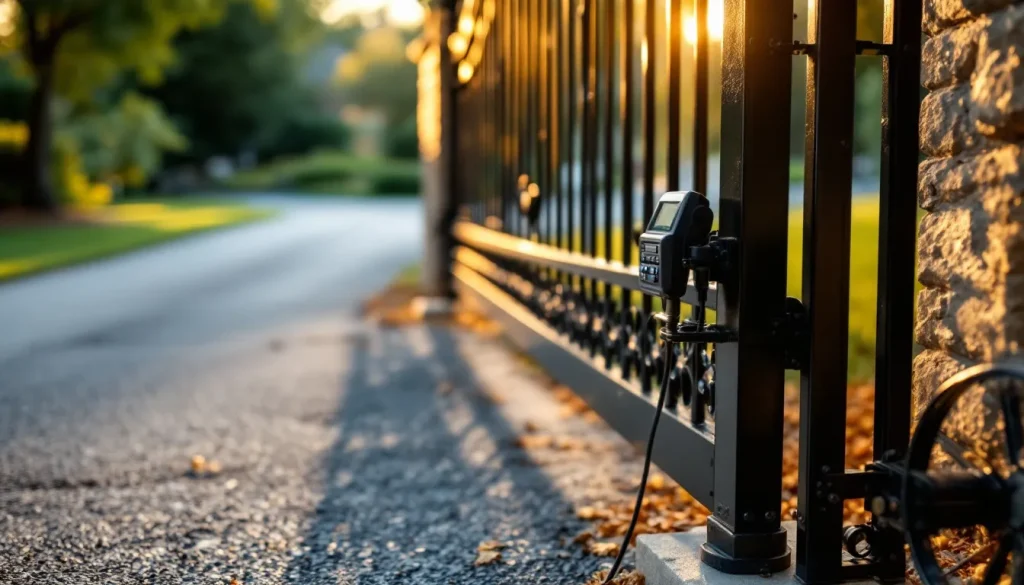
An automatic gate needs an operator (the motor), a mounting method matched to swing or slide, safety devices, and an access control. Core components are the gate opener, photo-eye safety sensors, an obstruction-reversing edge, a control board, and an entry method such as a keypad, remote, or smartphone app. Power comes from a wired 120V line or a solar-charged battery.
Solar openers suit gates far from a power source or in sunny regions, avoiding a costly trench for electrical. Wired openers deliver steadier power for heavy gates and frequent cycles, which matters for busy or commercial entrances.
Safety hardware is not optional. UL 325 is the U.S. safety standard for automatic gate operators, requiring entrapment protection like sensors and reversing edges. A reputable installer will include these; a quote that omits safety devices should be questioned.
Residential vs. commercial gate installation
Residential gate installation focuses on curb appeal, privacy, and moderate daily use, while commercial and industrial installation prioritizes duty cycle, security, and code compliance. A home gate might cycle a few dozen times a day; a business or gated community gate can cycle hundreds of times, demanding a heavier-duty operator, backup power, and often fire-department access hardware.
Commercial projects more often require permits, engineered footings, loop detectors embedded in the pavement, and access systems tied to intercoms or card readers. Light-commercial property owners should budget for these extras and confirm the installer has done comparable work.
The gate installation process and timeline
Professional gate installation follows a repeatable sequence from consultation to final testing, usually completed in one to three days of on-site work after materials arrive. The timeline stretches when concrete footings must cure or when custom fabrication and permits are involved. Below is the realistic order of operations most contractors follow.
- Free consultation and site assessment (day 0): The installer measures the opening, checks slope and clearance, and discusses material, style, and automation. This is where a design-to-quote sales process starts.
- Quote and design approval: You receive an itemized quote covering gate, posts, footings, opener, electrical, and permits. Approve before any work begins.
- Permitting (if required): The contractor pulls permits; this can add days or weeks depending on the jurisdiction.
- Post setting and footings (day 1): Crews dig and pour concrete footings for gate posts. Concrete typically needs 24 to 72 hours to cure before hanging a heavy gate.
- Gate hanging and hardware (day 2): The gate is mounted, leveled, and fitted with hinges, latches, or track.
- Automation and electrical (day 2 to 3): Installers mount the opener, run wiring or set the solar panel, install safety sensors, and configure the control board and entry devices.
- Testing and walkthrough: The crew tests the safety reverse, opening cycle, and remote or keypad, then shows you operation and maintenance.
A simple manual walk gate can be a half-day job. A custom automatic driveway system with footings, curing time, and electrical trenching realistically spans a week or more from first dig to final test.
Do you need a permit? HOA and code considerations
Permit requirements for gate installation vary by state, county, and city, and are more common for driveway gates, electrical work, and structures over a certain height. Many jurisdictions require a permit for automatic gates because of the electrical hookup and public-safety rules, while a small manual walk gate may need none. Always verify locally before you build.
Homeowners associations add a second layer. HOAs often restrict gate height, material, color, and automation, and may require design approval before installation. Check your covenants early, because tearing out a non-compliant gate is expensive.
Automatic gates that open onto a public road may also trigger setback rules and fire-access requirements. These are conditional and depend on your municipality, so a contractor who pulls local permits regularly is worth the premium.
Best gate material: wood, steel, aluminum, or wrought iron
No single material is best; the right choice balances budget, maintenance, and look. Wood is affordable and warm but needs sealing; aluminum resists rust and is light enough for easy automation; steel is strong and secure but can corrode without coating; wrought iron is the most ornamental and durable but the heaviest and priciest. Match the material to your climate and use.
| Material | Strength | Maintenance | Relative cost | Best for |
|---|---|---|---|---|
| Wood | Moderate | High (seal/stain) | $ | Privacy, natural look |
| Aluminum | Moderate | Low (no rust) | $$ | Automated gates, coastal areas |
| Steel | High | Medium (needs coating) | $$$ | Security, wide spans |
| Wrought iron | Very high | Medium (rust touch-up) | $$$$ | Ornamental, long-term durability |
Weight matters for automation. Aluminum’s low weight reduces strain on an opener and can shrink motor cost, while a heavy wrought iron driveway gate needs a stronger, pricier operator. Factor material weight into the total automated-gate budget, not just the gate price.
DIY vs. hiring a professional gate installer
You can DIY a simple manual walk gate with basic tools and a weekend, but automatic driveway gates should go to a professional. Automation involves electrical work, precise footings, heavy lifting, and UL 325 safety compliance where mistakes cause injury, gate sag, or motor failure. The cost of hiring often pays for itself in longevity and correct safety setup.
A hinged wooden or aluminum walk gate is a reasonable homeowner project if the posts are already set and true. Where DIY goes wrong is post sag, out-of-level footings, and safety-sensor placement on motorized systems.
Top-rated local contractors, the kind that appear on Yelp “Top 10” lists and carry strong review counts, earn that standing largely on workmanship: gates that stay square, close flush, and reverse on contact years later. When comparing quotes, weigh reviews and warranty terms, not just price. Ask for photos of past driveway installs and confirm the crew handles permits and electrical.
Getting an affordable quote and choosing an installer
The affordable path is a free, itemized, design-to-quote consultation from two or three reviewed local installers, then comparing scope, not just headline price. A “near me” search surfaces service-area contractors; verify each carries insurance, handles permits, and includes safety hardware. The cheapest bid that omits footings or sensors is rarely the cheapest gate over its life.
Landscaping and outdoor-improvement companies frequently bundle gates with related work. If you are already upgrading the yard, pairing a gate with projects like artificial grass installation or artificial turf installation can consolidate one crew’s mobilization and reduce total cost.
Maintenance keeps a gate affordable long term. Periodic driveway and gate pressure washing removes grime that wears finishes and jams tracks, and you can source parts and supplies from a local pro landscaping and outdoor supply distributor. A well-maintained gate outlasts a neglected one by years.
Frequently Asked Questions
How much does gate installation cost?
Gate installation typically costs $500 to $1,500 for a manual walk gate and $2,500 to $12,000 for an automatic driveway gate in 2026, installed. Price depends on gate type, material, width, and automation. Custom wrought iron or dual-swing systems can exceed $15,000. Always confirm whether the quote includes posts, footings, electrical, and permit fees.
How much does it cost to install a driveway gate?
A driveway gate usually costs $1,500 to $4,000 manual and $3,000 to $12,000 automatic, installed in 2026. Single swing gates sit at the lower end, while dual-swing and wide sliding systems reach the top. Automation, opening width, material weight, and site prep such as concrete footings and electrical trenching drive the final number.
Is it cheaper to install a manual or automatic gate?
A manual gate is cheaper, often by $1,500 to $5,000, because it skips the opener, safety sensors, control board, and electrical hookup an automatic gate requires. A manual walk gate can cost $500 to $1,500, while the same gate motorized climbs into the thousands. Automation adds convenience and security but raises both upfront and maintenance costs.
How long does it take to install a gate?
A simple manual walk gate takes a half-day to a day. An automatic driveway gate usually takes one to three on-site days, but total time stretches to a week or more once concrete footings cure (24 to 72 hours), custom fabrication, and permits are added. Weather and jurisdiction permitting timelines are the most common delays.
Do I need a permit to install a gate?
It depends on your city and county. Many jurisdictions require a permit for automatic driveway gates because of the electrical work and public-safety rules, while a small manual walk gate may need none. Homeowners associations may also require design approval. Verify local building-department and HOA rules before installing, since removing a non-compliant gate is costly.
Swing gate vs. sliding gate: which is better for a driveway?
Swing gates are better for level, wide driveways with room to swing and usually cost less. Sliding gates are better for sloped driveways, short driveways where a swing would block cars, or tight urban lots, and cantilever slides clear snow and ground heave. Choose based on slope, side clearance, and how the gate will travel.
What’s the best material for a gate?
There is no single best material. Wood is affordable and warm but needs sealing; aluminum resists rust and is light for easy automation; steel is strong and secure but needs coating against corrosion; wrought iron is the most durable and ornamental but heaviest and priciest. Match material to climate, security needs, and whether the gate will be automated.
Can I install a gate myself or should I hire a professional?
You can DIY a simple manual walk gate on existing true posts in a weekend. Hire a professional for automatic driveway gates, which involve electrical work, precise concrete footings, heavy lifting, and UL 325 safety compliance where errors cause injury or motor failure. Professional installation typically pays for itself through correct safety setup and longer gate life.