
By the HMNDP Editorial Team. Last reviewed: June 2026.
What a soft wash system is (and how it works)
A soft wash system is a low-pressure chemical application setup that cleans exterior surfaces with a diluted sodium hypochlorite (bleach) and surfactant mix rather than high-pressure water. It sprays at roughly 40 to 100 PSI, compared with 1,500 to 4,000 PSI for a pressure washer. The chemistry kills algae, mold, lichen, and Gloeocapsa magma (the black roof streaks); the low pressure just carries the solution to the surface.
The core idea: let the chemical do the work, not the water. That is why a soft wash system can clean an asphalt shingle roof or painted siding without stripping granules, forcing water behind panels, or gouging wood. Pressure removes what it hits; chemistry removes what it dissolves.
Core components of a soft wash system
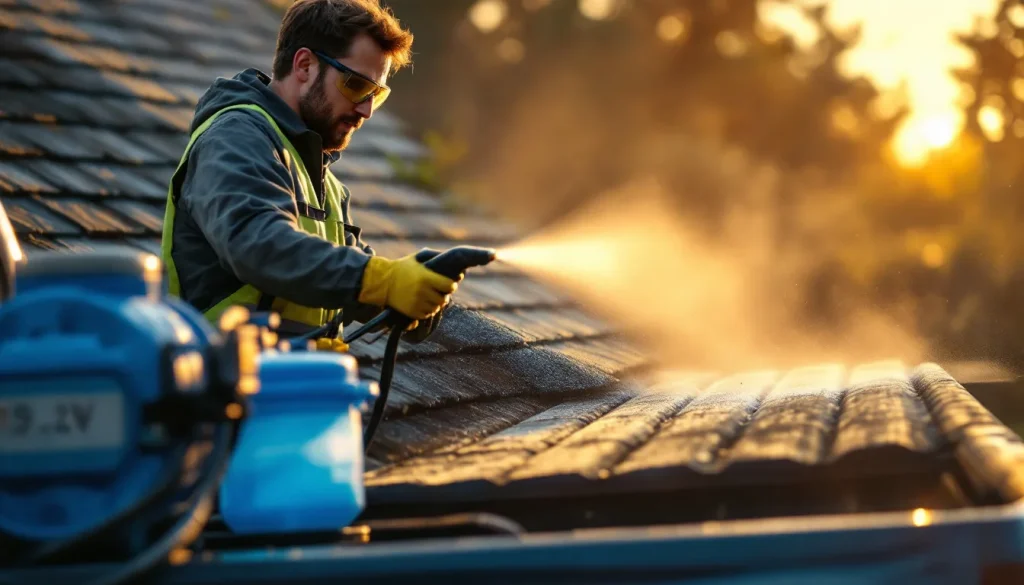
A soft wash system has six functional parts: a pump, chemical and water tanks, a mixing or proportioning device, a hose reel, a gun or wand, and nozzles. The pump moves the mixed solution at low pressure. The tanks and proportioner control the ratio of sodium hypochlorite to water so the mix matches the surface.
| Component | Job it does | Typical spec |
|---|---|---|
| Pump | Moves solution at low pressure | 12V Everflo EF7000, 7 GPM at 60 PSI, or a gas Comet P36/P40 |
| Chemical + water tanks | Hold SH and dilution water | Polyethylene, 35 to 200+ gallons |
| Proportioner / mixer | Blends SH, water, surfactant to a target % | Multi-port blend valve (e.g. 3-port EZ-style blend) |
| Hose reel | Deploys and stores 200 to 400 ft of hose | Manual or 12V electric |
| Gun / wand + nozzles | Fan pattern and reach control | Soft wash gun, 0050 to 0100 shooter tips |
Soft wash vs pressure washing: when to use each
Use soft wash on any surface that damage or water intrusion can ruin, and pressure washing on hard, flat surfaces that need mechanical removal. Roofs, siding, stucco, screens, and painted wood are soft wash jobs. Concrete flatwork, brick pavers, and heavy oil stains are usually pressure jobs. Getting this wrong voids roof warranties and etches siding.
| Surface | Method | Why |
|---|---|---|
| Asphalt / tile roof | Soft wash | Pressure strips granules and voids warranty |
| Vinyl / painted siding | Soft wash | Pressure forces water behind panels |
| Stucco, EIFS | Soft wash | Pressure cracks and pits the finish |
| Concrete driveway | Pressure (often) | Needs mechanical removal; see below |
| Wood deck / fence | Soft wash or low pressure | High pressure raises and splinters grain |
Concrete is the gray area. Organic staining lifts with a 2 to 4% soft wash mix and a rinse, but ground-in dirt often needs a surface cleaner. Our breakdown of driveway pressure washing covers when to reach for pressure instead.
12V electric vs gas soft wash system types
A 12V electric soft wash system runs a diaphragm pump off a deep-cycle battery, is quiet and cheap, and suits roofs and siding. A gas or air-driven system uses an engine and higher-output pump for long hose runs and high daily volume. 12V handles most residential work; gas earns its cost on commercial and multi-crew operations.
| Factor | 12V electric | Gas / air-driven |
|---|---|---|
| Pump output | ~5.5 to 7 GPM at 60 PSI | 7 to 8+ GPM, higher pressure headroom |
| Noise | Near silent | Loud engine |
| Best for | Roofs, siding, residential | Long runs, high job volume, commercial |
| Maintenance | Battery + diaphragm | Engine service, oil, filters |
| Typical 2026 price | $300 to $1,300 | $2,100 to $2,400 |
Chemical mix: SH, surfactant, and dilution ratios by surface
A soft wash mix is sodium hypochlorite (SH) diluted with water to a target percentage, plus a surfactant at roughly 200:1 to help it cling and sheet. Professional-grade SH at 10 to 12.5% is the practical base because it batch-mixes predictably. The percentage you apply changes by surface, not by preference.
| Surface | Applied SH % | Rough dilution from 12.5% SH |
|---|---|---|
| Vinyl / painted siding | 0.5 to 1.5% | ~1 part SH to 8 to 12 parts water |
| Concrete, brick, masonry | 2 to 4% | ~1 part SH to 2 to 5 parts water |
| Asphalt / tile roof | 3 to 6% | ~1 part SH to 1 to 3 parts water |
Always add surfactant last and mix a small batch to confirm the percentage before you load the tank. A simple check: 15% SH divided by 7 parts total gives about 2.14%, so the divisor is your fastest mental math on the truck.
Safety and plant protection: SH bleaches vegetation and fabric on contact. Pre-wet and post-rinse landscaping, wear chemical-resistant gloves, sealed eye protection, and boots, and never mix SH with acids or ammonia. Depending on your state and local rules, commercial applicators may face runoff and disposal requirements, so confirm before scaling up.
Soft wash system vs downstream injection: the cost and throughput math
Downstream injection applies chemical through a pressure washer after the pump, diluting at 10:1 to 20:1, and costs almost nothing to add. A dedicated soft wash system applies undiluted-to-lightly-diluted mix at full strength. The honest answer: downstreaming is cheaper and fine for siding, but it caps out around 0.8 to 1% SH at the surface, which is too weak for heavy roof algae.
This is the question forums argue about and vendors dodge. Here is the neutral version. A downstream injector on an 8 GPM machine pulls roughly 1 part chemical to 10+ parts water at the nozzle. Even feeding it straight 12.5% SH, the surface strength lands near 1%, which cleans siding but leaves black roof streaks that need 3 to 5%.
| Downstream injection | Soft wash system | |
|---|---|---|
| Added cost | ~$30 to $150 (injector) | $300 to $20,000 |
| Max surface SH % | ~0.8 to 1% | Full target (up to 6%) |
| Good for | Siding, light house washes | Roofs, heavy algae, high volume |
| Precision | Varies with hose, tips, GPM | Set by proportioner |
| Requires a pressure washer | Yes | No |
The decision is not “which is better.” It is “what do you clean?” If your jobs are 80% house washes, downstream first and add a cheap 12V roof system later. If roofs are your bread and butter, a soft wash system pays for itself because you cannot deliver the result any other way.
Portable, skid-mounted, and trailer setups
Soft wash systems come as portable units, skids, and trailer builds, tracking directly to job volume. A portable 12V unit fits a truck bed and suits solo or part-time operators. A skid bolts a pump, tanks, and reel onto a frame for a truck or van. A trailer build is a self-contained rig for full-time and multi-crew businesses.
| Setup | 2026 price band | Business stage |
|---|---|---|
| DIY / portable 12V | $300 to $1,300 | Homeowner, side hustle, testing demand |
| Turnkey standalone (12V or gas) | $1,000 to $2,400 | New solo operator |
| Skid (pump, tanks, reel) | $9,000 to $20,000 | Established, dedicated truck |
| Full trailer build | $12,000 to $25,000+ | Full-time, multi-crew, commercial |
Kits, turnkey packages, and the vendor landscape
A complete soft wash system kit bundles the pump, proportioner or blend valve, hose, reel, gun, and nozzles so you can run jobs out of the box. Turnkey standalone kits run about $1,000 to $2,400 in 2026. Vendors to compare include Southeast Softwash (SESW), Soft Wash Depot, Pressure Tek, Budget Soft Wash Solutions, and J. Racenstein.
A typical entry kit pairs a 12V Everflo EF7000 pump (7 GPM at 60 PSI) with a 3-port blend proportioner, 200+ ft of hose on a reel, a soft wash gun, and a set of shooter tips. Confirm hose length and tank capacity, because those two specs decide how many jobs you finish before refilling. Treat vendor claims neutrally and compare pump output, warranty, and support, not just headline price.
What it costs to get started and next steps
Getting started with soft wash ranges from about $300 for a DIY 12V build to $5,000+ for a turnkey commercial-ready rig, before a truck or trailer. A realistic new-business entry point is $1,000 to $2,500 for a standalone kit plus a few hundred in chemical. Skids and trailers push $9,000 to $25,000 once you are booking steady work.
Match the spend to your pipeline, not your ambition. If you are still validating demand, start portable and reinvest. For the wider startup picture, our guide to launching a pressure washing business and our breakdown of what pressure washing costs help you price jobs so the equipment pays back. Operators expanding into turf and hardscape cleaning can also review our notes on artificial turf as an adjacent service.
Frequently Asked Questions
What is a soft wash system and how does it work?
A soft wash system is a low-pressure setup (about 40 to 100 PSI) that applies a diluted sodium hypochlorite and surfactant mix to clean exterior surfaces. The chemistry kills algae, mold, and lichen; the low pressure only carries the solution to the surface. It has a pump, tanks, a proportioner, a hose reel, and a soft wash gun with nozzles.
What is the difference between a soft wash system and a pressure washer?
A pressure washer cleans with high-pressure water (1,500 to 4,000 PSI) and mechanical force. A soft wash system cleans with chemistry at low pressure (40 to 100 PSI), so it will not strip roof granules, force water behind siding, or gouge wood. Soft wash suits roofs, siding, and stucco; pressure suits concrete and heavy stains.
Is a soft wash system worth it, or should I just downstream?
It depends on your jobs. Downstream injection costs about $30 to $150 and cleans siding well, but caps near 0.8 to 1% SH at the surface, too weak for heavy roof algae that needs 3 to 5%. If roofs are core to your business, a dedicated soft wash system is worth it because downstreaming cannot deliver the result.
How much does a soft wash system cost?
In 2026, a DIY 12V build runs about $300 to $1,300, a turnkey standalone kit (12V or gas) runs $1,000 to $2,400, a skid runs $9,000 to $20,000, and a full trailer build runs $12,000 to $25,000+. A realistic new-business entry point is a $1,000 to $2,500 standalone kit plus chemical.
What chemicals and mix ratio do you use in a soft wash system?
The base is sodium hypochlorite (SH), usually professional-grade 10 to 12.5%, diluted with water plus a surfactant at roughly 200:1. Applied strength varies by surface: 0.5 to 1.5% for siding, 2 to 4% for concrete and masonry, and 3 to 6% for roofs. Mix a small batch and confirm the percentage before loading the tank.
What is the difference between a 12V and a gas soft wash system?
A 12V electric system runs a diaphragm pump off a deep-cycle battery at about 5.5 to 7 GPM and 60 PSI. It is quiet, cheap ($300 to $1,300), and handles most residential roofs and siding. A gas system uses an engine and higher-output pump (7 to 8+ GPM) for long hose runs and high volume, costing $2,100 to $2,400.
What’s in a complete soft wash system kit?
A complete kit includes a pump (often a 12V Everflo EF7000 at 7 GPM/60 PSI), a proportioner or blend valve, 200+ ft of hose on a reel, a soft wash gun, and a set of shooter nozzles. Turnkey kits run about $1,000 to $2,400 in 2026. Confirm hose length and tank capacity, since both decide jobs per refill.
What surfaces can you clean with a soft wash system (roofs, siding, concrete)?
Soft wash safely cleans asphalt and tile roofs, vinyl and painted siding, stucco, EIFS, screens, and wood at the right SH strength. Concrete and masonry respond to a 2 to 4% mix for organic stains, though ground-in dirt often still needs a pressure surface cleaner. Pre-wet and rinse landscaping, because SH bleaches vegetation on contact.