
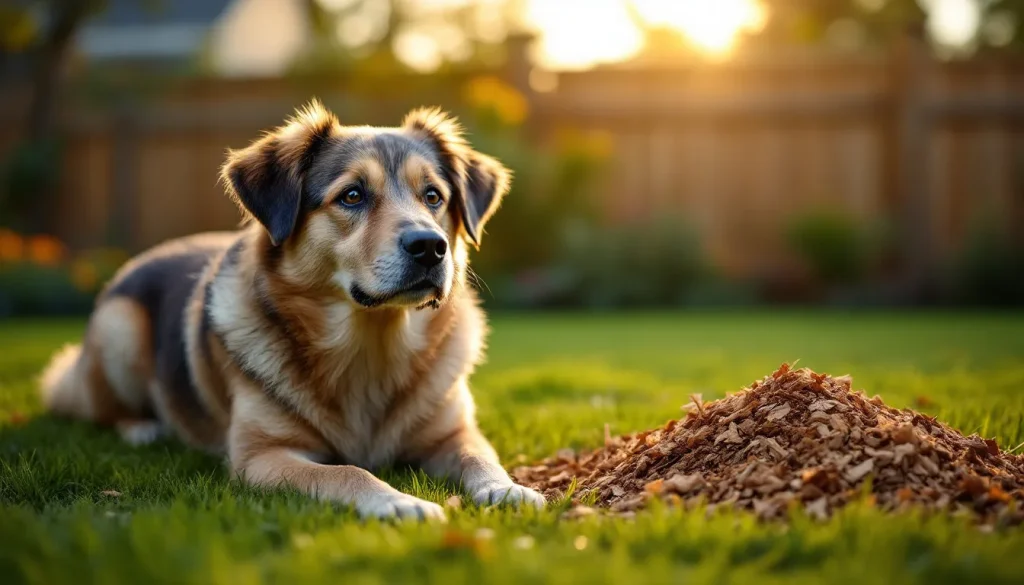
Is mulch safe for dogs?
Most mulch is safe around dogs, with two hard exceptions: cocoa bean mulch, which contains the same theobromine that makes chocolate toxic, and any large-nugget or dyed mulch a dog swallows in quantity. The mulch-and-dogs risk is mostly about type and volume. Aged, undyed hardwood, pine, and cedar sit in the low-risk group. Cocoa mulch is the one to never buy.
The danger scales with your dog’s habits. A senior Labrador that ignores the flower bed faces almost no risk. A four-month-old puppy that eats everything is a different calculation, because volume and blockage matter more than toxicity for most wood mulches.
Last reviewed: June 2026
What happens when a dog eats mulch
When a dog eats mulch, the wood, bark, or dye passes through the gut and usually causes mild stomach upset: vomiting, diarrhea, drooling, or loss of appetite. Symptoms typically appear 6 to 12 hours after ingestion. The serious risk with wood mulch is not poisoning but a physical intestinal blockage from swallowed chunks, especially large bark nuggets.
Small amounts of plain hardwood mulch often pass without incident. The GI tract treats it like fiber it cannot digest, so the body moves it along and expels it.
Blockage is the emergency scenario. A dog that swallows several large bark nuggets can develop an obstruction that stops food and water from passing. Signs include repeated vomiting, a hard or painful belly, straining with no stool, and lethargy. Obstruction can require surgery, so it is treated as urgent, not wait-and-see.
| Sign | Typical onset | What it usually means |
|---|---|---|
| Vomiting, drooling | 6 to 12 hours | Stomach irritation, often mild |
| Diarrhea, appetite loss | 6 to 24 hours | GI upset from wood or dye |
| Hard belly, straining, no stool | 12 to 48 hours | Possible blockage, urgent |
| Tremors, racing heart, seizures | 2 to 12 hours | Cocoa mulch (theobromine), emergency |
Cocoa mulch and theobromine: the one mulch to never buy
Cocoa bean mulch is the single most dangerous mulch for dogs because it is made from cocoa shells, the byproduct of chocolate production, and it carries theobromine and caffeine. These are the exact compounds that make chocolate toxic. Dogs are drawn to its sweet, chocolate-like smell, which makes accidental eating more likely.
The dose context is what other pages skip. According to the ASPCA Animal Poison Control Center, cocoa bean mulch can contain roughly 300 to 1,200 mg of theobromine per ounce. For comparison, theobromine can cause mild signs in dogs at about 20 mg per kg of body weight, serious signs near 40 to 50 mg per kg, and potentially fatal effects at 100 to 200 mg per kg.
Run the math and the danger is clear. A 30-pound (roughly 13.6 kg) dog could reach a mildly toxic dose from as little as an ounce of high-theobromine mulch. Symptoms can include vomiting, a racing heart, muscle tremors, and seizures. If you own a dog, do not install cocoa mulch, and treat any suspected ingestion as an emergency.
Dangerous vs safer mulch types for dogs
No two mulches carry the same risk. Cocoa mulch is toxic, rubber and large bark nuggets are blockage and choking hazards, and dyed mulch depends on its wood source. Cedar, pine, and aged undyed hardwood are the lower-risk picks. The table below compares the common types by the questions dog owners actually ask.
| Mulch type | Toxic to dogs? | Splinter / blockage risk | Verdict for dog owners |
|---|---|---|---|
| Cocoa bean mulch | Yes (theobromine) | Low | Never use |
| Rubber mulch | Not digestible, possible chemical leaching | High if chewed, cannot pass | Avoid with chewers |
| Large bark nuggets | No | High choking / blockage | Avoid with puppies |
| Dyed / colored mulch | Depends on wood source | Medium | Buy only certified dye-safe |
| Cypress mulch | Generally non-toxic | Can be sharp when dry | Acceptable, watch chewers |
| Cedar mulch | Non-toxic to most dogs | Low, soft fibers | Good, aromatic oils repel bugs |
| Pine bark / pine straw | Non-toxic | Low, soft | Good, gentle on paws |
| Aged undyed hardwood | Non-toxic | Low when shredded | Best all-around |
Cypress mulch is generally non-toxic, and it is a top question for a reason: it works well in beds and resists rot. The catch is that dried cypress can splinter into sharp pieces, so it can irritate the gut of a dog that chews it. It is acceptable, but not the softest option.
Cedar mulch is non-toxic to most dogs and doubles as a natural insect deterrent thanks to its aromatic oils. Those same oils can bother dogs with sensitive skin or airways, and a dog that eats cedar heavily may get an upset stomach. For most households it is a solid, dog-friendly choice.
Dyed mulch is a source question, not a color question. Modern colorants are usually iron-oxide (red, brown) or carbon (black) and are broadly considered low-toxicity. The real concern is that some cheap dyed mulch is ground from recycled lumber that may have been chemically treated. Buy dyed mulch only from a brand that certifies its wood source.
The best dog-safe mulch to buy
The best dog-safe mulch is aged, undyed, finely shredded hardwood, followed by pine bark and untreated cedar. All three are non-toxic, soft enough to lower splinter and blockage risk, and widely available. Skip cocoa, rubber, and large nuggets. Here is the ranked buy-this-not-that answer that toxicity pages leave out.
- Aged shredded hardwood (undyed): the safest all-purpose pick. Non-toxic, breaks down into soft fibers, and lower choking risk than nuggets. Ideal for mixed-use yards and matches most planting guidance in our guide to choosing mulch for flower beds.
- Pine bark mulch or pine straw: soft, gentle on paws, and non-toxic. Pine straw knits together and shifts less, so dogs swallow less of it. A strong option for beds near play areas and for the edible-garden setups covered in our vegetable garden mulch guide.
- Untreated cedar mulch: non-toxic and naturally bug-repelling. Best for dogs that sniff more than they chew. Watch dogs with skin sensitivities.
Whatever you choose, buy small-particle over large nuggets if you own a puppy, and confirm the bag says undyed or certifies its wood source. Particle size does more to prevent an emergency than any label claim about being pet-friendly.
What to do if your dog just ate mulch
If your dog just ate mulch, first identify the mulch type, then estimate the amount and watch for symptoms over the next 6 to 12 hours. Cocoa mulch is an immediate emergency. For wood mulch, small amounts often pass, but call a vet if you see repeated vomiting, a hard belly, or any sign of blockage. Follow these steps in order.
- Identify the mulch. If it is cocoa bean mulch, skip straight to step 4 and treat it as an emergency.
- Estimate the amount. A few pieces is different from a mouthful of large nuggets. Note the time it happened.
- Remove access and check the mouth. Move the dog away from the bed and clear any pieces still in the mouth. Do not induce vomiting unless a vet tells you to, since sharp pieces can cause harm coming back up.
- Call for help at these thresholds. Contact your veterinarian, the ASPCA Animal Poison Control Center at (888) 426-4435, or the Pet Poison Helpline at (855) 764-7661 if the mulch was cocoa, if your dog swallowed a large volume, if it is a small dog or puppy, or if any symptom appears.
- Monitor for 24 hours. Offer water, hold off on a big meal, and watch for vomiting, straining, lethargy, or a painful abdomen. Escalate to an emergency clinic if those appear.
General yard safety for dogs
Beyond mulch, a dog-safe yard means checking your plants, fertilizers, and lawn products for the same toxicity and blockage risks. Cocoa mulch is one hazard among several, including certain fertilizers, compost, and common landscaping plants. A quick sweep of what is in the ground prevents most accidental poisonings.
Fertilizer is the most overlooked risk. Bone meal and blood meal smell like food and can cause GI blockages or pancreatitis if eaten in bulk. Keep dogs off treated grass until it is watered in and dry, and store products sealed. Our notes on picking the right feed, such as our guide to the best fertilizer for grass and our roundup of the best fertilizer for green grass, can help you match product to lawn without over-applying.
Round out the yard by fencing off compost, removing toxic plants like sago palm and certain lilies, and rinsing paws after walks on treated surfaces. The goal is a landscape your dog can share, not one it has to be kept out of.
Frequently Asked Questions
Is mulch safe for dogs?
Most wood mulch is safe around dogs, but two types are not. Cocoa bean mulch is toxic because it contains theobromine, the compound in chocolate. Large bark nuggets and rubber mulch pose choking and intestinal blockage risks if swallowed. Aged undyed hardwood, pine, and cedar are the lower-risk choices for households with dogs.
What mulch is safe for dogs?
The safest mulches for dogs are aged, undyed, finely shredded hardwood, pine bark or pine straw, and untreated cedar. All three are non-toxic and soft enough to lower splinter and blockage risk. Choose small-particle mulch over large nuggets, especially for puppies, and avoid cocoa, rubber, and dyed mulch from uncertified wood sources.
Is cypress mulch safe for dogs?
Cypress mulch is generally non-toxic to dogs and is a popular, rot-resistant bed option. The main caution is that dried cypress can splinter into sharp pieces, which may irritate the stomach or intestines of a dog that chews and swallows it. It is acceptable for most dogs but is not the softest, lowest-risk choice available.
Is cedar mulch safe for dogs?
Cedar mulch is non-toxic to most dogs and has a natural insect-repelling quality from its aromatic oils. Those same oils can irritate dogs with sensitive skin or airways, and heavy eating can cause mild stomach upset. For dogs that sniff more than they chew, cedar is a good, dog-friendly mulch choice.
Is cocoa mulch toxic to dogs?
Yes. Cocoa bean mulch is toxic to dogs because it contains theobromine and caffeine from cocoa shells. It can hold roughly 300 to 1,200 mg of theobromine per ounce, per the ASPCA. Toxic effects can start near 20 mg per kg of body weight. Its chocolate-like smell attracts dogs, so owners should never install it.
What are the symptoms of mulch poisoning in dogs?
Symptoms of mulch ingestion in dogs usually appear 6 to 12 hours after eating and include vomiting, diarrhea, drooling, and appetite loss. A hard, painful belly with straining can signal an intestinal blockage. With cocoa mulch, watch for tremors, a racing heart, and seizures, which are an emergency and can begin within a few hours.
What should I do if my dog eats mulch?
Identify the mulch type, estimate the amount, and remove access. If it is cocoa mulch, or if your dog is small, ate a large volume, or shows any symptom, call your vet or the ASPCA Animal Poison Control Center at (888) 426-4435. Do not induce vomiting unless a professional directs you to, then monitor for 24 hours.
What is the best dog-safe mulch to buy?
The best dog-safe mulch to buy is aged, undyed, finely shredded hardwood, followed by pine bark or pine straw and untreated cedar. These are non-toxic and soft, which lowers splinter and blockage risk. Pick small particle sizes over large nuggets for puppies, and buy dyed mulch only from brands that certify their wood source.