
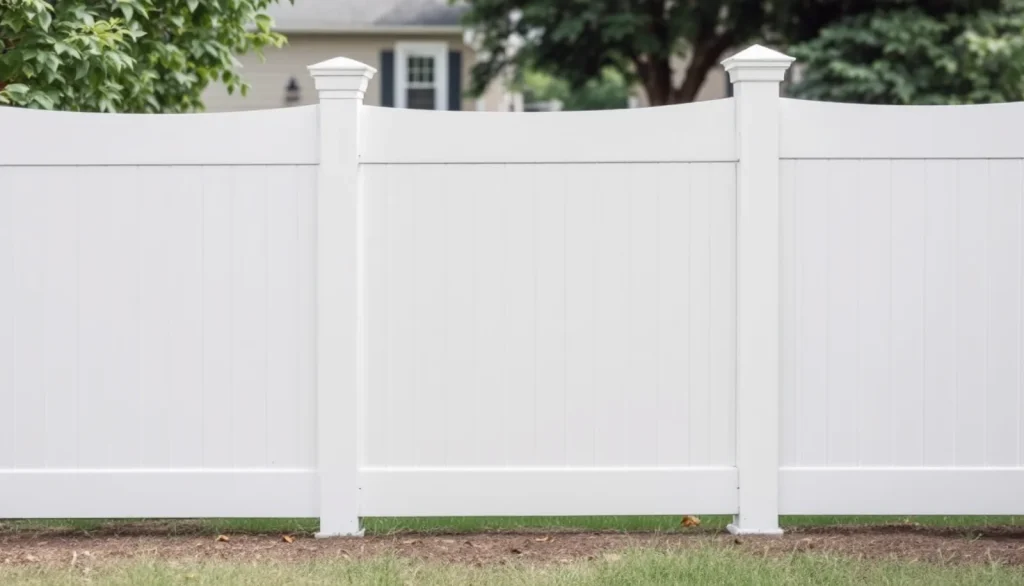
Vinyl Fence: Cost, Grades, Lifespan, and vs Wood
A vinyl fence (rigid PVC, sometimes sold as “PVC fence”) runs about $45 to $74 per linear foot installed in 2026, with a typical 6-foot privacy build landing near $55 per foot, and it lasts 20 to 30 years with no painting or staining. That price is roughly 25 to 30 percent above a wood fence and overlaps with aluminum, so the real decision is not vinyl versus everything else, it is which grade of vinyl you buy and how the installer handles thermal movement. This is a vinyl-specific buying guide: what it costs, how it compares to wood and aluminum, how long it really lasts, and the spec line items that separate a 30-year fence from one that goes brittle in eight. For a broader look at fence materials side by side, see our privacy fence guide; for the opening and hardware, our fence gate guide; and for the ornamental-metal route, wrought iron fence panels.
How much does a vinyl fence cost per foot in 2026?
A vinyl fence costs about $45 to $74 per linear foot installed in 2026, with $55 per foot the typical figure for a standard 6-foot solid-privacy build (Ergeon, 2026 pricing data). Materials run roughly $10 to $30 per foot and labor adds the rest, including post-setting concrete, permits, and project management. A 100-foot run lands near $5,100 installed; a typical 150 to 200-foot yard runs about $6,750 to $11,000.
Height moves the number more than almost anything else. A 4-foot vinyl fence runs roughly 25 percent less than a 6-foot fence, near $42 per foot, because it uses less material per panel. An 8-foot fence is materially more expensive and uncommon in residential work.
Style is the next lever. Solid-panel privacy uses the most material and anchors the typical price. Picket and semi-privacy sit below it. Ranch-rail (3-rail or split-rail) uses the least material and is usually the cheapest vinyl option per foot. Gates carry their own line item: a single 3 to 4-foot gate often runs around $1,320 and a double-leaf drive gate $3,000 or more, because the frame needs internal steel or aluminum reinforcement that a fence panel does not.
| Vinyl fence configuration | Installed cost per linear foot (2026) | Notes |
|---|---|---|
| Ranch-rail / 3-rail | $25 to $40 | Least material, no privacy, livestock and boundary use |
| Picket (4 ft) | $35 to $50 | Open spacing, front-yard and pool-adjacent |
| Semi-privacy / lattice-top (6 ft) | $50 to $65 | Solid lower panel, decorative top adds cost |
| Solid privacy (6 ft) | $45 to $74 (typical $55) | Most common residential build |
| Pool-code enclosure | $60 to $100+ | Child-safety spacing and self-latching gate hardware |
Other cost drivers: project size (a fixed mobilization cost spreads over more feet on bigger jobs), color and finish (tan, gray, almond, and woodgrain carry a small premium over white), decorative caps or scalloped tops, and your local market, which has run a $51 to $60 band across active states in 2026. Before you compare quotes, our 2026 cost benchmarks show how regional labor rates shift outdoor project pricing.
Vinyl fence vs wood vs aluminum
Vinyl sits between wood and aluminum on price and splits the difference on use case. Wood is cheapest upfront at about $43 per foot installed but demands re-staining or sealing every two to three years. Aluminum costs about $25 to $45 per foot, lasts longer, and resists coastal salt air, but it offers no privacy. Vinyl is the privacy material that you never paint. Pick by what you are optimizing: lowest entry cost (wood), lowest lifetime maintenance with full privacy (vinyl), or an open ornamental look and pool-code fit (aluminum).
| Factor | Vinyl (PVC) | Wood | Aluminum |
|---|---|---|---|
| Installed cost per foot (2026) | $45 to $74 | ~$43 typical | $25 to $45 |
| Lifespan | 20 to 30 years | 10 to 15 years | 30 to 50+ years |
| Maintenance | Wash 1 to 2x/year, no paint or stain | Re-stain or seal every 2 to 3 years | Occasional rinse |
| Privacy | Full (solid panels) | Good, gaps open as boards shrink | None (open pickets) |
| Repair model | Replace whole damaged section | Swap a single board | Replace a section |
| Cold-weather brittleness | Yes, impact risk in deep cold | No | No |
The long-run math often favors vinyl despite the higher entry price. Over a 25-year horizon, the total cost of vinyl tends to land below wood once you add wood’s recurring stain, seal, and board-replacement costs, an outcome that gets stronger in hot, humid climates where wood degrades fastest. Aluminum still wins on raw longevity and is the safer call for pool enclosures and street-facing HOA fences. One caveat the comparison pages tend to skip: vinyl’s repair model is all-or-nothing per section, so a single car-backed-into-it panel can mean replacing a full 6 to 8-foot run, while wood lets you swap one board.
How long does a vinyl fence last?
A vinyl fence lasts 20 to 30 years, and a high-grade, professionally installed fence in a mild climate can reach 50 years. The spread is not random. It is driven by the PVC grade, the UV inhibitor package, and install quality, not by the word “vinyl” on the quote. This is the gap most cost guides leave open: they price “vinyl” as one product when the grade you buy decides whether you get the 30-year fence or the 8-year one.
The single biggest lifespan variable is virgin versus recycled-content PVC. Commercial-grade virgin vinyl carries UV inhibitors, often titanium dioxide, blended into the material, so color and flexibility hold for decades. Budget recycled-content vinyl fades and turns brittle faster, and brittleness is what fails a fence: a cold-snap impact cracks a panel that virgin PVC would have flexed and survived. Ask the installer in writing whether the panels are virgin PVC and whether they meet ASTM F964, the standard specification for rigid PVC exterior profiles.
Signs a vinyl fence is reaching end of life include severe fading or chalking, warping or leaning posts, and cracking or missing components. You extend the life by choosing a quality manufacturer and installer, washing the fence once or twice a year, inspecting post anchors annually, and trimming nearby trees so branches do not load or scratch the panels.
Vinyl fence pros and cons
Vinyl’s case is low maintenance and full privacy for 20 to 30 years; its drawbacks are higher upfront cost, all-or-nothing repairs, and cold-weather brittleness. It resists rot, rust, and pests, never needs paint or stain, and keeps a crisp look without splintering. The trade-offs are real enough that climate and budget should decide the call, not marketing.
Pros:
- No painting, staining, or sealing; wash once or twice a year with soap and water.
- Resists rot, rust, insects, and warping; will not splinter.
- Full privacy with zero visibility between solid panels, more than most wood fences once their boards shrink.
- 20 to 30-year lifespan, often with a manufacturer warranty.
- Color and finish options including white, tan, gray, almond, and woodgrain.
Cons:
- Higher upfront cost than wood, about 25 to 30 percent more at install.
- Cannot be painted or stained effectively; the non-porous surface will not hold standard paint, so a color change means new panels.
- Damaged sections are replaced whole, not repaired board by board.
- Expands in heat and contracts in cold; an install measured too tight in winter can buckle in summer, which is why spring and fall are the preferred install seasons.
- Low-grade recycled vinyl can fade and go brittle well before 20 years.
How is a vinyl fence installed?
Vinyl fence installs in pre-assembled panels that slot into routed posts, which makes it faster than board-by-board wood. The work that determines whether it sags or survives wind is the post setting and the allowance left for thermal movement. A standard install runs in this order:
- Confirm the property line, call 811 to locate underground utilities, and pull a permit if your jurisdiction requires one.
- Lay out and dig post holes, typically 24 to 36 inches deep depending on frost depth and local code.
- Set posts in concrete, plumb and on consistent spacing; this is the step that prevents sagging and wind failure.
- Let the concrete cure before loading the posts with panels.
- Slide rails and infill panels into the routed posts, leaving the manufacturer-specified expansion gap so summer heat does not buckle the run.
- Install gates with reinforced frames and self-closing or self-latching hardware where pool or HOA code requires it.
- Cap posts and walk the line for level, alignment, and secure hardware.
Vinyl is one of the more DIY-friendly fence materials because the panels are pre-assembled, but the expansion-gap and concrete-anchoring details are where amateur installs fail. Schedule the install for spring or fall: vinyl set with tight winter measurements can compromise its own structure when it expands in summer heat. If you are vetting an installer, the same discipline you would apply to any outdoor contractor applies here, our guide to finding a reputable contractor covers the license, insurance, and reference checks worth demanding before the first invoice.
What to check before you sign a vinyl fence quote
Before signing, confirm five specs that quotes routinely omit but that decide whether you get the 30-year fence: PVC grade, wall thickness, gate reinforcement, install season, and warranty terms. These are the buyer-spec items the cost guides skip, and they are why two “vinyl fence” quotes at the same price per foot can deliver very different fences.
| Spec to confirm in writing | What to ask for | Why it matters |
|---|---|---|
| PVC grade | Virgin PVC, meets ASTM F964 | Recycled-content vinyl fades and goes brittle early |
| UV protection | Titanium dioxide / UV inhibitor in the material | Holds color for decades vs chalking in a few years |
| Wall thickness | Panel and post wall gauge in the spec sheet | Thin-wall panels flex, sag, and crack under load |
| Gate reinforcement | Internal steel or aluminum frame on every gate | Unreinforced vinyl gates sag and bind within a season |
| Install season and expansion gap | Spring or fall, with documented gap allowance | Tight winter installs buckle in summer heat |
| Warranty | Manufacturer warranty length and labor terms | Separates a backed product from a thin-margin import |
One more buyer note: vinyl cannot take paint, so choose the color you want for the life of the fence. Specialty vinyl-safe paints exist, but they need careful surface prep and never match the durability of the factory finish, so treat a color change as a panel-replacement decision, not a weekend project.
Last reviewed: June 2026
HMNDP Editorial Team, reviewed by HMNDP turf and horticulture editors.
Frequently asked questions
How much does a vinyl fence cost per foot?
A vinyl fence costs about $45 to $74 per linear foot installed in 2026, with $55 the typical figure for a standard 6-foot solid-privacy build. A 4-foot fence runs roughly 25 percent less, near $42 per foot. Ranch-rail is the cheapest style; pool-code enclosures the most expensive. A 100-foot run lands near $5,100 installed.
How long does a vinyl fence last?
A vinyl fence lasts 20 to 30 years, and a high-grade fence professionally installed in a mild climate can reach 50 years. The deciding factors are PVC grade and UV inhibitors, not the label. Virgin PVC with titanium dioxide holds color and flexibility for decades, while budget recycled-content vinyl fades and turns brittle far sooner.
Is a vinyl fence cheaper than wood?
Vinyl costs about 25 to 30 percent more than wood upfront, roughly $55 versus $43 per foot installed in 2026. Over a 25-year horizon, though, vinyl often costs less once you add wood’s recurring stain, seal, and board-replacement costs. The lifecycle advantage grows in hot, humid climates where wood degrades fastest.
Can you paint a vinyl fence?
No, not effectively. Vinyl’s non-porous surface will not hold standard paint or stain, so a color change means replacing panels. Specialty vinyl-safe paints exist but need careful surface prep and never match the durability of the factory finish. Choose your color at purchase, since it is the color for the life of the fence.
Vinyl fence vs aluminum: which is better?
Choose vinyl for privacy, pet containment, and noise reduction; choose aluminum for pool enclosures, open views, coastal salt resistance, and street-facing HOA fences. Vinyl runs $45 to $74 per foot with full privacy and a 20 to 30-year life. Aluminum runs $25 to $45 per foot, offers no privacy, and lasts 30 to 50-plus years.
What are the main drawbacks of a vinyl fence?
The main drawbacks are higher upfront cost than wood, all-or-nothing repairs, and cold-weather brittleness. Damaged sections are replaced whole rather than board by board. Vinyl cannot be painted. It expands in heat and contracts in cold, so a tight winter install can buckle in summer, which is why spring and fall are the preferred install seasons.
Is vinyl fence easy to install yourself?
Vinyl is one of the more DIY-friendly fence materials because the panels arrive pre-assembled and slot into routed posts, faster than board-by-board wood. The two steps that defeat amateurs are setting posts plumb in concrete and leaving the manufacturer-specified expansion gap so summer heat does not buckle the run. Permits and an 811 utility locate come first.