
Fence Gates: Cost, Types, and Anti-Sag Build Specs
Fence gates fail at predictable points: the hinge side, the frame corner, and the post footing. This guide covers fence gates the way a fence crew would brief you, what each type costs in 2026, the standard widths for walk and drive openings, the hardware that actually holds a gate square, and the post and bracing specs that decide whether your gate swings clean in five years or drags in five months. HMNDP does not sell gates or hardware. This is an editorial buying and build guide.
What does a fence gate cost in 2026?
A manual fence gate runs roughly $200 to $1,200 installed for most residential walk gates, with wood and chain link at the low end and steel or wrought iron at the top. Driveway gates cost far more, typically $2,000 to $6,000 manual and up to $12,000 once you add an automatic opener, cameras, or a keypad. Material, width, and hardware drive almost all of the spread.
The national average for a single gate install sits near $400 for a basic walk gate and near $2,000 once advanced features are included, per Angi and Ergeon 2026 pricing. Labor commonly bills around $80 per hour, with a typical walk-gate install taking four to eight hours.
| Gate type / material | Manual cost (installed) | Automated cost | Best for |
|---|---|---|---|
| Chain link walk gate | $200 to $1,000 | n/a | Lowest cost, utility yards, side access |
| Vinyl gate | $200 to $1,000 | up to $5,000 | Matching a vinyl fence, low maintenance |
| Wood gate | $400 to $4,000 | $850 to $8,000+ | Privacy fences, custom looks |
| Steel / wrought iron | $600 to $8,000+ | included at top of range | Security, ornamental front entries |
| Aluminum | $2,000 to $8,000+ | included at top of range | Driveways, rust-free coastal sites |
| Driveway gate (any material) | $2,000 to $6,000 | up to $12,000 | Vehicle access, two-car openings |
Hardware is the line item buyers underestimate. Standard hinges, a latch, and a handle add a modest amount, but heavy-duty designer hinges alone can run upward of $365 per Inch Calculator and Ergeon. Automatic opener technology (motor, keypad, cameras, intercom) adds roughly $1,000 to $6,000 on top of the base gate.
What size should a fence gate be?
Most residential walk gates are 36 to 48 inches wide. The industry-standard pedestrian width is 36 inches, which clears a person comfortably and meets the ADA recommendation of a 32-inch minimum clear opening. Step up to 42 to 48 inches if a wheelbarrow, push mower, or wide trash bin needs to pass. Single wood gates wider than about 4 feet are prone to sag and are better split into a double gate.
Driveway and equipment openings follow different math. A single-vehicle driveway gate runs 10 to 12 feet wide; a two-car opening runs 14 to 24 feet and is usually built as a double gate or split into two leaves. Gate height for driveways commonly sits at 6 to 8 feet.
| Opening | Standard width | Single or double | Note |
|---|---|---|---|
| Pedestrian / privacy walk gate | 36 to 42 inches | Single | 36 in. is the common default |
| Equipment / garden access | 42 to 48 inches | Single | Clears a wheelbarrow or mower |
| Max practical single wood gate | 48 inches | Single | Wider sags; go double instead |
| Single-car driveway | 10 to 12 feet | Single or double | Double leaf reduces swing arc |
| Two-car driveway | 14 to 24 feet | Double | Each leaf carries half the span |
Order on the opening, not the gate. Fence crews distinguish the rough opening (post to post) from the finish size of the gate leaf, because hinges and the latch gap eat 1 to 2 inches. Measure post-face to post-face, then subtract your hardware allowance before buying a prebuilt gate.
Which fence gate type is right for you?
Match the gate to the fence and the job. Chain link is cheapest and fine for side or utility access. Vinyl blends with a vinyl fence and needs almost no upkeep. Wood gives privacy and custom looks but demands the most bracing. Steel and wrought iron deliver security and ornamental curb appeal at a higher price. Aluminum resists rust, which matters on coastal or high-humidity sites.
- Chain link: lowest material and labor cost, galvanized or vinyl-coated, best for fences you are not trying to hide.
- Vinyl: color-matched to vinyl fencing, no painting, can warp in extreme heat on dark colors.
- Wood: cedar and redwood are the rot-resistant species crews favor; pressure-treated pine is cheaper but heavier and more prone to warping.
- Steel and wrought iron: strongest and most secure, needs rust management unless powder-coated.
- Aluminum: rust-free and light, common for automated driveway gates.
Why do fence gates sag, and how do you stop it?
Gates sag for three reasons: a weak hinge-side post, a frame that racks out of square, and loose or undersized hinges. The fix is to attack all three before the gate goes up, not after it drags. A square frame with a correct diagonal brace, set on a solid post with enough hinges, is what separates a gate that lasts from one that fails in a season.
This is the part most cost guides skip entirely. The pricing pages from Angi, Ergeon, and Inch Calculator cover types and dollars but say almost nothing about post size, post depth, hinge count, or brace direction. That gap is what makes most DIY gates sag within the first year. Here is the spec sheet those guides leave out.
Set the right post on the hinge side
The hinge-side post carries the entire weight of a swinging gate, so size it up. Use a 4×4 minimum for gates up to 4 feet wide, and step to a 6×6 for anything wider or for heavy wood and metal leaves. The post depth follows the frost line: set posts about 2 feet deep in warm, freeze-free climates, and 4 feet deep where the ground freezes, so frost heave does not lift and tilt the post.
Brace the frame the correct direction
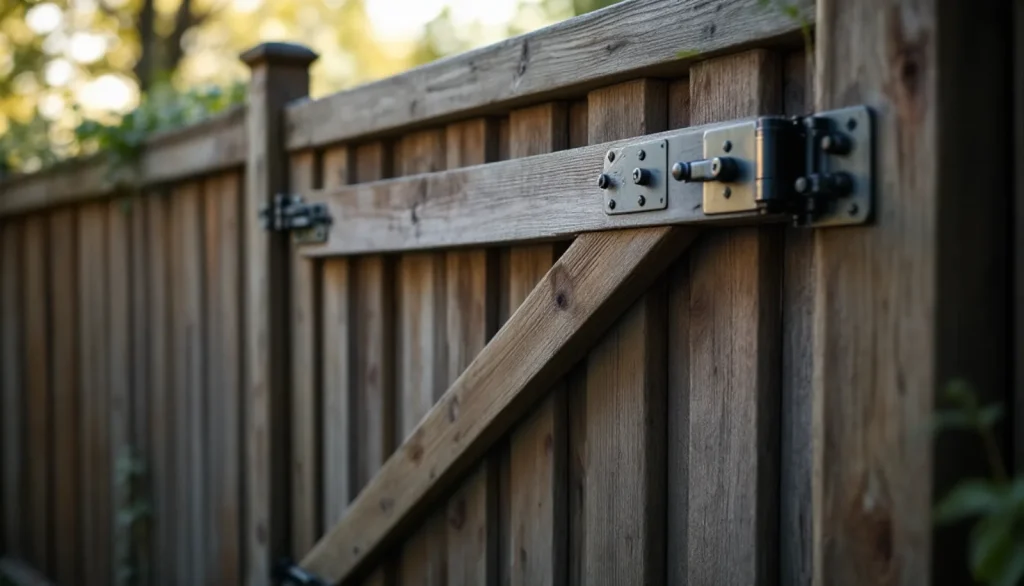
A diagonal brace stops the frame from racking, but only if it runs the right way. Install a wood compression brace from the bottom hinge-side corner up to the top latch-side corner; that direction pushes the gate’s weight back onto the hinge post. For a steel-cable anti-sag kit, do the opposite: run the cable from the top hinge-side corner down to the bottom latch-side corner, then tighten the turnbuckle to pull the leaf back into square.
- Build the frame square and check it corner to corner before hanging.
- Assemble with exterior screws, not nails, so joints do not loosen under repeated swing.
- Add the diagonal brace: wood compression brace bottom-hinge to top-latch, or cable kit top-hinge to bottom-latch.
- Use a rot-resistant species (cedar, redwood) and hot-dipped galvanized or stainless fasteners.
- Hang with at least two hinges; use three on gates over 4 feet or on heavy wood and metal.
- Leave a consistent 1/2 inch gap on the latch side so seasonal swelling does not bind the gate.
Use enough hinges, and the right ones
Two hinges is the minimum for a light walk gate; three is the rule once a gate passes 4 feet wide or carries the mass of solid wood or steel. Loose hinge screws are the single most common cause of an existing gate dropping, because the swing motion works them free over time. Size hinges to the gate weight, drive screws into solid post wood (not just the picket), and re-torque them annually.
Should you DIY a fence gate or hire a pro?
A single walk gate on an existing fence is a realistic weekend DIY if you can build a square frame and set a post; material cost often lands under $150 for a basic wood gate plus hardware. Hire a pro for driveway gates, automated openers, metal fabrication, or any opening where a leaning post needs to be reset in fresh concrete, because those jobs need equipment, electrical work, and load math you do not want to guess.
| Scenario | DIY realistic? | Why |
|---|---|---|
| Single wood walk gate, sound posts | Yes | Frame, brace, hardware; basic tools |
| Replacing a sagging gate, post still solid | Yes | Anti-sag kit or rebuild the leaf |
| Leaning hinge post | Sometimes | Requires digging and resetting concrete |
| Driveway or double gate | No | Weight, span, swing clearance |
| Automated or security gate | No | Motor, electrical, keypad wiring |
If you are hiring out, treat gate work like any other contractor decision: verify license, insurance, and references before you sign. Our guide to finding a reputable landscaper and our hardscape contractor vetting checklist both apply directly to fence and gate crews.
How does a fence gate fit your wider yard plan?
Gate placement should follow how you actually move through the yard: trash route, side-yard access, and the path to garden beds and irrigation valves. A 42-inch or wider gate near the beds saves you fighting a wheelbarrow through a tight 36-inch opening every season. Plan the gate before the fence so the opening lands where the work happens.
If the gate guards a planting or irrigation zone, size it for the equipment you carry. Homeowners installing bed irrigation should read our drip irrigation install guide, and anyone budgeting the full yard should check current lawn care cost benchmarks for 2026 so the gate line item sits in context.
Last reviewed: June 2026
HMNDP Editorial Team, reviewed by HMNDP turf and horticulture editors.
Frequently asked questions
How much does a fence gate cost?
A manual residential walk gate runs about $200 to $1,200 installed, with chain link and wood at the low end and steel or wrought iron higher. Driveway gates cost $2,000 to $6,000 manual and up to $12,000 automated. The national average sits near $400 for a basic gate and near $2,000 with advanced features, per Angi and Ergeon 2026 pricing.
How wide should a fence gate be?
Most residential walk gates are 36 to 48 inches wide, with 36 inches the common default and the ADA-recommended 32-inch minimum clear opening. Go 42 to 48 inches if a wheelbarrow or mower must pass. Single wood gates wider than 48 inches tend to sag, so build a double gate instead. Single-car driveway gates run 10 to 12 feet.
Why does my fence gate sag?
Gates sag for three reasons: a weak hinge-side post, a frame that racks out of square, and loose or undersized hinges. Loose hinge screws are the most common single cause, since the swing motion works them free over time. A square frame with a correct diagonal brace, set on a solid post with enough hinges, prevents most sag.
How do you keep a fence gate from sagging?
Install a diagonal compression brace from the bottom hinge-side corner up to the top latch-side corner, which pushes the gate’s weight onto the hinge post. For a steel-cable anti-sag kit, run the cable the opposite way, top hinge-side to bottom latch-side, then tighten the turnbuckle. Use a 4×4 or larger hinge post and at least two hinges.
What size post do you need for a fence gate?
Use a 4×4 minimum for gates up to 4 feet wide, and step to a 6×6 for wider gates or heavy wood and metal leaves. Set the post about 2 feet deep in freeze-free climates and 4 feet deep where the ground freezes, so frost heave cannot lift and tilt the hinge post over winter.
How many hinges does a fence gate need?
Two hinges is the minimum for a light walk gate. Use three hinges once a gate passes 4 feet wide or carries the weight of solid wood or steel. Size hinges to the gate weight, drive screws into solid post wood rather than just the picket, and re-torque the screws once a year to stop the gate dropping.
Which fence gate type is cheapest?
Chain link is the cheapest gate type, running roughly $200 to $1,000 installed because material and labor costs are low. Vinyl falls in a similar range and needs almost no maintenance. Wood starts around $400 but climbs to $4,000 for custom builds. Steel, wrought iron, and aluminum cost the most but add security and rust resistance.
Can I build a fence gate myself or should I hire a pro?
A single walk gate on sound posts is a realistic weekend DIY, often under $150 in materials plus hardware, if you can build a square frame. Hire a pro for driveway gates, automated openers, metal fabrication, or any opening where a leaning post needs resetting in fresh concrete, since those need equipment and electrical work.