
Rodent Pest Removal: Rats, Voles, Gophers, and More
Rodent pest removal starts with naming the animal, because the trap, bait, and timing that clear a pocket gopher will do nothing to a vole and are illegal for a mole in some states. This guide covers the seven yard rodents homeowners confront most (Norway and roof rats, meadow voles, pocket gophers, tree and ground squirrels, and chipmunks), plus moles, which are not rodents but get lumped in because they tunnel. Read the damage signs first, match the species, then pick the method. For an indoor mouse problem specifically, our mice deep-dive covers exclusion and snap-trap placement in detail.
Which rodent is in my yard? Identify by the damage
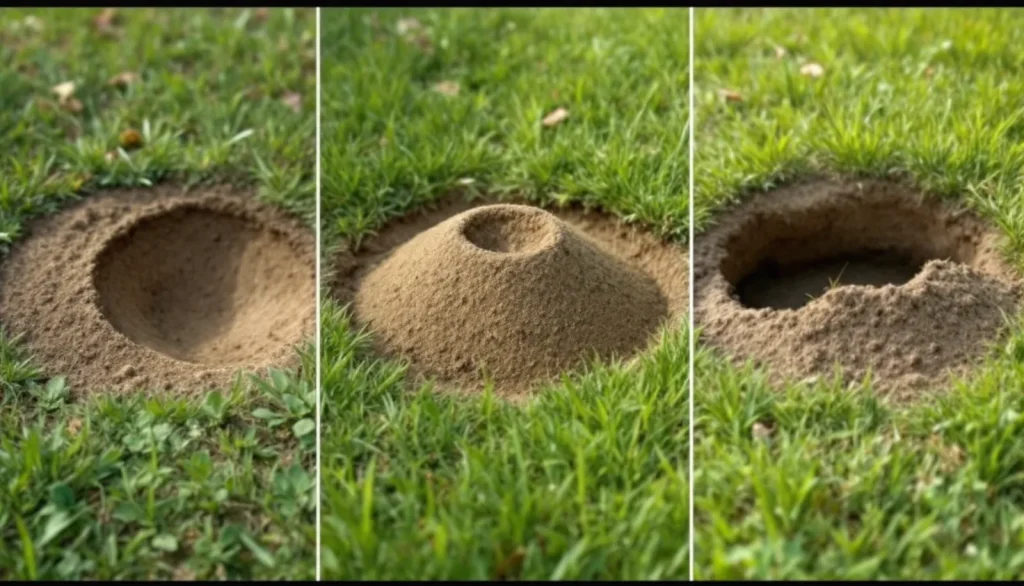
You can name most yard rodents in under a minute by the dirt they leave. Gophers push up crescent or fan-shaped mounds with a plugged hole offset to one side. Moles raise volcano-shaped, round, centered mounds and spongy surface ridges. Voles leave no mounds at all, just clean quarter-sized holes and visible surface runways through the grass. Squirrels and chipmunks dig shallow scattered holes and chew bark or bulbs above ground.
| Animal | Telltale sign | What it eats | Size |
|---|---|---|---|
| Pocket gopher | Crescent/fan mound, plugged off-center hole, no open burrow | Roots, bulbs, whole plants pulled underground | 6 to 10 inches incl. tail |
| Mole (not a rodent) | Round volcano mounds plus raised surface ridges | Earthworms and grubs (not roots) | 4 to 7 inches |
| Vole | Open clean holes, surface runways in turf, no mounds | Grass, roots, bark at the soil line, girdles young trees | 3 to 5 inches |
| Norway/roof rat | Greasy runs, droppings, gnaw marks, burrows near foundations | Almost anything, pet food, fruit, garbage | 7 to 9 inches body |
| Ground squirrel | Open burrow openings 4 inches wide, scattered soil, daytime activity | Seeds, roots, garden crops, irrigation lines | 9 to 11 inches body |
| Tree squirrel | Bark stripping, dug bulbs, attic and soffit entry | Nuts, buds, bulbs, bird seed | 8 to 10 inches body |
| Chipmunk | Small 2-inch holes near walls and steps, no soil mound | Seeds, bulbs, fallen fruit | 4 to 6 inches body |
The single most useful test is for moles versus gophers, since both make mounds. A mole mound is round with the soil pushed up from the center, like a tiny volcano. A gopher mound is crescent or horseshoe-shaped with the entry plug sitting to one side, per the University of California Statewide IPM Program (UC IPM) pocket gopher guidance at https://ipm.ucanr.edu/home-and-landscape/pocket-gophers/. Moles eat earthworms and grubs and never touch your roots, so poisoning the plants they pass does nothing.
Confirm an active tunnel before you trap
Set traps only in active runs, or you waste the effort. Flatten a section of a mole ridge or open a gopher mound, mark it, and check in 24 to 48 hours. If the mole ridge re-raises or the gopher re-plugs the hole, the run is active and worth trapping. Inactive tunnels stay collapsed, and a trap there catches nothing.
What is the best rodent pest removal method per species?
No single method works on every yard rodent. Trapping is the most reliable across surface and burrowing rodents, exclusion is the only permanent fix for rats and tree squirrels, and bait is tightly regulated and species-specific. UC IPM rates trapping as the safe and effective first choice for both gophers and moles, and trapping runs 85 to 95 percent effective in controlled professional settings according to 2026 cost-guide data.
| Animal | First-choice method | Tools or specifics | Timing |
|---|---|---|---|
| Pocket gopher | Trapping in the main tunnel | Macabee, Cinch, or Gophinator pincer traps (Gophinator catches larger gophers) | Spring and fall |
| Mole | Trapping only (no bait works) | Scissor or harpoon mole trap set over an active ridge | Early spring and fall |
| Vole | Mouse snap traps plus habitat cleanup | Snap traps baited with peanut butter set across runways; mow and clear mulch | Year-round |
| Rat (Norway/roof) | Exclusion plus snap traps | Seal gaps over 1/4 inch with steel wool and metal flashing; exterior bait stations only | Year-round |
| Ground squirrel | Trapping or burrow control | Box or Conibear traps baited with walnuts, oats, or melon rind | Mid-spring through fall |
| Tree squirrel/chipmunk | Exclusion plus live or snap traps | Seal soffit and roofline gaps; remove bird seed and fallen fruit | Year-round |
Gopher trapping is precise. UC IPM notes a single gopher holds a burrow system covering 200 to 2,000 square feet, with feeding tunnels 6 to 12 inches deep and the nest as deep as 6 feet. Open the main tunnel (not a lateral), set two traps facing opposite directions, and stake them so a partly caught animal cannot drag the trap underground.
The step-by-step gopher trapping sequence
- Find a fresh crescent mound and locate the plugged hole on the offset side.
- Probe 8 to 12 inches out from the plug to find the main tunnel (the probe drops suddenly when you hit it).
- Open the main tunnel with a trowel or gopher spade.
- Set two pincer traps back to back, one facing each direction down the run.
- Stake or wire each trap so it cannot be pulled into the soil.
- Cover the opening with a board or sod to block light, since gophers plug runs that leak daylight.
- Check at 24 to 48 hours; relocate if no catch, because the trap may be off the main run.
Exclusion and prevention: the part that lasts
Trapping clears the current animals, but exclusion and sanitation stop the next wave. For rats and squirrels, seal every gap wider than 1/4 inch with steel wool, caulk, or metal flashing, since a young rat passes through a hole the width of a quarter. For burrowers, raised beds and buried hardware cloth (1/4 inch mesh, 6 to 12 inches deep) protect roots from gophers and voles.
- Remove the food draw: pick up fallen fruit, store pet food in sealed bins, and clean spilled bird seed under feeders.
- Cut the cover: mow regularly, pull mulch and dense ground cover back from trunks, and clear brush piles where voles and chipmunks nest.
- Protect young trees with quarter-inch hardware-cloth trunk guards, since voles girdle bark at the snow or soil line in winter.
- Line raised beds and gopher-prone areas with buried galvanized mesh before planting.
- Fix leaking irrigation and outdoor faucets, since standing water draws rats and ground squirrels.
Predators help on the margins. A single barn owl family can take roughly 3,000 small rodents in a year, which is why nest boxes are a common vineyard and orchard tactic. They reduce pressure but rarely clear an established infestation on their own.
Is rodent bait legal in my state? The rule most guides skip
The strongest rodent poisons are no longer sold to homeowners, and several states restrict them further. As of EPA action, second-generation anticoagulant rodenticides (SGARs: brodifacoum, bromadiolone, difenacoum, difethialone) are not registered for general consumer products and are limited to licensed and structural pest-control operators. This is the layer most pest-removal pages leave out, and it changes what you can legally buy and apply.
California went further. AB 1788, signed September 29, 2020 and effective January 1, 2021, prohibits most uses of those four SGARs statewide after the Department of Fish and Wildlife detected them in more than 90 percent of tested mountain lions and 85 percent of tested protected fishers from 2014 to 2018. The California Department of Pesticide Regulation tracks current allowed uses at https://www.cdpr.ca.gov. Several other states have added their own restrictions, so confirm current rules with your state pesticide agency before buying any bait.
Bait placement is also regulated for burrowers. UC IPM is explicit that gopher bait must go into the main underground tunnel, never above ground, because surface application is both illegal and ineffective and poses a poisoning risk to pets, children, and wildlife. Bait should not be used in beds growing root vegetables. For pesticide categories and applicator licensing where a professional is required, see our applicator license guide.
When should I hire a professional, and what does it cost?
Hire out when the animal is a rat colony, a recurring infestation, or a species you cannot trap successfully after two weeks. Professional rodent removal runs $150 to $600 on average in 2026, with a typical job near $395 and an inspection alone at $75 to $150, according to 2026 cost guides from Angi, HomeGuide, and HomeAdvisor. Exclusion and severe-infestation work cost more.
| Service | 2026 price range | What you get |
|---|---|---|
| Inspection only | $75 to $150 | Species ID, entry-point and burrow mapping |
| Standard removal (rats/mice) | $150 to $600 | Trapping or exterior bait stations, follow-up visits |
| Exclusion plan | $600 to $1,400 | Sealing all entry points, repairs, a month of monitoring |
| Cleanup and sanitizing | $600 to $1,000 | Droppings removal, waste disposal, disinfection |
| Fumigation (severe) | $1 to $3 per sq ft | Roughly $2,000 to $6,000 for a 2,000 sq ft home |
Most professionals favor trapping over poison indoors so the dead animal is removed rather than left to decompose and stink inside a wall. Exterior bait stations are used as a perimeter preventive. For broader yard-service pricing context, see our 2026 lawn care cost benchmarks, and to vet any company you hire, run our contractor verification checklist.
Repellents, castor oil, and what does not work
Repellents move animals around rather than removing them, so treat them as a supplement, not a fix. Castor-oil granules and sprays are the most evidence-backed option for moles and gophers; a common homemade mix is 6 ounces of 100 percent unrefined castor oil and 2 tablespoons of liquid detergent in 1 gallon of water, watered into the soil. Effects fade in weeks and the animal often returns.
Ultrasonic stake repellents, vibrating spikes, gum, broken glass, and flooding tunnels with a hose have weak to no evidence behind them and can damage your yard. If a method has not measurably emptied the runs after a week or two, switch to trapping. For repairing the turf damage left behind, our guides on filling bare spots and diagnosing brown patches cover the regrowth steps.
Last reviewed: June 2026
HMNDP Editorial Team, reviewed by HMNDP turf and horticulture editors.
Frequently asked questions
How do I know if I have moles, voles, or gophers?
Check the soil. Moles raise round, volcano-shaped mounds plus spongy surface ridges and eat worms, not roots. Gophers push crescent or fan-shaped mounds with a plugged hole offset to one side and eat roots. Voles leave no mounds at all, just clean quarter-sized holes and visible surface runways through the grass.
What is the best way to get rid of gophers?
Trapping in the main tunnel is the most reliable method, rated safe and effective by UC IPM. Find a fresh crescent mound, probe 8 to 12 inches out to locate the main run, open it, and set two pincer traps (Macabee, Cinch, or Gophinator) facing opposite directions. Stake them and cover the opening to block daylight. Check at 24 to 48 hours.
Is a mole a rodent?
No. Moles are insectivores, not rodents, and they eat earthworms and grubs rather than plant roots. They get grouped with rodents only because they tunnel and raise mounds. This matters for control: poison baits aimed at roots do nothing to moles, and trapping over an active surface ridge is the only method that reliably removes them.
Is rat poison legal for homeowners to buy?
The strongest poisons are restricted. Second-generation anticoagulant rodenticides (brodifacoum, bromadiolone, difenacoum, difethialone) are no longer registered for general consumer sale under EPA rules and are limited to licensed pest-control operators. California’s AB 1788 banned most uses statewide as of January 2021. Confirm current rules with your state pesticide agency before buying any bait.
How much does professional rodent removal cost in 2026?
Professional rodent removal runs $150 to $600 on average in 2026, with a typical job near $395, per cost guides from Angi, HomeGuide, and HomeAdvisor. An inspection alone costs $75 to $150. A full exclusion plan runs $600 to $1,400, and severe-infestation fumigation costs roughly $2,000 to $6,000 for a 2,000 square foot home.
Does castor oil get rid of moles and gophers?
Castor oil is the most evidence-backed repellent for moles and gophers, but it relocates animals rather than removing them. A common mix is 6 ounces of unrefined castor oil and 2 tablespoons of liquid detergent in 1 gallon of water, watered into the soil. Effects fade in weeks and the animal often returns, so pair it with trapping for a lasting fix.
How do I keep rodents from coming back?
Combine exclusion with sanitation. Seal every gap wider than 1/4 inch with steel wool and metal flashing, since a young rat fits through a quarter-sized hole. Remove fallen fruit and spilled bird seed, store pet food in sealed bins, mow regularly, and pull mulch back from trunks. Bury 1/4 inch hardware cloth around raised beds to block gophers and voles.