
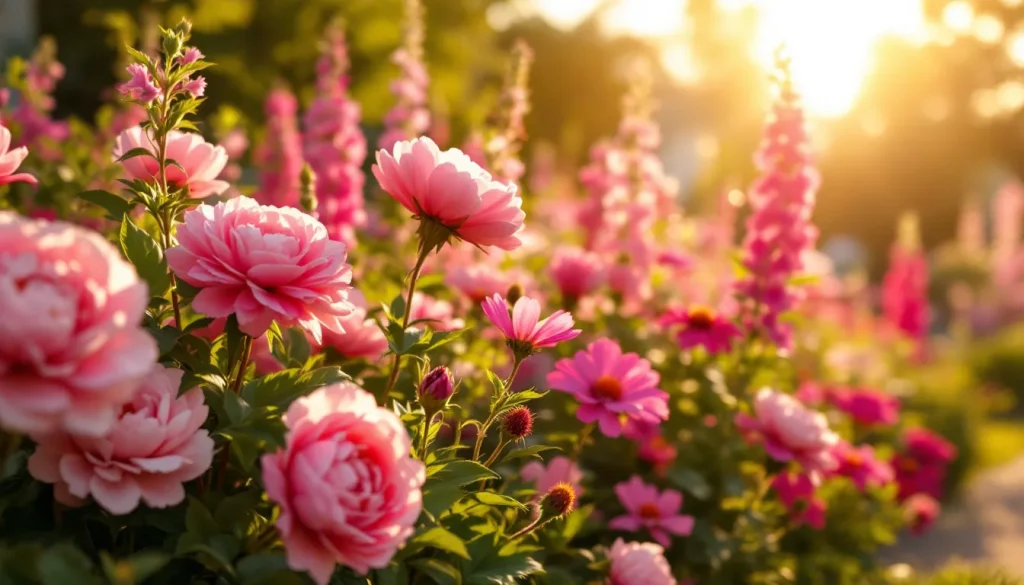
The 31 best pink flowers, ranked by how you’ll actually use them
Pink flowers span roses, peonies, and bee balm through tulips, dahlias, and cherry blossom, and the practical question is not “which is prettiest” but “which one survives my yard and blooms when I need it.” This guide names 31 pink-flowering plants with botanical names, then gives you USDA hardiness zone, sun requirement, bloom season, and an annual or perennial tag for each so you can choose instead of just browse.
By HMNDP Editorial Team, independent reporting on lawn care, landscaping, and the green industry.
Last reviewed: June 2026.
Read the master table first to filter by zone and sun. Then jump to the shortlist that matches your job: shade beds, cut bouquets, weddings, pollinators, containers, or all-summer color. Care data below reflects general USDA zone guidance and can shift with your microclimate, soil, and local frost dates.
Master comparison table: 31 pink flowers by zone, sun, bloom, and type
This table is the filter no other “pink flowers” list gives you. Scan it to match a plant to your conditions before reading any description. “Zone” is the USDA hardiness range where the plant reliably overwinters as a perennial. Annuals are grown for a single season in most U.S. zones. Sun key: full sun is 6+ hours, part sun is 3 to 6 hours, shade is under 3 hours of direct light.
| # | Common name | Botanical name | Type | USDA zone | Sun | Bloom season |
|---|---|---|---|---|---|---|
| 1 | Rose | Rosa spp. | Perennial (shrub) | 3 to 9 | Full sun | Late spring to fall |
| 2 | Peony | Paeonia spp. | Perennial | 3 to 8 | Full to part sun | Late spring |
| 3 | Bee balm | Monarda didyma | Perennial | 4 to 9 | Full to part sun | Mid to late summer |
| 4 | Dahlia | Dahlia spp. | Tender perennial | 8 to 11 (lift in colder zones) | Full sun | Summer to first frost |
| 5 | Tulip | Tulipa spp. | Perennial (bulb) | 3 to 8 | Full to part sun | Early to mid spring |
| 6 | Cherry blossom | Prunus serrulata | Perennial (tree) | 5 to 8 | Full sun | Early spring |
| 7 | Hydrangea | Hydrangea macrophylla | Perennial (shrub) | 5 to 9 | Part sun | Summer to early fall |
| 8 | Coneflower | Echinacea purpurea | Perennial | 3 to 8 | Full sun | Summer to early fall |
| 9 | Astilbe | Astilbe spp. | Perennial | 3 to 8 | Part sun to shade | Early to mid summer |
| 10 | Foxglove | Digitalis purpurea | Biennial | 4 to 9 | Part sun | Late spring to summer |
| 11 | Cosmos | Cosmos bipinnatus | Annual | 2 to 11 (annual) | Full sun | Summer to frost |
| 12 | Zinnia | Zinnia elegans | Annual | 2 to 11 (annual) | Full sun | Summer to frost |
| 13 | Petunia | Petunia spp. | Annual | 9 to 11 (annual elsewhere) | Full sun | Spring to frost |
| 14 | Impatiens | Impatiens walleriana | Annual | 10 to 11 (annual) | Part sun to shade | Spring to frost |
| 15 | Begonia | Begonia spp. | Tender perennial | 9 to 11 (annual) | Part sun to shade | Summer to frost |
| 16 | Sweet pea | Lathyrus odoratus | Annual | 2 to 11 (annual) | Full to part sun | Late spring to summer |
| 17 | Snapdragon | Antirrhinum majus | Annual | 7 to 11 (annual elsewhere) | Full to part sun | Spring and fall |
| 18 | Ranunculus | Ranunculus asiaticus | Tender perennial | 8 to 10 (annual) | Full sun | Spring |
| 19 | Camellia | Camellia japonica | Perennial (shrub) | 7 to 9 | Part sun | Late winter to spring |
| 20 | Azalea | Rhododendron spp. | Perennial (shrub) | 4 to 9 | Part sun | Spring |
| 21 | Dianthus (Sweet William) | Dianthus spp. | Perennial | 3 to 9 | Full sun | Late spring to summer |
| 22 | Phlox (garden) | Phlox paniculata | Perennial | 4 to 8 | Full to part sun | Mid to late summer |
| 23 | Lupine | Lupinus spp. | Perennial | 4 to 8 | Full sun | Late spring to early summer |
| 24 | Hollyhock | Alcea rosea | Biennial/short perennial | 3 to 8 | Full sun | Summer |
| 25 | Anemone (Japanese) | Anemone hupehensis | Perennial | 4 to 8 | Part sun | Late summer to fall |
| 26 | Bleeding heart | Lamprocapnos spectabilis | Perennial | 3 to 9 | Part sun to shade | Mid spring to early summer |
| 27 | Mandevilla | Mandevilla spp. | Tender perennial (vine) | 9 to 11 (annual) | Full sun | Summer to frost |
| 28 | Coral bells | Heuchera spp. | Perennial | 4 to 9 | Part sun to shade | Late spring to summer |
| 29 | Gaura (whirling butterflies) | Oenothera lindheimeri | Perennial | 5 to 9 | Full sun | Late spring to frost |
| 30 | Mallow (rose mallow) | Hibiscus moscheutos | Perennial | 5 to 9 | Full sun | Mid to late summer |
| 31 | Lily (Oriental) | Lilium spp. | Perennial (bulb) | 4 to 9 | Full to part sun | Mid to late summer |
Each species is described below in the same order, with a photo for visual identification. If you are choosing plants around drainage or a slope, pair this with our guides to types of soil and types of erosion so the bed you plant does not wash out.
The 31 pink flowers, named and described
Below are all 31 pink-flowering plants from the table, each with its botanical name, a short identification note, and the growing detail that matters most. Shades of pink range from soft blush and pale to hot pink and near-magenta, and many species offer multiple named cultivars across that range.
1. Rose (Rosa spp.)
The rose is the default pink flower for most people, with cultivars from pale blush (‘New Dawn’) to hot pink (‘Knock Out’). Roses are woody perennial shrubs hardy in USDA zones 3 to 9, want full sun (6+ hours), and bloom from late spring through fall with deadheading. Repeat-blooming shrub roses are the low-effort choice for beginners.
2. Peony (Paeonia spp.)
Peonies produce large, dense, blush-to-deep-pink blooms in late spring and are famously long-lived, with clumps that can outlast the gardener. They are perennials for zones 3 to 8, want full to part sun, and dislike being planted too deep. A single established plant can hold dozens of flowers for a two to three week window.
3. Bee balm (Monarda didyma)
Bee balm carries shaggy, tubular pink to rose flowers in mid to late summer and is a top pollinator plant, drawing hummingbirds and native bees. It is a perennial for zones 4 to 9 in full to part sun. Choose mildew-resistant cultivars like ‘Marshall’s Delight’ and give it airflow to avoid powdery mildew.
4. Dahlia (Dahlia spp.)
Dahlias deliver structured pink blooms from summer to first frost, from dinner-plate size down to compact pompons. They grow from tubers, thrive in full sun, and are hardy in zones 8 to 11; in colder zones, lift and store the tubers over winter. Dahlias are a cut-flower staple for their long vase life.
5. Tulip (Tulipa spp.)
Tulips open in early to mid spring in every pink shade, from pale to fringed hot pink. Planted as fall bulbs, they are perennial in zones 3 to 8, though many gardeners treat hybrid tulips as annuals because bloom quality fades after the first year. Full to part sun and well-drained soil are key.
6. Cherry blossom (Prunus serrulata)
Ornamental cherry trees produce clouds of soft pink blossom in early spring, the signature of the flowering cherry. They are perennial trees for zones 5 to 8 in full sun. Bloom lasts roughly one to two weeks, so plant for the moment rather than season-long color. ‘Kwanzan’ offers deep double-pink flowers.
7. Hydrangea (Hydrangea macrophylla)
Bigleaf hydrangeas form large pink mophead or lacecap clusters through summer into early fall. They are perennial shrubs for zones 5 to 9 in part sun. Flower color responds to soil pH: alkaline soil (higher pH) keeps blooms pink, while acidic soil turns them blue, so pink hydrangeas may need lime to hold their color.
8. Coneflower (Echinacea purpurea)
Purple coneflower reads as rosy pink and blooms from summer into early fall on tough, drought-tolerant stems. It is a native perennial for zones 3 to 8 in full sun, and a reliable pollinator and goldfinch plant. Leave seed heads standing for winter interest and birds.
9. Astilbe (Astilbe spp.)
Astilbe sends up feathery pink plumes in early to mid summer and is one of the few showy bloomers for shade. It is a perennial for zones 3 to 8 in part sun to shade, and it needs consistently moist soil. Pair it with ferns and hostas in a damp, low-light bed.
10. Foxglove (Digitalis purpurea)
Foxglove raises tall spires of speckled pink bells in late spring to summer. It is a biennial for zones 4 to 9 in part sun, flowering in its second year and then self-seeding. Note that all parts are toxic if eaten, so site it away from small children and pets.
11. Cosmos (Cosmos bipinnatus)
Cosmos is an easy annual with daisy-like pink flowers on airy foliage from summer to frost. It grows anywhere as a warm-season annual, wants full sun, and thrives in poor soil (rich soil produces leaves over flowers). Direct-sow after frost for a low-cost cutting patch.
12. Zinnia (Zinnia elegans)
Zinnias bloom in bright and soft pinks from summer to frost and are among the fastest annuals from seed. They want full sun and tolerate heat well. Zinnias are a beginner cut-flower favorite because more you cut, the more they bloom. Give airflow to limit powdery mildew.
13. Petunia (Petunia spp.)
Petunias flower nonstop in pinks from blush to magenta, spring to frost, in beds and containers. They are grown as annuals in most zones and want full sun. Trailing types like the Wave series spill over container edges. Deadhead older varieties; many modern petunias are self-cleaning.
14. Impatiens (Impatiens walleriana)
Impatiens are the go-to pink annual for shade, flowering spring to frost in part sun to shade. They want consistent moisture and grow as annuals in most of the U.S. They fill shady borders and containers where sun-lovers fail. Choose downy-mildew-resistant strains where that disease is present.
15. Begonia (Begonia spp.)
Begonias offer waxy or ruffled pink blooms and thrive in part sun to shade from summer to frost. They are tender perennials grown as annuals in zones below 9. Wax and tuberous types both come in strong pinks and pair well with impatiens in low-light containers.
16. Sweet pea (Lathyrus odoratus)
Sweet peas are fragrant climbing annuals with ruffled pink blossoms in late spring to summer. They want full to part sun, cool weather, and a trellis to climb. Sow early because they fade in summer heat. Few flowers match their scent for cutting.
17. Snapdragon (Antirrhinum majus)
Snapdragons stack pink tubular flowers on spikes and bloom in the cool shoulder seasons, spring and fall. Grown as annuals in most zones (perennial in 7 to 11), they want full to part sun. Tall varieties are excellent cut flowers; dwarf types edge borders and containers.
18. Ranunculus (Ranunculus asiaticus)
Ranunculus produce tightly layered, rose-like pink blooms in spring and are a florist and wedding favorite. Grown from corms, they are hardy in zones 8 to 10 and treated as annuals elsewhere. They want full sun and cool spring weather, and their long, straight stems suit bouquets.
19. Camellia (Camellia japonica)
Camellias bring pink blooms in late winter to spring when little else flowers, on glossy evergreen shrubs. They are perennial for zones 7 to 9 in part sun and prefer acidic, well-drained soil. Their off-season timing makes them a standout for Southern gardens.
20. Azalea (Rhododendron spp.)
Azaleas cover themselves in pink spring blooms and are a Southern and woodland-garden staple. They are perennial shrubs for zones 4 to 9 in part sun, and they need acidic soil to thrive. Encore-type azaleas rebloom in fall for a second flush of color.
21. Dianthus / Sweet William (Dianthus spp.)
Dianthus carries clove-scented pink flowers with fringed petals from late spring into summer, often on low mounds. Most are perennial for zones 3 to 9 in full sun. Compact “pinks” edge borders and containers, and the name “pink” refers to the pinked (frilled) petal edge, not only the color.
22. Garden phlox (Phlox paniculata)
Garden phlox forms fragrant pink flower clusters atop tall stems in mid to late summer, a cottage-garden classic. It is a perennial for zones 4 to 8 in full to part sun. Choose mildew-resistant cultivars like ‘David’ and its pink relatives, and space plants for airflow.
23. Lupine (Lupinus spp.)
Lupines send up bold pink flower spikes in late spring to early summer over palmate leaves. They are perennials for zones 4 to 8 in full sun and prefer cool climates and well-drained soil. As legumes, they help fix nitrogen and read beautifully in a naturalistic border.
24. Hollyhock (Alcea rosea)
Hollyhocks tower with pink saucer blooms up cottage walls in summer, often reaching 6 feet or more. They are biennials or short-lived perennials for zones 3 to 8 in full sun, and they self-seed freely. Give them a back-of-border spot and shelter from wind.
25. Japanese anemone (Anemone hupehensis)
Japanese anemone opens soft pink flowers on wiry stems in late summer to fall, filling the gap after summer perennials fade. It is a perennial for zones 4 to 8 in part sun and spreads once established. It is one of the best pink plants for extending color into autumn.
26. Bleeding heart (Lamprocapnos spectabilis)
Bleeding heart dangles distinctive heart-shaped pink flowers along arching stems in mid spring to early summer. It is a perennial for zones 3 to 9 in part sun to shade and goes dormant by midsummer. Plant it with later-emerging shade perennials to cover the gap it leaves.
27. Mandevilla (Mandevilla spp.)
Mandevilla is a tropical vine with large trumpet-shaped pink flowers from summer to frost. It is a tender perennial for zones 9 to 11, grown as an annual or overwintered indoors elsewhere. Give it full sun and a trellis; it is a strong container and patio plant.
28. Coral bells (Heuchera spp.)
Coral bells send airy sprays of tiny pink bell flowers above colorful foliage in late spring to summer. They are perennials for zones 4 to 9 in part sun to shade, valued as much for their leaves as their blooms. They edge shady borders and containers well.
29. Gaura / whirling butterflies (Oenothera lindheimeri)
Gaura floats delicate pink blooms on thin, swaying stems from late spring to frost, giving a long season of soft motion. It is a heat and drought-tolerant perennial for zones 5 to 9 in full sun. It suits xeriscapes and informal, prairie-style plantings.
30. Rose mallow (Hibiscus moscheutos)
Hardy hibiscus, or rose mallow, produces dinner-plate pink flowers in mid to late summer on shrub-sized perennials. It is hardy in zones 5 to 9 in full sun and tolerates wet soil, including rain gardens. Each bloom lasts a day, but plants open flushes over many weeks.
31. Oriental lily (Lilium spp.)
Oriental lilies open large, fragrant pink flowers in mid to late summer on tall stems from bulbs. They are perennial for zones 4 to 9 in full to part sun. ‘Stargazer’ is the iconic pink-and-white type. Plant bulbs in fall or spring in well-drained soil for years of return.
Naturally pink flowers vs. dyed or heavily hybridized pink
Naturally pink flowers get their color from pigments the plant produces on its own, mainly anthocyanins. Dyed flowers (common with florist roses, carnations, and orchids) are white blooms that took up colored water or were sprayed. Heavily hybridized pinks are real plant pigment, but bred by humans into shades that rarely occur in the wild. Here is how to tell them apart.
Truly naturally pink species include wild rose (Rosa carolina), coneflower, bleeding heart, foxglove, and many native phlox and mallows. Their pink is consistent from petal base to tip and matches the species, not a fashion shade.
Dyed flowers usually show color pooling in the veins, an unnaturally uniform or novelty shade (electric or rainbow tones), or a white base where dye did not reach. Cut carnations and “rainbow roses” are the usual examples. Dye is cosmetic and does not transfer to a plant you grow at home.
Heavily hybridized pinks, like many modern roses, tulips, and dahlias, are genuinely pigmented but are cultivated selections. If you want a specific shade to plant, buy the named cultivar rather than trusting a dyed cut stem to represent what will grow.
| Source of pink | How to spot it | Examples |
|---|---|---|
| Naturally pink | Even color, matches wild species | Wild rose, coneflower, foxglove, bleeding heart |
| Dyed (cut only) | Vein pooling, novelty shades, white base | Dyed carnations, rainbow roses, tinted orchids |
| Hybridized cultivar | Real pigment, named variety, not wild-occurring | ‘Knock Out’ rose, fringed pink tulips, pink dahlias |
Pink and yellow flowers: the bi-color pink shortlist
Pink and yellow flowers are a specific search for a reason: the combination reads warm and cheerful and is common in wedding and container palettes. Some plants carry both colors on one bloom, while others are simply available in both. Below are reliable choices for a pink-and-yellow scheme.
- Lantana (Lantana camara): clusters that open yellow and age to pink on the same head, zones 8 to 11, full sun, summer to frost.
- Columbine (Aquilegia spp.): bi-color pink-and-yellow forms, zones 3 to 8, part sun, spring.
- ‘Peace’ rose and blend roses: pink-edged yellow petals, zones 5 to 9, full sun, late spring to fall.
- Blanket flower (Gaillardia): warm pink-to-yellow banding on daisy blooms, zones 3 to 10, full sun, summer.
- Snapdragon and zinnia mixes: both come in true pink and true yellow to plant side by side for a two-tone bed.
For a planted scheme, pair a pink perennial (coneflower or garden phlox) with a yellow one (coreopsis or rudbeckia) rather than hunting for one plant that does both. Matching bloom season is what makes the combination land.
Pink perennials that come back every year
Pink perennials return each year without replanting, unlike annuals you buy again every spring. From the 31 above, the reliable pink perennials for U.S. gardens include peony, bee balm, coneflower, astilbe, garden phlox, Japanese anemone, bleeding heart, rose mallow, coral bells, gaura, dianthus, lupine, and hardy roses. These are the backbone of a low-maintenance pink bed.
For a bed that reads pink from spring through fall, layer bloom times: bleeding heart and peony (spring), bee balm and coneflower (summer), then Japanese anemone (fall). This relay is the core idea behind our roundup of perennial flowers that bloom all summer, which pairs well with a pink-focused plan.
Match the perennial to your light and zone using the master table above. Astilbe, coral bells, and bleeding heart handle shade; coneflower, gaura, and rose mallow want full sun and shrug off heat.
Best pink flowers for shade, bouquets, weddings, pollinators, and containers
The fastest way to choose is by job, not by name. These shortlists pull the strongest pink pick from the 31 species for each common use, so you do not have to reread every entry. Confirm your zone and sun against the master table before buying.
| Your goal | Top pink picks | Why |
|---|---|---|
| Shade garden | Astilbe, impatiens, bleeding heart, coral bells, begonia | Bloom in part sun to shade where sun-lovers fail |
| Cut bouquets | Dahlia, zinnia, snapdragon, ranunculus, sweet pea | Long stems, long vase life, repeat cutting |
| Weddings | Peony, ranunculus, garden rose, sweet pea | Classic blush tones, soft form, fragrance |
| Pollinators | Bee balm, coneflower, phlox, gaura | Nectar-rich, draw bees, butterflies, hummingbirds |
| Containers | Petunia, begonia, mandevilla, dianthus, impatiens | Compact or trailing, bloom nonstop in pots |
| All-summer color | Cosmos, zinnia, petunia, gaura, rose mallow | Bloom continuously summer to frost |
For pollinator beds, group three or more of the same species together rather than scattering singles; bees forage more efficiently on a mass of one flower. Bee balm and coneflower planted in drifts will out-attract the same plants spaced apart.
What pink flowers symbolize and mean
Pink flowers broadly symbolize love, gentleness, gratitude, and admiration, softer in tone than the passion tied to red. Shade shifts the meaning: pale blush suggests grace and innocence, while hot pink signals energy and playful affection. Specific flowers carry their own symbolism layered on top of the color.
- Pink rose: gratitude, admiration, and gentle love; a common “thank you” flower.
- Pink peony: romance, prosperity, and a happy marriage; popular in weddings.
- Pink carnation: a mother’s love, closely tied to Mother’s Day.
- Pink ribbon and pink blooms: breast cancer awareness and support.
- Cherry blossom: the fleeting nature of life (mono no aware in Japanese tradition).
Meanings are cultural conventions, not fixed rules, and they vary by region and occasion. Use them as a starting point for gifting rather than a strict code.
How to choose and plant your pink flowers
Pick pink flowers by matching four things in order: your USDA zone, your light, your bloom timing, and whether you want annual or perennial. Get those right and almost any species on this list performs. The most common failure is planting a full-sun flower in shade or a zone-9 plant in a zone-5 winter.
- Confirm your USDA hardiness zone. Perennials must match your zone to survive winter; annuals do not, since you replant yearly.
- Measure your light. Count direct sun hours: 6+ is full sun, 3 to 6 is part sun, under 3 is shade. Match it to the table.
- Choose bloom timing. Layer spring, summer, and fall bloomers for continuous pink, or mass one season for impact.
- Decide annual or perennial. Annuals give instant, season-long color; perennials return but often bloom for shorter windows.
- Prep the soil and drainage. Most pink flowers want well-drained soil; amend heavy clay before planting.
Good soil and a healthy lawn frame any flower bed. If you are planning the wider yard around your beds, our guides to types of grass and types of soil help you match turf and ground conditions to the plants you choose.
Frequently Asked Questions
What are the most popular pink flowers and their names?
The most popular pink flowers are the rose (Rosa spp.), peony (Paeonia spp.), and tulip (Tulipa spp.), followed by dahlia, hydrangea, cherry blossom, and cosmos. These lead in both garden planting and floristry because they offer many pink shades, wide zone tolerance, and long bloom or vase life. Roses and peonies in particular anchor most pink garden beds and bouquets.
What are naturally pink flowers, not dyed or hybridized?
Naturally pink flowers get their color from the plant’s own anthocyanin pigments, not from dye or intensive breeding. Examples include wild rose (Rosa carolina), purple coneflower, foxglove, bleeding heart, native phlox, and rose mallow. Spot them by even color that matches the wild species. Dyed cut flowers, by contrast, show vein pooling, a white base, or novelty shades that no living plant produces.
What perennial flowers bloom pink?
Reliable pink perennials that return yearly include peony, bee balm, coneflower, astilbe, garden phlox, Japanese anemone, bleeding heart, rose mallow, coral bells, gaura, dianthus, and hardy roses. They span USDA zones 3 to 9 and cover spring through fall. Layering their bloom times (peony in spring, coneflower in summer, anemone in fall) keeps a bed pink across the whole growing season.
What flowers are both pink and yellow?
Flowers that carry pink and yellow together include lantana (opens yellow, ages pink), bi-color columbine, the ‘Peace’ rose, and blanket flower (Gaillardia). For a planted scheme, many gardeners pair a pink flower like coneflower or phlox with a yellow one like coreopsis or rudbeckia that blooms in the same season, since matching bloom time is what makes the two-tone combination work.
What do pink flowers symbolize or mean?
Pink flowers generally symbolize love, gentleness, gratitude, and admiration, a softer sentiment than red’s passion. Pale blush suggests grace and innocence; hot pink signals playful energy. Specific blooms add meaning: pink roses mean gratitude, pink peonies mean romance and a happy marriage, pink carnations mean a mother’s love, and pink ribbons and blooms represent breast cancer awareness and support.
What are the best pink flowers to grow in a garden?
The best pink flowers for a home garden depend on light and zone, but strong all-around picks are coneflower and bee balm (sun and pollinators), astilbe and bleeding heart (shade), and hardy roses and peonies (structure). For nonstop color, add cosmos, zinnia, and petunia as annuals. Match each to your USDA zone and sun hours using a care table before buying.
What pink flowers are best for bouquets or weddings?
The best pink flowers for bouquets and weddings are peony, garden rose, ranunculus, and sweet pea for their soft blush tones and fragrance, plus dahlia, zinnia, and snapdragon for long-lasting cut stems. Peonies and ranunculus are especially prized for spring weddings. For DIY arrangements, choose long-stemmed, repeat-cutting flowers like zinnia and dahlia so you can harvest continuously.
Which pink flowers bloom all summer or year-round?
Pink flowers that bloom all summer include cosmos, zinnia, petunia, gaura, and rose mallow, which flower from early summer to frost. No pink flower blooms year-round outdoors in most U.S. zones, but in frost-free zones 10 to 11, mandevilla and tropical hibiscus flower nearly continuously. In colder zones, layer spring, summer, and fall perennials to approximate season-long pink.