
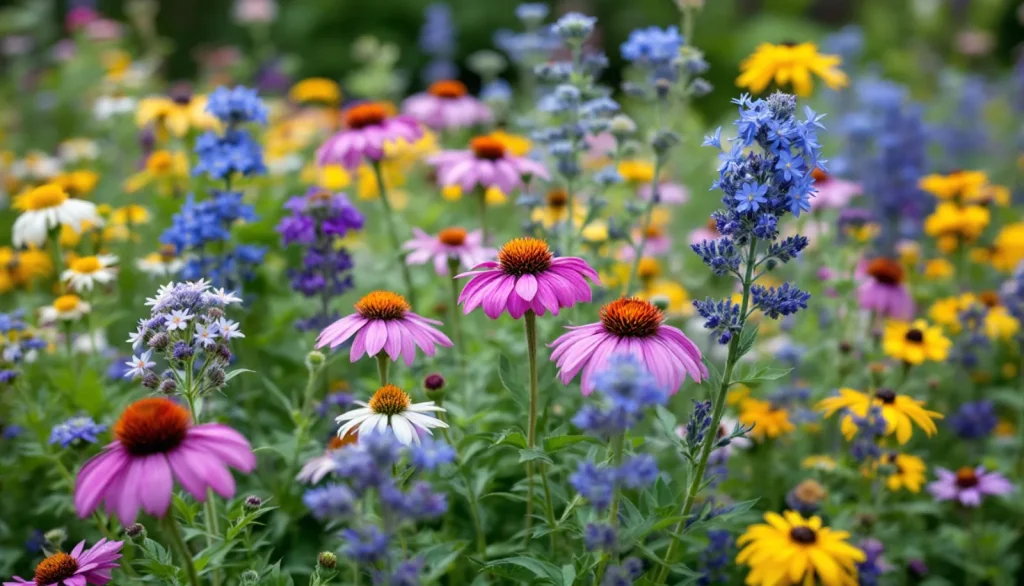
Perennial Flowers That Bloom All Summer, Ranked by Weeks
The shortest list of perennial flowers that bloom all summer, meaning real color from June to frost rather than a two-week flush, comes down to about a dozen reliable species: coreopsis, catmint, coneflower, Russian sage, black-eyed Susan, salvia, yarrow, blanket flower, garden phlox, bee balm, and a few others. The catch most lists skip: “blooms all summer” hides two very different plants. Some flower nonstop on their own. Others give you 14 to 16 weeks only if you cut them back at the right moment. This page ranks them by how many weeks they actually bloom and tells you which technique, simple deadheading or a hard shear, keeps each one going. For the broader by-zone selection of every perennial type, see our perennial flowers selection guide; this page is the long-bloom subset only.
The short version
- Horticulturists define a “long-blooming” perennial as one that flowers for at least 6 to 10 weeks, per Garden Design and multiple extension sources. The plants below run 12 to 20 weeks.
- “Full sun” means 6 or more hours of direct sun per day. Nearly every all-summer bloomer needs it.
- Threadleaf coreopsis (tickseed) is the duration champion, holding flowers roughly 16 to 20 weeks from late spring to frost.
- Two maintenance camps: deadhead-only plants (coneflower, salvia, blanket flower) and shear-back plants (catmint, coreopsis, yarrow) that need a one-third to one-half cut after the first flush to rebloom.
- A handful bloom all summer with zero deadheading: sedum, Russian sage, and many newer catmint cultivars like Cat’s Pajamas.
- Most are hardy in USDA zones 3 to 9. Confirm your zone on the 2023 USDA Plant Hardiness Zone Map.
Which perennials actually bloom all summer (ranked by weeks)
The perennials that genuinely bloom all summer, defined as 12 or more continuous weeks, are led by threadleaf coreopsis at 16 to 20 weeks, followed by catmint, blanket flower, and coneflower in the 12 to 16 week range. Most lists bury this by listing a calendar “bloom window” instead of bloom duration. The table below ranks the workhorses by how long the flowers actually stay on the plant.
| Perennial (botanical name) | Bloom duration | Bloom window | Sun | Zones | Height |
|---|---|---|---|---|---|
| Threadleaf coreopsis / tickseed (Coreopsis verticillata) | 16 to 20 weeks | Late spring to frost | Full sun | 3 to 9 | 1 to 3 ft |
| Catmint (Nepeta x faassenii) | 14 to 16 weeks with cutback | Late spring to fall | Full sun | 3 to 9 | 1 to 3 ft |
| Blanket flower (Gaillardia) | 14 to 16 weeks | Spring to frost | Full sun | 3 to 9 | 1 to 2 ft |
| Coneflower (Echinacea purpurea) | 12 to 16 weeks | Early June to September | Full sun | 3 to 9 | 2 to 4 ft |
| Russian sage (Perovskia atriplicifolia) | 12 to 16 weeks | July to first frost | Full sun | 4 to 9 | 2 to 4 ft |
| Salvia (Salvia nemorosa) | 12 to 14 weeks with deadhead | Late spring to fall | Full sun | 4 to 9 | 1 to 3 ft |
| Black-eyed Susan (Rudbeckia) | 10 to 14 weeks | June to September | Full sun | 3 to 9 | 1 to 3 ft |
| Yarrow (Achillea) | 10 to 14 weeks with cutback | All summer | Full sun | 3 to 9 | 2 to 3 ft |
| Garden phlox (Phlox paniculata) | 8 to 12 weeks | Mid-June to frost | Full to part sun | 4 to 8 | 2 to 4 ft |
| Bee balm (Monarda) | 6 to 10 weeks | Mid to late summer | Full to part sun | 3 to 9 | 2 to 4 ft |
| Sedum / stonecrop (Hylotelephium) | 6 to 10 weeks | Late summer into fall | Full sun | 3 to 9 | 1 to 2 ft |
Bloom durations vary by cultivar, region, and season; a plant in zone 9 with a long frost-free window will outrun the same plant in zone 4. Use the ranking to pick, then check the local nursery tag. Duration figures here reconcile bloom-window data from Garden Design, the Missouri Botanical Garden, and Gardening Know How against the working definition that a long bloomer flowers at least 6 to 10 weeks.
Why “blooms all summer” hides two different plants
“Blooms all summer” describes two unrelated behaviors, and confusing them is why gardens look patchy by August. One group flowers continuously on a single long flush. The other reblooms only after you remove spent flowers, so the same plant either runs all season or quits in six weeks depending entirely on what you do in July.
Continuous bloomers like sedum, Russian sage, and modern catmint cultivars (Cat’s Pajamas, Junior Walker) hold color without intervention. You can ignore them and still get the full window.
Flush-and-rebloom plants like coreopsis, catmint species types, yarrow, and salvia put on a heavy first show, then stall. Left alone they set seed and stop. Cut back at the right moment and they flower again into October. The next two sections split them by the technique each one needs.
Deadhead-only perennials: pinch the spent flower, keep the bloom
Deadheading means removing individual faded flowers, which redirects the plant’s energy from seed-making back into new buds. For these perennials a light, ongoing pinch is enough; no hard cutback is needed. Coneflower, salvia, blanket flower, and shasta daisy respond well to this single technique through the season.
- Coneflower (Echinacea): pinch spent blooms back to the next bud or leaf set. Note the Missouri Botanical Garden advises leaving the final flush of seedheads standing, because goldfinches and other birds feed on them through winter.
- Salvia (Salvia nemorosa): snip the whole spent flower spike down to the first set of side buds. This is the single highest-payoff deadhead on the list, often triggering two or three repeat flushes.
- Blanket flower (Gaillardia): pinch faded daisies to keep new ones coming spring to frost. Many newer series rebloom with almost no help.
- Shasta daisy and garden phlox: remove spent heads to stop seed set and extend the show; phlox also benefits from good air circulation to limit powdery mildew.
Shear-back perennials: cut by a third to rebloom for a second show
Shearing is a hard cut, removing one-third to one-half of the whole plant in a single pass, not flower by flower. Catmint, threadleaf coreopsis, and yarrow need this when the first flush fades and the plant goes floppy or sparse. The cut forces fresh foliage and a strong second bloom. Timing and amount matter, so follow the steps below.
- Watch for the first-flush fade. For catmint this is usually June; for coreopsis, late July or August. The plant looks leggy, flowering thins, and seed heads form.
- Shear the whole plant back by one-third to one-half. Use clean, sharp shears. Cut above a node so you leave green growth, not bare stems. Catmint can take a hard cut to a few inches; coreopsis and yarrow do well at one-third to one-half.
- Water and feed lightly. A modest dose of balanced fertilizer after the cut speeds regrowth. See our outdoor plant fertilizer guide for NPK selection on perennials.
- Expect rebloom in two to three weeks. The second flush carries most of these plants through September and October in zones 5 and warmer.
Perennials that bloom all summer with no deadheading at all
A few perennials bloom all summer and skip maintenance entirely, which matters if low effort is the goal. Sedum, Russian sage, and several newer catmint cultivars hold color without deadheading or shearing. They are the right pick for large beds, busy gardeners, or anyone who travels in July.
| Perennial | Why no deadheading needed | Named cultivar to look for |
|---|---|---|
| Sedum / stonecrop | Flowers and seedheads stay attractive into fall and winter; cutting them off removes the show | Autumn Joy, Birthday Party |
| Russian sage | Airy flower clouds bloom for weeks unattended from midsummer to frost | Blue Jean Baby, Little Spire |
| Catmint (newer cultivars) | Bred to rebloom on their own without the June cutback older types need | Cat’s Pajamas, Junior Walker |
| Coreopsis (some newer series) | Sterile or near-sterile types keep flowering without setting seed | Several Big Bang and Li’l Bang types |
How to plant for nonstop color June through frost
Nonstop color across the whole summer comes from overlapping bloom windows, not from one perfect plant. Pair an early-summer star like catmint or salvia with a midsummer anchor like coneflower or coreopsis and a late performer like Russian sage or sedum, so something is always at peak. Match every choice to full sun and well-drained soil.
Site selection drives results more than any product. Most all-summer bloomers want 6 or more hours of direct sun and soil that drains. Heavy clay rots the crowns of coreopsis, blanket flower, and Russian sage. If your bed stays wet, fix drainage first; our guide on drip irrigation for garden beds covers delivering steady, low-volume water without saturating the root zone.
Spacing affects bloom too. Crowded perennials get less air, more mildew (a known issue on garden phlox and bee balm), and fewer flowers. Follow the tag’s spacing, and in hot, dry regions like the Southwest, lean on the most drought-tough picks (Russian sage, yarrow, blanket flower, coreopsis). Gardeners in low-water metros can also weigh turf reduction; see our drought-tolerant lawn alternatives for the rebate and cost math.
Common mistakes that cut bloom time short
Most gardens lose summer bloom to three fixable errors: too much nitrogen, too little sun, and skipping the July cutback. Each one quietly trades flowers for foliage or stops rebloom entirely. Avoid these and the plants in the table will hit their full duration.
- Over-feeding nitrogen. High-N fertilizer pushes leafy growth at the expense of flowers. Use a balanced or bloom-leaning ratio; the NPK fertilizer guide explains which numbers to pick.
- Too little sun. A “full sun” perennial in 4 hours of light blooms sparsely and flops. Move it or pick a part-sun plant like garden phlox or bee balm instead.
- Skipping the shear-back. Catmint, coreopsis, and yarrow simply stop without the midseason cut. It feels drastic, but the second flush is the payoff.
- Letting seed set. On deadhead-responsive plants, every spent flower left on the stem signals the plant to slow new bud production.
For a season-long maintenance rhythm across your whole yard, not just the flower beds, our year-round lawn and landscape schedule lines up the feeding, watering, and cutback timing month by month.
Last reviewed: June 2026
HMNDP Editorial Team, reviewed by HMNDP turf and horticulture editors.
Frequently asked questions
Which perennial flowers bloom the longest?
Threadleaf coreopsis (tickseed) is the duration leader, holding flowers roughly 16 to 20 weeks from late spring to frost. Catmint, blanket flower, and coneflower follow at 12 to 16 weeks. The working definition of a long bloomer, per Garden Design and extension sources, is at least 6 to 10 weeks, so these well exceed it when sited in full sun with good drainage.
How do I keep perennials blooming all summer?
Match the technique to the plant. Deadhead-responsive types (coneflower, salvia, blanket flower) need spent flowers pinched off to keep new buds forming. Shear-back types (catmint, coreopsis, yarrow) need a one-third to one-half cut after the first flush fades, usually June for catmint and late July for coreopsis, which forces a second show into October in warmer zones.
What is the difference between deadheading and shearing perennials?
Deadheading removes individual faded flowers one at a time, redirecting energy from seed-making to new buds. Shearing is a single hard cut that takes one-third to one-half of the whole plant at once. Deadhead coneflower and salvia through the season; shear catmint, coreopsis, and yarrow when the first flush ends and the plant goes leggy or sparse.
What perennials bloom all summer without deadheading?
Sedum, Russian sage, and newer catmint cultivars like Cat’s Pajamas and Junior Walker bloom all summer with no deadheading at all. Sedum’s flowers and seedheads stay attractive into fall, Russian sage blooms unattended from midsummer to frost, and the newer catmints were bred to rebloom without the midseason cutback older types require.
How much sun do summer-blooming perennials need?
Most perennials that bloom all summer need full sun, defined as 6 or more hours of direct sun per day. Coreopsis, catmint, coneflower, Russian sage, salvia, yarrow, and blanket flower all underperform in shade, blooming sparsely and flopping. Garden phlox and bee balm tolerate part sun, making them the better pick for beds that get only 4 to 6 hours.
What zones do these perennials grow in?
Most all-summer bloomers are hardy across USDA zones 3 to 9, including coreopsis, catmint, coneflower, black-eyed Susan, yarrow, and bee balm. Russian sage and salvia run zones 4 to 9, and garden phlox roughly zones 4 to 8. Bloom duration stretches longer in warmer zones with later frost. Confirm your zone on the 2023 USDA Plant Hardiness Zone Map.
Do I deadhead coneflowers?
You can deadhead coneflowers through summer to push more blooms, pinching spent flowers back to the next bud. The Missouri Botanical Garden advises leaving the final flush of seedheads standing into fall and winter, because goldfinches and other birds feed on them. So deadhead early, then stop late in the season to feed wildlife.