
By the HMNDP Editorial Team. Last reviewed: June 2026.
Can you really do your own pest control?
Yes. You can do your own pest control for most common household and lawn pests using the same active ingredients licensed exterminators apply, sold to consumers without a license in most states. The main products (bifenthrin and cypermethrin sprays, fipronil and indoxacarb baits, snap traps) are available from DIY retailers like DoMyOwn, Solutions Pest & Lawn, and Amazon. Expect to spend roughly $50 to $150 a year versus $400 to $600 for a quarterly pro contract.
DIY pest control means inspecting, identifying, and treating pests yourself with over-the-counter, professional-strength products instead of hiring a company. The skill gap is smaller than most homeowners assume. The knowledge gap (which product, where, how often) is what this guide closes.
The catch: a handful of pests are legally or practically off-limits for DIY. Those are flagged in the decision section below.
DIY vs professional pest control: cost, control, and when each wins
DIY pest control wins on cost and routine prevention; professional service wins on speed, warranty, and serious infestations. A homeowner spending $50 to $150 a year on DIY supplies handles the same ant, roach, and spider pressure a $400 to $600 annual contract covers. The trade is your time (about 1 to 2 hours per quarter) and the learning curve. Pros earn their fee on termites, bed bugs, and heavy active infestations.
| Factor | DIY pest control | Professional contract |
|---|---|---|
| Typical annual cost | $50 to $150 in supplies | $400 to $600 (quarterly visits) |
| Upfront cost | $60 to $120 (sprayer + concentrate + baits) | $0 to $200 initial service |
| Time per treatment | 1 to 2 hours, you do it | 0, they do it |
| Speed on a new infestation | Days to weeks (learning + product wait) | Same week, often guaranteed |
| Best for | Prevention, ants, roaches, spiders, mosquitoes, lawn pests | Termites, bed bugs, large or recurring infestations |
| Warranty / re-treat | None (you re-treat) | Usually included between visits |
The break-even math
The break-even is simple: DIY pays for itself in the first season. A starter kit (a 1-gallon pump sprayer at $15 to $25, a 16 to 32 oz bottle of bifenthrin or cypermethrin concentrate at $25 to $45 that makes 10 to 30 gallons, and a tube of gel bait at $10 to $15) costs under $90 and treats a typical home for a full year. One pro visit alone often runs $100 to $175. If you value your time at zero and have no specialty pest, DIY saves $300 to $500 per year.
Conditional caveat: savings shrink if you misdiagnose the pest and buy the wrong product, or if the problem is a structural pest where a failed DIY attempt costs more in damage than a contract. Match the pest to the product first.
Pest-by-pest product matching (stop over-buying)
Match each pest to one product class and you avoid the most common beginner mistake: buying five products when two would do. Ants and roaches respond to baits plus a perimeter spray. Spiders and most occasional invaders fall to the same perimeter spray. Fleas need an IGR (insect growth regulator). Rodents need traps, not poison, indoors. The table below maps pest to active ingredient class and method.
| Pest | Primary method | Product class / active ingredient | Example consumer product |
|---|---|---|---|
| Ants | Bait first, then perimeter spray | Gel/liquid bait (fipronil, borax, dinotefuran) + pyrethroid spray | Advion Ant Gel, Taurus SC perimeter |
| Roaches | Gel bait + crack-and-crevice | Indoxacarb or fipronil gel bait | Advion Roach Gel, Combat baits |
| Spiders | Perimeter + corner spray, knock down webs | Pyrethroid (bifenthrin, cypermethrin) | Bifen IT, Cyzmic CS |
| Fleas | Treat pet + spray + IGR, vacuum daily | Adulticide + growth regulator (pyriproxyfen) | Precor 2000, Petcor |
| Mosquitoes | Mist shrubs/shade, remove standing water | Bifenthrin or lambda-cyhalothrin barrier spray | Bifen IT, Talstar |
| Rodents (mice/rats) | Snap traps + seal entry points | Mechanical traps; bait stations outdoors only | Victor snap traps, exterior bait stations |
| Lawn grubs | Granule, watered in | Imidacloprid (preventive) or carbaryl (curative) | Granular grub control |
For mice specifically, traps beat poison indoors because a poisoned rodent dies inside a wall. Our deeper walkthrough on DIY pest control for mice covers trap placement and sealing entry points. For lawn grubs, timing the granule application is everything, which we break down in the guide to grub control for lawns.
Core DIY product categories explained
Five product categories cover nearly every home and yard pest: liquid insecticide concentrates (sprays), baits, traps, granules, and growth regulators. Sprays create barriers, baits get carried back to nests, traps capture rodents, granules treat soil and lawn, and growth regulators stop reproduction. Most homeowners need a spray plus a bait to start.
- Liquid concentrates (sprays): Pyrethroids like bifenthrin and cypermethrin. You dilute a few ounces into a gallon of water. One bottle makes 10 to 30 gallons. The workhorse of DIY.
- Baits: Gels and granular baits with fipronil, indoxacarb, or hydramethylnon. Insects carry them back to the colony. Best for ants and roaches. Do not spray over bait, it repels foragers.
- Traps: Snap traps and glue boards for rodents and crawling insects. Mechanical, no chemistry.
- Granules: Spread and watered into lawn or mulch beds for grubs, fleas, and perimeter crawling pests.
- Growth regulators (IGRs): Pyriproxyfen and methoprene break the breeding cycle. Essential for fleas, useful for roaches.
The best DIY pest control spray for inside and outside
The best all-around DIY pest control spray is a pyrethroid concentrate (bifenthrin sold as Bifen IT, or cypermethrin sold as Cynoff or Demon) diluted in a pump sprayer. One product handles both interior cracks and the exterior perimeter, kills a broad range of insects on contact and as a residual, and is labeled for indoor and outdoor use. Microencapsulated formulas (CS suffix, like Cyzmic CS) last longer on surfaces.
How to select and apply a liquid concentrate
- Pick one broad-spectrum pyrethroid concentrate (bifenthrin or cypermethrin). Check the label says both indoor and outdoor use.
- Read the mix rate. Most run 0.5 to 1 oz per gallon. Measure, do not eyeball.
- Mix only what you will use that day in a clean 1-gallon pump sprayer.
- Indoors, apply a thin band along baseboards, under sinks, and into cracks and crevices. Avoid open surfaces where food is prepped.
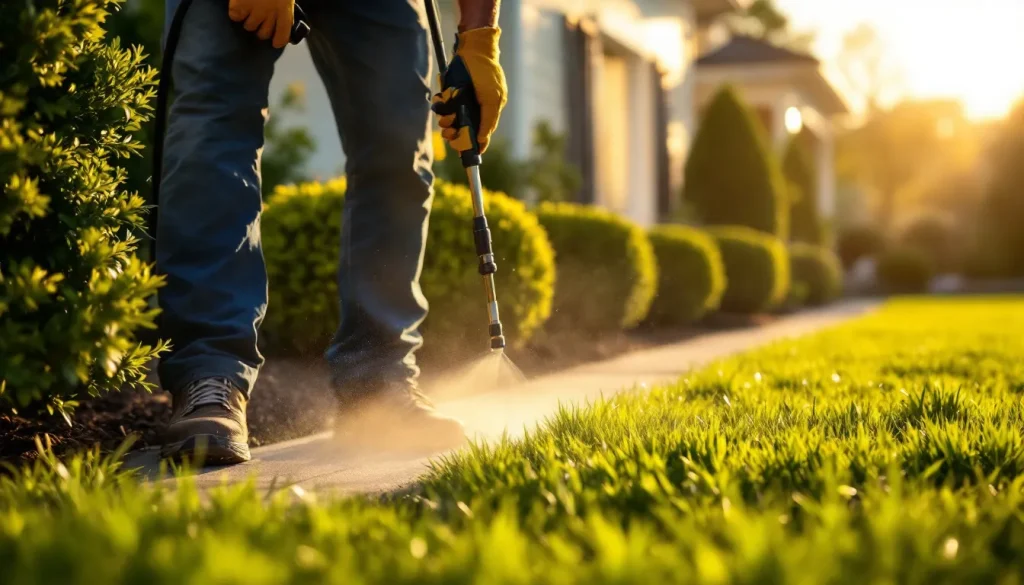
- Outdoors, spray a 1 to 3 foot band up the foundation and out onto the ground (the perimeter barrier), plus door and window frames, eaves, and weep holes.
- Let it dry fully (2 to 4 hours) before pets or kids return to treated areas.
DIY lawn and outdoor pest control
Outdoor DIY pest control works on two fronts: a perimeter barrier spray on the foundation and a lawn or yard treatment for pests living in turf and beds. The perimeter band (bifenthrin sprayed 1 to 3 feet up and out from the foundation) stops most insects before they enter. For the lawn itself, granular products target grubs, fleas, ticks, and ants in the soil.
Mosquito control is mostly source reduction: dump standing water weekly, then mist shaded shrubs, fence lines, and the underside of leaves where adults rest with a bifenthrin barrier spray every 3 to 4 weeks in season. For grubs that brown out turf, a preventive imidacloprid granule applied in late spring to early summer beats a curative product applied after damage shows. Homeowners weighing whether to keep handling the yard or hand it off can compare options in our roundup of the best lawn care services for 2026.
The DIY pest control schedule (copy this)
A working DIY pest control schedule is quarterly for the perimeter barrier, monthly to as-needed for baits and spot treatment, and seasonal for lawn and mosquito work. The table below is the program competitors bury: what to apply, where, and when across a full year. Print it and follow it.
| Timing | Indoor | Outdoor / lawn |
|---|---|---|
| Spring (Mar to May) | Perimeter spray baseboards, refresh ant/roach gel bait | Foundation barrier spray, preventive grub granule (late spring), clear standing water |
| Summer (Jun to Aug) | Spot-treat as pests appear, re-bait monthly | Re-spray foundation barrier (quarterly), mosquito barrier every 3 to 4 weeks, flea/tick granule if pets |
| Fall (Sep to Nov) | Heavy perimeter spray (pests move indoors), set rodent traps, seal entry points | Foundation barrier spray, treat under decks and crawl space vents |
| Winter (Dec to Feb) | Monitor traps, bait any active ants/roaches, light baseboard touch-up | Minimal; inspect for rodent entry, store products above 40F |
Default cadence if you remember nothing else: spray the exterior perimeter every 90 days, re-bait monthly while pests are active, and run lawn and mosquito work spring through fall.
How to start a DIY pest control program as a beginner
Start by identifying the pest, then buy one spray and one bait, then treat in a fixed order: inspect, bait, spray indoors, spray the exterior perimeter. Beginners who skip identification over-buy and under-treat. The ordered program below takes about two hours the first time and under an hour each quarter after.
- Inspect and identify. Find where pests enter and travel. Look at baseboards, under sinks, the foundation line, and entry points. Confirm the species (ant vs roach changes the bait).
- Buy the right two products. One pyrethroid concentrate and one matching bait from the pest table above. Add snap traps if rodents.
- Place bait first. Pea-sized dabs of gel near trails and harborage. Do not spray over it.
- Spray indoor cracks and crevices. Thin band along baseboards, under appliances, into gaps. Not over open surfaces.
- Spray the exterior perimeter. A 1 to 3 foot barrier up and out from the foundation, plus doors, windows, eaves.
- Seal and reduce. Caulk gaps, fix screens, dump standing water, store food sealed.
- Re-treat on schedule. Perimeter every 90 days, bait monthly while active.
New to the basics? The HMNDP learn hub has primers on reading product labels and lawn fundamentals.
Which pests you should never treat yourself
Do not DIY termites, bed bugs, large or structural infestations, or stinging-insect nests in walls. These either cause expensive hidden damage, resist consumer products, or carry safety risks that justify a licensed professional. DIY pest control is built for prevention and common pests, not crisis structural work. Knowing this line is what separates smart DIY from costly mistakes.
- Termites: Subterranean termite control needs trenched soil treatment or in-ground baiting systems and often state-licensed application. Failed DIY can mean thousands in structural damage.
- Bed bugs: Highly resistant to consumer pyrethroids and easy to spread. Heat treatment and pro-grade rotation usually win where DIY fails.
- Large or recurring infestations: Heavy roach or rodent populations in walls and voids need volume and equipment beyond a pump sprayer.
- Stinging insects in structures: Yellowjacket or hornet nests inside walls carry sting-allergy risk; a visible exterior nest you can safely reach is borderline DIY.
The regulatory line varies by state. Most consumer products are sold without a license, but some restricted-use pesticides and certain termite treatments require a licensed applicator. Check your state department of agriculture before applying anything labeled restricted-use.
Safety, PPE, and pets and children
DIY pest control is safe around pets and children when you follow the label, wear basic PPE, and keep them off treated areas until dry. Pyrethroid sprays are low-toxicity to mammals at label rates but are toxic to fish and bees, so avoid ponds and blooming flowers. The label is the law: it lists the legal rate, sites, and re-entry time.
- Wear gloves, long sleeves, closed shoes, and eye protection when mixing and spraying.
- Keep pets and kids out of treated areas until fully dry, usually 2 to 4 hours.
- Place baits and rodent stations where children and pets cannot reach (behind appliances, in tamper-resistant stations).
- Never mix products or exceed the label rate. More is not better and can violate the label.
- Store concentrates locked, above 40F, in original containers.
Frequently Asked Questions
Can you really do your own pest control as well as a professional?
For common pests (ants, roaches, spiders, fleas, mosquitoes, mice), yes. Consumers can buy the same active ingredients pros use, and routine prevention is mostly about consistency, not credentials. Where pros pull ahead is termites, bed bugs, large infestations, and warranty-backed speed. For everyday prevention, a disciplined DIY program matches professional results at a fraction of the cost.
How much money does DIY pest control save versus hiring an exterminator?
DIY typically costs $50 to $150 a year in supplies versus $400 to $600 for a quarterly professional contract, a savings of roughly $300 to $500 annually. A starter kit (sprayer, one concentrate, one bait) runs under $90 and lasts a full year. Savings shrink only if you misdiagnose the pest, buy the wrong products, or face a specialty pest like termites.
What products do professional exterminators use that I can buy myself?
Many pro products are sold to consumers: bifenthrin (Bifen IT, Talstar), cypermethrin (Demon, Cynoff), and lambda-cyhalothrin sprays; fipronil and indoxacarb baits (Advion, Taurus); and pyriproxyfen growth regulators (Precor). Retailers like DoMyOwn and Solutions Pest & Lawn ship them without a license in most states. The exceptions are restricted-use pesticides and certain termite products that require a licensed applicator.
What is a good DIY pest control schedule for the year?
Spray the exterior perimeter every 90 days (quarterly), re-bait indoors monthly while pests are active, and run lawn and mosquito treatments spring through fall. Add a heavier perimeter spray and rodent traps in fall when pests move indoors, and seal entry points. In winter, mainly monitor traps and touch up baseboards. Quarterly barrier plus monthly bait is the core rhythm.
What is the best DIY pest control spray for the inside and outside of a house?
A broad-spectrum pyrethroid concentrate, bifenthrin (Bifen IT) or cypermethrin (Demon), is the best single spray for both. One bottle labeled for indoor and outdoor use, diluted at roughly 0.5 to 1 oz per gallon in a pump sprayer, handles interior cracks and the exterior perimeter barrier. Microencapsulated CS formulas (like Cyzmic CS) last longer on outdoor surfaces.
How do I start a DIY pest control program as a beginner?
Identify the pest first, then buy just one pyrethroid spray and one matching bait. Treat in order: place bait, spray indoor cracks and crevices, then spray a 1 to 3 foot exterior perimeter barrier, then seal entry points and remove standing water. Re-treat the perimeter every 90 days and re-bait monthly. The first treatment takes about two hours; later ones under an hour.
Which pests should I never try to treat myself?
Skip DIY for termites, bed bugs, large or structural infestations, and stinging-insect nests inside walls. Termites can cause thousands in hidden damage and often require licensed soil or baiting treatment. Bed bugs resist consumer sprays and spread easily. Heavy in-wall infestations need professional equipment. A visible, reachable exterior wasp nest is borderline; anything inside a structure should go to a pro.
Is DIY pest control safe around pets and children?
Yes, when you follow the label, wear gloves and eye protection, and keep pets and kids off treated areas until dry (usually 2 to 4 hours). Pyrethroid sprays are low-toxicity to mammals at label rates but toxic to fish and bees, so avoid ponds and blooms. Place baits and rodent stations out of reach, and never exceed the labeled rate.