
By the HMNDP Editorial Team. Last reviewed: June 2026.
Why no flower is truly black
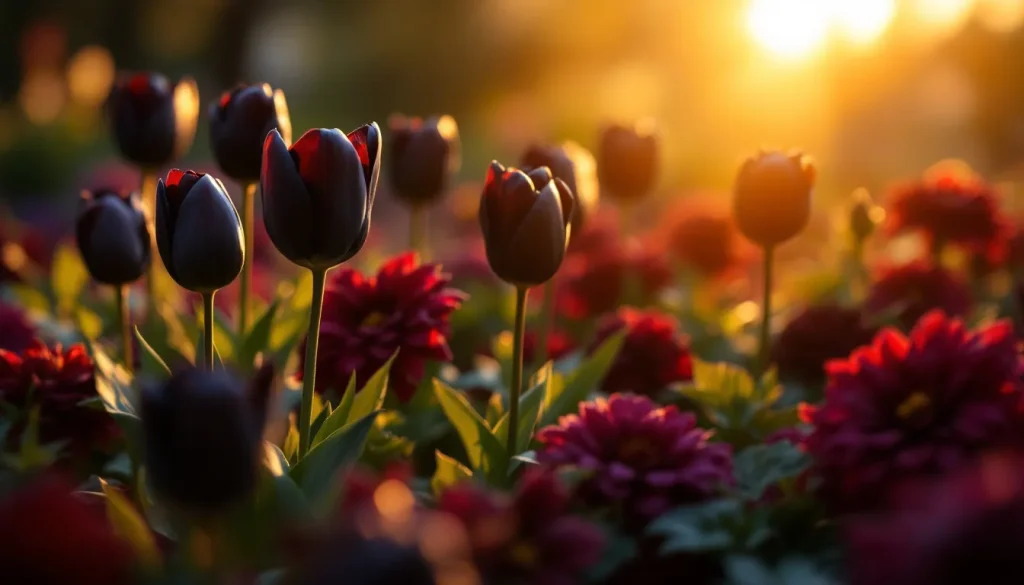
Black flowers do not exist in a literal sense. Plants have no black pigment. The blooms sold as black are packed with dense anthocyanins, the same red and purple pigments in grapes and eggplant, layered thick enough to absorb nearly all visible light so your eye reads them as near-black. Hold a “black” petal to strong sun and the deep purple, maroon, or oxblood underneath shows through.
That honesty matters because most flower lists oversell the color and never grade it. Below, each variety is ranked by how genuinely dark it looks, from true near-black to deep burgundy that only reads black at a distance.
The 11 darkest black flower varieties, ranked
These are the most reliably dark blooms gardeners and florists use, with botanical names, USDA hardiness zones, bloom season, and a darkness grade. Grade reflects how close each gets to true black: near-black is the deepest tier, followed by dark purple or maroon, then deep red. Named cultivars run far darker than generic seed.
| Flower (cultivar) | Botanical name | USDA zones | Bloom season | Darkness grade |
|---|---|---|---|---|
| Petunia ‘Black Velvet’ | Petunia hybrid | Annual (all zones) | Summer to frost | Near-black (matte) |
| Tulip ‘Queen of Night’ | Tulipa | 3 to 8 | Late spring | Near-black, maroon core |
| Calla lily ‘Schwarzwalder’ | Zantedeschia | 8 to 10 (lift in cold) | Summer | Near-black purple |
| Bearded iris ‘Before the Storm’ | Iris germanica | 3 to 9 | Late spring | Near-black |
| Bat flower | Tacca chantrieri | 10 to 11 / houseplant | Summer | Closest to true black |
| Hollyhock ‘Nigra’ | Alcea rosea | 3 to 8 | Summer (biennial) | Dark chocolate-maroon |
| Hellebore (‘Onyx Odyssey’) | Helleborus | 4 to 9 | Late winter to spring | Dark purple-black |
| Dahlia ‘Black Jack’ / ‘Arabian Night’ | Dahlia | 8 to 11 (lift in cold) | Summer to fall | Deep maroon-red |
| Gladiolus ‘Black Star’ | Gladiolus | 8 to 11 (lift in cold) | Summer | Deep velvety red-purple |
| Black pansy / viola | Viola tricolor / hybrid | Cool-season annual | Spring, fall | Near-black with sheen |
| Rose ‘Black Baccara’ | Rosa hybrid tea | 5 to 9 | Summer to fall | Deep burgundy-red |
The takeaway: the flowers marketed hardest as “black roses” are actually the least black. ‘Black Baccara’ is a stunning oxblood red, not black. For genuine darkness, the petunia, tulip, iris, calla, and bat flower win.
How to grow black flowers darker
Black flowers are usually no fussier than their ordinary cousins, but the depth of color depends heavily on how you grow them. The pigment that makes a bloom dark, anthocyanin, is produced in response to light and temperature, so the same cultivar can look sooty black or washed-out purple depending on placement.
Three levers control darkness:
- Full sun. Bright light drives anthocyanin production. Dark blooms grown in shade fade toward gray-purple. Give them six or more hours of direct sun.
- Cooler temperatures. Pigment intensifies in the cool of spring and fall. Heat waves during flowering can bleach the color, so a bloom is often darkest early in the season.
- Named cultivars, not generic seed. The deep color is bred in. Start from named tubers, bulbs, or plants, since “black flower” mystery seed rarely delivers.
Dark blooms also read best against a light foil. Set them near silver foliage or pale gravel, or plant a border over a bed of black mulch if you want the flowers to float rather than disappear.
Black flowers for weddings and arrangements
For weddings and events, florists reach for Calla lily ‘Schwarzwalder’, Rose ‘Black Baccara’, Dahlia ‘Arabian Night’, and Tulip ‘Queen of Night’. These hold their shape in a bouquet and stay dark under warm indoor light, which tends to lighten petals a full shade.
Dark blooms work as an accent rather than the whole show. A few near-black stems sharpen any palette, pairing cleanly with white and blush for a modern look, or with deep red and gold for a gothic, dramatic table. Order stems slightly darker than your target color to offset venue lighting.
Where to buy black flower seeds and bulbs (and avoid fakes)
Buy black flowers as named cultivars from established sellers, and treat “true black” seed listings as suspect. Reputable sources include Burpee, White Flower Farm, Longfield Gardens, and Eden Brothers, where the listing shows a botanical name and a photo that matches real specimens.
The scams are easy to spot once you know the pattern:
- Dyed or Photoshopped images. “Blue-black rose”, “rainbow black”, and glowing jet-black petals are edited or dye-injected, not grown.
- Generic “black flower seed”. Real dark flowers sell under specific names like ‘Queen of Night’ or ‘Black Velvet’, never as unnamed black seed.
- Rock-bottom marketplace listings. Bulk cheap seed from anonymous sellers often germinates as ordinary red or purple, if it germinates at all.
If the name is missing and the price looks too good, assume the photo is fake.
What black flowers symbolize
Black flowers carry layered meaning: mystery, elegance, and power most often, plus mourning or farewell in some traditions, and rebirth in others, since black precedes renewal. The reading depends entirely on setting. The same dark dahlia signals bold sophistication at a wedding and grief at a memorial.
That duality is why dark blooms have surged in popularity for gothic and moody garden designs. If you enjoy the language of flowers, it pairs naturally with the meanings gardeners assign to annual flowers and with how blooms carry symbolic weight, like birth flowers. For a fuller dark-garden effect, some designers extend the theme underfoot with black rubber mulch to frame the beds.
Frequently Asked Questions
Are there any truly black flowers in nature?
No. No known flower produces a true black pigment. Plants make dark blooms by stacking dense anthocyanins, the red-purple pigments in petals, until they absorb almost all visible light and read as near-black. Under bright sun you can usually see the underlying deep purple, maroon, or red. The bat flower (Tacca chantrieri) comes closest to genuine black.
What is the darkest, most truly black flower you can grow?
Petunia ‘Black Velvet’ is the darkest bloom most home gardeners can grow, engineered by Ball Horticultural to read as matte, velvety black. Close behind are Tulip ‘Queen of Night’, bearded Iris ‘Before the Storm’, and Calla lily ‘Schwarzwalder’. All still carry a faint purple or maroon undertone in strong light, since no petal pigment is truly black.
What do black flowers symbolize or mean?
Black flowers commonly symbolize mystery, elegance, and power, and in some cultures mourning or farewell. They are also read as rebirth and new beginnings, since black precedes renewal. Meaning shifts by setting: a dark bouquet at a wedding reads as bold sophistication, while the same blooms at a memorial signal grief and remembrance. Context decides the message.
Why do some flowers look black instead of purple or red?
It comes down to pigment density. A petal packed with high concentrations of anthocyanins absorbs nearly all wavelengths of visible light, leaving little to reflect, so your eye registers black. Thin the same pigment out and you see purple or red. Petal texture matters too: velvety, matte surfaces scatter less light and look darker than glossy petals of identical pigment.
Where can I buy real black flower seeds or bulbs and avoid fakes?
Buy named cultivars from established sellers such as Burpee, White Flower Farm, Longfield Gardens, or Eden Brothers, where the botanical name and photo match. Treat “true black”, “blue-black rose”, or “rainbow black” seed listings on marketplaces as scams, since those images are dyed or Photoshopped. Real dark flowers are sold under specific names like ‘Queen of Night’, never as generic black seed.