
Annual Flowers Meaning: Annual vs Perennial vs Biennial
The meaning of annual flowers is simpler than the name suggests and trips up nearly every new gardener: an annual flower completes its whole life in one growing season. It sprouts, grows, blooms, sets seed, and dies, all within a single year. The word annual comes from the Latin annus, meaning year, so it tells you the plant lives for one year. It does not mean the plant returns every year. That single misread is why people buy petunias in May and feel cheated when nothing comes up the next spring. This guide defines the term, compares it to perennial and biennial flowers in a clear table, and flags the one detail that confuses buyers most: a plant sold as an annual in a cold state is often a tender perennial somewhere warmer.
What does “annual” mean for a flower?
An annual flower lives one growing season, then dies for good. It germinates from seed, builds roots and leaves, flowers, produces its own seed, and finishes its life cycle in a single year. Because the plant’s entire biological job is to set seed before frost, annuals pour energy into nonstop blooms rather than long-term roots, which is why they flower harder and longer than most perennials.
The confusion is built into the word. Annual entered English from Latin annus (year), and dictionaries date its use for plants to about 1710. “Yearly” describes the lifespan, not a return trip. The plant does not regrow from its roots next season the way a perennial does. Once seed matures and cold arrives, the original plant is gone.
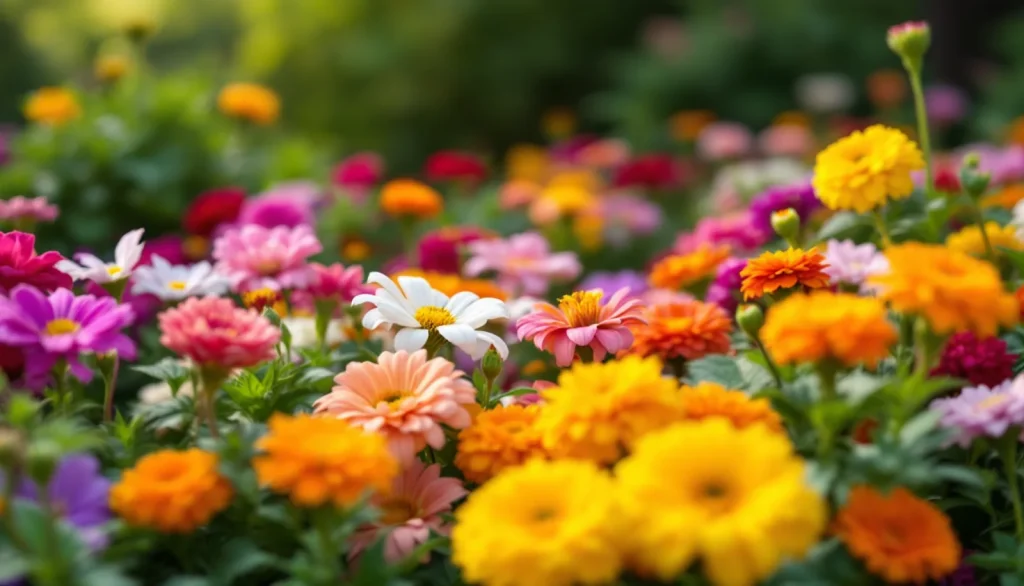
Common annual flowers include petunia, marigold, zinnia, impatiens, sunflower, alyssum, vinca, and morning glory. These are the racks of color most garden centers stock for instant beds and containers, sold to bloom from late spring until the first hard freeze kills them.
Annual vs perennial vs biennial: the comparison
The three labels describe how long a flowering plant lives, not how pretty it is. An annual lives one season. A biennial lives two seasons (leaves the first year, flowers the second, then dies). A perennial lives three or more years, dying back to the roots in winter in cold climates and regrowing each spring. The table below puts the practical differences side by side.
| Trait | Annual | Biennial | Perennial |
|---|---|---|---|
| Life cycle | One growing season, then dies | Two seasons: foliage year 1, flowers year 2, then dies | Three or more years; regrows from roots |
| Comes back next year? | No (a few self-sow) | No (parent dies after flowering) | Yes, from the same root system |
| Bloom length | Long: spring to frost | Short burst in year 2 | Often shorter, once per season |
| Replanting | Every year | Every two years | Plant once, divide as needed |
| Up-front cost vs long-term | Cheap per plant, paid yearly | Moderate | Higher up front, best long-term value |
| Typical examples | Petunia, marigold, zinnia, impatiens | Foxglove, hollyhock, dianthus (sweet William) | Coneflower, daylily, peony, black-eyed Susan |
One pattern runs through the table: annuals trade longevity for color. They give the most bloom per season and the most flexibility to change the look every year, at the cost of buying and planting again. Perennials cost more at purchase and bloom for a shorter window, but return on their own and need the least care once established, especially native species. For the seasonal timing of beds and feeding, our year-round lawn and bed schedule shows where annual planting fits the calendar.
Why some “annuals” are really tender perennials
Here is the detail most definitions skip: whether a plant is an annual can depend on where you live. Many flowers sold as annuals in cold states are tender perennials, meaning they would live for years in a frost-free climate but die in a hard winter, so northern gardeners grow them as annuals. Geranium (Pelargonium), begonia, coleus, vinca, and impatiens all fall in this group.
This is why the same plant gets labeled differently across the country. A geranium treated as a throwaway annual in Minnesota can overwinter and grow for years in a frost-free part of Florida or coastal California. The USDA Plant Hardiness Zone map, revised in 2023 by the USDA Agricultural Research Service, is the standard reference for where a given plant survives winter; check your zone at planthardiness.ars.usda.gov before assuming a flower is “just an annual.”
The practical takeaway: read the tag, but also read your climate. If a plant is described as a tender perennial or “perennial in zones 9 to 11,” it will behave as an annual anywhere colder unless you dig it up and overwinter it indoors.
Hardy, half-hardy, and tender annuals
Among true annuals, the split that matters for planting time is cold tolerance. Hardy annuals shrug off light frost and can go out in early spring or fall. Tender annuals need warm soil and die at the first frost. Half-hardy annuals sit in between, taking cool weather but not a freeze. Planting a tender annual too early is the most common reason a flat of color stalls or dies.
- Hardy annuals: tolerate light frost, sown in early spring or fall. Examples: sweet alyssum, calendula, bachelor’s button (cornflower), pansy.
- Half-hardy annuals: handle cool nights but not a hard freeze; plant after the worst frost risk passes. Examples: petunia, snapdragon, cosmos.
- Tender annuals: need warm soil and warm nights; plant only after your last spring frost date. Examples: marigold, zinnia, impatiens, vinca.
Find your average last spring frost date through your state’s land-grant extension service or the National Weather Service, then count back from it. Tender annuals planted before that date risk a setback every cold snap.
Do any annual flowers come back?
Most annuals do not return, but a handful reseed themselves. Self-sowing annuals drop seed before they die, and those seeds sprout the next spring, so the bed fills back in even though the original plants are gone. This is not the same as a perennial regrowing from its roots. It is a new generation grown from last year’s seed.
Reliable self-sowers include sweet alyssum, bachelor’s button, forget-me-nots, cosmos, and cleome (spider flower). To encourage it, stop deadheading late in the season and let the last flowers form seed heads. To prevent volunteers from crowding a tidy bed, deadhead through the end of the season instead.
When to plant annuals vs perennials
Use annuals for fast, season-long color and for spots you want to change yearly, like containers, window boxes, and front-bed borders. Use perennials as the permanent backbone of a bed, then layer annuals around them to fill gaps and carry color between perennial bloom windows. Most gardens use both.
Annuals are also the low-risk way to test a color scheme or a tricky spot before committing to pricier perennials. Because they cost little and last one season, a failed annual experiment costs a few dollars and a summer, not years. If a bed keeps struggling, the issue is often soil or light rather than plant choice; our guide to growing in shade, slopes, and compacted soil covers the site problems that defeat both annuals and perennials, and the NPK fertilizer guide explains the feeding that heavy-blooming annuals depend on.
Quick definitions, plain English
If you only remember three sentences, remember these. An annual flower lives one season and dies. A biennial flower needs two seasons, flowering in the second, then dies. A perennial flower returns for three or more years from the same roots. Everything else, including the tender-perennial-sold-as-annual trap, follows from those three lifespans plus your local winter.
For the full planting and care framework these definitions plug into, start at our lawn, fertilizer, and landscape learning hub, and if you would rather hand the bed work to a pro, see how to find a reputable landscaper before you sign anything.
Last reviewed: June 2026
HMNDP Editorial Team, reviewed by HMNDP turf and horticulture editors.
Frequently asked questions
Do annual flowers come back every year?
No. Annual flowers complete their whole life cycle in one growing season, then die. The word annual means yearly, describing the one-year lifespan, not a yearly return. A few annuals, like sweet alyssum, bachelor’s button, and forget-me-nots, self-sow and reappear from dropped seed, but the original plants do not regrow from their roots the way perennials do.
What is the difference between an annual, a biennial, and a perennial?
An annual lives one growing season, then dies. A biennial lives two seasons, growing leaves the first year and flowering the second before dying. A perennial lives three or more years, dying back to the roots in winter in cold climates and regrowing each spring. The labels describe lifespan, not flower quality or size.
What does annual mean in plants?
In plants, annual means the flower germinates, grows, blooms, sets seed, and dies within a single growing season. The word comes from the Latin annus, meaning year, and has described one-year plants since about 1710. Because the plant’s goal is to set seed before frost, annuals bloom heavily and continuously rather than building long-term roots.
Are some annual flowers really perennials?
Yes. Many flowers sold as annuals in cold states are tender perennials that would live for years in a frost-free climate but die in a hard winter. Geranium, begonia, coleus, vinca, and impatiens are common examples. A geranium grown as a throwaway annual in Minnesota can overwinter for years in frost-free Florida or coastal California.
What are examples of annual flowers?
Common annual flowers include petunia, marigold, zinnia, impatiens, sunflower, sweet alyssum, vinca, cosmos, and morning glory. These are the racks of fast color garden centers stock for beds and containers. They bloom from late spring until the first hard freeze, then die, which is why gardeners replant them every year.
Why are annuals called annuals if they only live one season?
Annual comes from the Latin annus, meaning year, so it marks a one-year lifespan. The confusion is that yearly describes how long the plant lives, not that it returns yearly. An annual finishes its full life cycle inside one year, then dies, while a perennial is the plant that actually comes back year after year from its roots.
What is the difference between hardy and tender annuals?
Hardy annuals tolerate light frost and can be planted in early spring or fall, like sweet alyssum, calendula, and pansy. Tender annuals need warm soil and die at the first frost, like marigold, zinnia, and impatiens. Half-hardy annuals such as petunia and cosmos take cool nights but not a hard freeze. Plant tender annuals only after your last spring frost date.