
By the HMNDP Editorial Team | Last reviewed: June 2026
The best base for artificial turf, in one spec
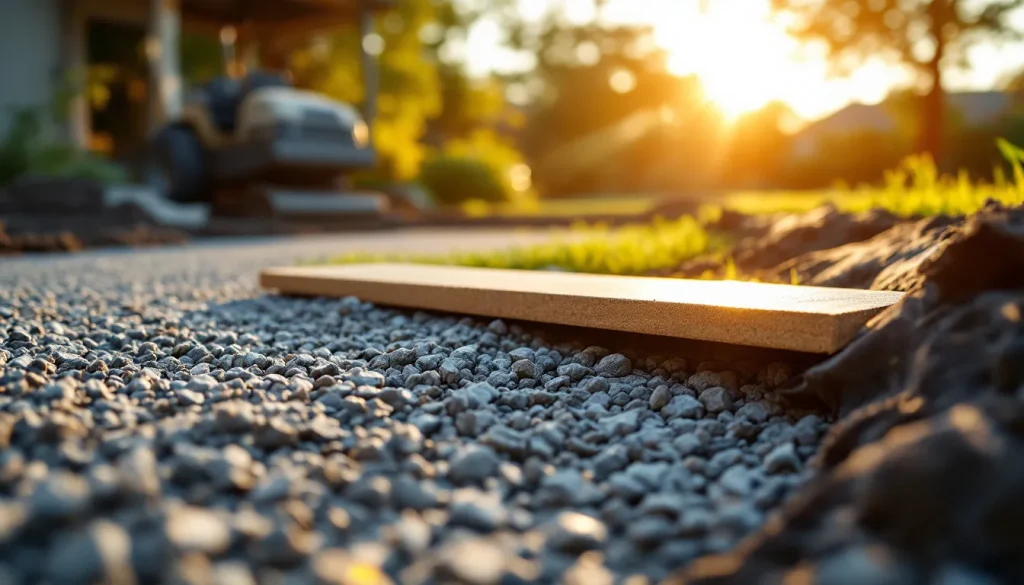
The base for artificial turf is a compacted layer of crushed rock, not soil or sand. For most lawns, build 3 to 4 inches of 3/4-inch-minus crushed stone that includes fines (the fractured gradation labeled “class 2 road base,” “crushed miscellaneous base,” or “3/4 minus”). Compact it to roughly 90 percent density with a plate compactor, screed it flat, and set a 1 to 2 percent slope so water drains.
That single spec is what most forum answers leave scattered across ten replies. The sections below give the material, the depth, the compaction number, the cost math, and the changes you make for dogs, playgrounds, and putting greens.
Base materials compared: crushed rock, road base, and decomposed granite
Three aggregates dominate artificial turf bases: 3/4-inch-minus crushed stone, Class II road base (also sold as crushed miscellaneous base or CMB), and decomposed granite (DG). All three share one trait that makes them work: fractured, angular particles plus fines that lock together when compacted. Rounded rock and clean gravel do not lock, so they stay loose and shift underfoot.
| Material | Typical size | Best for | Notes |
|---|---|---|---|
| 3/4″ crushed rock “with fines” (3/4 minus) | 3/4″ down to dust | General lawns, most installs | Angular, compacts hard, drains well. The default recommendation. |
| Class II road base / CMB | 3/4″ down to dust | Lawns, high-traffic, driveways-adjacent | Engineered road aggregate, very stable. May contain recycled concrete. |
| Decomposed granite (DG) | 3/8″ to fines | Putting greens, fine-graded surfaces | Screeds to a tight, smooth top. Drains slower than crushed rock. |
| Clean gravel / pea gravel / sand alone | varies, rounded | Not recommended as base | Will not compact or hold grade. See “what not to use.” |
Why “with fines” beats clean gravel and pea gravel
Aggregate “with fines” means the mix runs from the top size all the way down to rock dust, so small particles fill the gaps between big ones and lock the layer solid. Clean gravel (uniform, washed) and rounded pea gravel have no fines and no fracture, so they roll and never firm up. A base that stays loose telegraphs every footstep through the turf and develops low spots within a season.
Drainage is the base’s core job, and this is where people get it backwards. Angular crushed rock with fines still drains at 20 to 30 inches per hour once compacted, which is far faster than any rain event, while giving you a firm surface. Sand alone holds water and grows anaerobic under pet turf. Round pea gravel drains but never stops moving. Pick fracture plus fines, not one or the other.
Sub-base vs base layer: what goes directly under the turf
The sub-base is the native soil below your excavation, the sub-grade you compact before adding rock. The base is the crushed-aggregate layer you build on top of it, and it is what the turf actually sits on. Turf backing rests on the compacted, screeded surface of that aggregate base, not on soil.
Order from bottom to top: compacted native sub-grade, then 3 to 4 inches of compacted crushed-rock base, then an optional thin bedding/leveling course of finer aggregate or DG, then the turf. Weed barrier placement is covered in the install steps below.
How deep should the base be under artificial turf?
For residential lawns, build the base 3 to 4 inches deep after compaction. Three inches is the practical minimum for a stable, well-draining lawn on decent soil. Go to 4 inches for high-traffic areas, dog runs, or soft and clay-heavy sub-grades. Putting greens and playgrounds have their own targets, covered further down.
Depth is measured compacted, not loose. Loose aggregate settles roughly 15 to 20 percent under a plate compactor, so excavate and order material for the finished depth plus that settlement.
Step by step: excavate, base, compact, screed
The build sequence is fixed. Skipping compaction or setting the weed fabric in the wrong place causes most base failures. Here is the order for a standard lawn install.
- Excavate existing sod and soil to a sub-grade 3 to 4 inches below your finished turf height (add the turf pile thickness, usually 1 to 1.5 inches, to the cut depth).
- Grade a 1 to 2 percent slope (about 1 inch of fall per 8 feet) away from structures for drainage.
- Compact the exposed native sub-grade with a plate compactor before adding any rock.
- Lay geotextile weed barrier directly on the compacted sub-grade, under the base rock, so roots are blocked but the base still drains.
- Spread crushed rock with fines in 1.5 to 2 inch lifts, wetting each lift lightly to help it bind.
- Compact each lift to roughly 90 percent density, then screed the top flat to grade with a straightedge or screed board.
- Add a thin DG or fine-aggregate bedding course if you want a glass-smooth top, then roll the turf.
Some installers place a second weed fabric between the base and the turf. That is optional and mainly relevant where windblown seed is a problem. The primary fabric belongs under the rock. For the full picture on labor and tools, see our artificial turf installation guide.
How much base rock do you need per square foot? (cost and quantity math)
Aggregate is sold by the ton at landscape supply yards, so you need to convert area and depth into tonnage. The rule of thumb: 100 square feet at 3 inches deep needs about 1 cubic yard of loose rock, and crushed aggregate weighs roughly 1.4 tons per cubic yard. Add a compaction allowance and order a little extra.
| Coverage | 3″ depth | 4″ depth |
|---|---|---|
| Per 100 sq ft (order incl. compaction) | ~1.5 tons | ~1.9 tons |
| Per 500 sq ft | ~7.5 tons | ~9.5 tons |
| Per 1,000 sq ft | ~15 tons | ~19 tons |
Material cost at the yard typically runs 30 to 60 dollars per ton for crushed rock or road base, plus delivery of 60 to 120 dollars per load. That puts base material near 0.50 to 1.50 dollars per square foot, before excavation and labor. For how the base fits into the full project budget, see our artificial turf cost breakdown.
Base by use-case: lawn, dog, playground, putting green
This is where generic answers fail: they spec every job as a lawn. Drainage, deodorizing, and surface fineness change with the use. Match the base to the job, not to a blog post about grass.
| Use case | Base spec change | Why |
|---|---|---|
| Standard lawn | 3-4″ of 3/4 minus, 1-2% slope | Baseline stability and drainage. |
| Dog / pet turf | 4″ base, often CMB, plus a deodorizing infill (zeolite) or an air-drain panel layer under the turf | Urine must flush through fast; extra drainage and zeolite control odor. |
| Playground | Base plus a foam shock pad on top for fall protection | Meets fall-height safety needs the aggregate alone cannot. |
| Putting green | Finer graded DG or 1/4 minus, screeded very smooth, compacted hard | Ball roll needs a tight, true surface, not open crushed rock. |
For pet installs, the base and the maintenance routine work together. Our turf maintenance guide covers rinsing and infill topping that keep a dog base draining.
Regional prep and what NOT to use
Two regional issues wreck bases that competitors rarely mention: freeze-thaw heave in cold climates and expansive clay sub-grades. In freeze-thaw zones, a well-draining crushed-rock base is your defense, because water that cannot pool cannot heave. Keep fines-heavy layers thin at the very bottom and ensure the whole profile sheds water. On expansive clay, over-excavate an extra 1 to 2 inches and add a stabilizing lift of road base so seasonal soil swell does not telegraph through.
Do not use these as base under turf: topsoil or native dirt (holds water, grows weeds, will not compact), sand alone (holds moisture, ruts, and turns anaerobic under pets), and rounded pea gravel or clean washed gravel (no fines, never locks, stays loose). If you are still sourcing turf and materials, our roundup of artificial turf for sale lists supply options.
Frequently Asked Questions
What is the best base material for artificial turf?
The best base is 3/4-inch-minus crushed rock “with fines,” or an equivalent Class II road base. Both are angular and include particles down to dust, so they lock together when compacted and still drain fast. For fine surfaces like putting greens, use decomposed granite. Avoid pea gravel, clean gravel, sand alone, and topsoil, which never firm up properly.
How deep should the base be under artificial turf?
Build 3 to 4 inches of compacted crushed-rock base for residential lawns. Three inches is the minimum on stable soil; go to 4 inches for high-traffic zones, dog runs, or soft and clay-heavy ground. Measure depth after compaction, since loose aggregate settles about 15 to 20 percent once you run a plate compactor over it.
Can you install artificial turf directly on dirt or existing grass?
No, not for a lasting install. Turf laid on dirt or live grass will develop weeds, hold water, sink into low spots, and shift as the soil moves. Remove the sod, compact the sub-grade, and build 3 to 4 inches of crushed-rock base. Direct-on-dirt only makes sense for very temporary or event-only turf.
What is Class II road base and is it good for turf?
Class II road base, also sold as crushed miscellaneous base (CMB), is an engineered aggregate running from about 3/4 inch down to fines, sometimes including recycled concrete. It compacts very hard and is stable, which makes it excellent for turf bases, especially high-traffic and pet areas. It is a top choice alongside standard 3/4-minus crushed rock.
Do you need sand or a fabric layer under artificial turf?
You do not need a sand base, and sand alone is a poor base. You do want a geotextile weed barrier laid on the compacted sub-grade, directly under the crushed-rock base, to block roots while still letting water drain. A thin fine-aggregate or decomposed-granite bedding course on top of the base is optional for a smoother finish.
What base is best for dog and pet artificial turf?
For dog turf, build a 4-inch base, often Class II road base for stability, and prioritize drainage so urine flushes through instead of pooling. Many installers add a zeolite deodorizing infill or an air-drain panel layer under the turf. Rinse regularly. The extra depth and free drainage are what control odor and keep the pet area sanitary.
How much base material do I need per square foot?
Plan for roughly 1.5 tons of crushed rock per 100 square feet at 3 inches deep, or about 1.9 tons at 4 inches, including a compaction allowance. Aggregate is sold by the ton, weighs around 1.4 tons per cubic yard, and 100 square feet at 3 inches needs about 1 cubic yard. Order a little extra to avoid a second delivery.
Why use crushed rock “with fines” instead of clean gravel or pea gravel?
Fines are the small particles down to rock dust that fill gaps between larger fractured pieces, letting the layer compact into a solid, flat surface. Clean gravel and rounded pea gravel have no fines and no angular fracture, so they never lock together, stay loose, shift underfoot, and let the turf develop low spots. Fracture plus fines gives you firmness and drainage together.