
By the HMNDP Editorial Team — independent reporting on lawn care, landscaping, and the green industry.
Last reviewed: June 2026
What is sedge grass, and is it actually a grass?
Sedge grass is not a true grass. It is a grass-like flowering plant in the family Cyperaceae, most often in the genus Carex, which holds roughly 2,000 species worldwide and more than 480 in North America. It looks like turf from a distance, but its stems, leaves, and flowers separate it from real grasses in the family Poaceae.
The confusion is baked into the common name. People call ornamental Carex “sedge grass,” and they also call the lawn weed nutsedge “nutgrass,” even though neither is a grass. Both are sedges, and the word “grass” here is loose gardening shorthand, not botany.
Sedges and grasses are both monocots, meaning each seed sprouts a single cotyledon (seed leaf) and the leaves show parallel veins. That shared ancestry explains the family resemblance. The differences show up in the stem and the growth pattern, which is exactly where identification starts.
Sedge vs. grass vs. rush: the “sedges have edges” key
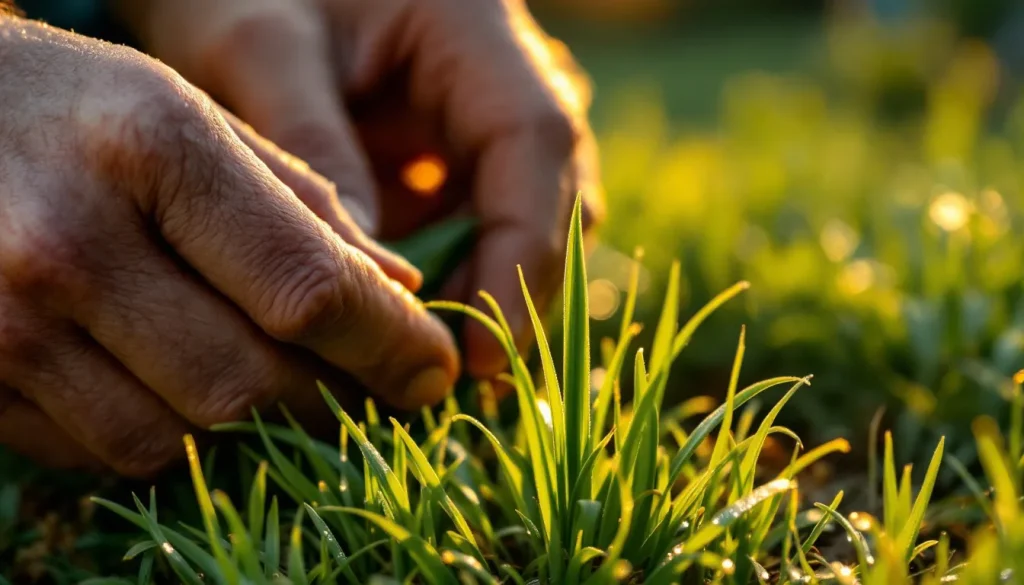
The old rhyme runs, “Sedges have edges, rushes are round, and grasses have nodes from the top to the ground.” It works because sedge stems are triangular and solid, rush stems are round and pithy, and grass stems are round and hollow with swollen joints. Rolling a stem between two fingers is the fastest field test.
Turn the rhyme into a five-step check you can run in under a minute:
- Roll the stem. A sedge stem feels three-sided and firm. A grass stem rolls smooth and round, and usually feels hollow.
- Look for nodes. Grasses have obvious swollen joints (nodes) along the stem. Sedge stems have no nodes.
- Check leaf arrangement. Sedge leaves are three-ranked, spiraling off the stem in three vertical rows. Grass leaves are two-ranked, alternating in two rows.
- Inspect the sheath. The leaf base wraps the stem as a closed tube in sedges. Grass sheaths are usually split and open.
- Confirm it is not a rush. If the stem is round and solid with cylindrical, needle-like leaves, it is a rush (Juncaceae), not a sedge.
Do not judge by color or height. Many sedges mimic fine fescue or Kentucky bluegrass closely enough that only the stem test is reliable.
Good sedge grass vs. bad sedge grass: one map
The single question behind most “sedge grass” searches is whether the plant is friend or foe. The answer depends on the species and how it spreads. Clumping native Carex are prized landscape plants. Aggressively rhizomatous sedges like nutsedge are lawn weeds. The dividing line is growth habit, not the name.
This split is why the top search results feel contradictory. One set of pages sells Carex as a native groundcover, and another set explains how to kill nutsedge. Both are correct. Here is the reconciliation in one table.
| Trait | Desirable sedge (ornamental Carex) | Weedy sedge (nutsedge / nutgrass) |
|---|---|---|
| Common examples | Pennsylvania sedge, Appalachian sedge, Texas sedge | Yellow nutsedge (Cyperus esculentus), purple nutsedge (Cyperus rotundus) |
| Growth habit | Mostly clumping or slow-creeping | Fast rhizomes plus underground tubers (nutlets) |
| Spread speed | Fills in over 1 to 3 seasons | One tuber can produce hundreds in a season |
| Where it shows up | Planted on purpose | Uninvited, faster and yellow-green against turf |
| Gardener’s goal | Establish and keep | Identify and remove |
A quick tell in a lawn: nutsedge grows faster than surrounding turf and stands taller within days of mowing, with a lime-green to yellow cast and that unmistakable triangular stem. If a sedge appears where you did not plant one and outruns the lawn, treat it as the weed.
Best native sedge grass by use case
The best native sedge depends on your conditions, not on a single “top” pick. Match the species to light, moisture, and region. Most landscape sedges are cool-season clumpers that stay semi-evergreen in mild winters and tolerate more shade than turfgrass. The table below maps common jobs to reliable US natives.
| Use case | Recommended sedge | Range fit | Notes |
|---|---|---|---|
| Dry shade groundcover | Pennsylvania sedge (Carex pensylvanica) | Eastern and central US | Spreads slowly by rhizome, 8 in. tall, tolerates root competition |
| No-mow lawn alternative | Appalachian sedge (Carex appalachica) | Northeast, Mid-Atlantic | Fine, fountaining texture, mow once or twice a year if at all |
| Sunny to part-shade turf swap (South) | Texas sedge (Carex texensis) | South, lower Midwest | Low clump, takes light foot traffic |
| Rain garden / wet spots | Fox sedge (Carex vulpinoidea) or Tussock sedge (Carex stricta) | Most of US | Handles standing water and fluctuating moisture |
| West Coast dry shade | Berkeley sedge (Carex divulsa, often sold as Carex tumulicola) | California, Pacific NW | Evergreen, drought-tolerant once established |
For a full lawn replacement, native sedges cut mowing to a few times per year and need little to no fertilizer or irrigation once rooted. That trade-off is different from a hard surface swap like artificial grass, which removes mowing entirely but loses the habitat and infiltration benefits a living sedge lawn provides.
Where to buy sedge grass: plugs, plants, or seed
Buy sedge as plugs or potted plants for a lawn or groundcover, and reserve seed for large naturalized or restoration areas. Most landscape Carex establish faster and more evenly from plugs because sedge seed can be slow and erratic to germinate. Named nurseries and native-plant sources beat generic big-box stock for correct species labeling.
| Form | Best for | Typical spacing | Trade-off |
|---|---|---|---|
| Plugs (small pots) | Lawns, groundcover mass plantings | 6 to 12 in. on center | More units to buy, fastest even fill |
| Quart / gallon plants | Accents, small beds | 12 to 18 in. on center | Higher cost per plant, instant presence |
| Seed | Meadows, restoration, rain gardens | Sown by rate, not spacing | Cheapest per area, slow and uneven, some species need cold stratification |
Where to look: regional native-plant nurseries, state native plant society sales, and specialty growers such as Prairie Moon Nursery, Prairie Nursery, and Hoffman Nursery (a wholesale grasses and sedges specialist). Buy by botanical name, since common names overlap and mislabeling is common. If a source cannot name the species, treat that as a warning sign.
How to grow and care for ornamental sedge grass
Ornamental sedge is low-maintenance once established: plant in spring or fall, keep soil moist for the first 6 to 8 weeks, then let most species run on rainfall. Space plugs 6 to 12 inches apart for a groundcover, match the species to your light, and skip heavy fertilizer, which pushes floppy growth.
Follow this sequence for a sedge lawn or bed:
- Match light. Use shade-adapted species (Pennsylvania, Appalachian) under trees, and sun-tolerant species (Texas sedge, Berkeley sedge) in open areas.
- Prep the soil. Remove existing weeds and grass first, since sedges compete poorly during establishment.
- Space and plant. Set plugs 6 to 12 in. on center. Tighter spacing closes the gap faster.
- Water in. Keep the top inch moist for 6 to 8 weeks, then taper to rainfall for drought-tolerant species.
- Maintain lightly. Mow or string-trim to about 3 to 4 in. once in late winter or early spring to refresh growth. No-mow is an option for informal looks.
Many Carex are semi-evergreen and hold color through mild winters, so cut back only the tired foliage. A living sedge lawn adds root structure and rainwater infiltration that a synthetic surface cannot; if you are weighing the two, our overview of artificial grass installation lays out the maintenance and drainage trade-offs on the other side.
How to get rid of nutsedge in a lawn
To remove nutsedge, target the tubers, not just the visible blades. Hand-pull isolated plants while young and small, before they set the underground nutlets that regrow. For established patches, a selective sedge herbicide with an active ingredient such as halosulfuron or sulfentrazone is more effective than pulling, which usually snaps the stem and leaves tubers behind.
Work in this order:
- Confirm it is nutsedge. Triangular solid stem, faster growth than turf, yellow-green (yellow nutsedge) or darker with a reddish base (purple nutsedge).
- Pull only when young. Remove single plants before they are 6 in. tall and before tubers form. Get the whole root.
- Spot-treat larger patches. Apply a labeled selective sedge herbicide (halosulfuron, sulfentrazone, or bentazon) to actively growing plants, following the product label exactly.
- Fix the conditions. Nutsedge favors wet, compacted, or overwatered soil. Correct drainage and cut back irrigation to slow its return.
- Thicken the turf. A dense, healthy lawn crowds out new sprouts. Warm-season lawns like bahia grass and lawns started from bermuda grass seed resist reinvasion better when kept thick and mowed at the right height.
Herbicide rules vary by product, state, and turf type, so read the label and confirm the product is cleared for your grass before spraying. Expect two or more applications across a season, because tubers sprout in flushes rather than all at once.
Frequently Asked Questions
What is sedge grass and is it actually a grass?
Sedge grass is a grass-like plant, not a true grass. It belongs to the family Cyperaceae, usually the genus Carex, while real grasses sit in Poaceae. The name mixes the two because sedges resemble turf. The giveaway is the stem: sedges are triangular and solid, whereas grasses are round, hollow, and jointed.
What is the difference between sedges and grasses?
Both are monocots with narrow parallel-veined leaves, but the structure differs. Sedges have triangular, solid stems with no nodes and three-ranked leaves on closed sheaths. Grasses have round, hollow stems with swollen nodes and two-ranked leaves on split sheaths. Rolling the stem between your fingers is the quickest way to tell a three-sided sedge from a round grass.
How do you identify a sedge, and what does “sedges have edges” mean?
“Sedges have edges” points to the triangular stem you can feel by rolling it between two fingers. To confirm a sedge, check five things: a three-sided solid stem, no nodes, leaves in three vertical ranks, closed tube-like sheaths, and stems that are not round like a rush. If all five match, it is a sedge.
Is sedge grass a weed or a good landscaping plant?
Both, depending on the species. Clumping native Carex like Pennsylvania and Appalachian sedge are valued groundcovers and lawn alternatives. Aggressively spreading sedges like yellow and purple nutsedge are lawn weeds that grow from tubers and outrun turf. Growth habit, not the name, decides which one you have.
What is the best native sedge grass for a lawn or groundcover?
There is no single best; match the species to conditions. For dry shade, Pennsylvania sedge (Carex pensylvanica) is a top pick. For a no-mow northeastern lawn, Appalachian sedge (Carex appalachica) works well. Southern gardeners often use Texas sedge, and West Coast dry shade suits Berkeley sedge. Wet spots call for fox or tussock sedge.
Where can I buy sedge grass, plants or seeds?
Buy plugs or potted plants for lawns and groundcover, since they establish faster and more evenly than seed. Reserve seed for large restoration or meadow areas. Source from regional native-plant nurseries, native plant society sales, or specialty growers such as Prairie Moon, Prairie Nursery, and Hoffman Nursery. Always order by botanical name to avoid mislabeling.
Does sedge grass grow in shade and is it evergreen?
Many sedges tolerate more shade than turfgrass, which is a main reason gardeners choose them under trees. Species like Pennsylvania and Appalachian sedge thrive in dry shade. A number of Carex are semi-evergreen and hold color through mild winters, though foliage can brown in cold climates and benefits from one cutback in late winter.
How do you get rid of nutsedge (sedge) in a lawn?
Target the tubers. Hand-pull young plants under 6 inches before nutlets form, and spot-treat established patches with a selective sedge herbicide containing halosulfuron, sulfentrazone, or bentazon, following the label. Fix wet, compacted, or overwatered soil that favors nutsedge, and keep turf dense to crowd out new sprouts. Expect two or more treatments per season.