
What is artificial turf infill and do you really need it?
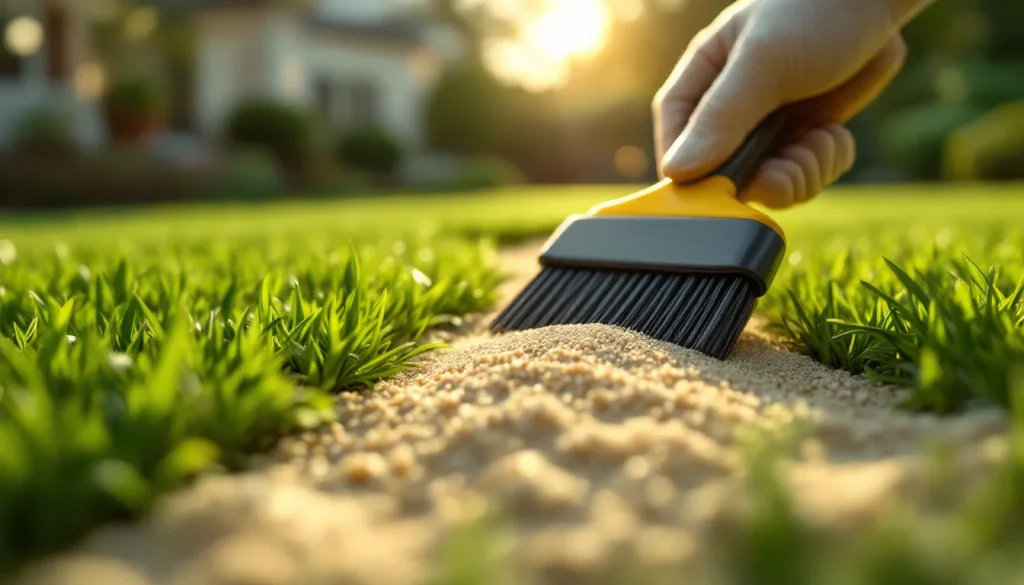
Artificial turf infill is granular material (silica sand, coated sand, crumb rubber, or organic granules) brushed down into the fibers after the turf is laid. It weighs the turf down, holds the blades upright, protects the backing, and helps water drain. Most landscape, pet, and sports turf performs better with infill. Only a few low-traffic decorative installs skip it.
By the HMNDP Editorial Team. Last reviewed: June 2026.
Skipping infill on a walked-on lawn is the fastest way to a matted, wrinkled surface. Without ballast, seams lift, blades lie flat, and the turf can ripple in heat. Infill is spread at roughly 1 to 2 pounds per square foot for typical residential grass, then worked in with a stiff broom or power brush.
Infill sits on top of your compacted base, so the base has to be right first. See our guide to the base for artificial turf before you calculate infill quantities.
Types of artificial turf infill compared
The five main infill categories are silica sand, coated or rounded sand, crumb rubber, thermoplastic elastomer (TPE), and organic or mineral infills like Zeolite, cork, and walnut shell. They differ sharply on cost, heat, odor control, and safety. The table below compares them so you can match a type to your yard.
| Infill type | Material | Cost per 50 lb bag | Best for | Watch-outs |
|---|---|---|---|---|
| Silica sand | Angular quartz sand | $8 to $15 | Budget landscape, ballast | Compacts over time, warms in sun |
| Coated/rounded sand (Envirofill, Smart Fill) | Sand with acrylic and Microban antimicrobial coat | $30 to $50 | Pets, high traffic, cooler surface | Higher upfront cost |
| Crumb rubber (SBR) | Recycled tire granules | $10 to $20 | Sports fields, shock pads | Heat retention, PAH/PFAS concerns, odor |
| TPE | Virgin thermoplastic elastomer | $40 to $70 | Sports, safer rubber alternative | Expensive |
| Zeolite (ZeoFill) | Natural volcanic mineral | $25 to $40 | Pet urine odor and ammonia control | Pair with sand, weak standalone ballast |
| Cork / walnut shell | Organic granules | $35 to $60 | Cool eco surface, playgrounds | Can wash out or decompose |
Crumb rubber deserves a neutral flag. It is made from recycled tires and can contain zinc, lead, and polycyclic aromatic hydrocarbons (PAHs), and some studies have raised questions about per- and polyfluoroalkyl substances (PFAS) in synthetic turf systems. Health findings remain mixed, and a handful of jurisdictions have restricted crumb rubber in public installs. For home pet and play areas, many buyers now choose coated sand or organic infill instead.
Why infill matters: support, ballast, drainage, and safety
Infill does four jobs at once. It keeps blades standing upright for a natural look, adds ballast so the turf lies flat and resists lifting, controls how fast fluids drain through the backing, and cushions impact for playgrounds and sports. It also shields the fibers from foot traffic, which extends the turf’s usable life.
- Blade support: granules prop up the fibers between the tufts, so grass rebounds instead of matting.
- Ballast: 1 to 2 pounds per square foot holds the turf down against wind, heat expansion, and pets.
- Drainage: angular sand keeps pore space open, while a manufacturer perforated backing does the actual draining.
- Durability: infill absorbs wear, so blades bend at the tip rather than the base where they break.
- Cushioning: deeper infill or a pad plus infill lowers the fall impact rating for playground safety.
How much infill do you need per square foot of artificial turf?
Plan for roughly 1 to 2 pounds of silica sand per square foot for a standard residential lawn, more for short putting-green pile and playground cushioning, less for tall luxury pile. Infill is sold mostly in 50-pound bags. Multiply your area by the rate below, then divide by the bag weight to get the number of bags.
| Pile height | Typical use | Silica sand rate | One 50 lb bag covers |
|---|---|---|---|
| Under 1 in | Putting/golf green | 3 to 6 lbs/sq ft | ~8 to 16 sq ft |
| 1 to 1.25 in | Pet turf, high traffic | 1.5 to 2.5 lbs/sq ft | ~20 to 33 sq ft |
| 1.25 to 1.75 in | Residential landscape | 1 to 2 lbs/sq ft | ~25 to 50 sq ft |
| Over 1.75 in | Decorative/luxury pile | 0.5 to 1 lb/sq ft | ~50 to 100 sq ft |
| Any (playground) | Fall cushioning | 2 to 4 lbs/sq ft | ~12 to 25 sq ft |
Infill calculator (do the math):
- Total infill (lbs) = area (sq ft) × application rate (lbs/sq ft).
- Bags needed = total infill (lbs) ÷ bag weight (usually 50 lbs).
- Example: a 500 sq ft landscape lawn at 1.5 lbs/sq ft = 750 lbs = 15 bags of 50 lb sand.
Always confirm against your turf maker’s spec sheet, since dense or short-pile products need more infill than the ranges above. Add one extra bag for topping up after the first month of settling.
Best artificial turf infill for dogs
The best infill for dogs is Zeolite (sold as ZeoFill) combined with an antimicrobial coated sand such as Envirofill with Microban. Zeolite is a porous volcanic mineral with a negative charge that traps ammonia from urine and releases it during rinsing, which cuts pet odor. Skip crumb rubber for pets because of heat and chew risk.
A common pet setup is a base layer of coated sand for ballast and blade support, topped with Zeolite in the top layer where urine lands. Rinse the area weekly, and use an enzyme cleaner monthly to break down solids. Zeolite can be recharged periodically with a diluted vinegar or gypsum flush per the maker’s directions.
Odor problems usually trace back to drainage, not just infill. If urine pools, the base or backing is the issue, so pair the right infill with a free-draining base and a turf product rated for pet use.
Does artificial turf infill make the grass hotter, and how do I keep it cool?
Yes, infill affects surface heat. Crumb rubber runs hottest and can reach 140 to 180°F in full summer sun, while silica sand is cooler and light-colored coated sand, Zeolite, and cork stay coolest. Turf itself already runs hotter than natural grass, so infill choice and shade matter in hot climates.
To keep an infilled lawn cooler, use these fixes:
- Choose reflective coated sand, Zeolite, or cork instead of dark crumb rubber.
- Hose the surface for a minute before use; evaporative cooling drops temperature fast, though briefly.
- Add shade sails, trees, or pergolas over high-use zones.
- Pick lighter thatch colors and lower-density pile in full-sun areas.
How to choose the right artificial turf infill
Choose infill by matching four factors to a type: how the area is used, whether pets are present, your climate heat, and your budget. Budget lawns favor silica sand, pet and hot-climate yards favor coated sand or Zeolite, and play and sports areas favor cork or TPE for cushioning. Use the framework below.
| Your situation | Recommended infill |
|---|---|
| Tight budget, decorative lawn | Silica sand |
| Dogs or pet odor concerns | Zeolite plus antimicrobial coated sand |
| Hot climate, full sun | Coated sand or cork; avoid crumb rubber |
| Kids’ playground | Cork or TPE for cushioning |
| Backyard sports or batting | TPE, or ventilated crumb rubber |
| Commercial high traffic | Coated rounded sand |
Infill is one line in a larger project. Weigh it alongside blade quality and installer skill, covered in our guide to how to choose an artificial turf company, and confirm your installer follows sound artificial turf installation practice for brushing infill in evenly.
How much does artificial turf infill cost?
Artificial turf infill costs about $0.24 to $1.50 per square foot installed, depending on type. Basic silica sand is cheapest at roughly $0.24 to $0.45 per square foot at a 1.5 lb rate, while coated sand and organic infills run $0.75 to $1.50 per square foot. Infill is a small share of total turf cost.
| Infill | Cost per sq ft (at ~1.5 lbs/sq ft) | 500 sq ft lawn |
|---|---|---|
| Silica sand | $0.24 to $0.45 | $120 to $225 |
| Crumb rubber | $0.30 to $0.60 | $150 to $300 |
| Zeolite | $0.75 to $1.20 | $375 to $600 |
| Coated sand | $0.90 to $1.50 | $450 to $750 |
To see where infill fits in the full budget alongside turf, base, and labor, review our breakdown of artificial turf cost. Infill typically adds 5 to 15 percent to a project total, so upgrading from plain sand to coated sand for a pet yard is a modest premium for real odor and heat benefits.
Frequently Asked Questions
What is artificial turf infill and do you really need it?
Artificial turf infill is granular material (silica sand, coated sand, rubber, or organic granules) brushed into the turf fibers after installation. It adds weight, holds blades upright, protects the backing, and aids drainage. Most walked-on landscape, pet, and sports turf needs it to avoid matting and lifting. Only low-traffic decorative or rooftop installs sometimes go without.
What is the best infill for artificial turf?
There is no single best infill; it depends on use. Coated rounded sand (like Envirofill) is the best all-round pick for homes because it resists compaction, runs cooler, and includes antimicrobial coating. Plain silica sand wins on budget, Zeolite wins for pet odor, and cork or TPE win for playground and sports cushioning. Match the infill to your specific yard.
How much infill do I need per square foot of artificial turf?
Plan on 1 to 2 pounds of silica sand per square foot for standard residential landscape turf. Short putting-green pile needs 3 to 6 pounds, and playgrounds need 2 to 4 pounds for cushioning. Multiply area by the rate, then divide by 50 for bag count. A 500 sq ft lawn at 1.5 lbs/sq ft needs 750 lbs, about 15 bags.
What is the best artificial turf infill for dogs?
The best infill for dogs is Zeolite (ZeoFill) paired with antimicrobial coated sand. Zeolite is a porous volcanic mineral that traps ammonia from urine and reduces odor, while the coated sand adds ballast and resists bacteria. Rinse weekly and use an enzyme cleaner monthly. Avoid crumb rubber for pets because it retains heat and poses a chewing risk.
Is silica sand or rubber infill better for artificial grass?
For most home lawns, silica sand is better than crumb rubber. Sand is cheaper, cooler, and free of the tire-derived contaminants that raise health questions, and it supports blades well. Crumb rubber offers more shock absorption, so it suits sports fields and shock-pad systems. For play areas wanting cushioning without rubber, cork or TPE are safer middle-ground options.
Does artificial turf infill make the grass hotter, and how do I keep it cool?
Infill choice affects heat. Crumb rubber runs hottest and can hit 140 to 180°F in direct sun, while light coated sand, Zeolite, and cork stay cooler. To reduce surface temperature, pick reflective infill, hose the turf before use for brief evaporative cooling, add shade sails or trees, and choose lighter, lower-density pile in full-sun zones.
How much does artificial turf infill cost?
Infill costs roughly $0.24 to $1.50 per square foot installed. Silica sand is cheapest at $8 to $15 per 50 lb bag, coated sand runs $30 to $50, Zeolite $25 to $40, and crumb rubber $10 to $20. For a 500 sq ft lawn, expect $120 to $225 for sand or $450 to $750 for coated sand, usually 5 to 15 percent of the total project.
How often do you need to replace or top up turf infill?
Infill rarely needs full replacement, but plan to top it up. High-traffic and pet areas can lose infill to rain, brushing, and cleanup, so check levels every 1 to 2 years and add a bag or two where blades start matting. Quality coated sand and Zeolite last many years. Regular brushing redistributes existing infill and delays the need to add more.