
By the HMNDP Editorial Team, independent reporting on lawn care, landscaping, and the green industry.
Last reviewed: June 2026
What an artificial turf company actually does
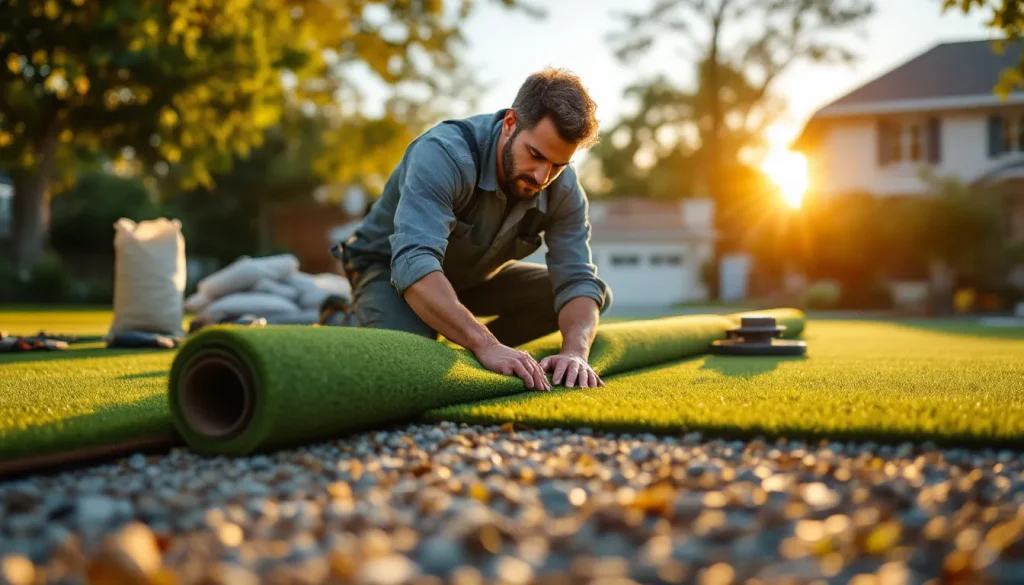
An artificial turf company designs, supplies, and installs synthetic grass systems for lawns, yards, playgrounds, sports fields, and putting greens. The real service is installation, not product. Anyone can order a roll of turf. The value is in base excavation, drainage, compaction, seaming, infill, and a warranty that stands behind the work for 8 to 15 years or more.
Two broad types compete for your job. National brands like SYNLawn, ForeverLawn, Premier, and Synthetic Turf Solutions license or franchise regional installers under a national warranty. Independent local installers buy turf wholesale and stand behind the work themselves. Both can do excellent work. The difference is who is accountable when a seam splits in year 4.
Core services most companies offer
A full-service artificial turf company covers residential lawns, commercial grounds, pet areas, playgrounds, and specialty golf greens. Product is the entry point; installation quality is the differentiator. Ask which services the crew self-performs versus subcontracts, because prep work is where most failures start.
- Residential artificial grass installation: front and back lawns, pet runs, poolside, and rooftop or balcony turf for homeowners.
- Commercial synthetic turf installation: HOA common areas, offices, hotels, schools, dog daycares, and municipal parks.
- Putting greens and golf greens: a specialty application with nylon turf, sand infill, and precise slope grading for true ball roll.
- Playground and pet turf: systems built with shock pads, antimicrobial infill, and flow-through backing for drainage.
Synthetic turf product varieties an installer should offer
Artificial grass is the primary product category, and quality varies widely by fiber, weight, and use case. A serious artificial turf company carries at least three grades and matches the product to how you will use the space. Pet, playground, and putting turf are engineered differently. Beware any company that quotes one turf for every job.
| Turf type | Best for | Typical face weight | Notes |
|---|---|---|---|
| Landscape (polyethylene) | Lawns, yards | 60 to 90 oz/sq yd | Soft feel, realistic multi-tone blades |
| Pet turf | Dog runs, pet areas | 50 to 80 oz/sq yd | Flow-through backing, antimicrobial infill |
| Playground turf | Play areas, schools | 40 to 70 oz/sq yd | Paired with shock pad for fall rating |
| Putting green (nylon) | Golf greens | Short pile, 0.4 to 0.75 in | Firm, sand-filled for consistent roll |
| Sports turf | Fields, courts | Variable, often infilled | Rubber or organic infill for cushioning |
For a deeper look at product options and the install itself, see our guide to artificial grass installation.
How to choose the right artificial turf company
Choose an artificial turf company by verifying license and insurance, comparing at least three itemized quotes, checking the manufacturer warranty length, and inspecting recent local installs in person. Confirm the crew self-performs base prep, not just turf laydown. Price alone is a weak signal; base preparation and seam quality decide whether the lawn lasts 5 years or 15.
- Verify licensing and insurance in your state before anything else. Many states require a landscaping or general contractor license above a dollar threshold.
- Get three itemized quotes that break out prep, drainage, turf grade, infill, and labor as separate lines.
- Read the warranty carefully: separate the manufacturer product warranty from the installer’s labor warranty.
- Inspect real installs that are 2 or more years old, not just fresh photos. Ask for local addresses.
- Confirm who does the prep. The best turf fails on a poorly compacted or under-drained base.
Our broader vetting playbook on how to find a reputable landscaper applies directly to turf crews.
Questions to ask an artificial turf installer before hiring
Ask an installer how many years they have run turf specifically, who self-performs the base prep, what the product and labor warranties each cover, and how they handle drainage on your soil. Strong answers are specific and written into the contract. Vague answers, cash-only pricing, and refusal to name references are red flags.
- How many turf projects have you completed, and how long have you specialized in turf?
- Do you self-perform excavation, base, and seaming, or subcontract it?
- What base depth, aggregate, and compaction do you use for my soil and slope?
- What does the manufacturer warranty cover versus your labor warranty, and for how long?
- What face weight, pile height, and infill are in this quote?
- Can I visit three installs you completed 2 or more years ago?
- Are you licensed and insured in this state, and can you provide certificates?
Red flags that should end the conversation
Walk away from door-to-door pressure, deep discounts that expire “today,” cash-only demands, no written warranty, and any refusal to itemize the quote or show older installs. A large deposit above 30 to 50 percent before materials arrive is another warning. Legitimate companies welcome license and insurance verification.
National turf company vs local installer
A national brand like SYNLawn or ForeverLawn offers a manufacturer-backed warranty and consistent product access, often at a premium. A local installer usually prices lower and gives you direct accountability, but the warranty depends on that one business staying open. Neither is automatically better; the right choice depends on how you weigh price against long-term warranty backing.
| Factor | National brand / franchise | Local independent installer |
|---|---|---|
| Typical price | Often 10 to 25% higher | Usually lower |
| Warranty backing | Corporate manufacturer warranty | Depends on the business staying open |
| Accountability | Through franchise, can be less direct | Direct with the owner |
| Product access | Proprietary, tested product lines | Wholesale, varies by supplier |
| Crew consistency | Standardized training | Varies by shop |
A practical middle path: hire a well-reviewed local installer who is a certified dealer for a national manufacturer. You get direct accountability plus a corporate-backed product warranty.
How much does artificial turf installation cost per square foot?
Professional artificial turf installation in the United States typically runs $8 to $20 per square foot fully installed as of 2026, with most residential lawns landing between $10 and $15. The turf material alone is often $2 to $7 per square foot. Labor, base prep, drainage, and infill make up the rest. Small or complex jobs push toward the high end.
| Cost driver | What it covers | Effect on price |
|---|---|---|
| Base prep and excavation | Removal, grading, aggregate, compaction | Often 30 to 50% of total |
| Turf grade | Face weight, pile height, warranty tier | $2 to $7+ /sq ft |
| Infill | Silica sand, coated sand, antimicrobial | $0.50 to $2 /sq ft |
| Drainage | Slope, French drains, permeable base | Rises with poor soil or flat lots |
| Square footage | Total area installed | Larger jobs lower per-sq-ft cost |
| Access and complexity | Slopes, curves, obstacles, rooftop | Adds labor hours |
For regional ranges and worked examples, see our full breakdown of artificial turf cost. Get quotes on a per-project basis, since a per-square-foot number without a scope is not comparable across companies.
How to judge turf quality and warranty
Judge turf quality by four specs: face weight (higher ounces means denser, more durable turf), pile height (blade length), warranty length, and treatment specs for pets, heat, and UV. Premium landscape turf runs 80 to 100+ oz/sq yd with a 15-year warranty. Budget turf near 40 to 50 oz thins and flattens faster in high-traffic or full-sun yards.
| Quality tier | Face weight | Warranty | Typical use |
|---|---|---|---|
| Budget | 40 to 55 oz/sq yd | 5 to 8 years | Low-traffic, low-sun areas |
| Mid | 60 to 80 oz/sq yd | 8 to 12 years | Most residential lawns |
| Premium | 80 to 100+ oz/sq yd | 12 to 15+ years | High traffic, pets, full sun |
Quality artificial turf lasts 15 to 25 years with proper installation. Warranties usually cover fading, fiber loss, and defects, but not damage from abuse, sharp objects, or reflected heat from windows. Always read what the warranty excludes.
Should you install artificial turf yourself or hire a company?
Hire a professional artificial turf company for anything larger than a small, flat, low-traffic area. DIY can save on labor for a 200 square foot patch, but base compaction, drainage, and seaming are where amateurs fail, and a botched base voids most product warranties. Self-installing usually forfeits any labor warranty and the manufacturer install-backed coverage.
DIY makes sense for a small pet corner, a putting strip, or a balcony where mistakes are cheap to fix. For a full lawn, a pro crew brings plate compactors, laser grading, and seam expertise that decide the 15-year outcome. Compare the labor savings against the risk of redoing the base. Our overview of artificial turf installation shows exactly what the process involves.
Getting a free quote and next steps
Most artificial turf companies offer a free on-site consultation and written estimate. Request quotes from three companies, give each the same scope (square footage, use case, pets, drainage needs), and compare itemized line by line. A same-scope comparison is the only way to see who is padding prep or downgrading turf grade to win on price.
Before you sign, confirm the license, insurance certificate, product and labor warranty terms, and a written project timeline. Ask for a start-to-finish scope and payment schedule in the contract, with the final payment tied to completion and your inspection.
Frequently Asked Questions
How do I choose the right artificial turf company?
Verify state license and insurance, collect three itemized quotes on the same scope, and confirm the manufacturer and labor warranties in writing. Inspect installs that are 2 or more years old in person, and confirm the crew self-performs base prep and drainage. Price is a weak signal on its own; base quality and seam work decide whether turf lasts 5 or 15 years.
What questions should I ask an artificial turf installer before hiring?
Ask how long they have specialized in turf, whether they self-perform excavation and seaming, what base depth and compaction they use, and what the product and labor warranties each cover. Ask the turf’s face weight, pile height, and infill, and request three older local references. Specific, written answers signal a strong company; vague or cash-only responses are red flags.
How much does artificial turf installation cost per square foot?
Professional installation typically runs $8 to $20 per square foot fully installed in 2026, with most residential lawns between $10 and $15. Turf material alone is often $2 to $7 per square foot; the rest is base prep, drainage, infill, and labor. Base prep can be 30 to 50 percent of the total. Small or complex jobs cost more per square foot.
Is it better to hire a national turf company or a local installer?
It depends on your priorities. National brands like SYNLawn and ForeverLawn offer manufacturer-backed warranties and tested products, often at a 10 to 25 percent premium. Local installers usually price lower with direct owner accountability, but warranty backing depends on the business staying open. A strong middle path is a well-reviewed local installer certified as a dealer for a national manufacturer.
What licenses, insurance, and warranties should an artificial turf company have?
Requirements vary by state, but a reputable company should carry general liability insurance, workers’ compensation, and any contractor or landscaping license your state mandates above its dollar threshold. Expect two warranties: a manufacturer product warranty (often 8 to 15 years) and a separate installer labor warranty. Always request current certificates and read what each warranty excludes before signing.
How can I tell if an artificial turf company uses high-quality grass?
Check four specs: face weight, pile height, warranty length, and pet, heat, and UV treatments. Premium landscape turf runs 80 to 100-plus ounces per square yard with a 12 to 15-year warranty. Budget turf near 40 to 55 ounces thins and flattens faster in sun and traffic. Ask for the product spec sheet by name, not a generic sample.
How long does artificial turf last and what does the warranty cover?
Quality artificial turf lasts 15 to 25 years with proper installation and drainage. Manufacturer warranties, usually 8 to 15 years, typically cover excessive fading, fiber loss, and material defects. They generally exclude damage from abuse, sharp objects, pet digging, and reflected window heat. A separate installer labor warranty covers seams and base workmanship, so confirm both in writing.
Should I install artificial turf myself or hire a professional company?
Hire a professional for anything beyond a small, flat, low-traffic area. DIY can work for a pet corner, putting strip, or balcony where mistakes are cheap. For a full lawn, base compaction, drainage, and seaming are where amateurs fail, and a poor base voids most product warranties. Self-installing also usually forfeits the labor warranty and install-backed manufacturer coverage.