
By the HMNDP Editorial Team, independent reporting on lawn care, landscaping, and the green industry.
Last reviewed: June 2026
Mulch alternatives at a glance
Mulch alternatives fall into three buckets: inorganic ground cover (stone, gravel, river rock, pumice, lava rock, rubber), living ground cover (low plants that spread), and other organic materials (wood chips, pine straw, leaf mold). Inorganic options last 10 years or more and cut re-mulching to near zero. Living and organic options feed the soil but need periodic renewal.
Here are the eight alternatives this guide covers, ordered roughly from most permanent to most soil-friendly:
- Stone, gravel, and river rock
- Pumice stone and lava rock
- Rubber mulch
- Landscape fabric and weed barrier
- Ground cover plants (living mulch)
- Wood chips
- Pine straw
- Leaf mold and compost
Mulch alternatives cost comparison per square foot
The cheapest mulch alternative up front is rarely the cheapest over 10 years. Bark and wood mulch cost little per bag but need topping up every 1 to 2 years, so the bills repeat. Stone and rubber cost 2 to 5 times more to install but can go a decade untouched. The table below shows rough 2026 US material costs plus a 10-year picture for a 100 square foot bed at 2 to 3 inches deep.
| Option | Installed cost / sq ft | Typical lifespan | Approx. 10-yr cost (100 sq ft) | Feeds soil? |
|---|---|---|---|---|
| Arborist wood chips | $0 to $0.50 (often free) | 1 to 2 yrs | $0 to $250 | Yes |
| Pine straw | $0.30 to $0.60 | ~1 yr | $300 to $600 | Yes |
| Bark mulch (reference) | $1 to $2 | 1 to 2 yrs | $800 to $1,400 | Yes |
| Landscape fabric | $0.40 to $0.80 | 5 to 10 yrs | $50 to $150 | No |
| Gravel / crushed stone | $1.50 to $3 | 10 to 15+ yrs | $150 to $350 | No |
| River rock | $2 to $4 | 15+ yrs | $200 to $450 | No |
| Pumice / lava rock | $3 to $6 | 15+ yrs | $300 to $650 | No |
| Rubber mulch | $4 to $8 | 10+ yrs | $400 to $850 | No |
| Ground cover plants | $2 to $5 (plugs) | Self-renewing | $200 to $500 | Yes |
The lesson: if you hate re-mulching, a one-time gravel or stone install often beats bagged bark on 10-year math while looking clean the whole time. If you want the soil to improve, free arborist chips are the budget winner. To size any of these, use our guide on how many cubic feet are in a yard of mulch so you buy the right volume once.
1. Stone, gravel, and river rock
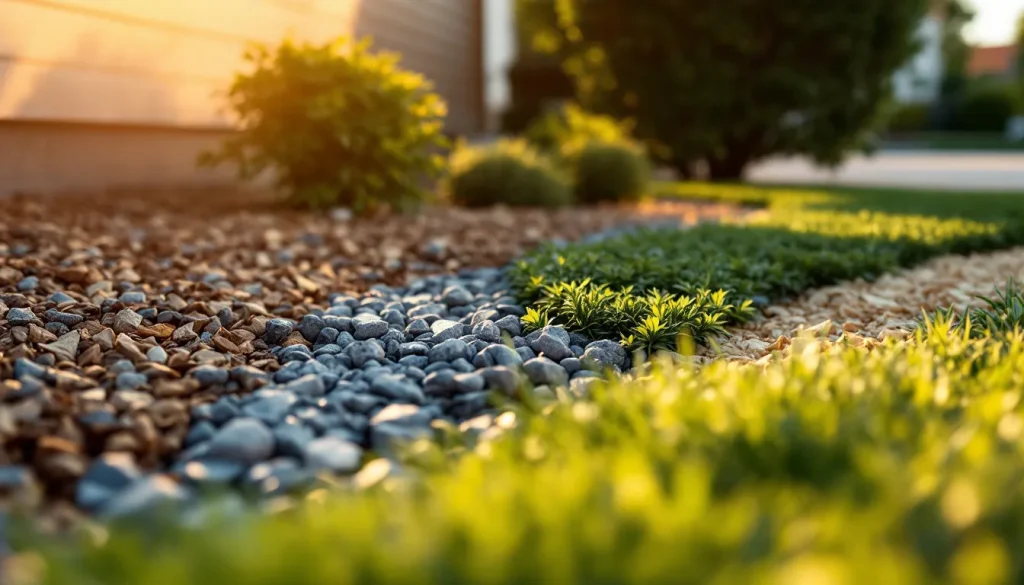
Stone, gravel, and river rock are the go-to permanent mulch alternative for curb appeal and near-zero upkeep. Crushed gravel packs tight for paths, pea gravel and river rock read as decorative in beds, and a 2 to 3 inch layer over landscape fabric stays put for 10 to 15 years. Expect $1.50 to $4 per square foot installed.
Stone shines around foundations, downspouts, and slopes because it does not wash away or rot. It also holds heat, which can stress nearby plants in hot climates. Reddit gardeners on r/landscaping regularly warn that gravel is heavy to remove later and still grows weeds once dust and leaf debris collect on top, so it is low maintenance, not no maintenance. For a full breakdown, see our guide on using rocks instead of mulch.
2. Pumice stone and lava rock
Pumice and lava rock are lightweight volcanic stone that give a bold red or gray look and last 15 years or more. They weigh far less than river rock, so they are easier to haul and spread, and their porous texture drains fast. Cost runs higher, roughly $3 to $6 per square foot, but you almost never replace them.
These rocks suit xeriscapes, cactus and succulent beds, and hot dry regions in the Southwest. The trade-offs: lava rock has sharp edges (bad for play areas and bare feet), the pieces can float or scatter in heavy rain, and the strong color fades over years of sun. Like all stone, it does nothing for soil health and can raise bed temperature.
3. Rubber mulch: the honest safety picture
Rubber mulch is shredded recycled tires sold as a long-lasting, spongy ground cover. It resists compaction, does not blow away easily, and can last 10 or more years, which is why it shows up under playsets. But the honest picture is mixed enough that many landscapers avoid it in planting beds and near edible gardens.
Three real concerns drive the caution:
- Heat: rubber absorbs sun and can get noticeably hotter than wood or stone on summer afternoons, a burn risk on bare skin in play areas.
- Chemicals and microplastics: tire crumb can leach zinc and other compounds and sheds microplastic particles as it degrades. The US EPA and CDC/ATSDR have studied tire crumb (notably in synthetic turf) and describe findings as limited rather than an all-clear.
- Odor and flammability: it can smell in heat and, once ignited, burns hotter and longer than wood mulch.
Is it better than wood mulch? For a play surface where you want cushioning and no yearly top-ups, IPEMA-certified rubber can make sense. For garden beds, foundations, and food gardens, most independent sources lean toward stone or wood. On r/landscaping and r/gardening, the common verdict is blunt: fine under a swing set, avoid in beds you actually plant.
4. Landscape fabric and weed barrier
Landscape fabric is a woven or spun-bond weed barrier laid over soil, then topped with stone or mulch. As a standalone weed-suppression layer it is cheap, $0.40 to $0.80 per square foot, and blocks most weeds for the first few years by cutting light to the soil.
The catch is that fabric is a supporting player, not a finished look, and it fails over time. Once organic dust settles on top, weeds root above the fabric, and roots below can grow through woven products. It also restricts water and air to the soil and interferes with beneficial organisms. Use it under gravel on paths and utility strips; skip it under living beds where you want plants to spread.
5. Ground cover plants (living mulch)
Ground cover plants are the living mulch alternative: low, spreading species that carpet bare soil, choke out weeds, and get better with age instead of decaying. Good picks include creeping thyme, creeping phlox, sedum, clover, ajuga, and native selections suited to your zone. Initial cost is $2 to $5 per square foot in plugs, then they largely renew themselves.
This is the strongest option for soil health, pollinators, slopes (roots hold soil), and long-term curb appeal. The downside is patience: beds look sparse for one to two seasons until plants knit together, and you weed between them during establishment. For planted beds generally, our guide to the best mulch for flower beds covers how to pair living and organic cover.
6. Wood chips
Wood chips, especially free arborist chips, are the budget champion and a genuine soil builder. Unlike dyed bark bags, raw arborist chips are a mix of wood, bark, and leaves that break down into rich organic matter. Tree crews often drop full loads free through services like ChipDrop, so material cost can be $0.
Chips suppress weeds well at 3 to 4 inches deep, retain moisture, and moderate soil temperature. The trade-offs: they decompose and need topping up every 1 to 2 years, fresh chips can briefly tie up surface nitrogen, and you should keep any wood product 12 to 18 inches away from your foundation and siding to avoid inviting termites, ants, and moisture. Chips are excellent on paths and around trees and shrubs. For edibles, see the best mulch for a vegetable garden.
7. Pine straw
Pine straw (pine needles) is a lightweight organic mulch popular across the Southeast. It knits together into a mat that resists washout on slopes, breaks down slowly, and gives beds a natural woodland look for $0.30 to $0.60 per square foot. It is one of the cheaper natural options to buy by the bale.
Pine straw suits acid-loving plants like azaleas, camellias, hydrangeas, and blueberries, and it is easy to spread by hand. It does need refreshing about once a year as it compresses and fades, and in very dry, fire-prone areas fine needles are more flammable than green ground cover, so keep it away from the house in those zones.
8. Leaf mold and compost
Leaf mold (partially decomposed leaves) and finished compost are the most eco-friendly, essentially free mulch alternatives if you make them from yard waste. A 2 to 3 inch layer conserves moisture, suppresses weeds, and feeds soil biology better than any inert product.
The trade-off is looks and longevity. Compost and leaf mold decompose fast, so they need renewing each season and can appear untidy compared to stone or bark. Many gardeners split the difference: a compost or leaf-mold base for the soil, topped with a thin decorative layer of chips or pine straw for curb appeal. This is a classic budget, pest-neutral, soil-first approach that Reddit gardeners on r/gardening champion for beds you actively grow in.
Best mulch alternative by zone (foundation, playground, slope, path, beds)
The right mulch alternative depends on where it goes, not just price. Matching material to zone avoids the two most common mistakes: wood against the foundation (pest and rot risk) and stone in beds you want to plant later (hard to remove). Use this quick match:
| Zone | Best fit | Why | Avoid |
|---|---|---|---|
| Around the house / foundation | Gravel or crushed stone | Will not rot or hold moisture against siding; deters termites and ants | Wood mulch touching the wall |
| Playground / play area | IPEMA-certified rubber or engineered wood fiber | Cushioning for falls; rubber avoids yearly top-ups | Sharp lava rock; gravel |
| Slopes and banks | Ground cover plants or pine straw | Roots and matted needles hold soil against washout | Loose river rock; bark |
| Pathways | Crushed gravel over landscape fabric | Compacts firm, drains, stays weed-light for years | Compost; loose chips |
| Garden and flower beds | Wood chips, compost, or living mulch | Feeds soil and supports plant growth | Rubber; landscape fabric |
Curb appeal, pests, and weeds: choosing your priority
Most homeowners are really optimizing for one of three things: looks, low maintenance, or a healthy garden. Naming your priority makes the choice fast. Stone and rubber win on set-and-forget curb appeal, wood chips and compost win on soil, and living ground cover wins on the long game once established.
On pests, inorganic covers (stone, gravel, pumice) hold less moisture and give termites, ants, and roaches fewer places to nest near the house, which is why gravel is the standard foundation choice. On weeds, the best suppression comes from blocking light: 3 to 4 inches of chips, a dense living carpet, or fabric under stone. No option is truly weed-proof once debris builds on the surface, so plan on a light annual cleanup whatever you choose.
Frequently Asked Questions
What can I use instead of mulch?
You can use stone, gravel, or river rock; pumice or lava rock; rubber mulch; landscape fabric; ground cover plants (living mulch); wood chips; pine straw; or leaf mold and compost. Inorganic covers last 10 years or more with little upkeep, while organic and living options feed the soil but need periodic renewal. Match the material to the zone (foundation, path, slope, or bed).
What is the cheapest alternative to mulch?
Free arborist wood chips are the cheapest, often $0 through tree crews or services like ChipDrop, and they improve the soil as they break down. Leaf mold and compost made from your own yard waste are also essentially free. Among purchased options, pine straw ($0.30 to $0.60 per square foot) and landscape fabric are the lowest-cost choices in 2026.
What is the best mulch alternative around the house or foundation?
Gravel or crushed stone is the best choice around a foundation. Stone does not rot, hold moisture against your siding, or attract termites and ants the way wood mulch can. A 2 to 3 inch layer over landscape fabric stays clean for years. Keep any organic mulch at least 12 to 18 inches away from the wall to reduce pest and moisture risk.
What is the best low-maintenance alternative to mulch?
Stone (gravel, river rock, pumice, or lava rock) is the most low-maintenance mulch alternative, lasting 10 to 15 years or more with only occasional debris cleanup and topping up. Rubber mulch is similarly long-lasting. Established ground cover plants are low maintenance once they fill in, though they need one to two seasons and some weeding to reach that point.
Is rubber mulch safe, and is it better than wood mulch?
Rubber mulch (shredded recycled tires) lasts 10 or more years and cushions falls, but it can run hot in summer, may leach zinc and shed microplastics as it degrades, and burns hotter than wood if ignited. EPA and CDC/ATSDR studies of tire crumb call findings limited, not an all-clear. It can beat wood under a play set; for planting beds and food gardens, stone or wood is usually the safer pick.
What can I put down instead of mulch to stop weeds?
To stop weeds, block light to the soil. The strongest options are a 3 to 4 inch layer of wood chips, a dense living ground cover like creeping thyme or clover, or landscape fabric topped with gravel. No option is permanently weed-proof, because dust and leaf debris eventually let weeds root on top, so expect a light annual cleanup regardless.
What is a good natural or eco-friendly alternative to mulch?
Living ground cover plants are the most eco-friendly option: they feed pollinators, hold soil on slopes, and renew themselves. Leaf mold, compost, and free arborist wood chips are close behind, all building soil biology as they decompose. These natural choices improve soil health over time, unlike inert stone or rubber, though they need renewing more often for looks.
What can I use instead of mulch in a playground or play area?
For play areas, use IPEMA-certified rubber mulch or engineered wood fiber, both tested for fall cushioning. Rubber avoids yearly top-ups but can get hot in direct sun. Engineered wood fiber runs cooler and is splinter-controlled but needs periodic refilling. Avoid sharp lava rock and loose gravel in play zones, since neither cushions falls and both can cause scrapes.