
By the HMNDP Editorial Team, independent reporting on lawn care, landscaping, and the green-industry business.
Last reviewed: June 2026
What a hardscape patio is (and how it differs from softscape)
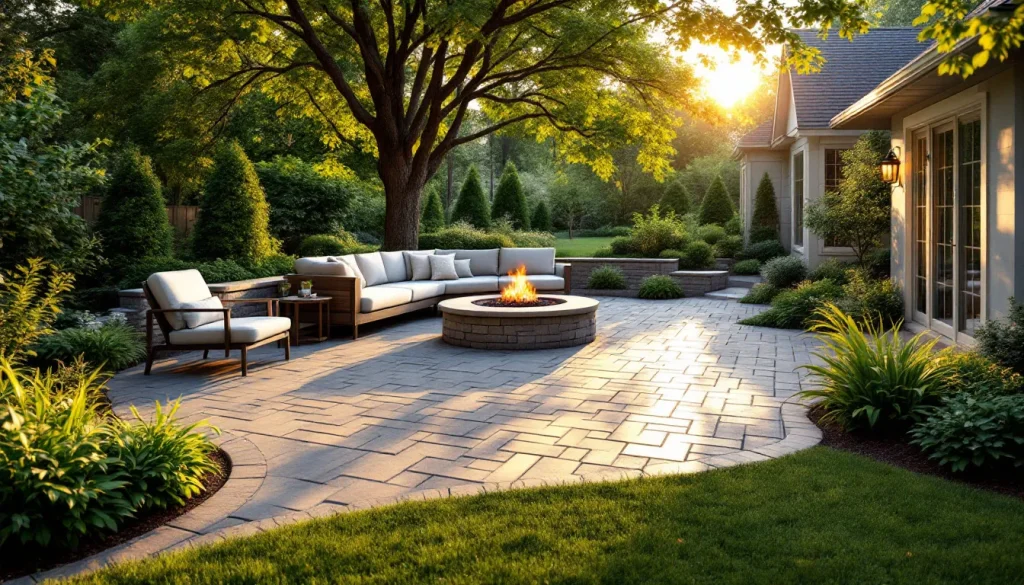
A hardscape patio is an outdoor living surface built from hard, non-living materials: concrete pavers, natural stone, brick, or poured concrete, set on a compacted base. Hardscape covers every solid, built element in a yard (patios, walkways, retaining walls, seating walls, decks, and steps), while softscape covers the living elements (grass, plants, shrubs, and trees). The patio is the flat, usable floor of that hardscape.
The distinction matters for budgeting because the two behave differently over time. Softscape grows, spreads, and needs seasonal replacement. Hardscape is a one-time structural install that, done correctly, lasts decades with little upkeep.
Most residential yards use both. A typical design pairs a hardscape patio with softscape borders: planting beds along the edges, a lawn beyond, and shade trees framing the space. The hardscape defines where people sit and walk; the softscape softens the hard edges and adds color.
| Category | What it includes | Behavior over time |
|---|---|---|
| Hardscape | Patios, paver walkways, retaining walls, seating walls, steps, decks, fire pits | Structural, one-time install, decades of service |
| Softscape | Lawn, garden beds, shrubs, perennials, mulch, trees | Living, grows and needs seasonal maintenance |
Hardscape patio material options, side by side
The four common hardscape patio materials are concrete pavers, natural stone (including flagstone), brick, and poured concrete. Each carries a different price per square foot, a different lifespan, and a different maintenance load. Concrete pavers dominate residential installs because they balance cost, durability, and repairability. The right choice depends on budget, look, and how much upkeep you will tolerate.
Concrete pavers
Concrete pavers are molded interlocking units, the most popular hardscape patio material in the United States. They run roughly $10 to $25 per square foot installed, resist cracking because individual units flex independently, and let you lift and replace a single damaged paver instead of the whole surface. Manufacturer lines like Belgard and Unilock offer dozens of shapes, colors, and textures, including tumbled and slate-look finishes.
Natural stone and flagstone
Natural stone is quarried material such as bluestone, limestone, or irregular flagstone, prized for a high-end, one-of-a-kind look. It typically costs $20 to $50-plus per square foot installed because the material is heavy, variable, and labor-intensive to set. Flagstone laid in a dry, sand-swept joint gives a relaxed, organic pattern, while cut stone in a mortared joint reads more formal.
Brick
Clay brick is a fired-clay paver with a classic, warm look that holds its color for decades. Installed cost lands around $10 to $20 per square foot. Brick suits traditional and colonial homes, works in herringbone or basketweave patterns, and ages gracefully, though the color palette is narrower than concrete pavers and moss can gather in shaded, damp joints.
Poured concrete
Poured concrete is a single continuous slab, the lowest-cost hardscape patio option at roughly $6 to $15 per square foot installed, and higher for stamped or colored finishes. It goes in fast, but a monolithic slab cracks as the ground moves, and repairing it means patching a visible seam or replacing a whole section. Stamped concrete mimics stone or brick at a lower price but shares the same cracking risk.
Hardscape cost per square foot in 2026
Hardscape patio cost runs from about $5 per square foot for basic poured concrete to $50-plus per square foot for premium natural stone, installed. The number swings on material, site conditions, pattern complexity, and regional labor rates. Below is the decision matrix competitors leave out: each material paired with its real installed cost, expected lifespan, and maintenance load in one place.
| Material | Installed cost / sq ft | Lifespan | Maintenance | Best for |
|---|---|---|---|---|
| Poured concrete | $6 to $15 | 25 to 30 yrs | Low, but cracks are hard to fix | Tight budgets, simple shapes |
| Stamped concrete | $12 to $20 | 25 yrs | Reseal every 2 to 3 yrs | Stone look on a budget |
| Brick | $10 to $20 | 25 to 50-plus yrs | Low, occasional weeding of joints | Traditional homes |
| Concrete pavers | $10 to $25 | 25 to 40 yrs | Low, single units replaceable | Most residential patios |
| Natural stone / flagstone | $20 to $50-plus | 50-plus yrs | Occasional re-sanding of joints | High-end, custom looks |
These ranges are national averages for June 2026 and may run higher in high-cost metros or on sites needing extra excavation, drainage, or retaining structure. Get itemized quotes before you commit. Our guide to choosing hardscape materials breaks down each option in more depth.
Full hardscape patio installation cost, by size
A finished hardscape patio in 2026 usually costs between $2,000 and $15,000 depending on size and material. The per-square-foot figure alone hides the real number, so it helps to price whole patios. Below are two common sizes using a mid-range concrete paver at about $18 per square foot installed, the figure most homeowners land on.
| Patio size | Square feet | Concrete paver (~$18/sq ft) | Natural stone (~$35/sq ft) |
|---|---|---|---|
| 12 x 12 | 144 sq ft | ~$2,600 | ~$5,000 |
| 16 x 20 | 320 sq ft | ~$5,800 | ~$11,200 |
The labor-versus-materials split is the part cost guides skip. On a paver patio, expect roughly 50 to 65 percent of the total to be labor and 35 to 50 percent materials. Excavation, base compaction, and precise setting are where crews spend their hours, and that labor is what separates a patio that stays flat from one that heaves.
Add-ons stack on top of the base patio. A seating wall may add $2,000 to $6,000, a built-in fire pit $700 to $3,000, and steps or a raised section several thousand more. Budget the patio floor first, then layer features once you know your baseline number. See our full hardscape installation cost breakdown for a line-by-line view.
Is a hardscape patio cheaper than a deck?
A ground-level hardscape patio is usually cheaper than a raised wood or composite deck of the same size. A paver patio often runs $10 to $25 per square foot, while a pressure-treated wood deck runs about $15 to $35 and a composite deck $30 to $60-plus, because decks need framing, footings, and railings. The gap widens as the deck rises off the ground.
| Factor | Hardscape patio | Deck |
|---|---|---|
| Cost / sq ft | $10 to $25 (pavers) | $15 to $60-plus |
| Best terrain | Flat or gently graded ground | Sloped or elevated sites |
| Lifespan | 25 to 50-plus yrs | 15 to 30 yrs |
| Maintenance | Low, occasional joint sand | Staining, sealing, board replacement |
| Resale appeal | Strong, low upkeep | Strong, but ongoing cost |
Terrain often decides it. On flat ground near grade, a patio wins on cost and upkeep. On a steep slope or a second-story walkout, a deck avoids the expensive retaining walls and fill a patio would require. Match the structure to the site, not just the sticker price.
Hardscape patio design ideas and outdoor living features
Popular hardscape patio designs pair a paver or stone floor with vertical and functional elements: seating walls, fire pits, outdoor kitchens, and retaining walls that carve usable space out of a slope. The most cited inspiration sources are Pinterest boards and the photo galleries from Belgard, Unilock, and Home Depot. Below are the design moves that recur across high-end installs.
- Seating (sitting) walls. Low walls, usually 18 to 24 inches tall, that ring a patio and double as permanent bench seating around a fire feature.
- Fire pits and fireplaces. A built-in fire pit anchors the layout and extends the usable season into cool evenings.
- Outdoor kitchens. Grill islands, counters, and bar seating that turn the patio into a dining room, often clad in the same paver as the floor.
- Retaining walls. Structural walls that hold back a slope, create level terraces, and turn an unusable hillside into flat patio space.
- Multi-level patios. Stepped zones that separate cooking, dining, and lounging areas on the same footprint.
- Mixed materials. A stone or contrasting-color paver border framing a field of standard pavers, a common Belgard and Unilock design pattern.
Softscape ties it together. Planting beds along the patio edge, a specimen tree for shade, and low ornamental grasses soften the hard lines. For more layouts and inspiration, see our backyard hardscape ideas gallery.
Drainage, base prep, and grading: what makes or breaks a patio
The base under a hardscape patio matters more than the material on top. A patio fails when water pools, the base is too thin, or the ground was not graded to drain. A proper install excavates 7 to 12 inches, compacts a crushed-stone base in lifts, and slopes the finished surface away from the house at about 1 to 2 percent (roughly 1/4 inch of fall per foot). Skip this and even premium pavers heave and sink.
Here is the sequence a competent crew follows, and what to confirm before you pay.
- Excavate to depth. Dig out 7 to 12 inches for pavers, deeper in cold climates where frost heave is a risk. Too-shallow excavation is the most common corner cut.
- Grade for drainage. Slope the sub-base away from structures at 1 to 2 percent so water sheds instead of pooling.
- Lay and compact the base. Add crushed stone (often 3/4-inch minus) in 2-to-4-inch lifts, compacting each layer with a plate compactor. Skipping lifts leaves soft spots that settle later.
- Set the bedding layer. Screed a thin sand or fine-stone bedding layer over the compacted base for the pavers to seat into.
- Install edge restraint. Lock the perimeter with plastic, metal, or concrete edging so pavers cannot creep outward over time.
- Sweep in joint sand. Fill the joints, ideally with polymeric sand that hardens to resist weeds and washout.
Consider permeable pavers if drainage or local stormwater rules are a concern. Permeable systems use open-graded stone and wider joints that let rain infiltrate through the surface into the ground, reducing runoff, and some municipalities may offer stormwater credits for them depending on your jurisdiction. They cost more up front but can solve a wet-yard problem that would otherwise need separate drains.
Because base work is invisible once buried, it is where inexperienced or low-bid crews cut corners. Ask any contractor to spell out excavation depth, base thickness, and slope in the written quote. Our hardscape contractor vetting checklist covers the questions that separate real installers from mow-and-blow crews taking on patios.
How long a hardscape patio lasts and what upkeep it needs
A properly installed hardscape patio lasts 25 to 50-plus years, and natural stone can outlast the house. Maintenance is light: sweep debris, rinse periodically, refill joint sand every few years, and reseal if the material calls for it. Concrete pavers add a repair advantage because you can lift and swap a single stained or cracked unit without touching the rest of the surface.
Poured concrete is the exception on repairability. It needs the least routine care, but once it cracks (and slabs eventually do as soil shifts), the fix is a visible patch or a full section replacement. That tradeoff, low upkeep but hard to repair, is why many homeowners pay more up front for pavers.
Frequently Asked Questions
What is a hardscape patio and how is it different from softscape?
A hardscape patio is an outdoor living floor built from non-living materials like pavers, stone, brick, or concrete set on a compacted base. Hardscape covers all built, solid elements (patios, walls, walkways, steps, decks), while softscape covers living elements (lawn, plants, shrubs, trees). The patio is the flat, usable hardscape surface, usually paired with softscape borders for contrast.
How much does a hardscape patio cost per square foot in 2026?
In 2026, hardscape patios run about $5 per square foot for basic poured concrete up to $50-plus per square foot for premium natural stone, installed. Concrete pavers, the most common choice, land around $10 to $25 per square foot. The final number depends on material, site conditions, pattern complexity, and regional labor rates, so get itemized quotes.
What is the best material for a hardscape patio?
Concrete pavers are the best all-around choice for most homeowners because they balance cost ($10 to $25 per square foot), a 25-to-40-year lifespan, and easy single-unit repair. Natural stone looks the most premium and lasts longest but costs the most. Brick suits traditional homes. Poured concrete is cheapest but cracks and is hard to repair. Match material to budget and look.
How much does it cost to install a full hardscape patio by size?
Using mid-range concrete pavers at about $18 per square foot installed, a 12×12 patio (144 sq ft) costs roughly $2,600 and a 16×20 patio (320 sq ft) roughly $5,800. In natural stone, those jump to about $5,000 and $11,200. Labor is typically 50 to 65 percent of the total. Features like seating walls or fire pits add thousands more.
Is a hardscape patio cheaper than building a deck?
Usually yes for a ground-level install. A paver patio often runs $10 to $25 per square foot, while a wood deck runs $15 to $35 and composite $30 to $60-plus, because decks need framing, footings, and railings. On flat ground the patio wins on cost and upkeep. On steep or elevated sites, a deck can be cheaper than the retaining walls a patio would require.
How long does a hardscape patio last and how much maintenance does it need?
A properly built hardscape patio lasts 25 to 50-plus years, and natural stone can outlast the house. Maintenance is light: sweep, rinse, refill joint sand every few years, and reseal materials that need it. Concrete pavers let you swap a single damaged unit. Poured concrete needs the least routine care but is difficult to repair once it cracks.
Do I need drainage or a special base for a hardscape patio?
Yes. A lasting patio needs 7 to 12 inches of excavation, a compacted crushed-stone base laid in lifts, and a surface sloped away from the house at 1 to 2 percent (about 1/4 inch per foot). Poor drainage and thin bases cause heaving and sinking. Permeable pavers can help on wet sites or where local stormwater rules apply.
What are the most popular hardscape patio design ideas?
The most popular hardscape patio designs pair a paver or stone floor with seating walls, built-in fire pits, outdoor kitchens, and retaining walls that create level space on a slope. Multi-level layouts, contrasting-material borders (a Belgard and Unilock signature), and softscape planting beds along the edges recur across high-end installs featured on Pinterest and manufacturer galleries.