
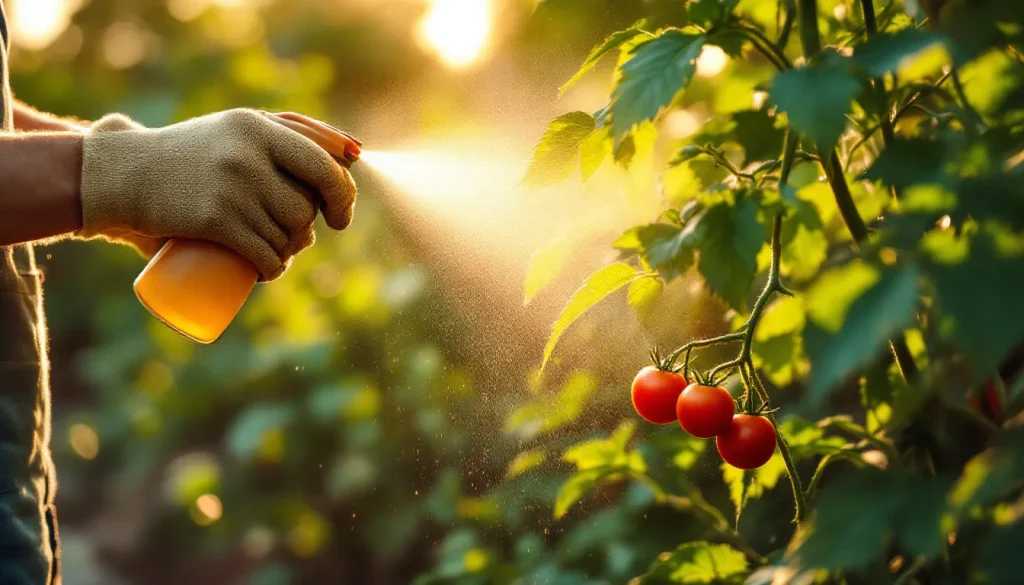
Which fungicide for plants should you buy?
Match the fungicide to the disease, not to the brand on the shelf. For powdery mildew, use sulfur or potassium bicarbonate. For blight, leaf spot, and downy mildew on vegetables, use copper or chlorothalonil (Daconil). For black spot and rust on roses and ornamentals, use a systemic like myclobutanil or tebuconazole. Identify the disease first, then pick from the table below.
By the HMNDP Editorial Team, independent reporting on lawn care, landscaping, and the green-industry business.
Last reviewed: June 2026.
Disease-to-fungicide lookup table (start here)
This is the decision most guides skip. Find your disease in the left column, confirm the plant type, then buy the matching active ingredient. Each pairing reflects label-directed uses common in the United States. Always read the specific product label, since formulations and approved crops vary by manufacturer.
| Disease (symptom) | Best active ingredient | Plant type | Example product |
|---|---|---|---|
| Powdery mildew (white dusty coating) | Sulfur or potassium bicarbonate | Veg, roses, cucurbits | Bonide Sulfur Plant Fungicide, GreenCure |
| Early/late blight (brown leaf lesions, tomato/potato) | Chlorothalonil or copper | Vegetables | Daconil (Garden Tech), Bonide Copper |
| Black spot (black circles on rose leaves) | Myclobutanil (systemic) | Roses, ornamentals | Spectracide Immunox |
| Rust (orange/brown pustules under leaves) | Sulfur or myclobutanil | Ornamentals, lawns, beans | Bonide Sulfur, Immunox |
| Leaf spot (septoria, cercospora) | Chlorothalonil or copper | Veg, shade trees | Daconil, Southern Ag Copper |
| Downy mildew (yellow patches, fuzzy underside) | Copper | Cucurbits, grapes, basil | Bonide Copper Fungicide |
| Anthracnose / fruit rot | Captan or chlorothalonil | Fruit, vegetables | Bonide Captan, Daconil |
| Brown patch / dollar spot (lawn) | Azoxystrobin or propiconazole | Turfgrass | Scotts DiseaseEx, BioAdvanced |
What a fungicide is and how it works (protectant vs systemic)
A fungicide is a product that kills or stops fungal pathogens on plants. The two main types work differently. Protectant (contact) fungicides coat the leaf surface and block spores from germinating, so they only protect tissue they physically cover. Systemic fungicides are absorbed into the plant and move through it, treating existing infections and protecting new growth.
Protectants like copper, sulfur, chlorothalonil, and captan are preventive. They do little once a leaf is already infected, so timing before disease appears matters most.
Systemics like myclobutanil, propiconazole, and azoxystrobin can cure early infections and resist washing off. The trade-off: fungi develop resistance to single-site systemics faster, so rotate active ingredients every two to three applications.
Common active ingredients: copper, sulfur, chlorothalonil, captan
Four active ingredients cover most home-garden fungal problems. Copper and sulfur are minerals approved for organic gardening. Chlorothalonil (Daconil) and captan are synthetic broad-spectrum protectants. Each has a temperature ceiling and a target disease range, summarized below.
| Active ingredient | Type | Best against | Heat limit | Organic? |
|---|---|---|---|---|
| Copper (octanoate/sulfate) | Protectant | Blight, downy mildew, bacterial spot, leaf spot | Avoid above ~85F | Yes (OMRI options) |
| Sulfur | Protectant | Powdery mildew, rust, scab | Avoid above 85-90F | Yes (OMRI options) |
| Chlorothalonil (Daconil) | Protectant | Blight, leaf spot, anthracnose | Tolerates heat well | No |
| Captan | Protectant | Fruit rot, scab, anthracnose | Tolerates heat well | No |
Never apply sulfur within two to three weeks of an oil spray, and never apply copper or sulfur in hot sun. The combination causes phytotoxic leaf burn. See our deeper breakdown of copper fungicide uses and limits before treating edibles.
Organic and OMRI-listed fungicide options
OMRI-listed fungicides are reviewed by the Organic Materials Review Institute and allowed in certified organic gardening. The main organic actives are copper, sulfur, potassium bicarbonate, neem oil, and Bacillus subtilis (a beneficial bacterium). They work as protectants, so apply before or at the first sign of disease.
- Potassium bicarbonate (GreenCure, MilStop): strong on powdery mildew, gentle on foliage.
- Neem oil: mild fungicide plus insecticide, best as early prevention.
- Bacillus subtilis (Serenade): biological control for many leaf diseases, safe up to harvest day.
- Copper octanoate (Bonide Copper): the go-to organic option for tomato and potato blight.
For a broader look at low-toxicity garden inputs, see our guide to non-toxic pest control methods.
Indoor vs outdoor plant fungicides
Indoor and outdoor fungicides differ on odor, residue, and application method. For houseplants, choose low-odor, ready-to-spray products and treat plants outside or in a ventilated room. Sulfur and copper smell strong and can stain, so neem oil or potassium bicarbonate suit indoor use better. Outdoors, durable protectants like Daconil or copper handle weather and larger plantings.
| Setting | Best choice | Avoid | Why |
|---|---|---|---|
| Houseplants | Neem oil, potassium bicarbonate, Bacillus subtilis | Sulfur, strong copper | Odor, staining, ventilation |
| Outdoor veg/ornamentals | Copper, chlorothalonil, sulfur | Frequent indoor-only sprays | Rain-fastness, coverage |
Pollinator-safe and pet-safe product selection
Most fungicides are far less toxic to bees than insecticides, but timing still matters. To protect pollinators, never spray open flowers, and apply in early morning or evening when bees are not foraging. Copper, sulfur, potassium bicarbonate, and Bacillus subtilis are considered low-risk to bees. Some systemics may affect bee larvae, so avoid spraying blooming plants.
For pets, let sprays dry fully (usually two to four hours) before allowing access. Sulfur can irritate dog paws and noses. Keep concentrates sealed and stored out of reach. Always follow the precautionary statements on the product label, which may vary by state.
When should you apply fungicide to plants?
Apply fungicide preventively, before disease takes hold, or at the very first symptom. Most fungal diseases need leaf wetness and warmth to spread, so spray ahead of a wet, humid stretch. For susceptible crops like tomatoes and roses, begin on a seven to fourteen day schedule once humid weather arrives, and apply early morning so foliage dries quickly.
- Identify the disease (use the lookup table above).
- Spray on a dry, calm day below 85F, covering both leaf surfaces.
- Repeat every 7 to 14 days while conditions favor disease.
- Rotate active ingredients every 2 to 3 sprays to slow resistance.
How to reapply fungicide after rain
Reapply protectant fungicides after roughly 1 inch of rain or every 7 to 10 days, whichever comes first. Contact products like copper, sulfur, and chlorothalonil wash off and must be replaced once heavy rain removes the protective film. Systemic fungicides absorbed into the plant resist rain better and may only need reapplication on the normal 14-day interval.
A practical rule: if you can still see visible residue on the leaves, coverage likely holds. After a downpour that strips that film, treat again once foliage dries.
Homemade and DIY fungicide recipes: what works vs myth
Some kitchen recipes have real research behind them, others do not. Baking soda alone is weak; potassium bicarbonate is the proven version. Milk spray shows measured effect on powdery mildew in field trials. Neem oil works as a mild preventive. Use the honest verdict below before mixing anything.
| DIY recipe | Mix | Verdict |
|---|---|---|
| Baking soda spray | 1 tbsp baking soda + 1 tsp oil + 1 tsp soap per gallon | Weak. Potassium bicarbonate works better and is cheap. |
| Milk spray | 1 part milk to 9 parts water, weekly | Works on powdery mildew (cucurbits, zucchini) in trials. |
| Neem oil | 1-2 tbsp per gallon + a drop of soap | Real mild preventive; reapply weekly. Not a cure. |
| Vinegar spray | Diluted household vinegar | Myth. Burns foliage, no reliable fungal control. |
DIY sprays are best for prevention and small infections. For established blight or fast-spreading disease, a labeled copper or chlorothalonil product is more reliable.
Is fungicide safe for vegetables and edible plants?
Many fungicides are labeled for edibles, but you must follow the pre-harvest interval (PHI), the minimum days between spraying and picking. PHI varies by product and crop. The label is the legal authority. Copper, sulfur, Bacillus subtilis, and many chlorothalonil products are cleared for vegetables when used as directed.
| Active ingredient | Typical PHI on veg | Notes |
|---|---|---|
| Bacillus subtilis (Serenade) | 0 days | Can harvest same day |
| Sulfur | 0-1 day (varies) | Check label per crop |
| Copper | 0-1 day (varies) | Many products allow harvest soon after drying |
| Chlorothalonil (Daconil) | often 7-14 days on some crops | Varies widely; some crops not allowed |
Always wash produce before eating, and confirm the PHI on your exact product, since values differ between manufacturers and crops.
Where to buy and how products compare
Home-garden fungicides are sold at Amazon, big-box garden centers (Home Depot, Lowe’s), independent nurseries, and specialty suppliers like Arbico Organics for OMRI-listed and biological options. Concentrates cost less per use; ready-to-spray bottles cost more but are convenient for small jobs and houseplants.
- Amazon / big-box: widest stock of Daconil, Bonide, Spectracide Immunox, Scotts DiseaseEx.
- Arbico Organics / specialty: OMRI biologicals like Serenade and quality copper/sulfur.
- Local nurseries: regional product advice and disease ID help.
For lawn-specific fungal problems and related turf treatments, see our guide to lawn grub and turf control, and browse more in the HMNDP Learn library.
Frequently Asked Questions
What is the best fungicide for plants?
There is no single best fungicide; the best one matches your disease. Chlorothalonil (Daconil) is the most versatile broad-spectrum option for vegetable blight and leaf spot. Sulfur or potassium bicarbonate wins for powdery mildew. Myclobutanil (Spectracide Immunox) is best for rose black spot and rust. Identify the disease, then choose the matching active ingredient.
What is the best organic fungicide for plants?
For organic gardening, the strongest OMRI-listed choices are copper octanoate for blight and downy mildew, sulfur for powdery mildew and rust, and potassium bicarbonate (GreenCure) for clean powdery-mildew control. Bacillus subtilis (Serenade) is a biological option safe up to harvest day. Match the active ingredient to the disease, and apply preventively for best results.
When should you apply fungicide to plants?
Apply fungicide preventively or at the first sign of disease, since most protectants cannot reverse established infections. Spray before a humid, wet stretch when fungal pressure rises, on a dry calm day below 85F, early in the morning so leaves dry fast. Repeat every 7 to 14 days while conditions favor disease, and rotate ingredients to limit resistance.
How do you make a homemade fungicide for plants?
A proven DIY spray for powdery mildew is 1 tablespoon potassium bicarbonate (or baking soda), 1 teaspoon horticultural oil, and a few drops of soap per gallon of water. Milk diluted 1 part to 9 parts water also works on powdery mildew. Spray weekly as prevention. DIY sprays manage light cases; established blight needs a labeled commercial product.
What is the difference between systemic and protectant (contact) fungicides?
Protectant (contact) fungicides like copper, sulfur, and chlorothalonil coat the leaf surface and prevent spores from germinating, so they protect only the tissue they cover and wash off in rain. Systemic fungicides like myclobutanil are absorbed into the plant, can cure early infections, and resist rain, but fungi build resistance to them faster, so rotate products.
Is fungicide safe for vegetables and edible plants?
Yes, when you use a product labeled for edibles and follow the pre-harvest interval (PHI), the required days between spraying and picking. Copper, sulfur, and Bacillus subtilis (Serenade) are commonly cleared for vegetables, with some allowing same-day harvest. PHI varies by product and crop, so check your exact label and always wash produce before eating.
Are plant fungicides safe for bees and pets?
Most fungicides are low-risk to bees compared with insecticides, but avoid spraying open blooms and treat in early morning or evening when bees are not foraging. Copper, sulfur, potassium bicarbonate, and Bacillus subtilis are bee-friendly choices. For pets, let sprays dry two to four hours before access, and store concentrates sealed and out of reach.
How often should you reapply fungicide after rain?
Reapply protectant fungicides after about 1 inch of rain or every 7 to 10 days, whichever comes first, because contact products like copper, sulfur, and chlorothalonil wash off. Systemic fungicides absorbed into the plant resist rain and usually hold to the normal 14-day schedule. If visible leaf residue remains after a storm, coverage likely still protects the plant.