
By the HMNDP Editorial Team, independent reporting on lawn care, landscaping, and the green industry.
Last reviewed: June 2026
What copper fungicide is and how it works
Copper fungicide is a protectant spray that uses copper ions to kill fungal spores and bacteria on contact, before they enter plant tissue. It is preventative, not curative. Copper coats the leaf surface and disrupts spore enzymes and cell membranes. It cannot reverse an established infection, so timing is everything: spray before symptoms or at the first visible spot.
The active ingredient varies by product. Common forms include copper octanoate (copper soap), copper hydroxide, copper sulfate, and Bordeaux mixture (copper sulfate plus hydrated lime). All release copper ions in the presence of moisture. The ions stay on the surface, which is why rain washes them off and why reapplication after heavy rain is standard.
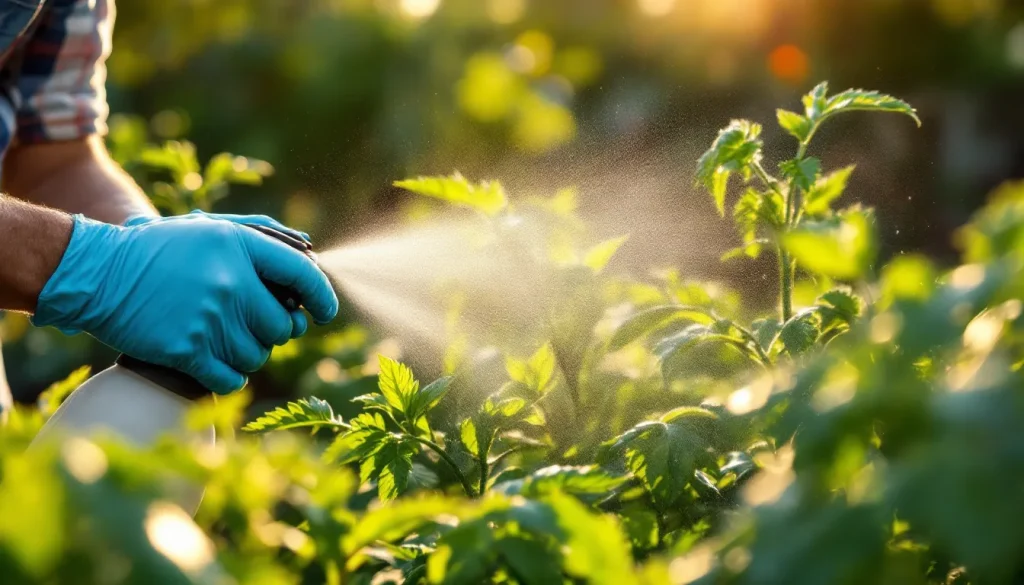
Because copper sits on the surface and does not move systemically, full leaf coverage matters more than volume. Spray both leaf sides until the surface is wet but not dripping.
What diseases copper fungicide controls
Copper fungicide controls a wide range of fungal and bacterial diseases, which is unusual for a single product. It works on powdery mildew, downy mildew, black spot on roses, peach leaf curl, early and late blight on tomatoes and potatoes, fire blight, bacterial leaf spot, and bacterial canker. It is one of the few options effective against bacterial diseases, where most other fungicides fail.
| Disease | Type | Best timing for copper |
|---|---|---|
| Peach leaf curl | Fungal | Dormant, before buds swell (fall and late winter) |
| Early/late blight (tomato, potato) | Fungal | First flowering, then every 7 to 10 days |
| Black spot (roses) | Fungal | Bud break, repeat every 7 to 14 days |
| Powdery and downy mildew | Fungal | At first sign or before humid spells |
| Fire blight, bacterial leaf spot | Bacterial | Dormant and early bloom |
Numbered copper fungicide spray schedule with exact mix rates
Here is the concrete schedule most product pages skip. Rates below reflect typical copper octanoate concentrates such as Bonide Captain Jack’s Copper Fungicide and similar liquid copper concentrates. Always confirm against your product label, since concentration differs by brand. A standard rate is 0.5 to 2 tablespoons (about 0.25 to 1 fl oz) of concentrate per gallon of water.
- Peach leaf curl (peach, nectarine): Apply 2 to 4 tbsp per gallon at 50 percent leaf fall in autumn, repeat once in late winter before bud swell. Two dormant sprays usually prevent the disease for the season.
- Tomato and potato blight: Mix 1 to 2 tbsp per gallon. First spray at first flower, then every 7 to 10 days during warm, wet weather. Reapply after 1 inch of rain.
- Roses, black spot: Use 0.5 to 1 tbsp per gallon at bud break, repeat every 7 to 14 days through the humid season.
- Powdery and downy mildew (cucurbits, grapes, ornamentals): 1 to 2 tbsp per gallon at first symptom, repeat every 7 to 10 days.
- Fire blight and bacterial spot (fruit trees): 2 to 3 tbsp per gallon during dormancy and at early bloom.
Mix only what you will use that day. Add concentrate to a half-full sprayer, then top off with water and agitate. Copper settles fast, so shake the tank every few minutes while spraying.
Copper octanoate vs. copper hydroxide vs. Bordeaux mixture
The copper form changes efficacy, re-entry interval (REI), organic eligibility, and burn risk. Product pages rarely compare them. Copper octanoate (copper soap) is the gentlest on plant tissue and most home-garden friendly. Copper hydroxide delivers more metallic copper per ounce and stronger control but burns leaves more easily. Bordeaux mixture sticks longest but is the harshest and most labor-intensive to mix.
| Form | Relative strength | Burn risk | OMRI organic | Best use |
|---|---|---|---|---|
| Copper octanoate (soap) | Moderate | Low | Often listed | Vegetables, roses, general home garden |
| Copper hydroxide | High | Moderate to high | Some products | Orchards, heavy disease pressure |
| Bordeaux mixture | High, long residual | High | Allowed if components qualify | Dormant fruit tree sprays |
For most DIY gardeners, copper octanoate concentrate is the safest starting point. The trade-off is more frequent reapplication.
Is copper fungicide OK for organic gardening?
Yes, many copper fungicides are approved for organic use. Look for the OMRI Listed seal (Organic Materials Review Institute) on the label, which confirms compliance with USDA National Organic Program rules. Bonide Captain Jack’s line and several liquid copper concentrates carry OMRI listing. Copper is a naturally occurring mineral, which is why it is permitted, but allowed does not mean unlimited.
Organic certification rules still cap copper use to prevent soil buildup. If you garden organically, copper pairs well with cultural controls and soil health practices. See our organic garden fertilizer guide and our notes on organic fertilizer for the vegetable garden to keep plants vigorous and less disease-prone.
How copper accumulates in soil, and how to limit it
This is the risk competitors mention in passing but never quantify. Copper does not break down. Every spray that lands on soil adds metallic copper that stays put. Repeated annual use, especially in orchards and vineyards, can push soil copper from a normal 5 to 30 parts per million toward 100 ppm or higher, levels that stunt roots, harm earthworms, and reduce yields.
Soil pH controls the danger. In acidic soil (pH below 6.0), copper becomes more soluble and more toxic to roots. In neutral to slightly alkaline soil, copper binds to organic matter and clay and stays less available. Adding compost and organic matter buffers copper and lowers plant uptake.
- Cap total applications at roughly 4 to 8 per season per area, and avoid copper on the same beds year after year.
- Keep soil pH at 6.0 to 7.0 to reduce copper solubility.
- Maintain organic matter above 3 percent to bind free copper.
- Spray to cover foliage, not soil, and stop once disease pressure ends.
- Rotate to non-copper controls in alternate years on heavily treated plots.
If you have sprayed copper for several seasons on the same ground, a soil test for copper is cheap insurance before adding more.
Safety: PHI, bees, aquatic life, and leaf burn
Copper fungicide is low toxicity to people but carries real environmental and phytotoxicity limits that sales pages omit. The pre-harvest interval (PHI) for most copper products on vegetables and fruit is 0 to 1 day, meaning you can often harvest the day of or day after spraying, but always confirm the label. Wash produce regardless.
- Bees: Copper is relatively low risk to bees but can irritate them. Spray at dawn or dusk when pollinators are inactive, and avoid open bloom when possible.
- Aquatic life: Copper is highly toxic to fish and aquatic invertebrates. Do not spray near ponds, streams, or storm drains, and never rinse equipment where runoff reaches water.
- Rain-fastness: Copper needs roughly 2 hours to dry and bind. Rain within a few hours washes it off; reapply after about 1 inch of rain.
- Leaf burn: Do not spray above 85 to 90 F or when leaves stay wet for long periods. Heat and prolonged leaf wetness increase copper injury, showing as black or brown leaf spotting.
Wear gloves and eye protection, and keep copper off bare skin.
Can you use copper fungicide on lawns?
Copper fungicide is registered mainly for garden plants, fruit, and ornamentals, not as a primary lawn fungicide. Some labels list turf for specific diseases, but copper is not the first choice for common lawn problems like brown patch or dollar spot, where other fungicides perform better. Always check that turf appears on the product label before applying.
If your lawn issue is actually moss rather than fungus, copper sulfate products are sometimes used, though cultural fixes work better long term. See our guide on how to get rid of moss in lawn. For broader maintenance reading, browse the HMNDP learn hub.
Concentrate vs. ready-to-use: which to buy
Liquid copper concentrate is the better value and the right pick if you have more than a few plants. A single bottle mixes into many gallons, and you control the rate per crop. Ready-to-use (RTU) spray costs more per ounce but skips mixing, ideal for a handful of roses or one fruit tree. For most gardens, buy the concentrate.
| Format | Best for | Cost per use | Control over rate |
|---|---|---|---|
| Liquid concentrate | Whole garden, multiple trees | Low | Full |
| Ready-to-use spray | A few plants, spot treatment | High | Fixed |
Frequently Asked Questions
What is copper fungicide and how does it work?
Copper fungicide is a protectant spray that releases copper ions to kill fungal spores and bacteria on the plant surface before they infect tissue. It works by disrupting spore enzymes and cell membranes. It is preventative, not curative, so it cannot reverse an established infection. Apply it before symptoms appear or at the very first visible spot for best results.
What diseases does copper fungicide control?
Copper fungicide controls many fungal and bacterial diseases, including powdery mildew, downy mildew, black spot, peach leaf curl, early and late blight, fire blight, and bacterial leaf spot. It is one of few products effective against bacterial diseases, where most fungicides fail. Coverage and timing matter more than dose, since copper stays on the surface and does not move through the plant.
How do you mix copper fungicide per gallon?
A typical copper octanoate concentrate mixes at 0.5 to 2 tablespoons (about 0.25 to 1 fl oz) per gallon of water, depending on crop and disease pressure. Use 2 to 4 tablespoons per gallon for dormant peach leaf curl sprays and 1 to 2 for blight. Add concentrate to a half-full tank, top with water, and agitate often because copper settles fast.
How often can you use copper fungicide without harming the soil?
Limit copper to roughly 4 to 8 applications per season per area, and avoid spraying the same beds every year. Copper does not break down and accumulates in soil, potentially exceeding 100 ppm with heavy repeated use. Keep soil pH between 6.0 and 7.0 and organic matter above 3 percent to bind copper and lower plant uptake. Rotate to non-copper controls periodically.
Is copper fungicide safe for organic gardening?
Yes, many copper fungicides are OMRI Listed and approved under the USDA National Organic Program, including Bonide Captain Jack’s line. Copper is a naturally occurring mineral, which is why it is permitted. Allowed does not mean unlimited, however. Organic rules still cap copper use to prevent soil accumulation, so combine it with cultural controls and healthy soil practices.
What is the pre-harvest interval for copper fungicide?
Most copper products carry a pre-harvest interval (PHI) of 0 to 1 day on vegetables and fruit, meaning you can often harvest the same day or next day after spraying. Always confirm the exact interval on your product label, since it varies by crop and formulation. Wash all produce before eating regardless of the listed interval.
Can copper fungicide be used on lawns for fungus?
Copper fungicide is registered mainly for garden plants, fruit, and ornamentals, not as a primary lawn fungicide. Some labels list turf for specific diseases, but copper is not the top choice for brown patch or dollar spot, where other fungicides perform better. Check that turf appears on the label before applying. For moss rather than fungus, cultural fixes usually beat copper sulfate.
What is the best copper fungicide, concentrate or ready-to-use?
Liquid copper concentrate is the best value for most gardeners, since one bottle mixes into many gallons and you control the rate per crop. Ready-to-use spray costs more per ounce but skips mixing, which suits a few roses or a single fruit tree. Copper octanoate (copper soap) concentrate is the safest all-purpose starting point for home gardens.