
Grass for Cats: Best Types and How to Grow It Safely
Grass for cats is a tray of young cereal grass, usually wheat, oat, barley, or rye, grown indoors for cats to chew. It is not lawn turf and not catnip. A 2021 peer-reviewed survey of 1,021 cat owners, published in the journal Animals by Benjamin Hart and colleagues at UC Davis, found 71 percent of cats were seen eating plants at least six times, and 91 percent showed no sign of illness beforehand. So the old story that cats only eat grass when sick does not hold up. This guide covers what cat grass actually is, which seed to pick, how to grow a tray on a windowsill, and how to keep your cat away from the plants that send cats to the emergency vet.
What is cat grass?
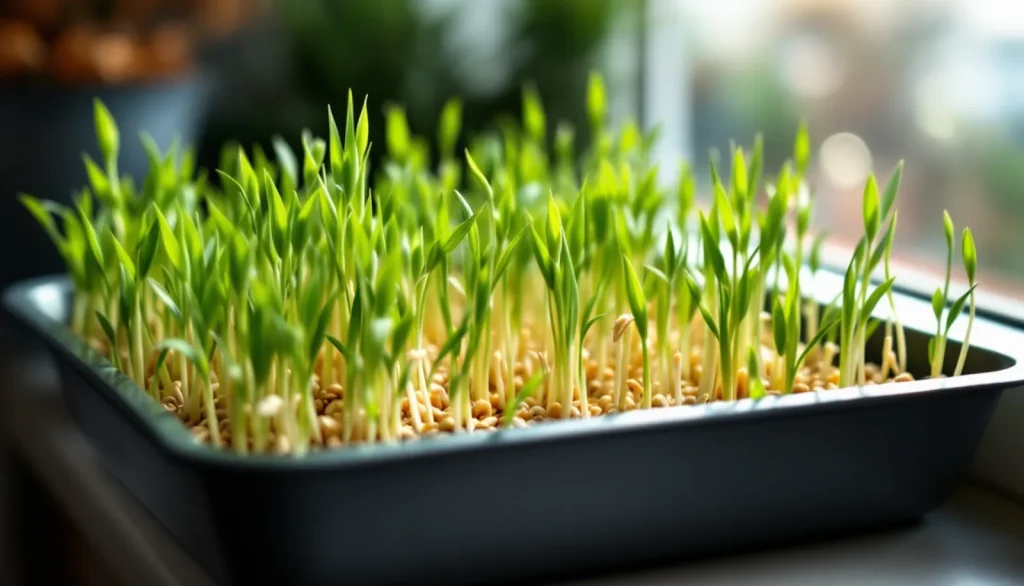
Cat grass is the dense sprouts of cereal grain seeds, most often wheat (Triticum aestivum), oat (Avena sativa), barley (Hordeum vulgare), or rye (Secale cereale). Seeds are sown thickly in a shallow tray and harvested young, at roughly 4 to 6 inches. It is sold as seed packets or pre-grown trays and is completely unrelated to the perennial turf grasses people grow for lawns.
Two points trip people up. First, cat grass is not catnip (Nepeta cataria), which is a mint that triggers a scent-driven response rather than chewing. Second, “wheatgrass” sold for human juicing is the same plant as wheat cat grass, just harvested for people. The Hart 2021 study tested grass preference and reported cats favored oat and wheat sprouts when offered fresh trays.
Indoor cats benefit most. A cat that never goes outside has no access to safe greenery, so a tray gives it something to chew that is not your houseplants or yard plants. For homeowners thinking about the broader question of plant choice indoors and out, our coverage of safe versus risky species is worth a read before you fill a windowsill.
Why do cats eat grass?
Cats eat grass as normal behavior, not as a sickness signal. The Hart 2021 survey found 91 percent of cats appeared normal before eating plants, and only 27 percent frequently vomited afterward. Younger cats eat it more: 39 percent of cats under 3 years old ate plants daily versus 27 percent of older cats. The leading hypothesis is an inherited instinct that helped wild ancestors purge intestinal parasites.
The folklore says cats eat grass to make themselves vomit and clear hairballs. The data weakens that claim. Most cats do not vomit after eating grass, and the researchers concluded the behavior is too common and too rarely tied to illness to be a deliberate stomach remedy.
That said, grass does carry practical value for an indoor cat. The reasons most often cited by veterinary sources are below.
- Fiber and roughage. Cereal sprouts are high in insoluble fiber, which can help move hair and indigestible material through the gut. VCA Animal Hospitals notes grass provides roughage that aids digestion and elimination.
- Micronutrients. VCA lists trace minerals plus vitamins A, B, and D, and folic acid, which supports hemoglobin production.
- Enrichment. Chewing gives an indoor cat a natural outlet. The ASPCA and shelters recommend cat grass as enrichment for cats kept entirely inside.
- Hairball passage. Hill’s Pet notes grass may help expel hairballs, though the Hart data suggests this is not the main driver.
Wheat, oat, barley, and rye: which cat grass to grow
The four common cat grass seeds (wheat, oat, barley, rye) all sprout fast and are non-toxic to cats per the ASPCA. They differ in blade texture, durability under chewing, and how quickly they germinate. Many commercial kits sell a blend so the tray hedges across types. The table below compares them on the specs that matter when you pick a packet.
| Seed type | Species | Germination | Texture and durability | Best for |
|---|---|---|---|---|
| Oat grass | Avena sativa | 3 to 5 days | Soft, sweet, broad blade; tender | First-timers and cats new to grass; high in soluble fiber, iron, and B vitamins per PetMD |
| Wheat grass | Triticum aestivum | 3 to 5 days | Fine, sturdy blade; holds up to chewing | Most popular all-rounder; the preferred type in the Hart 2021 trials |
| Barley grass | Hordeum vulgare | 4 to 6 days | Medium blade; vigorous regrowth | Trays you want to last and regrow after grazing |
| Rye grass | Secale cereale | 4 to 7 days | Thin, hardy blade; slowest of the four | Mixing into a blend for variety |
Alfalfa (Medicago sativa) sometimes appears in kits. PetMD quotes veterinarian Mark Waldrop of the Nashville Cat Clinic, who has noted alfalfa for cats with kidney concerns, but it is a legume, not a cereal grass, and it grows differently. Start with oat or wheat unless you have a specific reason to add alfalfa.
How to grow cat grass indoors
Cat grass grows on a windowsill year-round and is ready to chew in about 10 to 14 days. You need shallow seeds, a drainage tray, potting mix or a hydroponic mat, and a bright spot. Sow thickly, keep the seed damp and dark until it sprouts in 3 to 7 days, then move it to light. The full process is below.
- Soak the seed. Pre-soak seeds in water for 8 to 12 hours overnight to speed germination. This step is optional but cuts a day or two off the timeline.
- Sow thickly. Fill a shallow tray three-quarters full with potting mix, scatter seeds densely across the surface, and cover with about a quarter inch of soil. Dense sowing is what makes the tray look like a lush carpet rather than scattered blades.
- Germinate in the dark. Mist until damp, cover loosely with plastic wrap or a lid, and keep in a cool, dark spot. Sprouts appear in 3 to 7 days, often within 2 to 3 days for oat and wheat.
- Move to light. Once sprouts emerge, remove the cover and set the tray on a bright windowsill with indirect sun. Good airflow at this stage reduces the risk of mold.
- Water lightly. Keep the soil consistently moist during germination, then water every other day and let the surface dry slightly between waterings to avoid root rot.
- Offer at 4 to 6 inches. The grass is ready when it stands 4 to 6 inches tall, usually 10 to 14 days from sowing. At that height it survives a cat’s grazing.
- Refresh the tray. A tray stays palatable for about 1 to 2 weeks, then wilts. Refresh or restart every 10 to 14 days, and run two trays on a stagger so one is always ready.
Mold is the most common failure. It comes from overwatering and poor airflow, so let the surface dry between waterings, do not let the tray sit in standing water, and toss any tray that grows fuzzy white or gray patches. If you grow other things indoors, the same drainage and watering discipline that prevents fungal problems in turf applies here in miniature.
Is grass safe for cats?
Cat grass grown indoors from wheat, oat, barley, or rye seed is non-toxic and safe per the ASPCA plant list. The real risks are overeating, mold, and pesticide exposure on outdoor lawn grass. Keep cat grass as a treat, not a meal. VCA Animal Hospitals advises that treats, including grass, stay under 10 percent of a cat’s daily calories.
Watch how much a new cat eats at first. Overeating can cause stomach upset and loose stool, and because cats lack the enzymes to digest large amounts of grass, a big binge may end in vomiting. Occasional vomiting after grazing is normal. Frequent vomiting, or a sudden spike in grass eating, can signal an underlying problem and is worth a vet visit.
Avoid letting cats graze on outdoor lawns you do not control. Treated turf may carry herbicides or insecticides, and soil contact can transmit parasites. If you want to understand what gets applied to lawns, our explainer on how weed killers work shows why an indoor tray is the cleaner option for a cat.
Cat grass versus toxic houseplants
Cat grass is safe; many common houseplants and cut flowers are not. The single most dangerous plant for cats is the lily. Lilies in the Lilium and Hemerocallis genera cause irreversible kidney failure in cats, and even licking pollen off a paw or drinking vase water can be fatal. The ASPCA Animal Poison Control Center runs a 24-hour hotline at (888) 426-4435.
Giving your cat its own grass tray reduces the urge to chew on plants it should not touch, but the safer move is to remove the toxic ones entirely. The table below compares safe cat grass with plants the ASPCA flags as toxic to cats.
| Plant | Status for cats | What happens |
|---|---|---|
| Cat grass (wheat, oat, barley, rye) | Non-toxic | Safe to chew; limit to a treat |
| True lily and daylily (Lilium, Hemerocallis) | Highly toxic | Kidney failure from any exposure, including pollen and vase water |
| Philodendron | Toxic | Oral irritation, drooling, vomiting from insoluble calcium oxalates |
| Aloe | Toxic | Vomiting, lethargy, diarrhea |
| Sago palm | Highly toxic | Liver failure; often fatal |
| Tulip and daffodil | Toxic | Drooling, vomiting; bulbs are the worst part |
| Azalea and rhododendron | Toxic | Vomiting, heart and neurological signs |
Keep any toxic plant out of the home or fully out of reach, since cats jump. With lilies, removal is the only safe option because pollen can transfer onto other surfaces and plants. The full reference is the ASPCA Toxic and Non-Toxic Plant List for cats, searchable by common name.
How much cat grass should a cat eat?
Treat cat grass as an occasional snack, not a food. Keep grass and all treats under 10 percent of daily calories per VCA guidance. Most cats self-regulate and nibble a few blades at a time. Provide a fresh tray, let the cat graze when it wants, and step in only if eating becomes excessive or vomiting turns frequent.
If you keep more than one cat, set out separate trays so they do not compete over a single patch. And introduce grass slowly with a new cat: offer a small tray, note how much it eats in the first few days, and watch the litter box for loose stool before leaving a full tray out.
Last reviewed: June 2026
HMNDP Editorial Team, reviewed by HMNDP turf and horticulture editors.
Frequently asked questions
What is cat grass?
Cat grass is a tray of young cereal grass sprouts, usually wheat, oat, barley, or rye, grown indoors for cats to chew. It is not lawn turf and not catnip, which is a mint. Seeds are sown thickly in a shallow tray and harvested young at about 4 to 6 inches, sold as seed packets or pre-grown trays.
Why do cats eat grass?
Cats eat grass as normal behavior, not a sickness signal. A 2021 study of 1,021 owners in the journal Animals found 91 percent of cats looked normal before eating plants and only 27 percent vomited after. The likely driver is an inherited instinct to purge intestinal parasites, plus fiber, micronutrients, and chewing enrichment for indoor cats.
Is grass safe for cats?
Cat grass grown indoors from wheat, oat, barley, or rye is non-toxic and safe per the ASPCA. Keep it under 10 percent of daily calories, since overeating can cause vomiting or loose stool. Avoid outdoor lawn grass, which may carry herbicides, insecticides, or parasites. Occasional vomiting is normal; frequent vomiting warrants a vet visit.
How do you grow cat grass indoors?
Sow seeds thickly in a shallow drainage tray with potting mix, mist damp, and cover in a dark spot. Sprouts appear in 3 to 7 days. Move to a bright windowsill, water every other day, and offer the grass at 4 to 6 inches tall, usually 10 to 14 days from sowing. Refresh the tray every 1 to 2 weeks.
What is the best grass for cats: wheat, oat, or barley?
Oat and wheat are the best starting picks. Oat grass is soft and sweet with a broad tender blade, good for first-timers. Wheat is the popular all-rounder and the preferred type in the Hart 2021 trials, with a fine sturdy blade that holds up to chewing. Barley regrows vigorously, and rye works mixed into a blend.
Do cats eat grass to throw up?
Usually not. The 2021 Hart study found only 27 percent of cats frequently vomited after eating grass, and 91 percent showed no illness beforehand, so the self-medicating theory does not hold up. Most cats graze as normal behavior. Occasional vomiting can happen because cats lack enzymes to digest large amounts of grass, but it is not the goal.
What plants are toxic to cats?
Lilies in the Lilium and Hemerocallis genera are the most dangerous, causing kidney failure from any exposure including pollen and vase water. Sago palm causes liver failure. Philodendron, aloe, tulip, daffodil, azalea, and rhododendron are also toxic per the ASPCA. Remove these from the home. The ASPCA poison hotline is (888) 426-4435.
How much cat grass should a cat eat?
Treat cat grass as an occasional snack. Keep grass and all treats under 10 percent of daily calories per VCA guidance. Most cats nibble a few blades and self-regulate. Introduce it slowly to a new cat, watch the first few days for loose stool, and give multiple cats separate trays so they do not compete.