
By the HMNDP Editorial Team, independent reporting on lawn care, landscaping, and the green-industry business.
Last reviewed: June 2026
What is sweet grass (Hierochloe odorata)?
Sweet grass is a slender, cool-season perennial grass known scientifically as Hierochloe odorata, now often reclassified as Anthoxanthum nitens. It carries a sweet, vanilla-like scent that grows stronger as the leaves dry. Native to North America and northern Eurasia, it spreads by underground rhizomes and holds deep ceremonial importance for many Indigenous peoples.
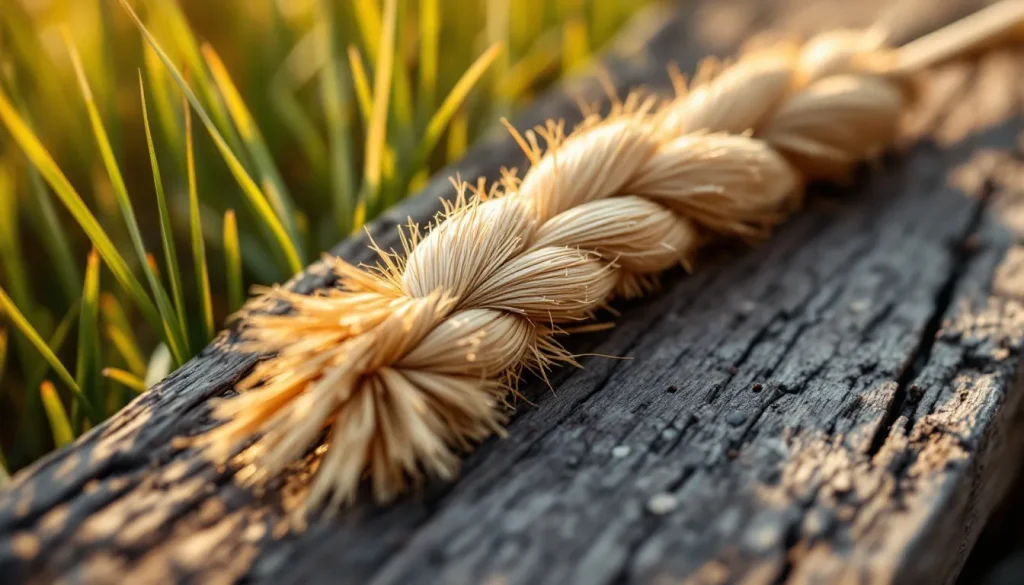
The vanilla aroma comes from coumarin, the same aromatic compound found in vanilla grass, sweet clover, and freshly cut hay. Coumarin concentrates as the plant dries, which is why braided, cured sweetgrass smells far sweeter than a living blade snapped in the field.
Botanists reclassified the plant from the genus Hierochloe into Anthoxanthum based on genetic evidence, so reputable native-plant nurseries may list it under either name. Both refer to the same species. Older references and many gardeners still use Hierochloe odorata, so treat the two names as synonyms when you shop.
Common names and name collisions
Sweet grass goes by many common names: sweetgrass, vanilla grass, holy grass, seneca grass, and buffalo grass. These all point to Hierochloe odorata / Anthoxanthum nitens. The single-word “sweetgrass” and two-word “sweet grass” are used interchangeably. Watch for unrelated things that share the name and are not this plant.
| Name you might see | What it actually refers to |
|---|---|
| Sweetgrass / sweet grass / holy grass / seneca grass | Hierochloe odorata (this plant) |
| Vanilla grass | Usually this plant, sometimes related Anthoxanthum species |
| Buffalo grass (as a sweetgrass name) | This plant in some regions, but also Bouteloua dactyloides, a warm-season lawn grass |
| Sweet Grass County / Sweetgrass, Montana | Places, not plants |
| Vetiver “sweet grass” | Chrysopogon zizanioides, an unrelated aromatic grass |
The “buffalo grass” collision matters most for gardeners. If a listing shows a low, gray-green lawn turf sold by the flat for full sun, that is likely Bouteloua dactyloides, not aromatic sweetgrass. Confirm the Latin name before you buy.
How to identify sweet grass
Sweet grass is an erect, slender grass that grows roughly 12 to 20 inches tall (about 1 to 2 feet), with shiny, hairless leaf blades and a reddish-purple base at the crown. It greens up early in spring as a cool-season grower. The strongest identifier is scent: crush or dry a blade and you get a distinct sweet, vanilla-hay smell.
The flowering stems appear in late spring and carry small, open, pyramid-shaped seed heads (panicles) that turn tan as they mature. Blades feel smooth rather than coarse, and the plant forms loose, spreading patches rather than dense clumps.
Scent is the field test that separates sweetgrass from lookalike grasses. Many prairie grasses share the same height and green color, but few carry the coumarin sweetness. If a blade smells like fresh hay or vanilla when bruised, you likely have the right plant.
Where sweet grass grows: native range and climate
Sweet grass is native to cool, moist regions across North America and northern Eurasia. In North America its range runs from the northern United States through much of Canada, favoring wet meadows, marsh edges, streambanks, and moist prairie. As a cool-season perennial, it grows actively in spring and fall and slows in summer heat.
It is winter-hardy across a wide band, generally reliable in USDA zones 3 through 8, and survives hard freezes because the rhizomes overwinter underground. Gardeners in hot, dry southern climates find it harder to keep because it wants consistent moisture and cooler roots.
This cool-season, moisture-loving profile is the opposite of warm-season lawn grasses like Bahia grass or Bermuda grass, which thrive in heat and drought. Sweetgrass is grown for scent and ceremony, not for a mowed lawn, so match it to a damp, part-shade spot rather than an open turf area.
How to grow and care for sweetgrass
To grow sweetgrass, plant rhizome divisions or plugs in spring in moist, rich soil, in full sun to part shade, and keep the soil consistently damp through the first season. Space plants about 12 inches apart and expect them to knit into a patch within one to two years. It needs little fertilizer and no mowing.
The plant tolerates a range of soils but prefers moisture-retentive, slightly acidic to neutral ground. Part shade helps in warmer zones by keeping roots cool. Water deeply during dry spells; drought stress is the most common reason home plantings fail.
Follow this basic establishment sequence:
- Plant divisions or plugs in early spring, 12 inches apart, in moist soil amended with compost.
- Water to keep the top few inches damp for the first 6 to 8 weeks while roots and rhizomes establish.
- Skip heavy fertilizer; a thin spring compost topdressing is enough, since rich synthetic feeding pushes floppy growth.
- Let the patch spread through summer, then cut back spent foliage in late fall or early spring.
- Harvest leaves for braiding once the patch is well established, typically in the second year, by cutting rather than pulling.
Because sweetgrass asks for steady moisture and a specific climate, some gardeners who simply want low-maintenance year-round green in a hot yard choose artificial grass for turf zones and reserve a small irrigated bed for aromatic species like this one.
Is sweetgrass invasive? Managing aggressive rhizomes
Sweetgrass is not classified as a noxious invasive, but it spreads aggressively by rhizomes and can colonize a bed and crowd neighbors if left unchecked. In moist, fertile soil it travels quickly, sending up new shoots a foot or more from the parent. Plan for containment before you plant, not after it escapes.
The practical fix is a physical root barrier. Grow sweetgrass in a bottomless pot sunk in the ground, a raised bed with a buried edging, or a large container. This is the single most important step the nursery blurbs leave out.
| Containment method | How it works | Best for |
|---|---|---|
| Buried edging (12+ in deep) | Vertical barrier blocks lateral rhizomes | In-ground beds where you want a defined patch |
| Sunken bottomless pot | Confines roots while blending into soil line | Mixed native beds and borders |
| Above-ground container (5+ gal) | Full physical isolation, easy to move | Patios, small yards, hot climates needing shade |
| Annual edge trimming | Sever escaping rhizomes with a spade each spring | Gardeners who want a natural drift and will maintain it |
If you want a spreading, informal stand for harvesting, let it run and edge it yearly. If you want a tidy garden, contain it from day one.
Can you grow sweet grass from seed, or do you need plugs?
You almost always need plugs or rhizome divisions, not seed. Sweet grass seed is notoriously unreliable: viability is low, germination rates are poor and erratic, and much commercially sold “sweetgrass seed” produces disappointing results or is mislabeled. Serious growers and native-plant nurseries propagate it by division for this reason.
The plant sets little viable seed in cultivation, and what it does set often needs cold stratification and still germinates weakly. Division, by contrast, is close to foolproof: lift an established clump in spring, tease apart sections with roots and rhizome attached, and replant.
| Method | Realistic success | Notes |
|---|---|---|
| Seed | Low and unpredictable | Poor viability; be skeptical of cheap seed listings |
| Nursery plugs / potted plants | High | Best route for beginners; buy from native-plant specialists |
| Rhizome division | Very high | Free once you have one healthy plant; divide in spring |
If a retailer promises easy sweetgrass from seed, treat that as a warning sign about the seller rather than a shortcut. Start with a live plant.
Where to buy sweet grass plants or seeds near me
Buy sweet grass as live plugs or potted plants from native-plant nurseries, prairie-restoration growers, and Indigenous-owned suppliers rather than as seed. Search “native plant nursery” plus your state, or check regional native plant society sale lists. Expect small plugs to run a few dollars each and to establish far more reliably than seed.
Reputable sources list the Latin name (Hierochloe odorata or Anthoxanthum nitens), describe it as division-propagated, and set honest expectations about spread. Be cautious of generic marketplace listings selling bulk “sweetgrass seeds,” which are frequently low-viability or a different species entirely.
Whenever possible, buy from Indigenous-owned businesses or nurseries that source ethically. This supports the communities for whom the plant is sacred and helps reduce pressure on wild stands, which brings us to the question most listings ignore.
Cultural respect, ethical sourcing, and whether it is okay to grow sweetgrass
Sweetgrass is sacred to many Indigenous nations across North America, where it is braided and burned as a purifying smoke in ceremony, often described as one of four sacred plants alongside tobacco, cedar, and sage. Growing your own is widely seen as respectful; the sensitive issues are wild-harvesting, over-harvesting, and using it casually without understanding its meaning.
Sweetgrass appears in the writing of Robin Wall Kimmerer, a botanist and member of the Citizen Potawatomi Nation, whose 2013 book Braiding Sweetgrass frames the plant through reciprocity: take only what you need, never more than half a stand, and give something back. That ethic is a useful guide for any grower.
Here is a practical, respectful approach:
- Grow, do not wild-harvest. Cultivating your own patch avoids depleting wild colonies, some of which face pressure from over-collection.
- Source ethically. Buy plants from Indigenous-owned businesses or native-plant nurseries rather than mass wild-collected braids of unknown origin.
- Harvest gently. Cut leaves rather than pulling, and never take more than about half a stand, so the rhizomes keep producing.
- Learn the meaning. If you burn it, understand it is a ceremonial plant to many nations, not a generic air freshener, and use it with that awareness.
Is it legal for a non-Native person to grow and burn sweetgrass? In the United States and Canada the plant itself is not restricted, so growing and using it privately is generally lawful. The concern is cultural, not legal: many Indigenous people welcome respectful cultivation but object to commercial exploitation and hollow imitation of ceremony. Growing your own, sourcing ethically, and using it thoughtfully honors that line.
Benefits and traditional uses of sweetgrass
Sweetgrass is used mainly as a ceremonial and aromatic plant. Indigenous peoples braid the long dried leaves and burn them as incense or smudge, producing a sweet, calming smoke used for purification and prayer. The braided form also appears in traditional basketry, and the pleasant scent makes it a natural, long-lasting aromatic.
In the garden, its practical benefits are the fragrance, its role in native and pollinator-friendly plantings, and its ability to hold moist soil with spreading roots. It is not a lawn or turf grass, and it is grown for scent and meaning rather than foot traffic or a mowed surface.
Gardeners building a full native or naturalized yard often pair aromatic species like this with defined low-care zones, sometimes even artificial grass installation for high-traffic areas, so the living, fragrant plantings can be enjoyed where they matter most.
Frequently Asked Questions
What is sweet grass (Hierochloe odorata) and why does it smell like vanilla?
Sweet grass is a slender, cool-season perennial grass, Hierochloe odorata (also classified as Anthoxanthum nitens), native to North America and northern Eurasia. Its sweet, vanilla-like scent comes from coumarin, an aromatic compound also found in vanilla grass and fresh hay. The smell intensifies as the leaves dry, which is why cured, braided sweetgrass is far more fragrant than a living blade.
What is sweet grass used for?
Sweetgrass is used mainly as a ceremonial and aromatic plant. Many Indigenous nations braid the dried leaves and burn them as a purifying smudge or incense, and the braids also feature in traditional basketry. In gardens it is grown for its fragrance and its place in native and pollinator plantings. It is not a lawn grass and is not mowed or used for turf.
How do you grow and care for sweetgrass?
Plant rhizome divisions or plugs in spring, spaced about 12 inches apart, in moist, rich soil in full sun to part shade. Keep the soil consistently damp for the first season, skip heavy fertilizer, and let the patch spread. Contain the aggressive rhizomes with buried edging or a sunken pot. Cut back spent foliage in late fall or early spring. It needs no mowing.
Can you grow sweet grass from seed, or do you need plugs?
You almost always need plugs or rhizome divisions rather than seed. Sweetgrass seed has low, unpredictable viability and poor germination, and much seed sold online disappoints or is mislabeled. Nursery plugs establish reliably, and division of an existing clump is close to foolproof. Treat any “easy from seed” sweetgrass claim as a reason to doubt the seller and buy live plants instead.
Is sweetgrass invasive or will it take over my garden?
Sweetgrass is not a listed noxious invasive, but it spreads aggressively by underground rhizomes and can crowd out neighbors in moist, fertile soil. Contain it from the start with 12-inch-deep buried edging, a sunken bottomless pot, or an above-ground container. If you want a natural drift, let it run and sever escaping rhizomes with a spade each spring.
Where can I buy sweet grass plants or seeds near me?
Buy live plugs or potted plants from native-plant nurseries, prairie-restoration growers, and Indigenous-owned suppliers rather than seed. Search “native plant nursery” plus your state or check regional native plant society sales. Confirm the Latin name (Hierochloe odorata or Anthoxanthum nitens) on the listing, and be cautious of bulk marketplace “sweetgrass seed,” which is often low-viability or a different plant.
Is it respectful and legal to grow and burn sweetgrass if I am not Native American?
The plant is not legally restricted in the United States or Canada, so private cultivation and use are generally lawful. The concern is cultural. Sweetgrass is sacred to many Indigenous nations, and growing your own is widely seen as respectful, while wild over-harvesting and commercial imitation of ceremony are not. Source ethically, harvest gently, and use it with awareness of its meaning.