
By the HMNDP Editorial Team, independent reporting on lawn care and landscaping.
Last reviewed: June 2026
What are weeds, in one sentence?
A weed is any plant growing where a person does not want it. That is the whole definition. Weeds are not a botanical group like ferns or oaks; the label is a human judgment about place and situation. The same plant can be a weed in your vegetable bed and a prized wildflower in a meadow 10 feet away.
This is why botanists and agencies agree that “weed” describes a role, not a species. The plant does not change. What changes is whether someone planted it on purpose and whether it interferes with what they want to grow.
Reference sources converge on this framing. Wikipedia defines a weed as “a plant considered undesirable in a particular situation.” The US Bureau of Land Management (BLM) uses the same “plant out of place” idea. Gardeners on forums land on it too, usually phrased as “a plant growing where you don’t want it.”
Why the same plant can be a weed in one place and not another
Weediness is context-dependent, not fixed. A plant becomes a weed only when it grows somewhere a person judges it unwanted. Change the location, the crop, or the goal, and the same species can flip from pest to prize. Context, not the plant’s DNA, decides the label.
Grass is the clearest example. Turf grass in a lawn is the goal. That same grass sprouting between the bricks of a patio or inside a flower bed is a weed. Nothing about the plant changed; only its position did.
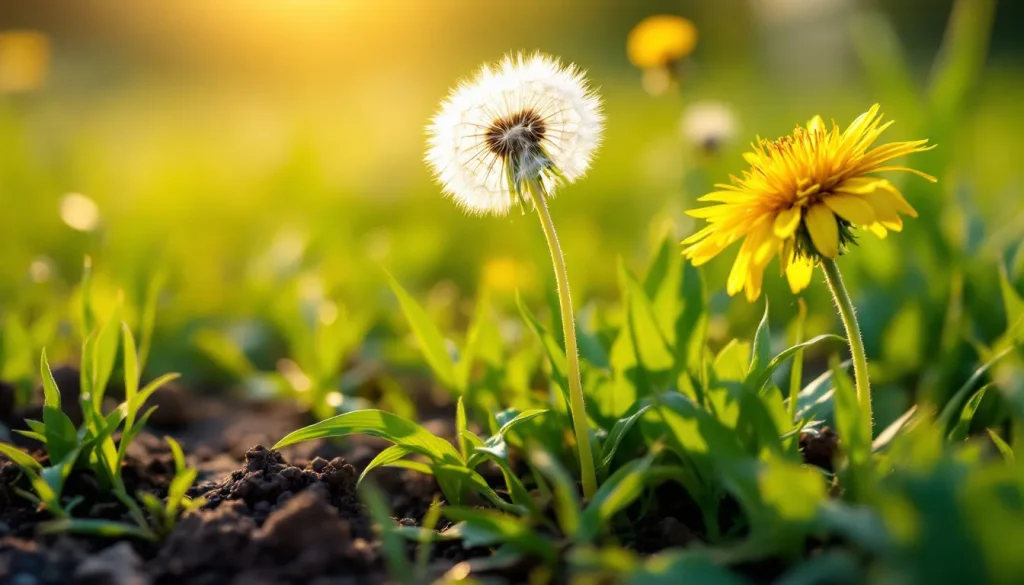
The reverse happens too. A dandelion in a manicured lawn is a classic weed, but foragers grow dandelions on purpose for salad greens, and the flowers feed early-spring bees. Whether dandelions count as weeds depends entirely on who is judging. We cover that debate in detail in our guide on whether dandelions are actually weeds.
Because the definition is a judgment, there is no master list of “weed plants” that holds everywhere. A plant is a weed the moment it is in the wrong spot for the person looking at it.
What makes a plant a weed: the weedy-traits checklist
Plants earn a reputation as weeds because they share a set of survival traits. Not every unwanted plant is aggressive, but the ones that spread fast, resist removal, and keep coming back share a common toolkit. Here is the checklist that separates a stubborn weed from a plant you can pull once and forget.
- Fast growth. Weeds sprout and reach maturity quickly, often outracing slower crop or garden plants for space and light.
- Prolific seeding. A single plant can produce thousands of seeds. One common lambsquarters plant can set over 70,000 seeds in a season.
- Seed dormancy and persistence. Weed seeds can sit dormant in soil for years, even decades, then sprout when conditions turn favorable. This is why weeds return after you clear a bed.
- Aggressive roots. Many weeds spread underground. Field bindweed roots can reach 20 feet or more, and a snapped fragment can grow a whole new plant.
- Thriving in disturbed soil. Weeds are built to colonize bare, dug, or damaged ground fast, which is exactly what a tilled garden or a new lawn provides.
- Toughness. Weeds tolerate poor soil, drought, foot traffic, and mowing better than most cultivated plants.
A plant does not need all six traits to be a weed. But the plants gardeners curse most, bindweed, thistle, crabgrass, share several of them. That is the mechanism behind the frustration.
Common examples of weeds
Some plants show up on almost every gardener’s weed list because they combine fast spread, tough roots, and heavy seeding. Below are widely recognized weeds across lawns, gardens, and farm fields, with the trait that makes each one hard to control. Local names and severity vary by region and climate.
| Weed | Where it shows up | Why it is hard to control |
|---|---|---|
| Dandelion | Lawns, gardens, paths | Deep taproot regrows if snapped; seeds blow far on the wind |
| Field bindweed | Gardens, fields, fences | Roots reach 20+ feet; fragments resprout |
| Canada thistle | Lawns, pastures, roadsides | Spreads by creeping underground roots and by seed |
| Crabgrass | Lawns, driveways, thin turf | One plant sets thousands of seeds before frost kills it |
| Chickweed | Cool-season gardens, beds | Grows and seeds fast in cool, moist soil |
| Purslane | Vegetable beds, cracks | Broken stems reroot; seeds persist in soil for years |
| Ground ivy (creeping charlie) | Shady lawns | Spreads by creeping stems that root at each node |
| Lambsquarters | Gardens, farm fields | Single plant can produce 70,000+ seeds |
If your problem is weeds pushing through the lawn specifically, the control approach differs from garden-bed weeding. Our guide on weeds in grass walks through lawn-specific fixes.
Weeds in the garden versus weeds in agriculture
Weeds cause trouble in two main settings, and the stakes differ. In a home garden, weeds are mostly a nuisance that steals space and looks. In agriculture, weeds are an economic threat that can cut crop yields and cost billions. The plants overlap, but the reason they matter changes with the setting.
In the garden, weeds compete with your flowers and vegetables for water, nutrients, sunlight, and root space. They can crowd seedlings, harbor pests, and make a bed look neglected. The cost is mostly time and appearance, and control is usually hand-pulling, mulching, or spot treatment.
In agriculture, weeds are a yield problem measured in dollars. Uncontrolled weeds can reduce crop yields by 30 to 50 percent or more, and weed control is a major line item on farms worldwide. The scale forces different tools: tillage, crop rotation, and targeted herbicides.
The competition mechanism is the same in both settings. Weeds take resources the desired plant needs. Only the size of the loss and the control method change. For chemical control basics across both contexts, see our explainer on what a herbicide is and how it works.
How to identify weeds in your yard
Identifying a weed means confirming a plant is unwanted, then naming it so you can control it correctly. Start by asking whether you planted it on purpose. If not, look at leaf shape, growth habit, flowers, and where it is growing. Matching those clues to a regional weed guide gives you a name and a control method.
- Ask if you planted it. If a plant appeared on its own in a spot you did not sow, treat it as a suspect.
- Check the leaves. Note whether leaves are broad (broadleaf weeds like dandelion) or narrow and grasslike (grassy weeds like crabgrass). This split decides which herbicide, if any, will work.
- Watch the growth habit. Does it form a low rosette, a creeping mat, or an upright stalk? Habit narrows the list fast.
- Look at flowers and seed heads. Flower color and shape are strong ID clues and tell you how urgently to act before it seeds.
- Match to a local guide. Use a regional extension-service weed guide or a plant-ID app, since the same weed can look different by climate.
Correct identification matters because control depends on the weed type. A treatment that kills broadleaf dandelions will not touch grassy crabgrass, and pulling a taprooted weed differs from digging out a plant that spreads by root fragments.
Weed versus invasive species versus noxious weed
These three terms overlap but are not the same. A weed is any unwanted plant, judged by a person. An invasive species is a non-native plant that spreads and harms the environment or economy. A noxious weed is a plant a government has legally listed and regulated. A plant can be one, two, or all three at once.
| Term | What defines it | Who decides | Example |
|---|---|---|---|
| Weed | A plant growing where it is unwanted in a given situation | The individual person (gardener, farmer) | Grass in a flower bed |
| Invasive species | A non-native plant that spreads aggressively and causes ecological or economic harm | Scientists and land managers | Japanese knotweed |
| Noxious weed | A plant legally listed and regulated by a government agency | Federal, state, or local government | Canada thistle (listed in many US states) |
The key difference is authority. “Weed” is a personal call in your yard. “Invasive” is an ecological judgment about harm to native ecosystems. “Noxious” is a legal status, and depending on your state or county, landowners may be legally required to control listed noxious weeds on their property.
A dandelion is a weed to many people but is not invasive or noxious. Japanese knotweed is a weed, an invasive species, and a listed noxious plant in many places, which is why it triggers legal control duties that a dandelion never will.
Are weeds actually bad for your garden?
Weeds are usually harmful to a garden, but not always. Their main damage is competition: they take water, nutrients, light, and space from the plants you want. Some also spread disease or pests. But certain “weeds” feed pollinators, are edible, or improve soil, so a few in the right spot can be neutral or even helpful.
The clearest harm is competition. A weed growing next to a tomato seedling drinks the same water and mines the same nutrients, which can stunt the crop. In dense stands, weeds also shade out low-growing plants.
Weeds can carry problems beyond competition. Some host insect pests or plant diseases that then jump to your crops. Others, like bindweed, physically twine around and smother neighbors.
The counterpoint is that “weed” is a judgment, not a verdict on value. Clover fixes nitrogen in soil. Dandelions and chickweed are edible. Many weeds flower early and feed bees before garden plants bloom. Whether a given weed is “bad” depends on your goals for that spot.
What are weeds for kids, explained simply
A weed is a plant growing in the wrong place. That is it. Nobody planted it, and it is not wanted where it popped up. Think of a plant that sneaks into a flower pot or a garden bed without an invitation. It is not a bad plant, it is just a plant in a spot where people did not want it.
Here is a way to picture it. Imagine you set out toy cars in a neat row. Then a marble rolls in and sits in the middle of your cars. The marble is not broken or bad, but it does not belong in your car row. A weed is like that marble: a plant that shows up where it does not fit the plan.
Weeds are also fast and tough. They grow quickly, make lots of seeds, and are hard to pull out because their roots hold on tight. That is why a garden needs weeding again and again. The weeds keep trying to move back in.
The tricky part: the same plant can be a weed in one yard and a flower someone loves in another. A dandelion is a weed to a person who wants a perfect green lawn, but a treat for a bee looking for food. It depends on who is looking.
Why weeds grow so fast and spread so easily
Weeds spread fast because evolution built them to colonize bare ground first. They grow quickly, produce enormous numbers of seeds, store seeds that survive for years, and often spread by creeping roots as well. These traits let a single weed become a patch in one season and a lasting problem across many.
Speed is a survival strategy. In nature, weeds are the first plants to claim disturbed or bare soil, like a landslide, a burned patch, or your freshly dug garden bed. Getting big fast lets them grab light and space before slower plants arrive.
Seed numbers are the multiplier. When one plant drops tens of thousands of seeds, and many of those seeds can wait years in the soil before sprouting, clearing the visible weeds does not empty the seed bank underground. That is why weeds return after you thought you won.
Underground spread seals it. Weeds like bindweed and Canada thistle also travel by roots, so a single plant can send up new shoots several feet away and regrow from a snapped root fragment. Fast growth, heavy seeding, and creeping roots together explain why weeds seem impossible to fully beat.
Frequently Asked Questions
What are weeds in simple terms?
A weed is a plant growing where a person does not want it. It is that simple. Weeds are not a special type of plant; the word describes a plant’s situation, not its species. The same plant can be a weed in one garden and a welcome flower in another. Human judgment about place decides whether any plant counts as a weed.
What makes a plant a weed?
Two things make a plant a weed. First, a person judges it unwanted where it is growing. Second, many weeds share traits that make them spread and persist: fast growth, thousands of seeds, seeds that stay dormant for years, aggressive creeping roots, and a knack for thriving in disturbed soil. A plant does not need every trait, but the worst weeds combine several.
What is the difference between a weed and an invasive species?
A weed is any plant a person finds unwanted in a spot, which is a personal judgment. An invasive species is a non-native plant that spreads aggressively and harms the environment or economy, which is a scientific and legal judgment. Many weeds are native and harmless to ecosystems. A plant can be both a weed and invasive, but the two words are not interchangeable.
What are some common examples of weeds?
Common weeds include dandelion, field bindweed, Canada thistle, crabgrass, chickweed, purslane, ground ivy (creeping charlie), and lambsquarters. These show up repeatedly because they spread fast, seed heavily, and have tough or creeping roots. Which plants count as weeds varies by region and by the gardener’s goals, since the same species may be planted on purpose elsewhere for food, ground cover, or pollinators.
Are weeds actually bad for your garden?
Usually, but not always. Weeds compete with your plants for water, nutrients, light, and space, and some spread pests or disease, which harms crops and gardens. But certain weeds feed bees, are edible, or improve soil, like clover fixing nitrogen. Because “weed” is a human judgment rather than a plant category, whether a given weed is truly bad depends on your goals for that spot.
What are weeds for kids, explained simply?
A weed is a plant growing where nobody wanted it, like a marble that rolls into your neat row of toy cars. It is not a bad plant, just a plant in the wrong spot. Weeds grow fast, make lots of seeds, and hold on with strong roots, so they are hard to pull. The same plant can be a weed to one person and a favorite flower to another.
Why do weeds grow so fast and spread so easily?
Weeds evolved to be the first plants on bare or disturbed ground, so they grow quickly to grab light and space. They also produce huge numbers of seeds, and those seeds can wait dormant in the soil for years before sprouting. Many weeds spread by creeping roots too, regrowing from fragments. Fast growth, heavy seeding, and root spread together make them hard to stop.
Can a weed also be a useful or edible plant?
Yes. Because “weed” only means unwanted in a spot, many weeds are valuable elsewhere. Dandelion greens and flowers are edible and feed pollinators. Purslane and chickweed are eaten in salads. Clover improves soil by fixing nitrogen. A plant treated as a weed in a tidy lawn may be grown on purpose in a garden, kitchen, or wildflower patch nearby.