
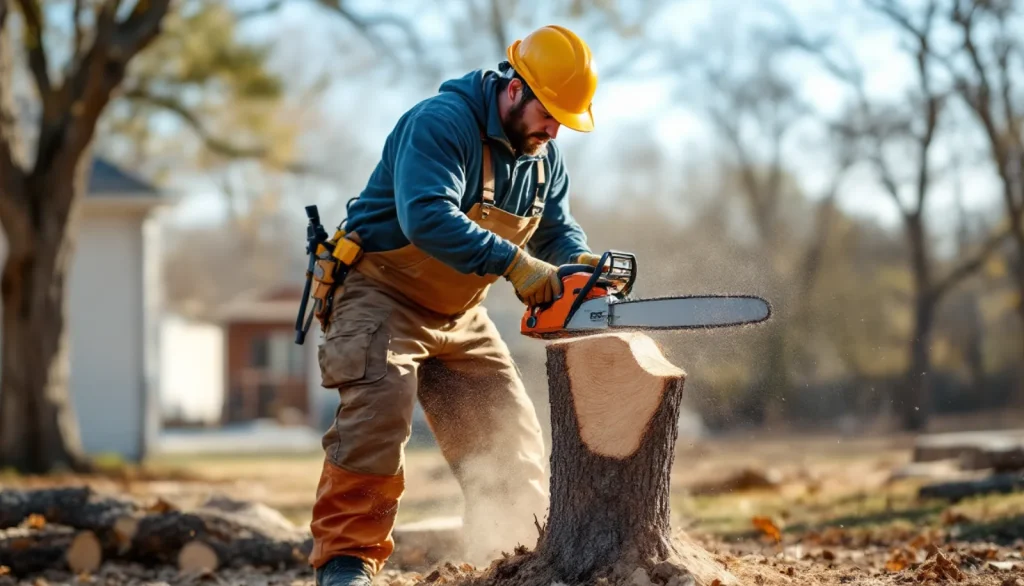
Tree Cutting: DIY Limits, Safety, and Cost
Tree cutting splits cleanly into two jobs: felling a small, healthy tree in the open, which a careful homeowner can do, and dropping anything large, leaning, dead, or near a building or power line, which belongs to a pro. The deciding factors are trunk diameter, height, lean, and what stands within falling distance. This guide gives the cost ranges (national average tree removal runs about $850, with a typical band of $385 to $1,070 per Lawn Love 2026 data), the actual felling steps with the OSHA hinge specs, the permit rules that can cost you a five-figure fine, and a go or no-go table so you know which side of the line your tree falls on before the saw starts.
Should you cut the tree yourself or hire a pro?
DIY tree cutting is reasonable only for a healthy tree under roughly 30 feet tall and under about 6 inches in trunk diameter, standing upright in open space with two clear escape paths and nothing valuable within a full tree length of the lean. Cross any one of those lines (height, diameter, lean, dead wood, a structure, a fence, or a power line in range) and the job moves to a licensed tree service. The math backs this up: a 2026 Family Handyman and OSHA-aligned read of the work shows the danger is in the unpredictable cases, not the easy ones.
The cost gap that tempts people to DIY is smaller than it looks. A pro charges roughly $150 to $435 to drop a small tree (Lawn Love 2026), while doing it yourself means buying a chainsaw, wedges, a logger’s helmet with face screen and ear protection, chaps, and gloves, which runs about $220 to $600 the first time. For a single small tree, the savings are thin once you price the gear you do not already own.
| Factor | DIY is reasonable | Hire a pro (no-go for DIY) |
|---|---|---|
| Height | Under 30 feet | Over 30 feet, or you cannot see the top clearly |
| Trunk diameter | Under 6 inches | Over 6 inches, or multiple trunks |
| Lean | Upright or slight lean toward open ground | Leaning toward a target, or back-leaning against the notch |
| Tree health | Live, sound wood | Dead, hollow, storm-damaged, or insect-rotted |
| What is in range | Open yard, nothing within a tree length | House, shed, fence, car, or property line in the fall zone |
| Power lines | None within two tree lengths | Any line within reach; call the utility, never the tree |
One rule overrides the rest: any tree touching or within reach of a power line is a utility call, not a tree-service call and never a DIY job. Contact your electric utility first. They clear or de-energize lines for hazard trees at no cost in most service territories.
How much does tree cutting cost in 2026?
Professional tree removal averages $850 nationally, with most jobs landing between $385 and $1,070, according to Lawn Love’s 2026 cost data. Price tracks size at roughly $9.50 to $14.50 per foot of height, so a 20-foot tree costs far less than an 80-foot one. Species, access, lean, and proximity to structures move the final number. Stump grinding and debris haul are usually separate line items.
| Job | Typical cost (2026) | Notes |
|---|---|---|
| Small tree, up to 30 ft | $285 to $435 | Fruit trees, young ornamentals |
| Medium tree, 30 to 60 ft | $435 to $870 | Most yard shade trees |
| Large tree, 60 to 80 ft | $870 to $1,160 | Mature oak, maple |
| Very large tree, over 80 ft | $1,160 to $2,000 | Tall pine, old-growth hardwood |
| Stump grinding (add-on) | $180 to $525 | Priced per stump or per inch |
| Fallen tree cleanup | $90 to $300 | Already down, no felling risk |
| Emergency removal | $450 to $3,000 | Storm damage, on a structure, after hours |
Species changes the price because of wood density and canopy size. Lawn Love’s 2026 figures put palm removal at $310 to $475, oak at $380 to $1,160, pine at $475 to $1,450, and cedar at $570 to $1,740. A wide, multi-stem maple takes longer to limb down than a single-trunk pine of the same height, which is part of why two trees of equal height can quote differently. For how local labor rates shape any outdoor service quote, see our breakdown of lawn care cost by service and region for 2026.
How to cut down a small tree safely
Felling a small tree is a sequence of fixed steps, not improvisation: gear up, plan the fall, clear two escape routes, cut a directional notch, then a back cut that leaves a hinge, and retreat the instant it moves. Follow the order. The hinge is what steers the fall, so the cut geometry is not optional. Below is the OSHA-aligned method for a sound tree small enough to drop in one piece.
- Put on PPE first: a logger’s helmet with face screen and ear protection, cut-resistant chaps, gloves, and steel-toe boots. Falling branches are a leading cause of logging injuries, per OSHA’s logging eTool.
- Judge the height and clear the area. Use the ax-handle trick: hold a handle at arm’s length, close one eye, and back up until the top of the handle lines up with the treetop and the bottom with the base; your feet mark roughly where the top will land.
- Pick the fall direction and cut two escape routes on the side away from the fall, about 45 degrees apart, clear of brush and trip hazards.
- Cut the directional notch on the fall side. Make it about one-fifth of the trunk diameter deep: a horizontal bottom cut, then a downward cut at roughly 60 degrees that meets it in a wedge.
- Make the back cut on the opposite side, level with or slightly above the notch apex, and stop before you reach the notch. Leave a hinge: OSHA’s guidance puts hinge length at about 80% of the trunk diameter at breast height and thickness at about 10%. The hinge holds the tree to the stump and steers the fall.
- For anything but the smallest trunks, drive one or two felling wedges into the back cut once the bar is a third of the way in, so the tree cannot settle back and pinch the saw.
- The moment the tree leans, pull the saw, set the chain brake, and walk (do not run) down an escape route. Keep your eyes on the tree the whole way. Never turn your back on a falling tree.
If at any point the tree starts to go the wrong way, the trunk is wider than your bar, the wood is punky or hollow, or you feel out of your depth, stop and call a pro. There is no partial credit on a botched fell. For vetting that contractor before money changes hands, our 14-step guide to finding a reputable landscaper covers the license, insurance, and reference checks that apply to tree services too.
Do you need a permit to cut down a tree?
Often, yes. Many cities and counties run Tree Preservation Ordinances that require a permit before you remove a tree above a set trunk diameter or of a protected, heritage, or native species, even on your own property. Dead, dying, or immediately hazardous trees are usually exempt, though some jurisdictions want the city arborist notified first. Permits commonly cost $20 to $150. Check your local planning department before cutting, because the fines for skipping it are steep.
The downside of guessing wrong is real money. Penalties for unpermitted removal typically run $500 to $10,000, and courts have gone far higher: New York City fines up to $15,000 and up to a year of jail for removing a protected tree without a permit, and a 2016 Woodside, California case ended in a $212,500 penalty (gotreequotes 2025). Several cities also charge replacement fees by trunk size, such as Washington, D.C. assessing per inch of circumference.
Document before you cut anything you believe is exempt. Photograph a dead or hazard tree, and where your jurisdiction requires it, get a certified arborist to confirm the hazard in writing. That paper trail is your defense if enforcement asks why the tree came down. Routine trimming of under about 25% of a tree’s foliage usually does not need a permit, but street trees and trees in wetlands or protected zones are common exceptions.
What to do with the stump and debris
Felling leaves three things behind: the stump, the trunk wood, and the brush. A pro can grind the stump for $180 to $525, usually a separate charge from the removal. You can leave a stump to rot, but it can sprout, harbor termites or carpenter ants, and stays a trip hazard for years. Grinding it below grade is the clean fix.
- Stump grinding: fastest option, $180 to $525 per stump, leaves a fillable hole and a pile of chips you can use as mulch.
- Chemical rot: potassium nitrate stump remover speeds decay over months; cheap but slow and not for trees you want gone this season.
- Trunk wood: bucked into rounds it becomes firewood after seasoning; many tree services haul it for a fee or leave it at your request.
- Brush: chipping runs about $75 to $125 per hour; chips make free mulch for beds, which ties into a healthier yard overall (see our year-round grass maintenance schedule for where mulch and bare soil fit the calendar).
If the removal opens a sunny patch where turf struggled under the canopy, that bare ground is a reseeding opportunity. Our guide to getting grass to grow in bare spots covers the renovation steps once the stump is out and the soil is graded.
Last reviewed: June 2026
HMNDP Editorial Team, reviewed by HMNDP turf and horticulture editors.
Before you decide whether a tree needs to come down, it helps to know what you are working with. Our guide on estimating a tree’s age without cutting it down walks through trunk measurements and growth clues so you can gauge a tree’s maturity first.
Frequently asked questions
Do I need a permit to cut down a tree on my property?
Often yes. Many cities and counties run Tree Preservation Ordinances requiring a permit before removing a tree above a set trunk diameter or of a protected, heritage, or native species, even on private land. Dead or immediately hazardous trees are usually exempt, though some areas want the city arborist notified first. Permits typically cost $20 to $150. Check your local planning department first.
How much does it cost to cut down a tree?
Professional tree removal averages $850 nationally in 2026, with most jobs between $385 and $1,070 (Lawn Love). Price runs about $9.50 to $14.50 per foot of height, so a small tree under 30 feet costs $285 to $435 while a tree over 80 feet runs $1,160 to $2,000. Stump grinding adds $180 to $525, and emergency or storm removal can reach $3,000.
When should I hire a professional instead of cutting the tree myself?
Hire a pro when the tree is over about 30 feet tall, over 6 inches in trunk diameter, dead or hollow, leaning toward a target, or has a house, fence, car, or power line within a full tree length of the fall zone. DIY is reasonable only for a small, healthy, upright tree in open space with two clear escape paths and nothing valuable in range.
How do I cut down a tree so it falls where I want?
Direction comes from the notch and hinge. Cut a directional notch on the fall side, about one-fifth of the trunk diameter deep, with a horizontal bottom cut and a 60-degree top cut. Then make a back cut level with the notch apex and stop short, leaving a hinge about 80% of the trunk diameter long and 10% thick (OSHA). The hinge holds and steers the tree as it falls.
What is the fine for cutting down a tree without a permit?
Penalties for unpermitted removal typically run $500 to $10,000, and courts have gone higher. New York City fines up to $15,000 and up to a year in jail for removing a protected tree without a permit, and a 2016 Woodside, California case ended in a $212,500 penalty (gotreequotes 2025). Many cities also charge replacement fees by trunk size on top of the fine.
Do I need a permit to cut down a dead tree?
Usually no. Dead, dying, and immediately hazardous trees are exempt under most ordinances, though some jurisdictions require you to notify the city arborist or get a certified arborist to confirm the hazard in writing first. Photograph the dead or damaged tree before removal so you have documentation if enforcement later asks why it came down.
How much does stump removal cost after cutting a tree?
Stump grinding runs $180 to $525 per stump in 2026 and is usually a separate charge from the tree removal (Lawn Love). Cost varies with stump diameter and root spread. Chemical rot using potassium nitrate is cheaper but takes months. Leaving a stump invites sprouting, termites or carpenter ants, and a lasting trip hazard, so grinding below grade is the clean fix.
Is it cheaper to cut down a tree myself?
Not by much for one small tree. A pro charges about $150 to $435 to drop a small tree, while DIY means buying a chainsaw, felling wedges, a logger’s helmet, chaps, and gloves for roughly $220 to $600 the first time. Once you factor in gear you do not own plus the risk of a botched fall, the savings on a single small tree are thin.