
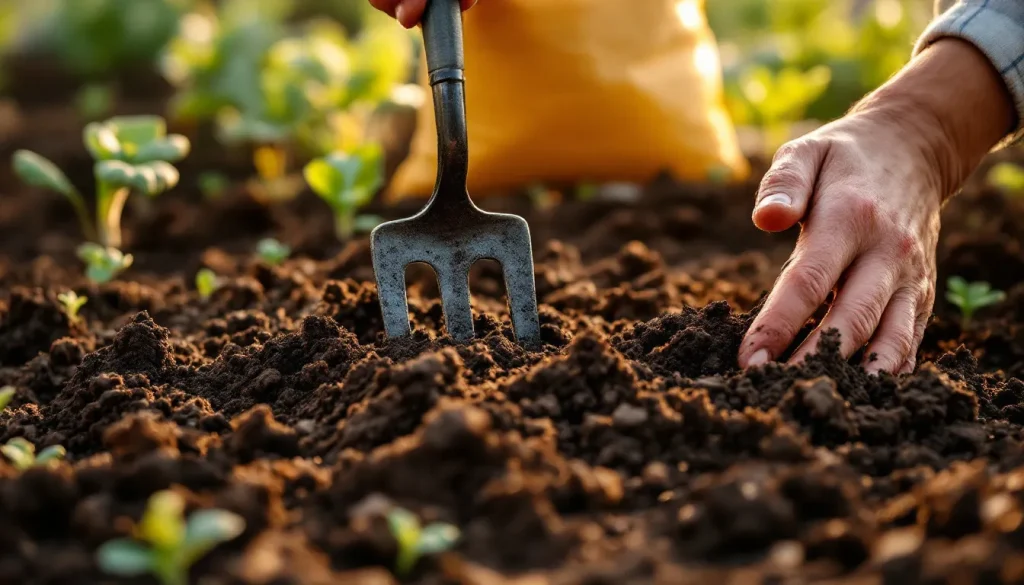
What an organic soil enhancer is (and how it differs from fertilizer)
An organic soil enhancer is a natural material (compost, aged manure, cover-crop residue, worm castings, biochar) added to soil to improve its structure, water holding, and biology, not just to feed one crop. Unlike synthetic fertilizer, which delivers a fixed dose of nitrogen, phosphorus, and potassium, an enhancer builds long-term organic matter and feeds the microbes that release nutrients slowly.
Fertilizer answers “this plant is hungry now.” A soil enhancer answers “this soil is broken and needs to hold nutrients and water better for years.” Many gardeners need both, but the enhancer is what turns dirt into a living system.
The distinction matters at purchase. A bag labeled 10-10-10 is fertilizer. A bag of “organic soil enhancer,” “soil conditioner,” or “compost blend” is an amendment. Retailers like Home Depot, Arbico Organics, and Grow Organic shelve them separately, and mixing up the two is the most common buying mistake.
The main types of organic soil enhancers, compared
The best organic soil enhancers fall into six families: compost, aged manure, cover crops, wood by-products, mineral additives (vermiculite, perlite), and biostimulants. Each fixes a different soil problem. Compost is the all-purpose base; manure adds nitrogen; cover crops build matter in place; wood mulch protects the surface; vermiculite loosens heavy soil; biostimulants boost biology.
Match the material to the defect, not to marketing. The table below pairs each enhancer with what it does best and its main caution.
| Enhancer | Best for | Typical rate | Main caution |
|---|---|---|---|
| Finished compost | All soils, building organic matter and tilth | 1 to 3 inches, worked into top 6 to 8 in | Buy cured, not “hot” fresh product |
| Well-rotted manure | Low-nitrogen, low-fertility beds | 20 to 40 lbs per 100 sq ft, aged 6+ months | Fresh manure can burn roots and carry pathogens |
| Cover crops (clover, rye, vetch) | Building matter in place, off-season beds | Seed per label; till in before seed set | Needs 6 to 10 weeks to grow and decompose |
| Bark mulch / sawdust | Surface protection, slow structure gain | 2 to 3 in mulch; sawdust sparingly | Ties up nitrogen as it breaks down |
| Vermiculite / perlite | Loosening clay, improving drainage and aeration | 10 to 25% of soil volume | Mineral, adds no nutrients or biology |
| Biostimulants (kelp, humic acid, mycorrhizae) | Kickstarting microbial life | Per label, small volumes | Supplement, not a matter source |
Compost is the primary amendment for most gardens because it does a little of everything: it feeds microbes, holds water, and improves both sandy and clay soils. Our deeper breakdown of organic soil and how living soils work covers the biology behind that.
Compost, manure, and cover crops: the organic-matter core
Compost, well-rotted manure, and cover crops are the three enhancers that actually add organic matter, the fraction of soil that stores nutrients and water. Compost is finished and ready. Manure is richer in nitrogen but must be aged. Cover crops (green manure) grow matter in place, then get tilled under to feed the soil for the next season.
Cover crops like crimson clover or winter rye are the cheapest way to build matter across a whole bed. Sow in fall, cut and turn under in spring at least 3 weeks before planting so the residue can break down.
How much to apply, and how to work it in
For most garden beds, spread 1 to 3 inches of compost or 20 to 40 pounds of aged manure per 100 square feet, then fork or till it into the top 6 to 8 inches of soil. New or badly depleted beds take the higher end. Established beds need only a 1-inch annual topdressing. This is the number most competitor pages never give you.
Work it in with these steps.
- Clear the bed of weeds and old debris.
- Spread the enhancer evenly across the surface at the rate above.
- Turn it into the top 6 to 8 inches with a fork, broadfork, or tiller.
- Rake level and water lightly to settle and activate microbes.
- Wait 1 to 2 weeks before planting if you used any manure or fresh product.
Quick math: 1 inch of compost over 100 square feet is about 0.31 cubic yards, roughly 8 to 9 standard 40-pound bags. Order by cubic yards for anything over 200 square feet; bagged product gets expensive fast. For persistent heavy clay, calcium-based conditioners can help too, covered in our guide to using gypsum for soil.
Read a soil test before you buy anything
A soil test tells you which enhancer you actually need, and it costs $15 to $30 through most US cooperative extension labs. It reports pH, organic matter percentage, and N-P-K levels. Buying enhancers without it is guessing. The results point straight to the right material and stop you from overpaying for the wrong bag.
Read the three numbers that matter this way.
| Test result | What it means | Enhancer to reach for |
|---|---|---|
| Organic matter below 3% | Soil is depleted, poor structure | Compost, 2 to 3 in; cover crops |
| Low nitrogen (N) | Pale plants, weak growth | Aged manure, blood meal, legume cover crop |
| pH below 6.0 (acidic) | Nutrients locked up | Lime plus compost; avoid pine/sawdust |
| pH above 7.5 (alkaline) | Iron, manganese unavailable | Compost, elemental sulfur, peat |
| Heavy clay, poor drainage | Compaction, waterlogging | Compost plus vermiculite or perlite |
Aim to raise organic matter toward 4 to 5%, the range most vegetable soils perform best in. A retest every 2 to 3 years shows whether your enhancers are working.
Clay vs sandy soil: pick the right enhancer
Clay and sandy soils have opposite problems, and compost fixes both. Clay is dense and drains poorly, so add 2 to 3 inches of compost plus vermiculite or perlite to open pore space. Sandy soil drains too fast and starves plants, so add compost and aged manure to hold water and nutrients. Do not add sand to clay; it can set like concrete.
OMRI-listed vs generic “organic,” plus manure safety
Not every bag labeled “organic” is certified. OMRI (Organic Materials Review Institute) listing means a product was independently vetted for use in certified organic growing; generic “organic” on a label is a marketing claim with no verification. If you grow to organic standards or just want assurance, look for the OMRI seal on compost, manure, and biostimulant bags.
Manure carries two real risks: nutrient “burn” and pathogens. Fresh manure is high in ammonia and can scorch roots, and raw manure may carry E. coli or salmonella. Only use manure that has been composted or aged at least 6 months. The USDA National Organic Program advises applying raw manure no fewer than 90 to 120 days before harvesting crops that touch the soil.
Cure caution applies to compost too. Fresh, “hot” compost that still smells of ammonia is not finished and can rob nitrogen from seedlings. Finished compost is dark, crumbly, and smells like forest floor. For a fuller list of materials and safe handling, see our reference on common soil amendments and how to use them.
Where to buy organic soil enhancers
You can buy organic soil enhancers at Home Depot, Arbico Organics, Grow Organic, and local garden centers or bulk landscape-supply yards. Home Depot stocks bagged compost, vermiculite, and manure for small jobs. Arbico Organics and Grow Organic carry OMRI-listed compost, biostimulants, and cover-crop seed for growers who want certified inputs. Bulk yards are cheapest per cubic yard.
| Source | Best for | Notes |
|---|---|---|
| Home Depot / Lowe’s | Small beds, bagged compost, vermiculite | Convenient; check for cured product |
| Arbico Organics | OMRI biostimulants, mycorrhizae | Ships nationwide; certified focus |
| Grow Organic (Peaceful Valley) | Cover-crop seed, amendments in bulk bags | Strong for green-manure planning |
| Local bulk landscape yard | Cubic-yard compost, mulch, screened topsoil | Cheapest for beds over 200 sq ft |
Order bulk by the cubic yard once your project passes roughly 200 square feet. If you are converting a lawn area rather than amending beds, compare that cost against low-maintenance alternatives like artificial turf options before hauling soil.
Byline: HMNDP Editorial Team. Last reviewed: June 2026.
Frequently Asked Questions
What is an organic soil enhancer and how is it different from fertilizer?
An organic soil enhancer is a natural material like compost, aged manure, or cover-crop residue added to improve soil structure, water holding, and microbial life over years. Fertilizer delivers a fixed dose of nitrogen, phosphorus, and potassium to feed one crop now. Enhancers build the soil itself; fertilizer feeds the plant. Many gardens benefit from using both together.
What are the best organic soil enhancers for garden soil?
The best all-purpose choice is finished compost because it improves both sandy and clay soils and feeds microbes. Aged manure adds nitrogen, cover crops build organic matter in place, and vermiculite or perlite loosens heavy clay. Biostimulants like kelp and mycorrhizae support biology. Match the enhancer to your specific soil problem rather than buying by brand name.
How much organic soil enhancer or compost should I add per square foot?
Spread 1 to 3 inches of compost, or 20 to 40 pounds of aged manure per 100 square feet, then work it into the top 6 to 8 inches. New or depleted beds take the higher end; established beds need only a 1-inch annual topdressing. One inch over 100 square feet equals about 8 to 9 standard 40-pound bags.
When is the best time of year to add soil amendments?
Fall is ideal for most amendments because compost and manure have all winter to break down and integrate before spring planting. Spring works too, but wait 1 to 2 weeks after adding any manure before planting. Cover crops go in during fall and get turned under in spring at least 3 weeks before you sow.
Which organic soil enhancer is best for clay vs sandy soil?
For clay, add 2 to 3 inches of compost plus vermiculite or perlite to open drainage; never add sand, which can harden clay. For sandy soil, add compost and aged manure to hold water and nutrients that otherwise drain away. Compost improves both because it balances water retention and aeration in opposite soil types.
Do I need a soil test before choosing a soil enhancer?
Yes, a soil test is the smartest first step. For $15 to $30 through a cooperative extension lab, it reports pH, organic matter percentage, and N-P-K. Those numbers tell you exactly which enhancer to buy, so you avoid overpaying for the wrong material. Retest every 2 to 3 years to confirm your amendments are working.
Is fresh manure safe to use as a soil enhancer?
Fresh manure is not safe for immediate use. It is high in ammonia that can burn roots and may carry pathogens like E. coli or salmonella. Use only manure composted or aged at least 6 months. USDA National Organic Program guidance advises applying raw manure no fewer than 90 to 120 days before harvesting crops that touch the soil.
Where can I buy organic soil enhancers (Home Depot, Arbico, Grow Organic)?
Home Depot and Lowe’s stock bagged compost, vermiculite, and manure for small beds. Arbico Organics carries OMRI-listed biostimulants and mycorrhizae, and Grow Organic (Peaceful Valley) is strong for cover-crop seed and bulk amendments. Local landscape-supply yards sell compost by the cubic yard, the cheapest option once your project passes about 200 square feet.