
By the HMNDP Editorial Team, independent reporting on lawn care, landscaping, fertilizer, and the green-industry business.
Last reviewed: June 2026.
What is organic soil?
Organic soil is a growing medium built mainly from decomposed plant and animal matter (compost, aged manure, leaf mold, peat or coir) blended with mineral particles and aerators like perlite or bark fines. The word “organic” here means derived from once-living material and processed without most synthetic chemicals. It is not a federally certified term for bagged soil.
In gardening, “organic” describes the inputs and how they were made, not a legal grade. A bag labeled organic soil typically contains a high share of finished compost plus bulking ingredients, designed to feed soil life and hold moisture.
Compare that to plain dirt or fill, which can be mostly mineral with little living matter. Organic soil leans toward biology: microbes, fungi, and slowly releasing nutrients. For the difference between this and standard garden blends, see our guide to garden soil.
What is bagged organic soil actually made of?
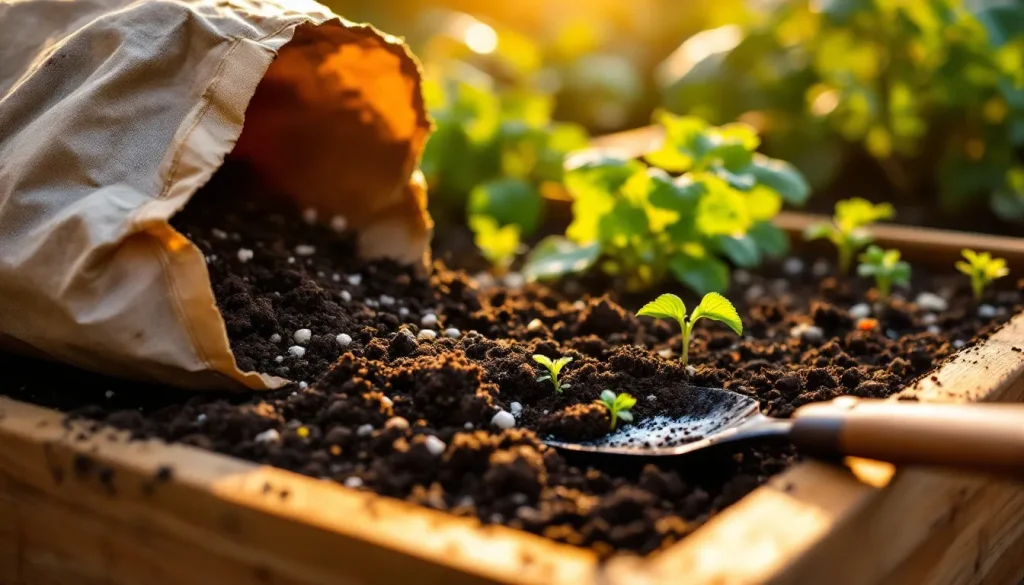
Bagged organic soil is usually a recipe of five things: compost, aged or composted manure, a moisture holder (peat moss or coconut coir), bark fines, and an aerator (perlite or pumice). Some bags add worm castings, kelp, or feather meal as a nutrient boost. Exact ratios are rarely printed, which matters for what you are paying for.
| Ingredient | Job in the bag | Notes |
|---|---|---|
| Finished compost | Organic matter, microbes, base nutrients | The defining ingredient; quality varies widely |
| Aged/composted manure | Nitrogen and bulk | If not fully aged, can cause salt or ammonia burn |
| Peat moss or coir | Holds water, lightens texture | Coir is the renewable substitute for peat |
| Bark fines | Structure, drainage, slow carbon | Cheap bulking agent; too much ties up nitrogen |
| Perlite or pumice | Aeration, drainage | The white specks in the bag |
Because labels list ingredients but not percentages, two bags both reading “organic soil” can behave very differently. A compost-heavy bag drains and feeds well. A bark-heavy bag is mostly filler that may rob nitrogen as the wood breaks down.
Is organic soil really certified organic, or is it just a label?
For practical purposes, “organic” on a soil bag is largely a marketing word. There is no USDA organic certification for bagged soil the way there is for food. The USDA National Organic Program certifies crops and produce, not the potting media gardeners buy. So a bag can say “organic” with no third-party check on the claim.
The real signal to look for is an OMRI listing. The Organic Materials Review Institute (OMRI) independently reviews inputs for use in certified organic production. An “OMRI Listed” seal means the product was vetted against the USDA organic standard for inputs, which is the closest thing to verification a home gardener gets.
| Label or seal | What it actually means | Trust level |
|---|---|---|
| “Organic” (plain text) | Marketing claim, no verification required | Low |
| “Natural” / “all-natural” | Undefined, no standard | Low |
| “OMRI Listed” | Third-party reviewed against USDA organic input rules | High |
| State input certification (e.g., CDFA OIM) | State-level review, varies by state | Medium to high |
This is the gap most articles skip. If “organic” matters to you for certified or chemical-avoidant growing, ignore the front-of-bag word and check the back for an OMRI seal or a state certification.
Organic soil amendments vs. organic soil
An amendment improves soil you already have; organic soil is a standalone growing medium. Composted manure, worm castings, leaf mold, and blood meal are amendments: you mix a few inches into existing beds. Organic soil is meant to be the bulk you plant directly into. Buying one when you needed the other is a common, costly mistake.
Amendments are concentrated. A bag of composted manure or worm castings is meant to be diluted into native ground, usually at one to three inches worked into the top six to eight inches. Use it straight in a container and you risk burning roots with excess salts and nitrogen.
Organic soil is diluted by design, with aerators and bulking already built in. For a breakdown of which amendments do what, see our reference on soil amendments, and our walkthrough on how to build a soil from components.
Organic soil vs. regular (conventional) soil
Organic soil is built from decomposed living matter and avoids synthetic fertilizers; regular or conventional bagged soil often blends mineral topsoil with synthetic nutrient charges. Organic soil feeds slowly through biology. Conventional and synthetic-charged blends feed faster and more predictably but do less for long-term soil life.
| Trait | Organic soil | Regular/conventional soil |
|---|---|---|
| Main inputs | Compost, manure, coir/peat | Mineral topsoil, sometimes synthetic feed |
| Nutrient release | Slow, biological | Often faster, synthetic charge |
| Microbial life | High | Lower |
| Predictability | Variable | More consistent short term |
| Long-term soil health | Builds it | Maintains less |
Neither is universally better. Organic soil rewards patience and repeat feeding. Conventional blends with a synthetic charge give faster early growth, then fade once the charge is used up, typically within a few weeks to a couple of months.
Use cases: gardens, vegetable beds, raised beds, and containers
Match the product to the spot. In-ground beds want organic soil or amendments mixed into native ground. Raised beds want a raised bed mix or a compost-rich blend. Containers want a lightweight organic potting mix, not heavy organic soil, which compacts and drowns roots in a pot.
| Where you’re planting | Best buy | Why |
|---|---|---|
| In-ground garden bed | Organic soil or compost amendment | Improves existing native soil |
| Raised bed | Raised bed mix or 50/50 topsoil and compost | Holds structure, drains, fills volume |
| Containers / pots | Organic potting mix | Light, fast-draining; soil compacts in pots |
| Seed starting | Sterile seed-starting mix | Fine texture, low nutrient, disease-free |
The single biggest container error is using heavy bagged organic soil in pots. It is too dense, holds too much water, and suffocates roots. Pots need a fluffy potting mix engineered for drainage.
Is organic soil better than regular soil for vegetables, and what about nutrients?
Organic soil is good for vegetables because it builds long-term fertility and microbial life, but it is usually low and slow on nitrogen, so “organic” does not mean “complete fertilizer.” Most bagged organic soils carry modest NPK numbers, often single digits, and release them gradually. Expect to feed during the season.
The honest nutrient picture: organic soil rarely lists guaranteed NPK like a fertilizer bag does. When it does, numbers are low (for example, around 0.1 to 0.5 nitrogen by weight). That is by design. Nutrients come from organic matter breaking down, not a soluble charge.
Two real risks deserve naming. First, manure burn: under-aged or fresh manure in cheap blends carries salts and ammonia that can scorch seedlings. Second, nitrogen tie-up: bark-heavy bags can pull nitrogen out of reach as wood decomposes. Buying a compost-forward, OMRI-listed bag reduces both.
For leafy greens and heavy feeders like tomatoes, plan to supplement with an organic nitrogen source (blood meal, feather meal, or a balanced organic fertilizer) a few weeks after planting.
Best organic soil for a vegetable garden and the brands to know
For a vegetable garden, the best organic soil is a compost-forward, OMRI-listed bag matched to your bed type, fed during the season. Common big-box options include Kellogg Garden Organics, Back to the Roots organic soil, and Home Depot’s Vigoro private label. Availability and exact formulas change by region and year.
| Brand/line | Where sold | Note |
|---|---|---|
| Kellogg Garden Organics | Home Depot, Lowe’s, regional | Several OMRI-listed lines; raised bed and garden soils |
| Back to the Roots | Big-box and grocery | Markets peat-free organic potting and soil mixes |
| Vigoro (Home Depot label) | Home Depot | Private-label garden and raised bed soils |
| Miracle-Gro Performance Organics | Wide retail | OMRI-listed organic line from a conventional brand |
Read the back, not the front. Confirm an OMRI seal if certification matters, favor compost as the lead ingredient, and avoid bags where bark or “forest products” dominate. Third parties are described here neutrally; verify current formulas at the shelf.
Should I buy organic soil in bags or in bulk, and how much do I need?
Buy bagged for small jobs and containers; buy bulk by the cubic yard once you need roughly one cubic yard or more, because bulk often costs far less per cubic foot. Bagged organic soil commonly runs about 5 to 12 US dollars per 1.5 cubic foot bag (roughly 3 to 8 dollars per cubic foot). Bulk delivered can run a fraction of that per cubic foot.
One cubic yard equals 27 cubic feet, or about 18 standard 1.5 cubic foot bags. So a single yard in bags can cost well over 100 dollars, while bulk delivery is frequently 30 to 60 dollars per yard plus a delivery fee, depending on region and supplier.
To size a job, use this formula: length (ft) x width (ft) x depth (ft) = cubic feet, then divide by 27 for cubic yards. A 4 by 8 foot raised bed filled 10 inches deep needs about 26.7 cubic feet, just under one cubic yard, or roughly 18 bags. That is the break-even point where bulk usually wins.
- Measure length, width, and fill depth in feet.
- Multiply the three for cubic feet.
- Divide by 27 for cubic yards.
- Divide cubic feet by 1.5 for number of standard bags.
- Under ~1 yard, bags are convenient; at or above ~1 yard, price out bulk delivery.
Can I make my own organic soil instead of buying it?
Yes. You can make organic soil by composting yard and kitchen waste, then blending finished compost with native topsoil and an aerator. DIY beats buying on cost for large in-ground areas and gives you control over inputs. Buying wins on speed, consistency, and small container jobs where volume is low.
A simple home blend is roughly one part finished compost, one part native or screened topsoil, and a handful of perlite or coarse sand per container for drainage. Compost takes about two to six months in an active pile, or longer if cold-composting.
DIY pays off at scale. Filling several raised beds with homemade compost plus bulk topsoil can cut cost dramatically versus bags. For step-by-step component recipes, see our guide on how to build a soil, and browse more practical gardening references in the HMNDP learn library.
Frequently Asked Questions
What is organic soil?
Organic soil is a growing medium made mainly from decomposed plant and animal matter, such as compost, aged manure, and peat or coir, blended with aerators like perlite. “Organic” here means derived from once-living material and processed without most synthetic chemicals. It feeds plants slowly through biology rather than a synthetic nutrient charge, and it is not a federally certified grade.
What is bagged organic soil actually made of?
Bagged organic soil is typically a blend of finished compost, aged or composted manure, a moisture holder (peat moss or coir), bark fines for structure, and an aerator like perlite. Some bags add worm castings or kelp. Ratios are rarely printed, so a compost-heavy bag performs far better than a bark-heavy one that can tie up nitrogen.
Is organic soil really certified organic, or is it just a label?
For bagged soil, “organic” is largely a marketing word. There is no USDA organic certification for soil the way there is for food; the USDA program certifies crops, not media. The real verification signal is an “OMRI Listed” seal from the Organic Materials Review Institute, which independently reviews inputs against the USDA organic standard. Check the back of the bag.
What is the difference between organic soil and regular soil?
Organic soil is built from decomposed living matter and avoids synthetic fertilizers, feeding slowly through microbial activity. Regular or conventional bagged soil often blends mineral topsoil with a synthetic nutrient charge that feeds faster but fades in weeks. Organic soil builds long-term fertility and soil life; conventional blends offer more short-term predictability with less benefit to soil biology.
Is organic soil better than regular soil for vegetables?
For vegetables, organic soil is generally a strong choice because it builds lasting fertility and microbial life. The catch is that it is usually low and slow on nitrogen, so it is not a complete fertilizer. Plan to feed heavy feeders like tomatoes and leafy greens during the season with an organic nitrogen source a few weeks after planting.
Should I buy organic soil in bags or in bulk?
Buy bagged for containers and small jobs; buy bulk by the cubic yard once you need about one cubic yard or more. Bagged organic soil runs roughly 3 to 8 dollars per cubic foot, while bulk delivery can be a fraction of that. One cubic yard equals 27 cubic feet, or about 18 standard 1.5 cubic foot bags, which is the break-even point.
Can I make my own organic soil instead of buying it?
Yes. Compost your yard and kitchen waste, then blend finished compost with native or screened topsoil plus an aerator. A simple mix is about one part compost to one part topsoil with perlite for drainage. DIY beats buying on cost for large beds; buying wins on speed, consistency, and small container jobs where you only need a bag or two.