
By the HMNDP Editorial Team, independent reporting on lawn care, landscaping, and the plants that define a place.
Last reviewed: June 2026
Native Hawaiian flowers, quickly sorted from the tropicals
Native Hawaiian flowers are the roughly 1,400 plant species that reached the islands on their own and evolved there, and most of the flowers tourists photograph are not among them. Plumeria, anthurium, bird of paradise, and blue ginger are introduced. True natives include ʻōhiʻa lehua, maʻo hau hele (the yellow hibiscus state flower), naʻu, and koʻoloa ʻula. Many natives are endangered.
Hawaii has more endangered plant species than any other U.S. state. The U.S. Fish and Wildlife Service lists over 400 Hawaiian plants as threatened or endangered, which is why “native” here carries real conservation weight, not just a botanical label.
This guide gives each flower its own entry with a fact block: Hawaiian name, status (endemic, indigenous, or introduced), bloom season, conservation status, and where you can actually see it. Use it to tell a garden-store plumeria from a forest ʻōhiʻa.
Endemic vs. indigenous vs. introduced: the framing that matters
Three status words separate real Hawaiian natives from lookalikes. Endemic means the plant evolved in Hawaii and grows naturally nowhere else on Earth. Indigenous (or native) means it arrived without human help but also grows elsewhere. Introduced means people brought it, whether ancient Polynesian voyagers or modern nurseries. Only endemic and indigenous plants count as truly native.
Native plants reached Hawaii by the “three Ms,” a framing used by Hawaii’s Division of Forestry and Wildlife (DOFAW): wind, waves (water), and wings (birds). Seeds blew in on storms, drifted across the Pacific, or hitched rides in feathers and bird guts. From a small number of arrivals, roughly 1,400 native species evolved.
Plants Polynesians carried by canoe (kalo, ʻulu, kukui) are called “canoe plants.” They are culturally Hawaiian and centuries old, but botanically they are introduced, not native. Keeping these categories straight is the whole point of this page.
| Status | Definition | Example flowers |
|---|---|---|
| Endemic | Evolved in Hawaii, found nowhere else | ʻŌhiʻa lehua, maʻo hau hele, koʻoloa ʻula, naʻu |
| Indigenous | Arrived naturally, also grows elsewhere | Pōhinahina (beach vitex), ʻilima, hinahina (beach heliotrope) |
| Introduced | Brought by people, ancient or modern | Plumeria, anthurium, bird of paradise, blue ginger, pikake |
Truly native Hawaiian flowers (endemic and indigenous)
These flowers reached Hawaii on their own and belong here botanically. Each entry lists Hawaiian name, status, bloom season, conservation status, and where to see it. Several are endangered, so treat wild sightings as rare privileges and never pick them.
ʻŌhiʻa lehua (Metrosideros polymorpha)
ʻŌhiʻa lehua is Hawaii’s most iconic native tree flower, a red, pom-pom-shaped bloom of fine stamens on a hardy tree. It is often the first plant to colonize fresh lava, which ties it deeply to Hawaiian creation stories and to the volcano goddess Pele. The species is endemic and dominates native forests across all main islands.
- Hawaiian name: lehua (flower), ʻōhiʻa (tree)
- Status: Endemic
- Bloom: Year-round, peaking spring and summer
- Conservation: Common but threatened by Rapid ʻŌhiʻa Death (ROD), a fungal disease that has killed over a million trees on Hawaiʻi Island since 2014
- Where to see it: Hawaiʻi Volcanoes National Park, upper-elevation trails on Maui and Kauaʻi
Maʻo hau hele (Hibiscus brackenridgei), the state flower
Maʻo hau hele is Hawaii’s official state flower, a bright yellow native hibiscus. Of the roughly seven hibiscus species native to Hawaii, this endemic yellow one holds the state honor, adopted in 1988. It is also one of the most endangered, which surprises most visitors who assume the state flower is common.
- Hawaiian name: maʻo hau hele
- Status: Endemic
- Bloom: Winter into spring
- Conservation: Federally listed endangered; fewer than 60 wild individuals reported in some surveys
- Where to see it: Cultivated at Maui Nui Botanical Gardens and Honolulu Botanical Gardens; rare in the wild on leeward slopes
Koʻoloa ʻula (Abutilon menziesii)
Koʻoloa ʻula is a small endemic shrub with delicate dark red, bell-shaped flowers, related to the hibiscus family. It clings to dry lowland forest, one of Hawaii’s most damaged habitats, which is why it sits on the federal endangered list. Few visitors ever see it wild, so botanical gardens are the reliable option.
- Hawaiian name: koʻoloa ʻula
- Status: Endemic
- Bloom: Spring and summer
- Conservation: Federally listed endangered
- Where to see it: Conservation plantings on Maui, Lānaʻi, and Oʻahu
Naʻu, the Hawaiian gardenia (Gardenia brighamii)
Naʻu is Hawaii’s endemic gardenia, a white, fragrant flower once used to scent kapa cloth and make yellow dye. Do not confuse it with common ornamental gardenias in garden stores, which are introduced. Naʻu is critically endangered, with only a handful of wild trees left across the islands.
- Hawaiian name: naʻu (also nānū)
- Status: Endemic
- Bloom: Summer
- Conservation: Federally listed endangered; fewer than 20 wild trees in some counts
- Where to see it: National Tropical Botanical Garden (Kauaʻi) and Waimea Valley (Oʻahu)
ʻIlima (Sida fallax)
ʻIlima is a low native shrub with small, papery yellow-to-orange flowers, indigenous to Hawaii and the Pacific. It was the flower of Oʻahu and a prized lei flower, since hundreds of thin blooms are strung to make a single royal lei. Unlike the endangered natives, ʻilima is still relatively common along coasts.
- Hawaiian name: ʻilima
- Status: Indigenous
- Bloom: Year-round in warm coastal areas
- Conservation: Not listed; locally common
- Where to see it: Coastal dunes and dry areas on all main islands
Iconic “Hawaiian” flowers that are NOT native
The flowers most people picture as Hawaiian were all introduced. They are beautiful and now part of island life, but botanically they came from elsewhere: the Americas, Africa, Asia, and beyond. Calling them native is the single most common error in flower guides, so here is the honest list.
| Flower | Native origin | How it got here |
|---|---|---|
| Plumeria (frangipani) | Central America and Caribbean | Brought as an ornamental in the 1860s; now the classic lei flower |
| Anthurium | Colombia and Ecuador | Introduced around 1889; a major Hawaii cut-flower crop |
| Bird of paradise | South Africa | Planted as a landscape ornamental |
| Blue ginger | Brazil | Introduced ornamental (not a true ginger) |
| Pikake (Arabian jasmine) | South and Southeast Asia | Popularized as a lei flower, named after Princess Kaʻiulani’s peacocks |
| Common gardenia | Asia and Africa | Nursery ornamental, distinct from native naʻu |
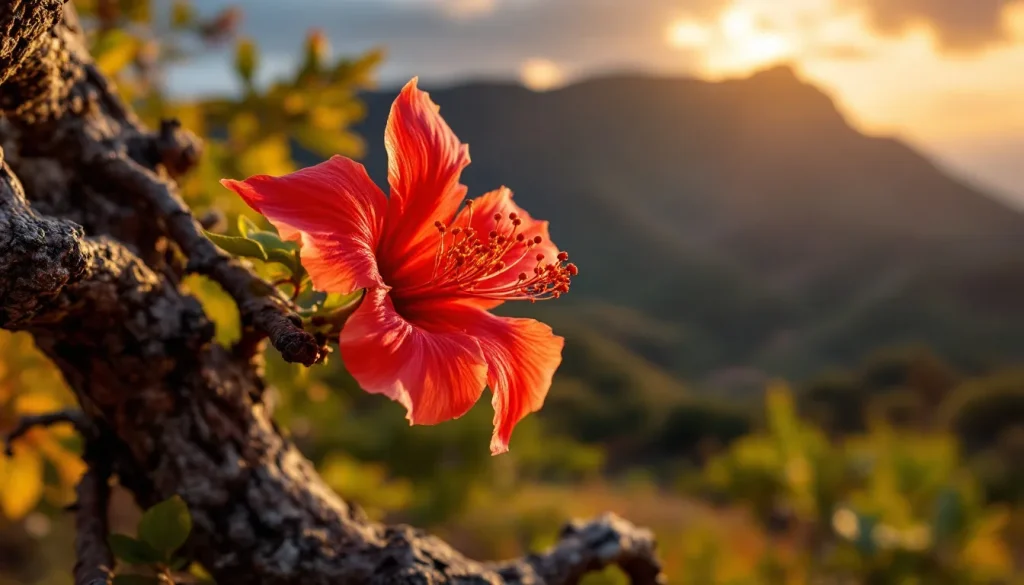
Most cultivated hibiscus you see in resorts and yards are also introduced hybrids, not the native species. Hawaii has around seven native hibiscus, but the large red and pink landscape hibiscus are usually imported ornamentals or crosses. That gap between “hibiscus in Hawaii” and “native Hawaiian hibiscus” trips up almost everyone.
Pikake, plumeria, and common gardenia matter culturally because they became the backbone of the modern lei trade. Their story is one of introduction and adoption, similar to how many popular annual flowers carry layered meanings far from their original homelands. Cultural significance and botanical nativeness are two different things.
Which native Hawaiian flowers are endangered
A large share of Hawaii’s native flowers are threatened or endangered, driven by habitat loss, invasive species, feral animals, and disease. The U.S. Fish and Wildlife Service lists over 400 Hawaiian plant taxa as threatened or endangered, more than any other state. Several flowers in this guide, including maʻo hau hele, naʻu, and koʻoloa ʻula, are federally protected.
Endangerment is the reason “native” is not a trivia label here. When you see a wild native, you are often looking at a species with a few dozen individuals left. Picking, transplanting, or disturbing these plants can be illegal and ecologically harmful.
| Flower | Status | Main threats |
|---|---|---|
| Maʻo hau hele | Endangered (endemic) | Habitat loss, invasive grasses, fire |
| Naʻu (Hawaiian gardenia) | Endangered (endemic) | Feral animals, habitat loss, low numbers |
| Koʻoloa ʻula | Endangered (endemic) | Dry-forest destruction, invasive plants |
| ʻŌhiʻa lehua | Common but threatened | Rapid ʻŌhiʻa Death fungal disease |
Where to see native Hawaiian flowers in the wild
Native Hawaiian flowers survive mainly at higher elevations and in protected areas, since lowlands are dominated by introduced species. The most reliable places are national parks, native-focused botanical gardens, and upland trails. Guided access protects fragile plants, so stay on trails and clean your boots to avoid spreading ROD.
- Hawaiʻi Volcanoes National Park (Hawaiʻi Island): ʻōhiʻa lehua along Crater Rim and Devastation trails, often on young lava.
- National Tropical Botanical Garden (Kauaʻi): conservation collections of endangered natives, including gardenia relatives.
- Waimea Valley (Oʻahu): curated native and Polynesian plant collections with labeled specimens.
- Maui Nui Botanical Gardens (Maui): focused on Hawaiian and Polynesian plants, a good place to see maʻo hau hele.
- High-elevation trails (Haleakalā, Kōkeʻe): native shrubland where introduced species thin out.
Gardeners who want natives should buy from nurseries that propagate them ethically rather than collect wild plants. The habit of matching a plant to its true place and conditions is the same discipline behind understanding any species, from a backyard dandelion to a stubborn patch of clover in a lawn. Right plant, right place, and honest labels all matter.
Frequently Asked Questions
What flowers are native to Hawaii?
Truly native Hawaiian flowers include ʻōhiʻa lehua, maʻo hau hele (yellow hibiscus), naʻu (Hawaiian gardenia), koʻoloa ʻula, and ʻilima. Hawaii has roughly 1,400 native plant species, most found nowhere else. Popular tropicals like plumeria, anthurium, and bird of paradise are introduced, not native, even though visitors strongly associate them with the islands.
What is Hawaii’s state flower?
Hawaii’s official state flower is the maʻo hau hele, a yellow native hibiscus (Hibiscus brackenridgei), designated in 1988. It is endemic, meaning it grows naturally nowhere else on Earth. It is also federally endangered, with very few wild individuals remaining, so most people only see it in botanical gardens and conservation plantings rather than in the wild.
Is the hibiscus native to Hawaii?
Some hibiscus are native to Hawaii and some are not. Hawaii has about seven native hibiscus species, including the endemic yellow state flower maʻo hau hele. However, most large red and pink hibiscus in resorts and yards are introduced ornamentals or hybrids. So “hibiscus in Hawaii” and “native Hawaiian hibiscus” are not the same thing.
Is plumeria (and are bird of paradise and anthurium) native to Hawaii?
No. Plumeria comes from Central America and the Caribbean, bird of paradise from South Africa, and anthurium from South America (Colombia and Ecuador). All three were introduced to Hawaii as ornamentals and are now iconic in leis and gardens. They are culturally important but botanically introduced, not native, and not endemic to the islands.
What is the difference between endemic and indigenous Hawaiian plants?
Endemic plants evolved in Hawaii and grow naturally nowhere else, such as ʻōhiʻa lehua. Indigenous plants arrived without human help but also grow elsewhere, such as ʻilima. Both count as truly native. Introduced plants, including canoe plants brought by Polynesians and modern nursery imports, are not native even when they are old and culturally significant.
What is the ʻōhiʻa lehua flower?
ʻŌhiʻa lehua is Hawaii’s iconic endemic tree flower, a red pom-pom of fine stamens on a hardy tree that often colonizes fresh lava. It anchors native forests and appears in Hawaiian legend tied to Pele. It is currently threatened by Rapid ʻŌhiʻa Death, a fungal disease that has killed over a million trees on Hawaiʻi Island since 2014.
Which native Hawaiian flowers are endangered?
Many are. Federally endangered native flowers include maʻo hau hele (yellow hibiscus state flower), naʻu (Hawaiian gardenia), and koʻoloa ʻula. Hawaii has over 400 threatened or endangered plant taxa, more than any other U.S. state. ʻŌhiʻa lehua is common but threatened by disease. Never pick or transplant native flowers, since many have only a few dozen wild individuals.
Where can I see native Hawaiian flowers in the wild?
Native flowers survive mainly at higher elevations and in protected areas. Reliable spots include Hawaiʻi Volcanoes National Park for ʻōhiʻa lehua, the National Tropical Botanical Garden on Kauaʻi, Waimea Valley on Oʻahu, and Maui Nui Botanical Gardens for maʻo hau hele. Stay on trails, clean your boots to avoid spreading disease, and never pick native plants.