
Dandelion Flowers: ID, Edibility, and Keep or Remove
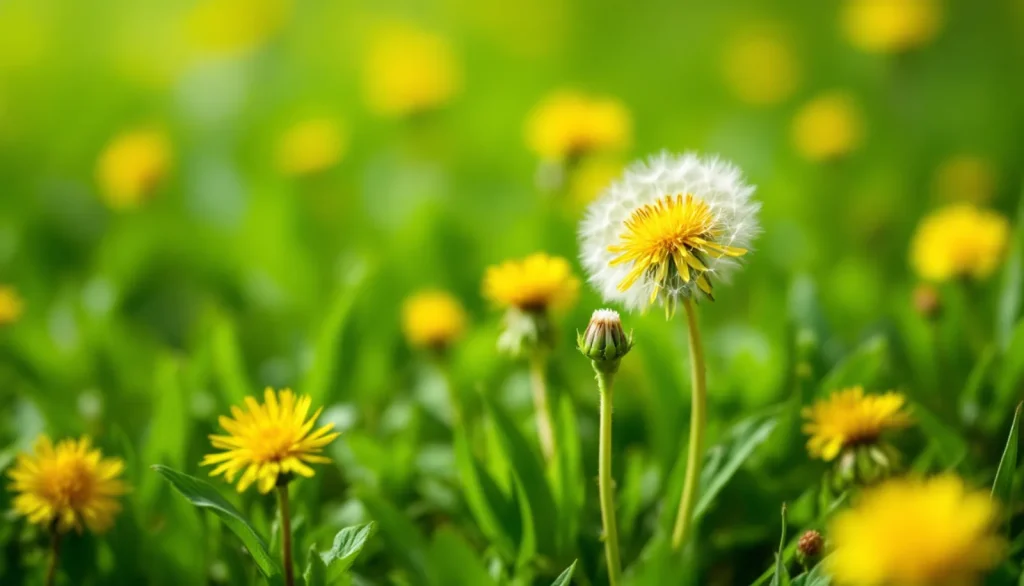
Dandelion flowers are the bright yellow blooms of Taraxacum officinale, a perennial in the daisy family (Asteraceae) that opens in early spring and is one of the first nectar sources for bees each year. Each yellow head is not a single flower but a packed cluster of many tiny florets, which is why one head can ripen into a round white seed head about a week or two later. This guide covers what the flower actually is, how to tell a true dandelion from its lookalikes, which parts are safe to eat and when, and how to decide whether to keep or remove the ones in your lawn.
What is a dandelion flower?
A dandelion flower is a composite flower head: dozens of small ray florets fused into one yellow disc on a smooth, hollow, leafless stalk. The plant is Taraxacum officinale, native to Eurasia and naturalized across the Northern Hemisphere through USDA Zone 3, per University of Wisconsin Horticulture. The name comes from the French dent de lion, “lion’s tooth,” for the jagged leaf edges.
Break the stem and it bleeds a white, milky latex sap. That sap is one of the fastest field tests for a true dandelion. The flowers open in daytime and close at night, then convert to the familiar seed head, where each seed carries a feathery pappus parachute for wind dispersal.
Reproduction is mostly asexual. Many Taraxacum plants set seed by apomixis, producing seeds without pollination, so offspring are genetic clones of the parent. That is part of why a single plant spreads so efficiently and why hand control has to remove the whole root, not just the top.
Dandelion vs cat’s-ear: how to tell true from false
The most common dandelion lookalike is cat’s-ear (Hypochaeris radicata), also called false dandelion or flatweed. The fastest tells: a true dandelion has one flower per smooth, hollow, unbranched stalk with milky sap, while cat’s-ear has a forked, solid, often branching stem carrying several blooms and hairy leaves. Use the table below before you forage or treat.
| Feature | True dandelion (Taraxacum officinale) | Cat’s-ear / false dandelion (Hypochaeris radicata) |
|---|---|---|
| Stem | Hollow, smooth, unbranched, one flower per stalk | Solid, often forked or branched, several flowers per stalk |
| Sap | Milky white latex when broken | Milky sap present but stems are wiry and solid |
| Leaves | Smooth, hairless, narrow, deeply jagged (“lion’s tooth”) | Broader, lobed, covered in coarse hairs |
| Blooms per stem | Always one | Usually several |
| Note | Edible, classic spring nectar source | Edible but linked to stringhalt lameness in grazing horses (Montana State Extension) |
Other yellow-flowered lookalikes include hawksbeard and Carolina false dandelion, which also branch and carry multiple heads. If the stalk branches or feels solid, it is not a true dandelion.
Are dandelion flowers edible?
Yes. The flowers, leaves, and roots of Taraxacum officinale are all edible, and the flower is the part most people overlook. Michigan State University Extension lists the open yellow heads for fritters, pancakes, cookies, quick bread, and wine. Harvest plump, fully open heads and pull off the bitter green base before cooking. The hollow flower stem itself is too bitter to use because of the milky sap.
Timing matters by part. Leaves are best picked young and tender before the plant flowers, since older leaves turn bitter. Flowers are sweetest fully open and bright in early spring. Roots are typically dug in fall, then dried and roasted as a caffeine-free coffee substitute, per MSU Extension.
On nutrition, the leaves carry roughly twice the iron of spinach and a single serving can supply around 500 percent of the daily value for vitamin K, along with vitamins A and C, per MSU Extension. That nutrient load is why dandelion greens show up in salads and sauteed dishes well beyond foraging circles.
One safety rule before you eat any of it
Never eat dandelions from a treated lawn. MSU Extension is explicit: harvest only from areas not treated with herbicides, pesticides, or fertilizers, and avoid roadsides, pet areas, and high-traffic ground. This is the single warning most “dandelion recipe” pages skip. If your yard gets a broadleaf weed treatment, the dandelions in it are not food. Wash every part before use.
Why pollinators rely on dandelion flowers
Dandelion flowers are one of the earliest and most abundant spring nectar sources for bees and other pollinators, because they bloom before most garden plants. University of Wisconsin Horticulture and multiple extension programs note this early-season value, which is the main reason many homeowners now leave some dandelions standing rather than spraying every one.
That ecological role drives the real decision most readers face: keep them for pollinators, or remove them from a manicured lawn. The honest answer is that it depends on your goals, your lawn density, and whether anyone in the household has a pollen sensitivity. The next section lays out both paths.
Keep them or remove them? A decision guide
Whether to keep or remove dandelion flowers depends on three things: pollinator value, lawn appearance standards, and whether you plan to forage. There is no single right answer, so match the approach to your priority. The table compares the realistic options and what each one costs you in effort or trade-offs.
| Goal | Best approach | Trade-off |
|---|---|---|
| Support early pollinators | Leave dandelions in low-visibility zones; mow high (3 to 4 inches) | Lawn looks less uniform; seeds spread |
| Edible harvest | Keep an untreated patch; harvest flowers and young leaves in spring | Must skip all herbicide on that area |
| Clean, uniform turf | Hand-pull the full taproot or spot-treat with a selective broadleaf herbicide | Labor, or chemical use near pollinators |
| Long-term prevention | Thicken the lawn through proper feeding and overseeding so turf outcompetes weeds | Slower, season-long effort |
A balanced middle path works for most yards: tolerate dandelions in side or back areas where they feed pollinators, and keep the front lawn tidy by hand-pulling or spot-treating. Our guide to drought-tolerant lawn alternatives covers low-mow and no-lawn options that sidestep the whole debate.
How to remove dandelions the right way
To remove dandelions for good, you have to get the entire taproot, which can run 6 to 12 inches deep and occasionally far deeper. A one-inch fragment of root left behind can regrow a whole new plant, so a clean full-root pull or a properly timed selective herbicide beats casual yanking. Follow this order:
- Water the area first so the soil releases the long taproot instead of snapping it.
- Use a dandelion fork or weed knife and lift the entire root, ideally before the flower goes to seed.
- For larger infestations, spot-treat with a selective broadleaf herbicide containing 2,4-D, dicamba, or MCPP, which targets dandelions without killing turf (University of Wisconsin Horticulture). Glyphosate is not the tool here: it is non-selective and will kill the surrounding grass.
- Apply in early fall when the plant moves nutrients down into the root for winter, which carries herbicide to the root and improves kill rate.
- Reseed thin spots and feed the lawn so dense turf crowds out new seedlings.
Prevention beats removal. Dandelions mainly invade lawns that are thin or stressed. A dense, well-fed lawn mowed at 3 to 4 inches resists them, so a seasonal feeding plan does more long-term than any single spray. See our year-round grass maintenance schedule and fertilizer choices by grass type to build that density.
Dandelion flower at a glance
Quick reference for the facts people ask most about dandelion flowers, all drawn from the verified specifics above. Use it as a cheat sheet before you forage, identify, or treat.
- Species: Taraxacum officinale, family Asteraceae, hardy through USDA Zone 3.
- Flower: a composite head of many tiny florets on a hollow, milky-sapped stalk; opens by day, closes at night.
- Seed head: forms a week or two after bloom; each seed has a pappus parachute for wind dispersal.
- Edible parts: flowers, young leaves, and roots, but only from untreated ground.
- Taproot: commonly 6 to 12 inches; a 1-inch fragment can regrow the plant.
- Control: hand-pull the full root or use a selective broadleaf herbicide (2,4-D, dicamba, MCPP); glyphosate kills surrounding turf.
For broader weed strategy and turf density, our pillar coverage on the lawn care learn hub and diagnosing common lawn problems ties dandelion control into a full-season program.
Last reviewed: June 2026
HMNDP Editorial Team, reviewed by HMNDP turf and horticulture editors.
Frequently asked questions
Are dandelion flowers edible?
Yes. The flowers, young leaves, and roots of Taraxacum officinale are all edible, per Michigan State University Extension. Open yellow heads go into fritters, pancakes, and wine once you remove the bitter green base. Leaves are best young, before flowering. Only harvest from ground that has not been treated with herbicides, pesticides, or fertilizers.
How do you tell a dandelion from a false dandelion?
A true dandelion has one flower per smooth, hollow, unbranched stalk with milky sap and hairless, jagged leaves. Cat’s-ear, or false dandelion (Hypochaeris radicata), has a solid, often forked stem carrying several blooms and hairy, lobed leaves. If the stalk branches or feels solid, it is not a true dandelion.
Are dandelion flowers good for bees?
Yes. Dandelion flowers are one of the earliest and most abundant spring nectar sources for bees and other pollinators, because they bloom before most garden plants, per University of Wisconsin Horticulture. That early-season value is why many homeowners now leave some dandelions standing in low-visibility lawn areas rather than spraying every one.
Why do dandelion flowers turn into puffballs?
A week or two after blooming, each dandelion flower head converts into a round white seed head. The head is actually many tiny florets, and each ripens into a seed carrying a feathery pappus parachute. Wind then disperses the seeds. Because many dandelions set seed asexually by apomixis, the offspring are genetic clones of the parent plant.
How do I get rid of dandelions without killing my grass?
Hand-pull the entire taproot after watering, since a one-inch root fragment can regrow. For larger patches, spot-treat with a selective broadleaf herbicide containing 2,4-D, dicamba, or MCPP, which targets dandelions but spares turf, per University of Wisconsin Horticulture. Avoid glyphosate, which is non-selective and kills the surrounding grass too.
Can you eat dandelions from your lawn?
Only if the lawn is untreated. MSU Extension warns to harvest dandelions exclusively from areas not treated with herbicides, pesticides, or fertilizers, and to avoid roadsides, pet zones, and high-traffic ground. If your yard gets any broadleaf weed treatment, the dandelions in it are not safe food. Always wash every part before eating.
What is a dandelion flower made of?
A dandelion flower is a composite head: many small ray florets fused into one yellow disc on a smooth, hollow, leafless stalk. Break the stem and it bleeds white, milky latex sap, a reliable field test for a true dandelion. The heads open in daytime and close at night before forming a seed head.