
Karl Foerster Grass: Care, Zones, and Cut-Back Timing
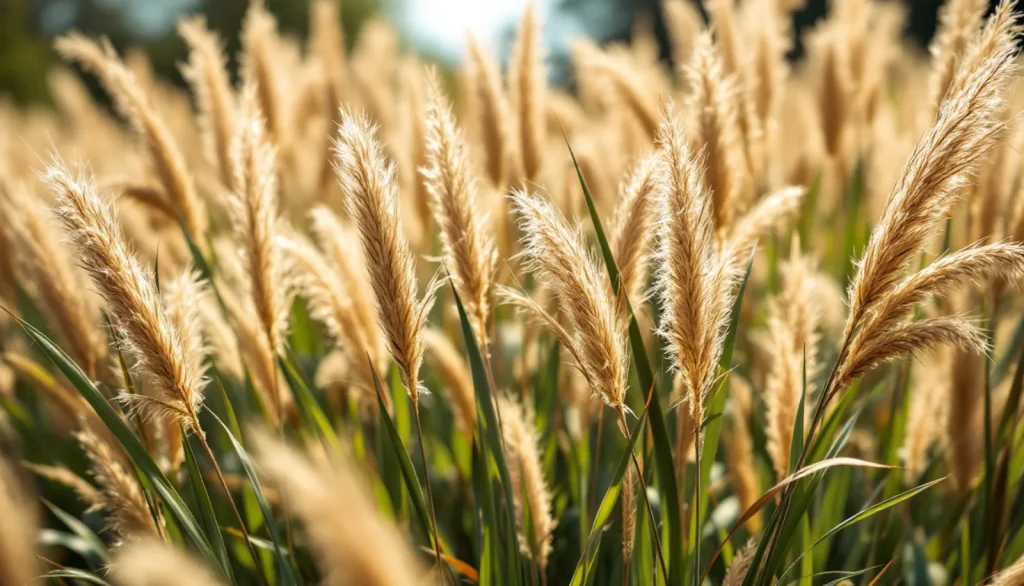
Karl Foerster grass (Calamagrostis x acutiflora ‘Karl Foerster’) is an upright, clump-forming ornamental grass hardy in USDA zones 4 to 9, growing 2 to 3 feet of foliage topped by feathery flower stems that reach 5 to 6 feet by early summer. It earned 2001 Perennial Plant of the Year from the Perennial Plant Association. The reason it shows up in so many designs: it is a sterile hybrid, so it never reseeds and never becomes a weed, and it holds a strict vertical column from June through winter without flopping.
What is Karl Foerster grass and is it invasive?
Karl Foerster grass is a sterile hybrid cool-season grass, so it is not invasive and will not self-seed anywhere in North America. It is a cross between Calamagrostis epigejos and Calamagrostis arundinacea, discovered in the Hamburg Botanical Garden and named by German nurseryman Karl Foerster. Its seeds are nonviable, which is the whole point.
This matters because one parent, Calamagrostis epigejos (bushgrass), is an aggressive spreader flagged as a problem species in parts of the Upper Midwest and Northeast. The hybrid inherited the upright form without the fertility. It spreads only by slow rhizome expansion, widening its own clump by an inch or two a year, and it stays where you plant it.
That sterility is why university programs recommend it as a safe substitute when a gardener wants a tall vertical grass but lives somewhere that bans or discourages self-seeding ornamentals like miscanthus. The University of Wisconsin-Madison Horticulture program lists it as well-behaved and non-aggressive.
What hardiness zone is Karl Foerster grass, really?
Karl Foerster grass is reliably hardy in USDA zones 4 to 9, and it survives zone 3 in many sites with good snow cover or mulch. Published ranges disagree because vendors and extensions test it under different conditions, so the table below shows what each major source actually reports.
| Source | Hardiness range cited | Notes |
|---|---|---|
| Proven Winners | Zones 5 to 11b | Conservative cold floor, wide heat ceiling |
| Gardening Know How | Zones 5 to 9 | Standard nursery range |
| University of Wisconsin Horticulture | Zones 3 to 9 | Cold-climate extension trial |
| Practical planting recommendation | Zones 4 to 9 | Safe in zone 3 with snow cover or winter mulch |
The practical read: if you garden in zone 4 or warmer, plant it without hesitation. In zone 3, site it where snow collects or apply a few inches of mulch over the crown after the ground freezes. Above zone 9 it can struggle with heat and humidity over a long summer, and rust pressure climbs.
How much sun and what soil does it need?
Karl Foerster grass grows best in full sun (6 or more hours) but tolerates partial shade, and it accepts moist, well-drained, fertile soil while handling clay better than most ornamental grasses. In too much shade the flower stems lean and the column loses its signature stiffness. It also performs in low spots that collect water, near ponds, and in heavy clay.
Soil pH is not a major constraint; it grows across a wide range. Once established it tolerates drought, but unlike warm-season grasses it prefers consistent moisture and will look fuller through summer if it does not dry out completely. New plantings need regular water through the first full season to root in.
If you are matching grasses to a tough spot, our guide to growing grass in shade, slopes, and compacted soil covers where this one fits and where it does not. For feeding, a light spring application is plenty; see the NPK fertilizer guide for ratios, since this grass needs far less than a lawn.
When do you cut back Karl Foerster grass?
Cut Karl Foerster grass back to 4 to 6 inches in late winter or very early spring, before new green growth emerges. Because it is a cool-season grass, it breaks dormancy early, so waiting until mid-spring means cutting into fresh blades. Leave the golden plumes standing all winter for structure and bird cover, then cut in the dormant window.
The timing trips people up because most ornamental grasses are warm-season and can wait until April. This one starts moving in late February or March in much of the country. The clean rule: cut after the coldest weeks pass but before you see new growth at the base.
- Wait until late winter, after the worst cold, while the clump is still fully dormant and tan.
- Gather the stems into a loose bundle with twine or a bungee for a clean cut and easy cleanup.
- Cut the whole clump to 4 to 6 inches above the crown with hedge shears or a string trimmer.
- Clear the debris so new shoots get light and air, which lowers rust risk.
- Do not cut in fall; the standing plumes are the winter feature and protect the crown.
How do you divide and propagate it?
Divide Karl Foerster grass every 3 years in spring or early fall to keep the center vigorous, since the only way to propagate it is by division. Its seeds are sterile, so there are no seedlings and no seed-starting option. When the middle of an old clump dies out and the growth forms a ring, it is time to split.
Lift the clump with a spade, cut it into sections each holding healthy roots and shoots, and replant at the original depth. Early spring, just as growth resumes, is the easiest time because the plant recovers fast. Space new divisions and new plants 18 to 24 inches apart for a mass planting, wider if you want each clump to read as a specimen.
Karl Foerster vs the variegated cultivars
Karl Foerster is the tallest and most upright of the feather reed grasses at 5 to 6 feet in flower, while its variegated siblings ‘Overdam’ and ‘Avalanche’ trade some height for striped foliage. Choose Karl Foerster for vertical structure and screening, and the variegated types for foliage color in smaller spaces.
| Cultivar | Flower height | Foliage | Best use |
|---|---|---|---|
| ‘Karl Foerster’ | 5 to 6 ft | Solid green | Vertical accent, screening, mass plantings, erosion control |
| ‘Overdam’ | 40 to 45 in | Green center, white margins | Brighter, shorter clump for mid-border |
| ‘Avalanche’ | 45 to 55 in | White center, green margins | Reverse variegation, refined or partly shaded spots |
All three are sterile and non-invasive and take the same care. The variegated cultivars run slightly shorter and can show marginally better rust resistance in wet regions, so in the coastal Pacific Northwest they are sometimes the safer pick. For solid vertical mass, nothing in this group beats the straight Karl Foerster.
Common problems: rust, flopping, and slow first year
The two real issues are rust in wet seasons and a slow first year, both manageable. Rust is a foliar fungal disease that appears in extended rain or where air circulation is poor, showing as orange pustules on the blades. Space plants for airflow, avoid overhead watering, and remove infected foliage, since rust cannot be cured once present.
Flopping is almost always a light problem. In full sun the column stays rigid; in shade the stems lean. If an established clump opens up in the center, that is age, and it signals time to divide rather than a disease.
The slow first year is normal. Like most perennials, Karl Foerster spends year one building roots and may look modest, then fills to full height in year two. It is deer resistant, has no serious pests, and lives for many years with little input. For seasonal timing on this and other perennials, see our year-round grass maintenance schedule.
Where to plant it in the landscape
Use Karl Foerster grass as a vertical accent, a soft seasonal screen, a mass planting, or for erosion control on slopes, planted 18 to 24 inches apart. Its narrow, columnar habit fits tight spaces where wider grasses would crowd a bed, and the winter plumes carry interest through the dead months. It pairs well with coneflower, sedum, salvia, and black-eyed Susan.
For slope and runoff work, the dense rhizome mat holds soil, which is why it shows up in rain garden and bioswale plantings. If you are managing runoff, our walkthrough on building a backyard rain garden covers where structural grasses like this belong in the planting plan.
Last reviewed: June 2026
HMNDP Editorial Team, reviewed by HMNDP turf and horticulture editors.
Frequently asked questions
Is Karl Foerster grass invasive?
No. Karl Foerster grass is a sterile hybrid of Calamagrostis epigejos and C. arundinacea, so it produces nonviable seeds and never self-seeds. It spreads only by slow rhizome expansion, widening its own clump an inch or two a year. University programs recommend it as a safe, well-behaved alternative to self-seeding ornamental grasses.
What hardiness zone is Karl Foerster grass?
Karl Foerster grass is reliably hardy in USDA zones 4 to 9, and survives zone 3 with good snow cover or winter mulch. Published ranges vary: Proven Winners cites zones 5 to 11b, Gardening Know How lists 5 to 9, and the University of Wisconsin reports 3 to 9. Zones 4 through 9 is the safe planting window.
When do you cut back Karl Foerster grass?
Cut it back to 4 to 6 inches in late winter or very early spring, before new green growth appears. Because it is a cool-season grass, it breaks dormancy early, so waiting until mid-spring risks cutting into fresh blades. Leave the golden plumes standing all winter for structure and bird cover, then cut in the dormant window.
How tall does Karl Foerster grass get?
Karl Foerster grass forms a foliage clump 2 to 3 feet tall, with feathery flower stems that reach 5 to 6 feet by early summer. The width stays under 2 to 3 feet, giving it a narrow, upright, columnar habit. That strict vertical form is why it suits tight spaces and screening where wider grasses would crowd a bed.
Does Karl Foerster grass need full sun?
It grows best in full sun with 6 or more hours, but tolerates partial shade. In too much shade the flower stems lean and the plant loses its rigid column. It accepts moist, well-drained, fertile soil, handles clay better than most grasses, and even performs in low spots that collect water or sites near ponds.
How do you divide Karl Foerster grass?
Divide it every 3 years in spring or early fall, since the sterile seeds mean division is the only way to propagate it. Lift the clump with a spade, cut it into sections each holding healthy roots and shoots, and replant at the original depth. Early spring, as growth resumes, gives the fastest recovery.
What is the difference between Karl Foerster, Overdam, and Avalanche?
Karl Foerster is the tallest at 5 to 6 feet with solid green foliage, best for vertical structure and screening. Overdam grows 40 to 45 inches with green centers and white margins. Avalanche reaches 45 to 55 inches with white centers and green margins. All three are sterile, non-invasive, and take identical care.
Why is my Karl Foerster grass flopping or getting rust?
Flopping is almost always a light problem; in full sun the column stays rigid, in shade it leans. An open center on an old clump means it is time to divide. Rust, an orange foliar fungus, appears in wet seasons or poor airflow. Space plants for circulation, avoid overhead watering, and remove infected blades.