
By the HMNDP Editorial Team, independent reporting on lawn care, landscaping, and water.
Last reviewed: June 2026
How often to water tomatoes: the short answer
How often to water tomatoes depends on three things: whether the plant is in a container or the ground, the air temperature, and the plant’s growth stage. In-ground tomatoes need deep watering 2 to 3 times per week. Containers need water once or twice a day in summer heat. The target is roughly 1 to 2 gallons per plant per week in mild weather, rising to 3 or more gallons in a heat wave.
The rest of this guide turns that into a decision you can make in ten seconds, then connects your schedule to the fruit problems (blossom-end rot, cracking) that inconsistent watering causes.
The tomato watering decision framework
Frequency is not a single number. It is the answer to three questions: container or ground, hot or mild, and young or fruiting. Read across the row that matches your plant and you have your schedule. Everything else in this guide is adjustment on top of this baseline.
| Setup | Mild weather (65 to 80°F) | Hot weather (85°F and up) | Volume target |
|---|---|---|---|
| In-ground bed | Deep soak 2x per week | Deep soak 3x per week | 1 to 2 gal/plant/week, up to 3+ in heat |
| Raised bed | 2 to 3x per week | Daily or every other day | 1.5 to 2.5 gal/plant/week |
| Container / pot (15+ gal) | Once daily | Once or twice daily | Until water runs from drainage holes |
| Grow bag / small pot (under 10 gal) | Once or twice daily | Twice daily, check midday | Until runoff, every session |
Then shift one step wetter for each of these: sandy soil, no mulch, windy or exposed site, or a plant heavy with fruit. Shift one step drier for clay soil, thick mulch, cool cloudy stretches, or a young seedling. This is the layer competitors leave out, and it is the single biggest real-world variable.
The “1 inch of water per week” rule and what it means in gallons
The garden rule of thumb is 1 inch of water per week, which for a tomato plant works out to roughly 1 to 2 gallons per week from rain plus irrigation combined. One inch of water over 1 square foot equals about 0.62 gallons, and a mature tomato’s root zone spans 1.5 to 3 square feet. That is where the 1 to 2 gallon figure comes from.
Measure rain with a cheap rain gauge and subtract it from your watering. If your area got 0.5 inch of rain, you owe the plant the other 0.5 inch. This keeps you from the two classic errors: watering on autopilot during a wet week, or ignoring a heat spike that doubles demand. The same “measure it, do not guess” logic drives lawn irrigation, which we cover in the best time to water grass.
How to deliver 1 inch: minutes on a drip line and gallons per plant
To deliver 1 inch (about 1 to 2 gallons per plant), match the method to a measurable output. A watering can or bucket is easiest: pour 1 to 2 gallons slowly at the base and stop. For drip and soaker systems, calculate run time from the emitter flow rate so you stop guessing at “long enough.”
| Method | Typical output | Run time for ~1.5 gal/plant |
|---|---|---|
| Watering can | 1 to 2 gal per fill | 1 slow fill at the base |
| Drip emitter (1 GPH) | 1 gallon per hour | About 90 minutes, 2x/week |
| Drip emitter (2 GPH) | 2 gallons per hour | About 45 minutes, 2x/week |
| Soaker hose (per foot) | ~0.5 gal per min per 10 ft | 15 to 20 min, then check depth |
| Garden hose (open) | ~5 to 10 gal per min | 10 to 20 seconds per plant |
Verify with a screwdriver or your finger: after watering, moisture should reach 6 to 8 inches deep. If it only wet the top 2 inches, water longer next time.
In-ground vs. raised bed vs. container watering
The container question is the one that changes everything. In-ground soil holds moisture and buffers temperature, so you water deeply and infrequently. Containers dry out fast, hold no reserve, and can need water twice a day in July. Raised beds sit between the two, draining faster than ground but holding more than a pot.
- In-ground: water 2 to 3 times per week, deeply. The surrounding soil acts as a reservoir the roots pull from between sessions.
- Raised bed: the loose mix drains quickly, so plan on 2 to 3 sessions weekly in mild weather and daily in heat.
- Container / pot: potting mix in a pot heats up and dries from all sides. Water once or twice daily in summer, always until water runs from the drainage holes.
Container growers should also size up. A 5-gallon pot dries out by midday in a heat wave, while a 15- to 20-gallon container or half wine barrel buys you a full day of buffer.
Why containers need water once or twice a day in heat
A tomato in a pot can need watering twice a day once temperatures pass 85°F because the limited soil volume holds only a few hours of reserve. Dark pots in direct sun heat the root zone and speed evaporation. A large, fruiting plant in a small pot can drink its container dry between breakfast and dinner.
Check pots by lifting or by pushing a finger 2 inches into the mix. If it is dry, water now, even if you watered this morning. Self-watering containers with a reservoir, and mulch on top of the potting mix, both cut this frequency roughly in half.
Deep, infrequent watering beats shallow, frequent watering
Deep, infrequent watering trains tomato roots to grow down toward reliable moisture, which makes plants far more resilient to heat and skipped days. Shallow, frequent sprinkles keep roots near the surface where soil dries fastest, producing weak, drought-prone plants. The rule: water less often but longer, aiming for moisture 6 to 8 inches deep each time.
This applies to in-ground and raised beds, where a reservoir of soil exists to hold the water. Containers are the exception: they have no deep reserve, so they genuinely need frequent watering. Even there, water fully until runoff rather than giving a light splash.
How to check soil moisture: the finger test
The finger test is the most reliable free tool for deciding whether to water tomatoes. Push a finger into the soil to the second knuckle, about 2 inches down. If that top inch or two is dry, water. If it is still moist, wait and check again in a day. This beats any fixed calendar because it reads actual conditions.
For a deeper read, push a wooden dowel or long screwdriver into the bed. It slides easily through moist soil and stops at dry soil, showing you how deep your last watering reached. Inexpensive moisture meters work too, but calibrate them against the finger test first.
Water at the base, keep the leaves dry
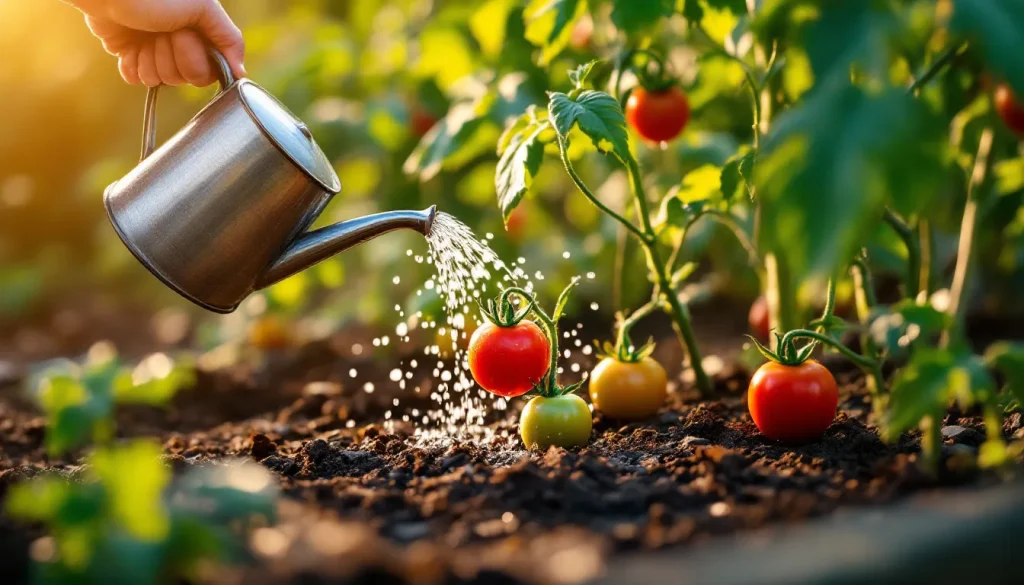
Always water tomatoes at the base, delivering water to the soil and roots rather than over the foliage. Wet leaves that sit overnight invite fungal diseases like early blight and septoria leaf spot, which spread through splashing water. Base watering with a can, drip line, or soaker hose keeps foliage dry and sends every drop to the roots.
If you must use an overhead sprinkler, run it in early morning so leaves dry within a few hours. A 2- to 3-inch mulch layer under the plant also stops soil-borne spores from splashing up onto lower leaves when you water.
Best time of day to water tomatoes
Early morning, ideally before 9 a.m., is the best time to water tomatoes. Cooler air means less evaporation, so more water reaches the roots, and any splashed foliage dries quickly as the day warms. Morning watering also sends the plant into the hottest hours fully hydrated, reducing afternoon wilt and heat stress.
Evening is the second choice and fine if mornings are impossible, but wet foliage overnight raises disease risk, so water the soil only. Avoid midday watering in full sun, when a large share evaporates before roots can use it. This morning-first logic mirrors turf irrigation, as we explain in our guide to watering grass.
Watering tomatoes by growth stage
Water needs change as a tomato matures. Seedlings need consistently moist (not soggy) soil for shallow young roots. Established, flowering, and fruiting plants need deeper, less frequent watering, with the highest total demand during fruit set and swell. Matching your schedule to the stage prevents both damping-off in seedlings and cracked fruit later.
| Stage | Goal | Approach |
|---|---|---|
| Seedling / transplant | Even moisture, no drying out | Light water daily or every other day until established (2 to 3 weeks) |
| Vegetative growth | Encourage deep roots | Deep watering 2 to 3x/week, let top inch dry between |
| Flowering | Steady, consistent moisture | Do not let soil swing wet-to-dry, which drops blossoms |
| Fruit set and swell | Highest, most consistent supply | 1.5 to 3+ gal/week, very even schedule to prevent cracking and rot |
| Ripening / end of season | Slightly reduce | Ease back to concentrate flavor and push ripening |
Watering in hot weather and summer heat
In hot weather above 85°F, tomato water demand climbs to 3 or more gallons per plant per week, and containers may need watering twice a day. Heat speeds transpiration and soil evaporation together, so a schedule that worked in June fails in a July heat wave. Add sessions rather than drowning the plant in one soaking.
Signs a plant needs more in heat include midday leaf curl or wilt that recovers by evening (mild stress) versus wilt that persists into the cool of morning (real drought). Mulch is your best defense: a 2- to 3-inch layer can cut watering frequency by 30 to 50 percent by holding soil moisture and lowering root-zone temperature.
Soil type and mulch: the biggest adjustment competitors skip
Soil type and mulch change your watering frequency more than almost any other factor, yet most guides ignore them. Sandy soil drains fast and needs more frequent, smaller waterings. Clay holds water long and needs less frequent, deeper sessions to avoid waterlogging. Mulch cuts total frequency across every soil type.
| Condition | Adjustment vs. baseline | Why |
|---|---|---|
| Sandy soil | Water 1.5x more often, less each time | Drains fast, holds little reserve |
| Loam | Follow the baseline table | Ideal balance of drainage and holding |
| Clay soil | Water less often, deeper, watch for waterlogging | Holds moisture long, drains slowly |
| 2 to 3 in. mulch (straw, wood chips) | Cut frequency 30 to 50% | Slows evaporation, cools root zone |
| No mulch, exposed | Increase frequency | Bare soil dries and heats fast |
If you improve soil each season with compost, watering frequency drops over time because organic matter raises the soil’s water-holding capacity. This is the same soil-first principle behind healthy turf establishment covered in the best time to plant grass seed.
Does inconsistent watering cause blossom-end rot and cracked tomatoes?
Yes. Inconsistent watering is the leading cause of both blossom-end rot and cracked or split fruit. Blossom-end rot (a sunken brown patch on the fruit bottom) is a calcium delivery failure driven by soil that swings dry-to-wet, not usually a calcium shortage in the soil. Cracking happens when a dry plant gets a sudden flood and the fruit swells faster than its skin can stretch.
The fix for both is a steady schedule, not a chemical. Calcium moves into fruit only when soil moisture stays even, so a plant that dries out then gets soaked cannot deliver calcium to developing fruit even in calcium-rich soil.
- Prevent blossom-end rot: water on a consistent schedule, never let soil fully dry, and mulch to buffer moisture swings. Most common on the first fruits of the season and in containers that dry out.
- Prevent cracking: avoid the boom-and-bust cycle of drought followed by heavy watering or heavy rain. Keep moisture even, especially as fruit ripens, and harvest ripe fruit before a big rainstorm.
If you take one thing from this guide, it is this: consistency prevents more tomato problems than volume does. A plant watered evenly at a modest amount outperforms one that lurches between drought and flood.
When to stop watering tomatoes at the end of the season
Many gardeners reduce or stop watering tomatoes in the final 1 to 2 weeks before harvest to concentrate flavor and push ripening. Mild, controlled water stress signals the plant to finish ripening fruit and pulls sugars into it, producing more intense taste. This end-of-season tactic is a top question that most ranking pages skip entirely.
Do this carefully. Ease back rather than cutting water off completely, because a hard drought can trigger cracking when the next rain hits or cause the plant to drop fruit. Watch the plant: light leaf curl is acceptable, but severe wilting or sunscald on exposed fruit means you cut too far.
At true season end, once you are ready to pull plants or a frost is coming, stop watering entirely and harvest all mature green fruit to ripen indoors. Timing garden tasks to the season is a recurring theme, from ripening tomatoes to choosing fall flowers to plant as summer winds down.
Signs of overwatering vs. underwatering tomatoes
Overwatered and underwatered tomatoes can both wilt, which confuses beginners. The tell is the soil and the leaves together. Underwatered plants have dry soil, crisp curling leaves, and wilt that worsens through the day. Overwatered plants have soggy soil, yellowing lower leaves, and a limp, sometimes mushy look even when the ground is wet.
| Symptom | Underwatering | Overwatering |
|---|---|---|
| Soil | Dry, cracked, pulls from pot edge | Soggy, waterlogged, smells sour |
| Leaves | Crisp, curled, dry edges, wilting | Yellowing (lower first), soft, drooping |
| Wilting pattern | Recovers overnight, worse midday | Persistent even in cool morning |
| Fruit | Small, blossom-end rot, cracks after rain | Bland, split, root-rot risk |
| Fix | Water deeper and more often, add mulch | Let soil dry, improve drainage, ease off |
When in doubt, do the finger test before reacting. Watering a plant that is already wilting from overwatering makes it worse, so confirm dry soil first.
Frequently Asked Questions
How often should I water tomatoes in pots or containers?
Water potted tomatoes once daily in mild weather and once or twice daily in summer heat above 85°F, always until water runs from the drainage holes. Containers hold only a few hours of moisture reserve, so a large fruiting plant in a small pot can drink it dry in a day. Use a 15-gallon or larger pot and mulch the surface to roughly halve how often you water.
How often should I water tomatoes in hot weather?
In hot weather above 85°F, water in-ground tomatoes deeply 3 times per week and containers once or twice daily. Total demand rises to 3 or more gallons per plant per week because heat speeds both transpiration and evaporation. Add extra sessions rather than one huge soaking, and lay 2 to 3 inches of mulch, which can cut watering frequency by 30 to 50 percent.
How much water does a tomato plant need per week?
A tomato plant needs roughly 1 to 2 gallons of water per week in mild weather, counting rain plus irrigation, which matches the 1 inch per week garden rule. In hot weather that climbs to 3 or more gallons per plant. Measure rainfall with a rain gauge and subtract it, and adjust up for sandy soil or containers and down for clay soil or heavy mulch.
How do I know if I’m overwatering or underwatering my tomatoes?
Check the soil and leaves together. Underwatered plants have dry soil, crisp curling leaves, and wilt that recovers overnight but worsens midday. Overwatered plants have soggy soil, yellowing lower leaves, and limp growth that stays wilted even in the cool morning. Do the finger test 2 inches down before reacting, since watering an already-overwatered plant makes the problem worse.
Should I water tomatoes every day?
Only containers and grow bags usually need daily watering, and often twice daily in heat. In-ground and raised-bed tomatoes do better with deep watering 2 to 3 times per week, because infrequent deep soaking trains roots to grow down and makes plants more drought-resilient. Daily shallow sprinkles on in-ground plants keep roots near the surface and weaken them. Let the finger test decide.
When should I stop watering tomatoes at the end of the season?
Ease back on water in the final 1 to 2 weeks before harvest to concentrate flavor and push ripening, but reduce gradually rather than cutting off completely, since hard drought can crack or drop fruit. At true season end, when frost approaches or you are pulling plants, stop watering entirely and harvest mature green fruit to ripen indoors.
Is it better to water tomatoes in the morning or evening?
Morning, ideally before 9 a.m., is better. Cooler air means less evaporation, so more water reaches the roots, and any splashed leaves dry quickly, lowering disease risk. Morning watering also sends the plant into the hottest hours fully hydrated. Evening works if mornings are impossible, but water the soil only, since wet foliage sitting overnight invites fungal disease.
Does inconsistent watering cause blossom-end rot and cracked tomatoes?
Yes. Inconsistent watering is the leading cause of both. Blossom-end rot is a calcium delivery failure triggered when soil swings dry-to-wet, not usually a soil calcium shortage. Cracking happens when a dry plant suddenly floods and fruit swells faster than the skin can stretch. The fix for both is a steady, even watering schedule plus mulch to buffer moisture, not a chemical treatment.