
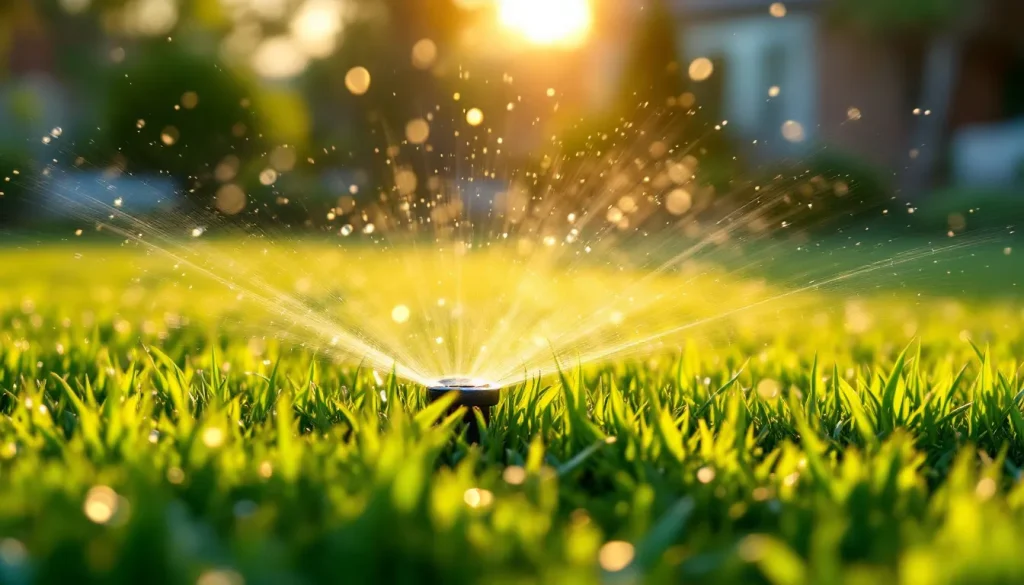
The short answer: water grass in the early morning, before 10 a.m.
The best time to water grass is early morning, roughly 4 a.m. to 9 a.m., and finished before 10 a.m. Cooler air and calmer wind mean less water evaporates, so more reaches the roots. Morning watering also lets blades dry by afternoon, which lowers the risk of fungal disease. The worst times are midday (peak evaporation) and after dark (wet blades overnight invite fungus).
By HMNDP Editorial Team, independent lawn-care reporting.
Last reviewed: June 2026.
That single rule covers most lawns most of the year. But the right answer shifts with the season and the type of grass you grow. The sections below give you the morning rule, then the parts other guides leave out: a seasonal schedule and a cool-season versus warm-season breakdown.
Why early morning is the best time to water your lawn
Early morning works because of evaporation. Between 4 a.m. and 9 a.m., air temperatures are at their lowest, wind is usually light, and the sun is low or just rising. Under those conditions, far less water turns to vapor before it soaks in, so a larger share reaches the root zone. Water applied at this hour also dries off the grass blades by midday.
Evaporation is the core mechanism behind every timing rule on this page. When you water at noon in 90 F heat with a breeze, a large portion can evaporate from the soil surface and from leaf blades before roots ever use it. Morning watering sidesteps that loss.
The 10 a.m. cutoff is a practical threshold, not a magic number. In most U.S. regions, soil and air temperatures climb sharply after mid-morning, and relative humidity drops. Once the surface is hot and dry, evaporation accelerates. Finishing before 10 a.m. keeps your watering on the efficient side of that curve.
The worst times to water grass: midday and after dark
The two worst times to water grass are midday and night. Midday watering (roughly 11 a.m. to 3 p.m.) wastes water to evaporation when heat and sun peak. Night watering leaves blades wet for hours, and standing moisture overnight is the leading condition for lawn fungal diseases like dollar spot, brown patch, and pythium.
Watering at night promotes disease because grass blades stay wet through the cool, dark hours when fungal spores spread fastest. Healthy lawns shrug off brief wetness, but repeated overnight soaking creates the warm, humid microclimate that fungus needs. If you struggle with patchy disease, check your watering clock first.
Persistent moisture also feeds other problems. Damp, shaded turf is more prone to moss, which is why our guide on how to get rid of moss in a lawn starts with drainage and watering habits before any chemical treatment.
The late-afternoon exception
If you cannot water in the morning, the second-best window is late afternoon, about 4 p.m. to 6 p.m. The goal is to finish early enough that blades dry before sunset. In hot, low-humidity climates this window is fairly safe. In humid regions or cool evenings, push it earlier so the lawn is not wet at dark. Treat afternoon as a backup, not a routine.
Best time to water grass in summer (the seasonal gap nobody fills)
Summer demands more water and tighter timing. In peak heat, most lawns need watering 2 to 3 times per week, and in extreme heat (sustained highs above 90 F) cool-season grass may need a deep soak 3 times weekly. Always water early morning in summer. The morning rule matters most when afternoon evaporation is highest. Total target stays near 1 to 1.5 inches per week including rain.
Other guides stop at “morning.” They skip what actually changes through the year. Watering needs are not fixed. They rise and fall with temperature, daylight, and grass growth. Here is the full-season schedule most articles omit.
| Season | Watering frequency | Notes |
|---|---|---|
| Spring (Mar to May) | 1 time per week or less | Cool, often wet. Let rain do the work. Watering too early trains shallow roots. |
| Summer (Jun to Aug) | 2 to 3 times per week | Highest evaporation. Deep soaks, early morning only. Watch for heat stress. |
| Fall (Sep to Nov) | 1 time per week, tapering | Cooling temps reduce demand. Cool-season grass recovers and roots deepen. |
| Winter (Dec to Feb) | Little to none | Most grass is dormant. Water only during dry, above-freezing spells. |
Fall is also the season to pair watering with feeding. Cool-season lawns build their deepest roots in autumn, which is why timing your fall lawn fertilizer alongside steady moisture pays off the following spring.
Do I need to water my lawn in winter?
Most lawns need little or no watering in winter. Cool-season grasses slow dramatically, and warm-season grasses (Bermuda, Zoysia, St. Augustine) go fully dormant and brown. Dormant grass uses almost no water. The exception is a long, dry, snow-free stretch with temperatures above freezing, when an occasional deep watering protects roots from desiccation. Never water when freezing is forecast.
In northern states, frozen or snow-covered ground means you stop watering entirely until spring. In warm southern states, an unusually dry winter month may call for one deep soak every few weeks. The principle holds: dormant grass barely drinks, so resist the urge to run sprinklers on a mild January day out of habit.
Cool-season vs warm-season grass: timing and frequency differ
Grass type changes both how often and how much you water. Cool-season grasses (tall fescue, Kentucky bluegrass, perennial ryegrass) grow fastest in spring and fall and struggle in summer heat, so they often need more frequent summer watering. Warm-season grasses (Bermuda, Zoysia, St. Augustine) thrive in summer heat, tolerate drought better, and need far less water in cool months when they go dormant.
This split is the single biggest accuracy gap in most “best time to water grass” articles. They treat all lawns the same. They are not the same. Match your schedule to your grass.
| Trait | Cool-season (fescue, bluegrass, rye) | Warm-season (Bermuda, Zoysia, St. Augustine) |
|---|---|---|
| Peak growth | Spring and fall, 60 to 75 F | Summer, 80 to 95 F |
| Summer watering | Higher demand, 2 to 3 times weekly | Moderate, deep but less frequent |
| Winter behavior | Slows, stays green, little water | Dormant and brown, almost no water |
| Drought tolerance | Lower | Higher |
| Best watering time | Early morning | Early morning |
Both grass families share the early-morning rule. What differs is volume and seasonal frequency. If you do not know your grass type, a regional extension office or the resources on our lawn-care learning hub can help you identify it.
How long and how often should I water my lawn?
Aim for 1 to 1.5 inches of water per week, including rainfall, delivered in 1 to 3 deep sessions rather than daily light sprinkles. Most sprinklers apply about 0.5 inch in 20 to 30 minutes, so 30 to 45 minutes per zone, two to three times weekly, hits the target for many lawns. Deep, infrequent watering drives roots down and builds drought resistance.
The “1 inch per week” rule is everywhere, but few guides tell you how to measure it. Here is the practical method.
The tuna-can (catch-cup) test
- Place 3 to 6 empty tuna cans or straight-sided cups around one sprinkler zone.
- Run the sprinklers for 15 minutes.
- Measure the water depth in each can with a ruler.
- Average the depths, then multiply to find minutes needed for 0.5 to 0.75 inch per session.
Example: if 15 minutes deposits 0.25 inch, then 30 minutes gives 0.5 inch. Watering twice a week at 30 minutes delivers roughly 1 inch. This test removes the guesswork and adjusts for your specific sprinkler and pressure.
Avoid frequent shallow watering. Daily 10-minute bursts wet only the top inch of soil, training roots to stay near the surface where they dry out fast. Fewer, deeper sessions force roots downward and make the lawn far more resilient in heat.
Signs of overwatering vs underwatering
Reading the lawn tells you whether your schedule is right. Underwatered grass turns bluish-gray, footprints linger because blades lack moisture to spring back, and soil feels hard and dry. Overwatered grass shows spongy soil, mushrooms, runoff, increased fungal patches, and shallow roots. Adjust by changing session length first, then frequency, before changing the time of day.
A simple field check: push a screwdriver into the soil after watering. If it slides in 6 inches easily, moisture reached the root zone. If it stops at 2 inches, you watered too lightly. If the ground is soupy hours later, you overwatered. Pair smart watering with the right feeding plan from our guide to the best fertilizer for grass to keep turf dense enough to crowd out weeds.
Frequently Asked Questions
What is the best time of day to water grass?
The best time to water grass is early morning, between about 4 a.m. and 9 a.m., finished before 10 a.m. Cooler temperatures and lighter wind reduce evaporation, so more water reaches the roots. Morning watering also lets blades dry during the day, which lowers the risk of fungal disease compared with evening or nighttime watering.
Why is early morning the best time to water your lawn?
Early morning is best because evaporation is lowest then. With cool air, calm wind, and a low sun, less water is lost to the air, so more soaks into the root zone. The lawn also dries before nightfall, which prevents the prolonged leaf wetness that encourages fungal diseases like brown patch and dollar spot.
What is the worst time to water grass?
Midday is the worst for waste because peak heat and sun evaporate much of the water before roots use it. Night is the worst for disease because blades stay wet for hours, creating ideal conditions for lawn fungus. If you must miss the morning, late afternoon (4 to 6 p.m.) is a safer backup than after dark.
Is it bad to water grass at night?
Yes, regular night watering is risky. Grass blades that stay wet through cool, dark hours create the humid microclimate that fungal diseases need to spread. Occasional night watering rarely causes harm, but routine evening soaking can lead to dollar spot, brown patch, and pythium. Water early morning instead so blades dry during the day.
How long should I water my lawn each time?
Most lawns need 30 to 45 minutes per zone to apply about 0.5 to 0.75 inch per session, but it varies by sprinkler. Use the tuna-can test: place cups in a zone, run sprinklers 15 minutes, measure depth, then calculate the minutes needed. Deep sessions a few times weekly beat short daily watering for root health.
How often should I water my grass?
Water 1 to 3 times per week, depending on season and grass type, aiming for 1 to 1.5 inches total including rain. Summer heat may require 2 to 3 sessions weekly, while spring and fall often need one or none. Deep, infrequent watering encourages deeper roots; avoid frequent shallow watering that keeps roots near the surface.
What is the best time to water grass in summer?
In summer, always water in the early morning before 10 a.m., when evaporation is lowest during the hottest season. Most lawns need 2 to 3 deep sessions per week in summer heat, and cool-season grasses may need more during sustained highs above 90 F. Keep the weekly total near 1 to 1.5 inches including any rainfall.
Do I need to water my lawn in winter?
Usually no. Cool-season grass slows and warm-season grass (Bermuda, Zoysia, St. Augustine) goes dormant and brown, using almost no water. Skip watering when the ground is frozen or snow-covered. The only exception is a long, dry, above-freezing spell, when one deep soak every few weeks can protect roots from drying out.