
By the HMNDP Editorial Team, independent reporting on lawn care, landscaping, water, and the green-industry business.
Last reviewed: June 2026
What terracotta watering spikes are
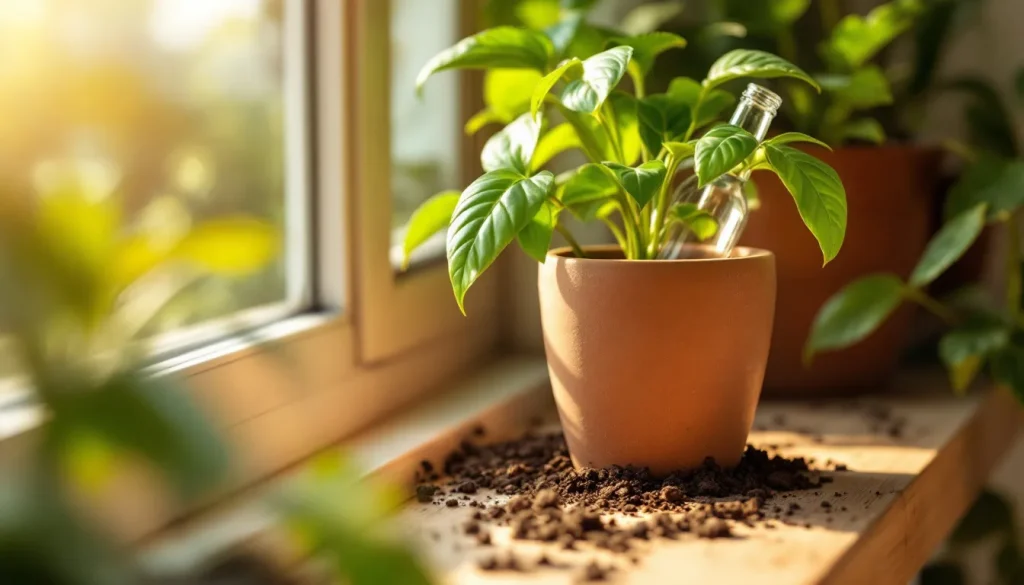
Terracotta watering spikes are unglazed clay stakes that turn an ordinary wine or plastic bottle into a slow, self-watering reservoir. You push the roughly 6-inch spike into the soil, fill a bottle with water, and invert it into the cup at the top of the spike. The porous terracotta wicks water into the surrounding soil so the root zone stays evenly moist for days.
The design has two parts: a hollow, cone-shaped clay body that sits in the pot and a wider cup or neck that grips the inverted bottle. Most are sold in multi-packs (common counts are 4, 10, and 12) and are marketed as beginner-friendly for indoor houseplants and outdoor garden beds alike.
The material matters. Terracotta is fired clay with thousands of microscopic pores. Those pores, not gravity or a valve, do the actual work of moving water into the soil.
How terracotta watering spikes actually work (the part product pages skip)
A terracotta watering spike works by soil moisture tension, not a constant drip. Water sits inside the clay wall held by surface tension in the micropores. When the surrounding soil dries, the dry soil pulls water through the clay by capillary action. When the soil is already wet, that pull disappears and flow nearly stops. The system is self-regulating: it releases more when the plant needs more.
This is the single most important thing to understand before buying. The spike does not empty on a timer. It responds to how thirsty the soil is, which is why it can keep moisture steady for days instead of flooding the pot at once.
It also explains the most common disappointment. If your potting mix is loose, sandy, or fast-draining, water passes through before the soil can build tension, so the bottle drains in a day. If the mix holds moisture (peat, coco coir, compost blends), the tension mechanism works as intended. For a broader look at how passive reservoirs regulate moisture, see our overview of automatic plant watering systems.
How to use terracotta watering spikes with a wine bottle
Using terracotta watering spikes with a wine bottle takes about two minutes. Pre-moisten the soil first, seat the spike, then invert a filled bottle into the cup. Skipping the pre-watering step is the top reason first-timers think the spikes failed.
- Water the plant normally and let it drain. Dry, hydrophobic soil will not wick, so the spike needs moist soil to start the tension pull.
- Push the terracotta spike into the soil until only the cup or neck shows, ideally 2 to 4 inches from the stem so it feeds the root zone without disturbing roots.
- Fill a clean 750ml wine bottle to the top with room-temperature water.
- Cover the bottle mouth with your thumb, invert it, and seat the neck firmly into the spike’s cup so it seals with no air gap.
- Check it after 24 hours. If the bottle is empty already, your soil drains too fast; if it barely dropped, the soil is still wet and the system is holding water in reserve.
Do terracotta watering spikes actually work? Honest efficacy and failure modes
Terracotta watering spikes do work for even, hands-off moisture in the right conditions, but they have real failure modes that product listings hide. They perform best in moisture-retentive soil, medium to small pots, and moderate indoor temperatures. They perform worst in sandy soil, bone-dry pots, and freezing outdoor conditions.
Here are the four ways they fail in practice:
- Clogged pores. Hard water leaves calcium carbonate scale, and light plus moisture grows algae and biofilm in the clay. Both seal the micropores over weeks, and flow slows to nothing. This is the number-one long-term complaint.
- Bottle tip-over and fast drain. A full 750ml bottle is top-heavy. In loose soil the spike leans, breaks the seal, and either dumps water or stops feeding. Sandy mixes also drain the whole bottle in under a day.
- Dry-soil startup failure. If you insert the spike into already-dry soil, the water can channel down and out instead of wicking sideways, leaving roots dry while the bottle empties.
- Freeze cracking. Water held in the clay expands when it freezes. Below 32F (0C), terracotta spikes left outdoors commonly crack, so they are a warm-season tool outdoors.
Used inside their limits, they keep soil more consistently moist than hand-watering, which is exactly what most houseplants prefer. For the bigger picture on passive moisture care, our guide to self-watering plant setups covers where these fit.
How long the water lasts and how many vacation days to expect
A full 750ml wine bottle in a terracotta watering spike typically lasts 3 to 10 days, and covers roughly 4 to 7 vacation days for one medium houseplant. The exact number depends on pot size, plant thirst, soil type, humidity, and temperature. Warmer, drier rooms empty the bottle faster.
| Condition | Approx. 750ml bottle duration | Vacation coverage |
|---|---|---|
| Small pot, moisture-retentive soil, cool room | 7 to 10 days | 1 week or more |
| Medium pot, average houseplant, 68 to 72F | 4 to 7 days | 4 to 7 days |
| Large or thirsty plant, warm room | 2 to 4 days | 2 to 3 days |
| Sandy or fast-draining mix | Under 1 day | Not reliable |
For a two-week trip, use a 1.5-liter bottle, add a second spike per pot, or group pots and test the setup a full week before you leave so you can measure your own drawdown rate.
What size and type of bottle fits
Most terracotta watering spikes are sized for a standard cork-finish wine bottle, which has a neck outer diameter near 18 to 19mm. Standard 750ml and 1.5-liter wine bottles seat well. Screw-cap wine, beer, and many soda bottles have wider or threaded necks (often 26 to 28mm) that may not seal.
Plastic water and soda bottles work if the neck matches the cup, and they are lighter, so they tip less than glass. Check the product’s stated neck diameter before assuming a bottle will fit. A poor seal lets air in, which either stops the flow or dumps the water.
Using them indoors and outdoors
Terracotta watering spikes suit indoor houseplants year-round and outdoor garden plants in warm months. Indoors they keep pots evenly moist and buffer irregular watering. Outdoors they help container plants and small beds through hot spells, but they are vulnerable to fast-draining garden soil, wind tipping the bottle, and winter freeze cracking.
Indoor pots are the ideal case: stable temperature, retentive potting mix, no freeze risk. Outdoors, sink the spike deeper for stability, shield the bottle from wind, and bring the spikes in before the first frost. For seasonal timing on outdoor planting overall, our note on the best time to plant is a useful companion.
How to clean terracotta watering spikes and stop clogging
Clean terracotta watering spikes every 4 to 6 weeks if you use hard water, or every 2 to 3 months with soft or filtered water. The goal is to dissolve mineral scale and remove algae before they seal the pores. Never use soap, because clay absorbs it and then leaches it into your soil.
- Soak the spike in a 1:1 mix of white vinegar and water for 30 to 60 minutes to dissolve calcium scale.
- Scrub the outside with a stiff brush to lift algae and biofilm.
- Rinse thoroughly with clean water and let it dry fully so pores reopen.
Using filtered or rainwater from the start slows scale buildup and extends the working life of each spike. Keeping the setup topped up also pairs well with a steady feeding routine; see our picks in the best plant fertilizer guide for 2026.
Terracotta spikes vs. globes, ollas, self-watering pots, and wicks
Terracotta watering spikes are the cheapest reusable-bottle option, but ollas last longer, self-watering pots need the least attention, and wick systems are the most DIY-flexible. The right pick depends on trip length, budget, and how much soil you need to cover.
| Method | How it works | Best for | Main drawback |
|---|---|---|---|
| Terracotta spike + bottle | Soil tension pulls water through porous clay | Cheap reuse of wine/plastic bottles; single pots | Pores clog; bottle can tip; freezes outdoors |
| Olla (buried clay pot) | Same porous-clay tension, larger buried reservoir | Garden beds and larger containers | Bulky; needs burying; higher cost |
| Plastic watering globe | Air-lock releases water as soil loosens around the stem | Quick, decorative indoor fix | Erratic flow; clogs with soil; short duration |
| Self-watering pot | Bottom reservoir wicks up to roots | Lowest ongoing effort | Must repot; higher upfront cost |
| Wick system | Cotton or nylon wick draws from a water jar | Cheap, fully DIY, multiple pots | Flow varies with wick and distance |
Ollas and terracotta spikes share the same physics; the spike is just a smaller, bottle-fed version. Globes look similar but rely on an air-lock rather than clay pores, which is why their flow is less predictable. Choose spikes when you want a low-cost, reusable-bottle system for individual pots.
Frequently Asked Questions
How do terracotta watering spikes work?
They work by soil moisture tension. Water sits inside the porous clay wall, held by surface tension in the micropores. When nearby soil dries, it pulls water through the clay by capillary action; when the soil is wet, the pull stops and flow slows. The spike releases water only as the plant needs it, which is why it holds moisture steady rather than dripping constantly.
Do terracotta watering spikes actually work?
Yes, in the right conditions. They keep soil evenly moist in moisture-retentive potting mix, medium to small pots, and moderate indoor temperatures. They fail in sandy fast-draining soil (bottle empties in a day), bone-dry startup soil, and freezing outdoor conditions. Over time, mineral scale and algae can clog the clay pores, so regular cleaning is what keeps them working.
How do you use terracotta watering spikes with a wine bottle?
Pre-moisten the soil, then push the spike in until only the cup shows, about 2 to 4 inches from the stem. Fill a clean 750ml wine bottle, cover the mouth with your thumb, invert it, and seat the neck firmly into the cup so it seals with no air gap. Check after 24 hours to confirm the drawdown rate suits your soil.
How long does the water last in a terracotta watering spike?
A full 750ml wine bottle usually lasts 3 to 10 days. A medium houseplant at 68 to 72F typically gets 4 to 7 days. Small pots in cool rooms can reach 7 to 10 days, while large or thirsty plants in warm rooms may drain in 2 to 4 days. Sandy soil can empty a bottle in under a day.
What size and type of bottle fits terracotta watering spikes?
Most spikes fit a standard cork-finish wine bottle with a neck outer diameter near 18 to 19mm, so 750ml and 1.5-liter wine bottles seat well. Screw-cap wine, beer, and many soda bottles have wider or threaded necks (often 26 to 28mm) that may not seal. Plastic bottles work if the neck matches and have the bonus of tipping less than glass.
Can you use terracotta watering spikes for outdoor plants?
Yes, in warm months. They help container plants and small beds through hot spells, but outdoor soil often drains faster, wind can tip the bottle, and terracotta cracks when water inside it freezes below 32F. Sink the spike deeper for stability, shield the bottle from wind, and bring the spikes indoors before the first frost to avoid freeze damage.
How do you clean terracotta watering spikes and stop them from clogging?
Soak the spike in a 1:1 mix of white vinegar and water for 30 to 60 minutes to dissolve mineral scale, scrub the outside to remove algae, then rinse well and dry fully so the pores reopen. Clean every 4 to 6 weeks with hard water. Never use soap, since clay absorbs it. Using filtered or rainwater slows buildup.
Are terracotta watering spikes better than plastic watering globes or self-watering pots?
It depends on your goal. Spikes are cheaper and reuse bottles, and their clay-pore mechanism is more predictable than a plastic globe’s air-lock, which clogs and flows erratically. Self-watering pots need the least ongoing attention but cost more and require repotting. For single pots on a budget, spikes win; for the lowest effort, a self-watering pot is usually better.