
By the HMNDP Editorial Team, independent reporting on lawn care, landscaping, and the green-industry business.
Last reviewed: June 2026
Earwig pest control at a glance
Effective earwig pest control means confirming the insect, sweeping or vacuuming the ones indoors, drying out damp harborage, sealing entry gaps, and setting oil or rolled-newspaper traps outdoors near the foundation. Earwigs are a nuisance pest, not a health threat. Most homes clear them with DIY steps in one to two weeks, and a professional is rarely needed unless numbers stay high.
What an earwig looks like (and how to identify it)
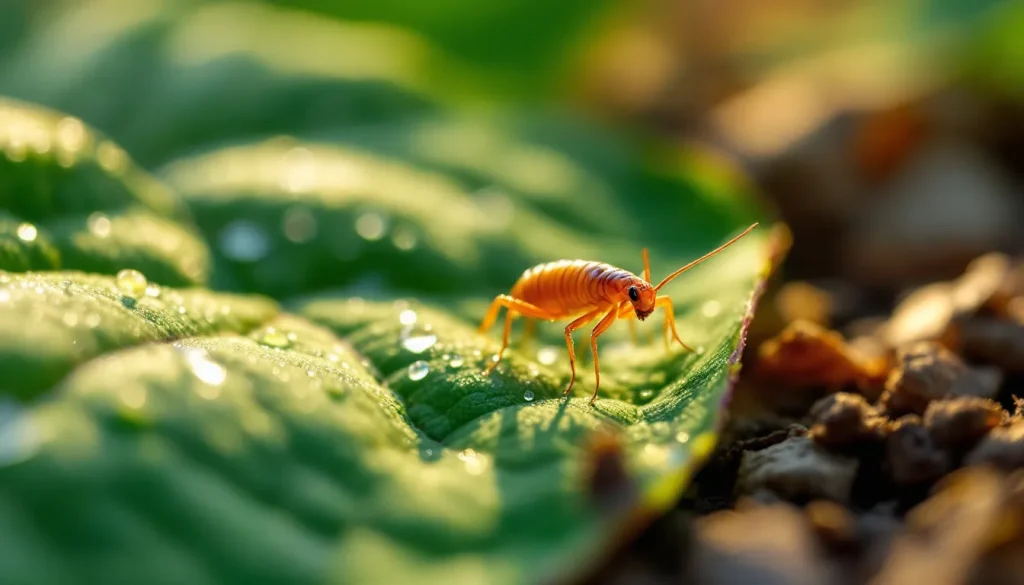
An earwig is a dark, elongated insect about 5 to 25 mm long (roughly a quarter to one inch) with a flattened reddish-brown to black body and a pair of forceps-like pincers, called cerci, at the rear. The European earwig (Forficula auricularia) is the most common species in US homes and gardens. Those rear pincers are the giveaway.
Males have curved, caliper-shaped pincers. Females have straighter ones. Earwigs have short front wings and can fly, though they rarely do. They move fast and prefer dark, tight spaces, which is why you often find them under pots, boards, or door mats.
Do not confuse them with rove beetles or silverfish. Silverfish are silver-gray, have no pincers, and taper like a fish. If the insect has visible rear forceps and a segmented tan-to-black body, it is almost certainly an earwig.
Confirm earwigs are the pest before you treat
Before buying any product, verify that earwigs are actually what you have. Correct ID prevents wasted money and the wrong treatment. Look for the signature rear pincers, check for damage patterns on plants (ragged, irregular holes in leaves and petals), and inspect damp hiding spots at dusk when earwigs are active. If you see slime trails instead, you have slugs, not earwigs.
Catch one in a jar and compare it to the cerci description above. Earwigs cluster in groups, so finding several together in one damp crevice is a strong signal. If you cannot confirm the species, a local extension office or pest professional can identify a sample, often at no charge.
Are earwigs harmful, do they bite, or do they crawl in your ears?
No. Earwigs do not crawl into human ears to lay eggs, that is an old folk myth with no scientific basis. They do not spread disease, do not infest food stores like pantry pests, and do not harm pets. The pincers can deliver a mild pinch if you squeeze one, but they rarely break skin and inject no venom. Earwigs are a nuisance, not a danger.
The name comes from Old English folklore, not behavior. An earwig would gain nothing from a human ear, and documented cases are effectively nonexistent. If a pinch does occur, wash the spot with soap and water. There is no need for antivenom, antibiotics, or panic.
This matters for treatment choice: because earwigs pose no real health risk, aggressive chemical fogging indoors is almost never justified. Physical removal and moisture control solve the problem for most homeowners.
Why earwigs surge now: seasonal timing
Earwigs peak in warm, damp weather from late spring through summer, then push indoors in late summer and fall when outdoor conditions dry out. A wet spring builds large populations; a dry late-summer stretch drives them toward the moisture and shelter inside your home. Timing prevention to these windows is the single biggest lever most guides skip.
The best prevention window is early to mid spring, before populations climb. Clearing damp debris and setting traps in April and May reduces the adults that would otherwise breed. A second push in August, when drought sends earwigs seeking water indoors, catches the late-season invasion before it starts.
Track your own yard: after heavy rain followed by a dry spell, expect indoor sightings within days. That pattern is your cue to seal gaps and dry out harborage fast.
How to get rid of earwigs indoors fast
To clear earwigs inside quickly, physically remove them and cut off the moisture that drew them in. Vacuum or sweep up any you see, empty the bag or canister outside, and wipe damp surfaces dry. Earwigs indoors are usually lost strays, not a breeding colony, so removal plus drying resolves most cases within a few days.
- Vacuum visible earwigs from baseboards, bathrooms, and basements. A shop vac with a little soapy water in the canister kills them on contact.
- Fix leaks and run a dehumidifier in basements and crawl spaces to keep humidity below 50 percent.
- Remove indoor moisture sources: overwatered houseplant saucers, damp cardboard, and wet towels.
- Set a few oil traps (recipe below) near where you keep finding them to monitor and reduce numbers.
Skip indoor insecticide sprays unless sightings persist. For a broader DIY strategy across household pests, HMNDP covers the fundamentals in this guide to doing your own pest control.
Seal cracks, gaps, and entry points
Earwigs enter through the same tiny gaps that let in moisture and other insects. Sealing these openings is the most durable fix because it stops the invasion at the wall. Focus on the foundation line, door thresholds, window frames, and any utility penetration, then use caulk, weatherstripping, and door sweeps to close them.
- Caulk cracks in the foundation, siding, and around window and door frames with exterior-grade silicone.
- Install or replace door sweeps and weatherstripping on exterior doors, including the garage.
- Seal gaps where pipes, cables, and dryer vents pass through walls using steel wool or expanding foam.
- Repair torn window screens and cover crawl-space and attic vents with fine mesh.
Reduce moisture and damp harborage
Earwigs need moisture to survive, so removing damp harborage is the core of long-term earwig pest control. Rake up leaf litter, thin thick mulch, clear plant debris, and move firewood and stored items off the ground and away from the wall. A dry perimeter is inhospitable and pushes earwigs elsewhere before they reach the house.
Keep mulch beds under two inches deep and pull them back a few inches from the foundation to create a dry gap. Fix downspouts and grading so water drains away from the wall, not toward it. Trim shrubs and ground cover so sunlight and air dry the soil surface faster after rain.
DIY earwig traps and homemade sprays (exact recipes)
Homemade traps and sprays give precise, low-cost control when you use the right ratios. Oil traps lure and drown earwigs overnight, rolled-newspaper traps collect them for disposal, and a dish-soap spray kills on contact. The exact recipes below remove the guesswork that most pages leave out.
| DIY method | Recipe / ratio | How to use |
|---|---|---|
| Oil and soy sauce trap | Equal parts vegetable oil and soy sauce (about 1 tablespoon each) in a shallow tuna or cat-food can | Sink the can to rim level in soil near affected plants or the foundation. Soy scent attracts, oil drowns. Empty and refill every 2 to 3 days. |
| Rolled newspaper trap | A sheet of newspaper rolled loosely and lightly dampened | Lay it in the garden or damp corner at dusk. Earwigs hide inside overnight. In the morning, seal it in a bag and discard, or shake into soapy water. |
| Dish-soap contact spray | 1 tablespoon liquid dish soap per 1 quart (4 cups) water in a spray bottle | Spray directly on earwigs you see. It kills on contact but has no lasting residue, so reapply as needed. Test on tender plants first. |
| Diatomaceous earth (DE) | Food-grade DE, applied as a thin dry band | Dust a line around entry points and bed edges. It abrades the insect’s cuticle. Reapply after rain. Keep dust away from bee-visited blooms. |
Oil traps are the workhorse for gardens and foundations. For chemical-free options across the yard, see HMNDP’s overview of eco-friendly pest control methods.
Managing earwigs in the garden (do they damage plants?)
Earwigs can damage plants, but they are a mixed case. They chew ragged, irregular holes in soft leaves, flower petals, and seedlings, and they favor dahlias, marigolds, lettuce, and strawberries. They also eat aphids and other soft-bodied pests, so a modest population can help. Control them in the garden only when damage to seedlings or fruit is clear.
Ring the oil traps around the plants taking damage and empty them every couple of days. Protect vulnerable seedlings with collars and delay heavy mulching until plants are established. Water in the morning so soil dries by evening, since damp evening beds are prime earwig habitat.
Because earwigs also cross lawns and turf edges, integrating your approach with broader turf management helps. HMNDP’s guide to lawn pest control covers how yard-wide moisture and thatch feed insect pressure.
Earwig repellents and killer sprays (including the peppermint oil claim)
Repellents range from weakly evidenced home remedies to registered insecticides. Peppermint oil is widely repeated as an earwig repellent, but the evidence is thin and any effect is short-lived once the scent fades. Physical exclusion and moisture control outperform any repellent. If you use a killer spray, match it to the location and follow the label.
| Product type | How well it works | Notes / safety |
|---|---|---|
| Peppermint or essential-oil spray | Weak, temporary | Little scientific support. May briefly deter but does not solve an infestation. |
| Diatomaceous earth | Moderate, slow | Food-grade only near edibles and pets. Loses effect when wet. Avoid inhaling the dust. |
| Insecticidal soap | Contact kill, no residue | Safe on most plants when diluted per label. Reapply after rain. |
| Pyrethroid perimeter spray (bifenthrin, permethrin) | Strong, lasting outdoor barrier | Read the label. Keep off blooming plants and away from ponds. Follow re-entry times for pets. |
On edible-plant beds, favor traps, insecticidal soap, or food-grade DE over broad-spectrum insecticides, and never spray products onto crops unless the label lists them.
When to call a professional for earwigs (and what it costs)
Call a professional when DIY steps fail after two to three weeks, when you see large recurring numbers indoors, or when earwigs enter from an inaccessible source like a slab or wall void. A single exterior perimeter treatment typically runs about 150 to 350 US dollars, and recurring quarterly service often falls in the 40 to 100 dollar per-visit range, varying by region and home size.
| Situation | DIY or pro |
|---|---|
| A few earwigs indoors after rain | DIY: vacuum, dry out, seal gaps |
| Steady garden damage to seedlings | DIY: oil traps and moisture control |
| Dozens indoors weekly for 2 to 3 weeks despite DIY | Pro: perimeter treatment and inspection |
| Entry from slab, wall voids, or crawl space you cannot reach | Pro: targeted barrier and exclusion |
A professional visit usually includes inspection, an exterior barrier treatment, targeting of harborage, and prevention advice. National providers like Orkin and Terminix offer this, as do independent firms that often price lower. Ask whether the quote covers a follow-up. To compare options nearby, HMNDP explains how to vet a local pest control company.
Frequently Asked Questions
How do I get rid of earwigs in my house fast?
Vacuum or sweep up every earwig you see and empty the container outdoors, since indoor earwigs are usually strays, not a colony. Then cut the moisture that drew them in: fix leaks, run a dehumidifier below 50 percent humidity, and dry damp corners. Seal entry gaps and set a couple of oil traps near sightings. Most homes clear indoor earwigs within a few days.
How do I get rid of earwigs in the garden?
Ring the affected plants with shallow oil traps made from equal parts vegetable oil and soy sauce in a sunken tuna can, and empty them every two to three days. Reduce damp harborage by thinning mulch, clearing debris, and watering in the morning so beds dry by evening. Protect seedlings with collars until they establish.
What is the best earwig repellent?
The most effective repellent is a dry, sealed perimeter, not a scent product. Physical exclusion (caulk, door sweeps, screens) plus moisture control keeps earwigs out far better than sprays. Food-grade diatomaceous earth dusted at entry points adds a moderate barrier. Peppermint oil is popular but weakly evidenced and short-lived, so treat it as a minor supplement, not a solution.
How do I make a homemade earwig killer spray or trap?
For a contact spray, mix 1 tablespoon liquid dish soap per quart of water and spray earwigs directly; it kills on contact with no residue. For a trap, combine equal parts vegetable oil and soy sauce (about 1 tablespoon each) in a shallow can sunk to rim level in soil. Earwigs enter for the scent and drown. Refill every two to three days.
What attracts earwigs into your house?
Moisture and shelter attract earwigs indoors, especially during late-summer drought when outdoor conditions dry out. Leaky pipes, damp basements, overwatered houseplants, and humid bathrooms draw them in, while cracks, gaps, and worn door sweeps let them enter. Damp mulch and debris against the foundation stage them right next to the wall, so a dry, sealed perimeter is the strongest deterrent.
Are earwigs harmful, do they bite, or do they really crawl into your ears?
No. The idea that earwigs crawl into ears to lay eggs is a myth with no scientific basis. They spread no disease and do not harm pets. Their rear pincers can deliver a mild pinch if squeezed, but they rarely break skin and carry no venom. Earwigs are a nuisance pest, so physical removal and moisture control are enough.
Does peppermint oil actually repel earwigs?
The evidence is weak. Peppermint oil is widely recommended online, but scientific support for repelling earwigs is thin and any effect fades quickly as the scent dissipates. It may offer brief, minor deterrence but will not clear an infestation. Exclusion (sealing gaps), moisture control, and oil traps deliver far more reliable results and should be your primary tools.
When should I call a professional for an earwig infestation and what does it cost?
Call a pro when DIY methods fail after two to three weeks, numbers stay high indoors, or earwigs enter from an unreachable source like a slab or wall void. A one-time exterior perimeter treatment typically costs about 150 to 350 US dollars, and recurring service often runs 40 to 100 dollars per visit, depending on region and home size. Ask whether a follow-up is included.