
By the HMNDP Editorial Team | Last reviewed: June 2026
Lawn pest control starts with identifying the bug, not buying a bottle
Lawn pest control means matching the right insecticide, timing, and application method to the specific insect chewing or sucking your grass. The single biggest mistake homeowners make is spraying before diagnosing. Grubs, chinch bugs, and armyworms each leave a different signature, and a product that kills one may barely touch another. Read the damage first, then treat.
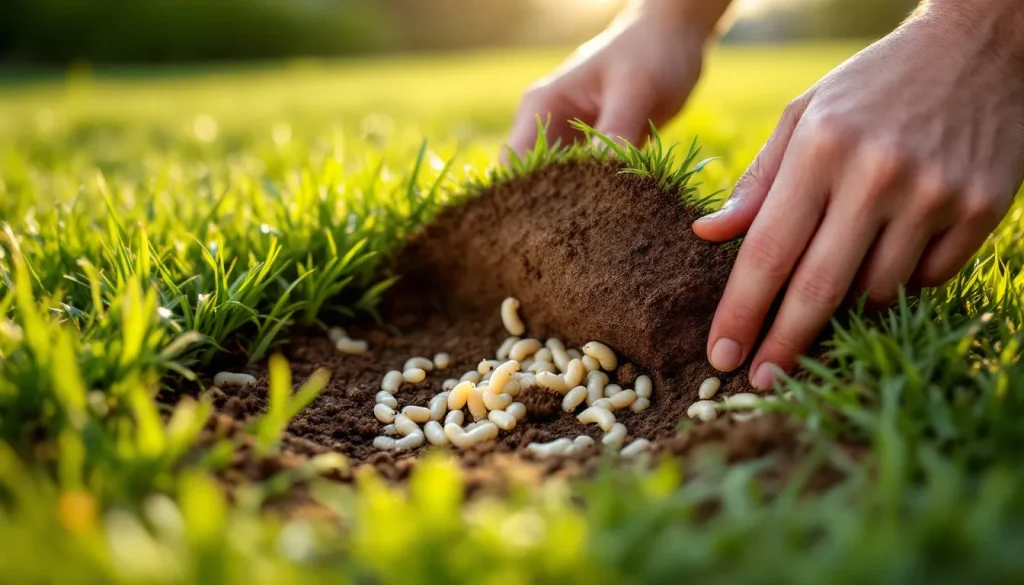
The fastest field test costs nothing: pull up a patch of failing turf. If it lifts like loose carpet, you likely have grubs feeding on the roots. If the roots hold firm but blades are chewed or discolored, look for surface insects instead.
Common lawn pests and how to identify the damage
The most common turf-damaging pests in U.S. lawns are white grubs, chinch bugs, sod webworms, armyworms, mole crickets, plus nuisance and biting insects like ants, fleas, and ticks. Each produces a distinct damage pattern. Use the table below to move from what you are seeing to a likely culprit before you spend a dollar.
| What you see | Likely pest | Quick confirm |
|---|---|---|
| Irregular brown patches that peel back like loose sod | White grubs | Dig 3 inches; find white C-shaped larvae |
| Expanding yellow-to-straw spots in the hottest, sunniest areas | Chinch bugs | Part grass at the patch edge; small black-and-white bugs scatter |
| Blades chewed short overnight, small green pellets | Armyworms or sod webworms | Soap-flush a square foot; larvae surface in minutes |
| Spongy soil, raised tunnels near the surface | Mole crickets | Common in Southern warm-season lawns |
| Mounds, trails, no root or blade damage | Ants | Follow trails to the nest |
| No turf damage, but bites on people or pets | Fleas and ticks | Drag a white cloth through tall grass |
The soap-flush test works for most surface insects: mix 2 tablespoons of dish soap in a gallon of water, pour over a square foot, and count what crawls up within 5 minutes. For ants specifically, our guide to pest control for ants covers bait-versus-mound strategy in more depth.
Outdoor insecticides: the core lawn pest control solution
Outdoor lawn and garden insecticides are the standard treatment for turf pests, sold in two formats: granular products you spread and water in, and liquid or spray concentrates you mix and apply. Both deliver similar active ingredients (bifenthrin, imidacloprid, carbaryl, or lambda-cyhalothrin). The right choice depends on the pest’s location in the soil profile.
Root feeders like grubs sit below the surface, so you need product carried down by water. Surface and blade feeders sit up top, where contact coverage matters more. That single distinction drives the format decision below.
Granular vs. liquid insecticide: which format to use
Granular insecticides suit soil-dwelling pests and large areas because they are easy to spread evenly and water into the root zone. Liquid sprays give faster contact knockdown of surface insects and let you spot-treat. Many homeowners keep both: granules for grub prevention, a liquid for a visible armyworm or chinch bug outbreak.
| Factor | Granular | Liquid / spray |
|---|---|---|
| Best for | Grubs, mole crickets, whole-lawn coverage | Chinch bugs, armyworms, fleas, ticks, spot spraying |
| Application | Broadcast spreader, then water in | Hose-end or tank sprayer |
| Speed of action | Slower, needs irrigation to activate | Faster surface knockdown |
| Even coverage | Easier over large lawns | Depends on technique |
DIY products, top brands, and where to buy
DIY lawn pest control products are widely stocked at Home Depot, Lowe’s, and specialty catalogs like DIY Pest Control, with common consumer brands including Scotts GrubEx, Bayer/BioAdvanced, Ortho, and Spectracide. Choose by target pest, not by shelf placement. A grub preventer and a broad surface insecticide are different tools.
Match the label to your diagnosis: imidacloprid or chlorantraniliprole for grub prevention, bifenthrin for chinch bugs and surface insects, spinosad for a lower-toxicity option. For soil-pest specifics, our grub control for lawn guide breaks down preventive versus curative actives. If you would rather buy contractor-grade product locally, see our roundup of a lawn care store near me and pro distributors.
Lawn pest control cost: DIY vs. professional service
DIY lawn pest control typically costs $15 to $60 per product per application, while a professional lawn pest control service usually runs $50 to $120 per visit or roughly $200 to $600 per year for a bundled seasonal program, depending on lawn size, pest, and region. No competing page publishes both sides, so here is the comparison directly.
| Option | Typical cost | Best when |
|---|---|---|
| DIY single product | $15 to $60 per bag or bottle | You identified the pest and the area is small to mid-size |
| DIY full-season supplies | $60 to $180 per year | You will apply preventive plus curative yourself |
| Pro single treatment | $50 to $120 per visit | One outbreak, or you want a diagnosis |
| Pro annual program | $200 to $600 per year | Recurring problems, large lawn, or you want it handled |
These are national ballpark ranges for 2026 and can vary by state, lawn square footage, and pest severity. In service-heavy markets like Cleveland, OH, providers often bundle lawn pest control into broader lawn care or whole-property plans, which changes the per-visit math. Get a written quote that names the target pest and product.
When to treat: a seasonal lawn pest calendar
Timing decides whether a treatment works. Grub preventers must go down before eggs hatch (late spring to midsummer), while curative grub products only work on young larvae in late summer to early fall. Surface pests and ticks are treated on sight through the warm months. Miss the window and you waste the product.
| Window | Target | Action |
|---|---|---|
| Early spring (Mar to Apr) | Overwintering insects, early ticks | Scout, first perimeter tick treatment |
| Late spring (May to Jun) | Grubs (preventive) | Apply preventive grub product, water in |
| Summer (Jun to Aug) | Chinch bugs, armyworms, sod webworms | Spot-treat liquids on sight |
| Late summer (Aug to Sep) | Grubs (curative) | Apply curative only if larvae are active |
| Fall (Sep to Oct) | Fleas, ticks, cleanup | Final treatment, reduce harborage |
Is lawn pest control safe for pets, kids, and pollinators?
Most synthetic lawn insecticides are considered safe for pets and children once the product has dried or the granules are watered in and the area is fully dry, which often takes a few hours to a day per the label. Pollinators are the bigger concern: never apply insecticide to blooming clover or weeds, and mow off flowers first. Always follow the specific label re-entry interval.
Neonicotinoids such as imidacloprid are toxic to bees, so keep them off anything in flower. If pollinator, pet, or child safety is your top priority, the organic options below trade a little speed for a wider margin.
Natural and organic lawn pest control that actually works
Several organic options control turf pests reliably when matched correctly: beneficial nematodes for grubs and larvae, Bt (Bacillus thuringiensis) for caterpillar-stage pests like armyworms and sod webworms, and spinosap-based spinosad for a range of chewing insects. These break down quickly and pose low risk to pets, kids, and non-target insects when used as directed.
| Organic active | Controls | Notes |
|---|---|---|
| Beneficial nematodes | Grubs, mole crickets, larvae | Apply to moist soil at dusk; keep watered |
| Bt (Bacillus thuringiensis) | Armyworms, sod webworms | Works on young caterpillars, not grubs |
| Spinosad | Many chewing surface insects | Low toxicity, still avoid spraying open blooms |
Do you need a pro, or can DIY handle it?
DIY lawn pest control handles most single-pest problems on small to mid-size lawns when you have correctly identified the insect and can hit the treatment window. Hire a professional lawn pest control service for recurring infestations, large properties, misdiagnosed damage, or when you want combined indoor-and-outdoor whole-property protection bundled with lawn care.
Whole-property providers such as Kapp’s Green Lawn market indoor plus outdoor perimeter coverage in one plan, which appeals to homeowners fighting ants, fleas, and ticks alongside turf pests. For a broader look at yard-wide treatment beyond the lawn itself, see our yard pest control guide. When searching “lawn pest control near me,” confirm the provider names the target pest and product in writing before you sign.
Frequently Asked Questions
What are the most common lawn pests and how do I identify which one is damaging my grass?
The most common are white grubs, chinch bugs, sod webworms, armyworms, and mole crickets. Identify by damage pattern: brown patches that peel up like loose carpet mean grubs, expanding yellow spots in full sun mean chinch bugs, and blades chewed short overnight mean armyworms or sod webworms. Confirm with a soap-flush test on a square foot of turf.
How much does professional lawn pest control cost vs. doing it yourself?
DIY products typically cost $15 to $60 per application, or $60 to $180 for a full season of supplies. A professional lawn pest control service usually charges $50 to $120 per visit or roughly $200 to $600 per year for a bundled program. Actual pricing depends on lawn size, pest severity, and your region, so get a written per-pest quote.
What is the best lawn pest control product or spray?
There is no single best product; the best one matches your pest. Use a grub preventer with imidacloprid or chlorantraniliprole for grubs, a bifenthrin liquid for chinch bugs and armyworms, and spinosad if you want lower toxicity. Diagnose first, then read the label to confirm your target pest is listed before buying.
Granular vs. liquid lawn insecticide, which should I use?
Use granular insecticides for soil pests like grubs and mole crickets and for even coverage over large lawns, since they wash into the root zone when watered in. Use liquid or spray products for faster knockdown of surface insects like chinch bugs, armyworms, fleas, and ticks, or for spot-treating a specific patch rather than the whole yard.
When is the best time of year to treat my lawn for pests?
Apply preventive grub products in late spring to midsummer, before eggs hatch, and curative grub products in late summer only if young larvae are active. Treat chinch bugs and armyworms on sight through summer. Start tick treatments in early spring and finish flea and tick control in fall. Timing to the pest’s life stage is what makes treatment work.
Is lawn pest control safe for pets, kids, and pollinators?
Most synthetic products are considered safe for pets and children once sprays have dried or granules are watered in and dry, often within a few hours to a day per the label. Pollinators are more sensitive, so never spray blooming clover or weeds and mow flowers off first. Neonicotinoids like imidacloprid are toxic to bees. Always follow the label re-entry interval.
Are there natural or organic lawn pest control options that actually work?
Yes. Beneficial nematodes control grubs, mole crickets, and larvae when applied to moist soil at dusk. Bt (Bacillus thuringiensis) targets young armyworms and sod webworms. Spinosad handles many chewing surface insects at low toxicity. These break down quickly and pose low risk to pets, kids, and non-target insects, though matching the active to the pest is essential.
Do I need professional lawn pest control or can DIY handle it?
DIY works well for a single, correctly identified pest on a small to mid-size lawn when you can hit the treatment window. Hire a professional for recurring infestations, large properties, damage you cannot diagnose, or when you want combined indoor and outdoor whole-property protection. A pro visit also buys you an expert diagnosis, which can prevent wasted DIY spending.