
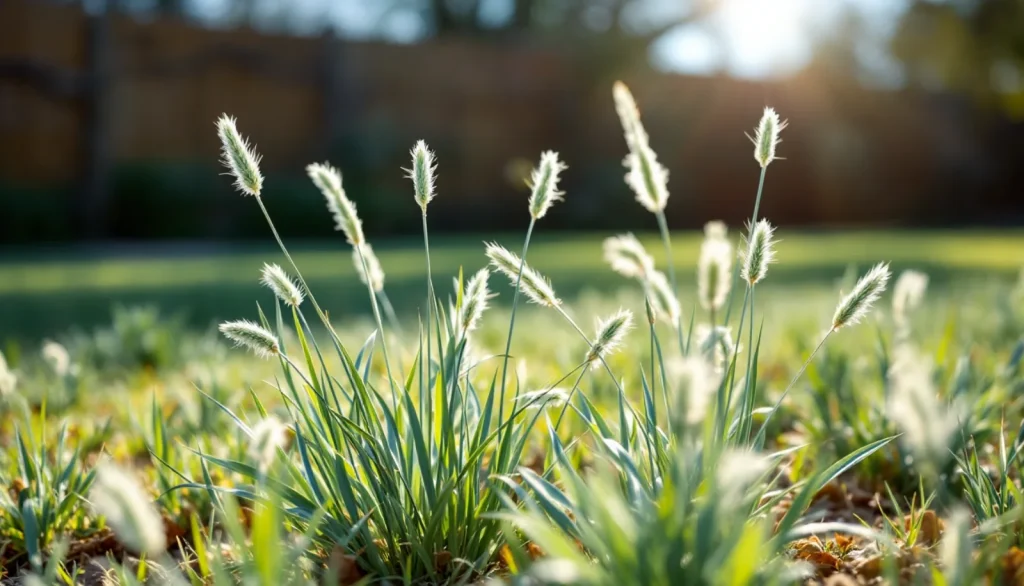
Buffalo Grass: Low-Water Native Lawn Care
Buffalo grass (Bouteloua dactyloides) is the most drought-tolerant lawn grass native to North America, surviving on roughly half the water a conventional lawn needs and going fully dormant in extended drought instead of dying. It is a fine-textured, blue-green warm-season grass from the shortgrass prairie that runs from Texas north through Kansas, Nebraska, and into the Dakotas. This page covers real water numbers, mowing, the cultivars worth planting, the zones it actually fits, and an honest comparison with Bermuda so you can decide whether buffalo grass belongs in your yard or whether a different warm-season turf fits better.
What is buffalo grass and where does it grow?
Buffalo grass is a native warm-season turf, Bouteloua dactyloides, adapted to the central Great Plains and the semi-arid Mountain West. It performs across roughly USDA hardiness zones 4 through 8, in full sun, on neutral to alkaline soils (pH about 6.5 to 8.0), in regions receiving under about 25 inches of annual rainfall. It does poorly east of the Mississippi, in the humid Southeast, and along the rainy Pacific Coast, where high humidity drives disease and faster-growing grasses crowd it out.
The species was reclassified, which is why sources disagree on its Latin name. Botanist George Engelmann placed it in Buchloe dactyloides, the name still printed on many seed bags and older extension sheets. In 1999, J.T. Columbus moved it into the grama-grass genus as Bouteloua dactyloides, now the accepted name (USDA PLANTS Database). Both names point to the same grass.
Buffalo grass spreads by above-ground runners called stolons, forming a low, soft mat that tops out near 8 to 10 inches if never mowed. It is dioecious, meaning male and female plants are separate, and most vegetative cultivars are female selections bred to avoid the taller male seed stalks. If you are still deciding which species is even in your yard, our guide to renovating thin and bare turf pairs well with proper identification first.
How much water does buffalo grass actually need?
Established buffalo grass needs roughly 50 to 75 percent less irrigation than Kentucky bluegrass, according to Colorado State University Extension, which is the headline reason people plant it. In practical terms that often means about 12 to 18 inches of total annual water across much of its range, against the 40 to 60 inches a cool-season lawn may demand in the same climate. In the western Plains, mature stands frequently survive on rainfall alone.
The drought trait is survival, not perpetual green. Roots reach 3 feet deep or more, and during prolonged dry spells the grass goes dormant and browns out, then recovers when moisture returns. You can choose to stop watering entirely and accept the tan color, or apply about 1 inch every two to four weeks in peak summer to hold green. Deep, infrequent watering beats frequent shallow watering every time.
Newly seeded or plugged buffalo grass is the exception: it needs steady surface moisture during establishment. For a precise application schedule, our drip irrigation install guide shows how to deliver that water without runoff, and our square-footage calculator sizes the system to your actual turf area.
How do you mow and fertilize buffalo grass?
Buffalo grass is mowed at 2 to 4 inches and fertilized lightly, which is the opposite of a high-input lawn. Cut it at 2 to 3 inches for a manicured look (about weekly in peak growth) or hold it at 3 to 4 inches and mow every three to four weeks. Some homeowners give it a single spring cleanup mow and let it grow as a low meadow the rest of the year. Never remove more than one-third of the leaf height in a single pass.
Fertilizer needs are minimal. Apply about 1 to 2 pounds of nitrogen per 1,000 square feet per year, split into two feedings: roughly 0.5 to 1 pound in late May or early June, and the same in late July or early August (University of Nebraska Extension). Over-feeding invites weeds and Bermuda invasion rather than a better lawn, so under-feeding is the safer error here.
The real maintenance issue is weed competition, not feeding or mowing. Buffalo grass is low density, so weeds and faster grasses fill any gaps, especially in the first two seasons. Keep it in full sun, because in shade it thins to a patchy stand that turns weedy fast. For a feeding cadence that fits warm-season turf generally, see our year-round grass maintenance schedule.
Which buffalo grass cultivar should you plant?
Pick a seeded cultivar for large areas and a vegetative cultivar (plugs or sod) for the densest, lowest lawn. Modern named cultivars are a major upgrade over common buffalo grass: they green up earlier, hold color longer, and form a tighter stand. The split below shows the cultivars extension turf programs name most often and the year each was released.
| Cultivar | Type | Released | Notes |
|---|---|---|---|
| Cody | Seeded | 1995 | Widely adapted benchmark; good density and drought tolerance |
| Bowie | Seeded | 2001 | Finer texture, improved color, faster establishment, early spring green-up |
| Sundancer | Seeded | 2014 | Darkest green of the seeded types, fastest establishment, best turf quality |
| Legacy | Vegetative (plugs/sod) | 1997 | Female line, low and very dense, high turf quality |
| Prestige | Vegetative (plugs/sod) | 1997 | Bright green, chinch-bug resistant, longer green season |
For a seeded lawn, Sundancer is the current top pick, with Cody and Bowie close behind. For plugs or sod, Legacy and Prestige give the lowest, densest carpet. Vegetative cultivars cost more upfront because they are planted as living plugs rather than seed, but they fill in tighter and crowd out weeds sooner.
How do you establish a buffalo grass lawn?
Establish buffalo grass by seed, plugs, or sod, planted in late spring to early summer once soils warm. Seed is cheapest per square foot but slowest; plugs and sod cost more but fill in faster and let you use the best female cultivars. The timing window matters: in cold-winter states, seed between April and July (after July is not recommended) so the stand roots in before frost.
- Kill or remove existing turf and weeds, then rake to a firm, level seedbed in full sun.
- Sow treated buffalo grass seed at about 2 to 3 pounds per 1,000 square feet; treated seed germinates faster than raw seed.
- For plugs, space them 6 to 24 inches apart; closer spacing fills in sooner (about 6 to 12 weeks at tight spacing).
- Keep the surface consistently moist for germination; seed sprouts in about 10 to 21 days depending on temperature and treatment.
- Hold off on heavy fertilizer and traffic the first season, and spot-control weeds while the stand thickens.
Patience is the cost of admission. A Virginia roadside trial recorded buffalo grass cover below 60 percent in year two; by year three, four cultivars averaged above 70 percent ground cover even through a severe summer drought. Plan on two full seasons before the lawn looks finished.
Buffalo grass vs Bermuda: which warm-season grass wins?
Buffalo grass wins on water and low maintenance; Bermuda grass wins on density, traffic, and a longer green season. They suit different yards. Buffalo grass fits low-traffic, water-restricted lawns in the Plains and Mountain West where the owner wants minimal inputs. Bermuda fits sunny, high-traffic lawns where a dense, hard-wearing surface and a longer green window matter more than water savings.
| Factor | Buffalo grass | Bermuda grass |
|---|---|---|
| Annual water (established) | ~12 to 18 in; often rainfall alone in the west | Higher; needs consistent irrigation to stay green |
| Mowing | 2 to 4 in, every 1 to 4 weeks | 0.5 to 2 in, frequent mowing and edging |
| Fertilizer | 1 to 2 lb N per 1,000 sq ft per year | 4 to 6 lb N per 1,000 sq ft per year |
| Traffic tolerance | Low to moderate | High, recovers quickly |
| Shade | Needs full sun; thins in shade | Needs full sun; poor in shade |
| Texture and color | Soft, fine, blue-green | Dense, fine, deeper green |
| Best regions | Great Plains, Mountain West, semi-arid | Transition zone and warm South |
Bermuda is also the aggressive neighbor: it invades thin buffalo grass stands, which is one more reason to avoid over-watering and over-feeding a buffalo grass lawn. In a true low-water Plains yard, buffalo grass is the better fit; in a transition-zone yard with kids, pets, and irrigation, Bermuda usually outperforms it. If you are weighing turf against no turf at all, our drought-tolerant lawn alternatives guide covers rebates and conversion costs.
What are the downsides of buffalo grass?
The main downsides are dormancy color, slow establishment, low weed resistance, and a narrow regional fit. Buffalo grass browns out after the first hard frost and stays tan until late spring, so it is dormant and off-color for a meaningful share of the year, longer than overseeded Bermuda looks green. If a year-round green lawn is the goal, this grass will disappoint.
It also establishes slowly (two seasons to mature), tolerates only light to moderate foot traffic, and is too thin to choke out weeds on its own, so expect spot weed control early on. Outside its native range, in humid or shaded sites, it underperforms badly. Matched to the right yard, dry, sunny, low-traffic, in zones 4 to 8, those tradeoffs are easy to accept for the water and mowing savings.
Lower water use also trims the lawn-care bill, since buffalo grass needs less irrigation, fertilizer, and mowing labor than a conventional lawn. Our 2026 lawn care cost guide breaks down where those savings show up by service line.
Last reviewed: June 2026
HMNDP Editorial Team, reviewed by HMNDP turf and horticulture editors.
Frequently asked questions
Is buffalo grass a good lawn grass?
Buffalo grass is a good lawn grass for dry, sunny, low-traffic yards in USDA zones 4 to 8 across the Great Plains and Mountain West. It uses roughly 50 to 75 percent less water than Kentucky bluegrass and needs little mowing or fertilizer. It is a poor choice for shade, high traffic, humid regions, or anyone wanting year-round green color.
How much water does buffalo grass need?
Established buffalo grass needs about 12 to 18 inches of total annual water across much of its range, roughly half what a cool-season lawn requires, per Colorado State University Extension. In the western Plains, mature stands often survive on rainfall alone. To hold green color in peak summer, apply about 1 inch every two to four weeks. Otherwise it goes dormant and brown until moisture returns.
Does buffalo grass stay green year-round?
No. Buffalo grass is a warm-season grass that browns out and goes dormant after the first hard frost, then greens up in late spring once temperatures warm. It stays tan through the cold months, a longer off-color window than overseeded Bermuda. Cool-season overseeding is generally not advised because the cool-season grass competes with the buffalo grass.
How fast does buffalo grass spread?
Buffalo grass spreads slowly by above-ground runners called stolons, not as fast as Bermuda. Seedlings begin spreading around four weeks after planting, and plugs spaced 6 to 24 inches apart fill in within 6 to 12 weeks at tight spacing. Full coverage usually takes two seasons; a Virginia trial reached above 70 percent cover only by year three.
What is the best buffalo grass cultivar?
For seeded lawns, Sundancer (released 2014) is the current top pick for color, density, and fast establishment, with Cody (1995) and Bowie (2001) close behind. For plugs or sod, Legacy and Prestige (both 1997) give the lowest, densest carpet. Named cultivars outperform common buffalo grass on green-up, color retention, and turf quality.
Buffalo grass vs Bermuda: which is better?
Buffalo grass wins on water use, low mowing, and minimal fertilizer (1 to 2 lb N versus Bermuda’s 4 to 6 lb per 1,000 sq ft). Bermuda wins on density, high traffic tolerance, and a longer green season. Choose buffalo grass for dry, low-traffic Plains lawns and Bermuda for sunny, high-traffic transition-zone or Southern yards.
What is the scientific name of buffalo grass?
The accepted scientific name is Bouteloua dactyloides, after J.T. Columbus moved it into the grama-grass genus in 1999. Many seed bags and older extension sheets still list the former name, Buchloe dactyloides. Both names refer to the same native warm-season prairie grass; the change is taxonomic, not a different species.
Does buffalo grass need full sun?
Yes. Buffalo grass needs full sun to grow a dense, healthy stand. In shade it thins to a patchy lawn that quickly turns weedy because its low density lets weeds and faster grasses fill the gaps. If your site is shaded, buffalo grass is the wrong choice and a shade-tolerant species or alternative ground cover will perform better.