
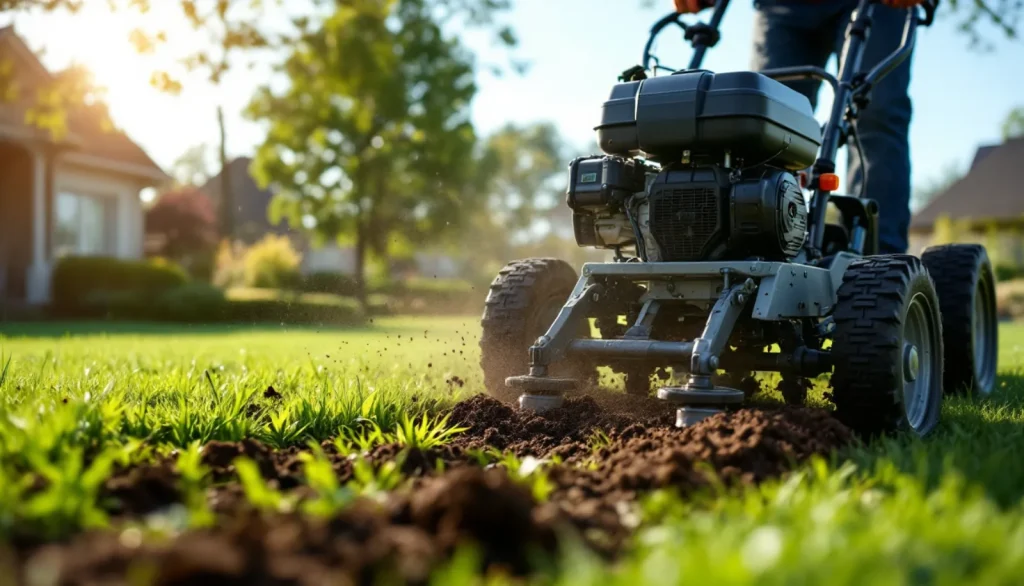
Lawn Aerator Rental: Costs, Machine Types, and Timing
A lawn aerator rental runs about $58 to $110 for a 4-hour to 24-hour window at most big-box and equipment yards in 2026, which is why renting beats buying for almost every homeowner who aerates once a year. The machine you actually want is a motorized core (plug) aerator, the heavy walk-behind unit that pulls real soil plugs. This guide covers what each rental class costs, the specs that matter, how to know whether to rent or hire a pro, and the lawn size where the math flips toward buying.
What does a lawn aerator rental cost in 2026?
A lawn aerator rental costs roughly $58 to $110 for a half day to a full day, with most homeowners paying near $92 for a 24-hour core aerator, per GrowItBuildIT and Angi 2026 rate data. Delivery, if you cannot haul it yourself, adds $50 to $100. A deposit or card hold is standard. Weekend and weekly bundles cut the per-day rate.
Rates track the machine class, not just the calendar. A compact 18-inch walk-behind is the cheapest rental and the one stocked at most Home Depot rental desks. Tow-behind and stand-on units cost more per day and exist mostly for large lots or commercial work.
| Rental class | Typical rate | Coverage | Best for |
|---|---|---|---|
| Compact walk-behind core (18 in, e.g. Classen CA-18) | $58 to $69 for 4 hr; $90 to $110 per day | About 23,000 sq ft per hour, 17.5 in pass | Most residential lots under 1 acre |
| Stand-on core aerator (26 to 30 in) | $120 to $205 per day | Faster, wider pass | Large lots, multiple properties |
| Tow-behind plug aerator | Often sold, not rented; under $200 to buy | Needs a riding mower or ATV | Acreage with a riding mower |
| Manual or spike-shoe aerator | $0 to $40 to buy | Slow, shallow | Tiny patches only; not true aeration |
The Classen CA-18 that Home Depot rents lists a 17.5-inch aerating width, coring depth to 3 inches, 24 tines, and two removable 36-pound weights, per Classen Turf Care spec sheets. It fits through a 30-inch gate. Rates and stock vary by store and region, so confirm before you drive over.
Should you rent or buy a lawn aerator?
Rent if you aerate once or twice a year, which describes most lawns. A motorized core aerator costs $1,000 to over $3,000 to buy, so at roughly $100 per rental it takes about 10 years of annual use to break even, per Thriving Yard’s rent-versus-buy math. Buy only if you aerate several times a season, run a side business, or live far from a rental yard.
Frequency is the deciding factor. Most lawns need aeration once every one to three years, and heavily compacted or high-traffic turf may want it twice a year. Below is the practical decision rule.
- Rent if you aerate 1 to 2 times per year and a rental yard is within a reasonable drive.
- Buy a tow-behind (under $200) if you already own a riding mower and have an acre or more.
- Buy a walk-behind only at heavy, repeated annual use, or if you do lawn work for income.
- Skip spike-shoe aerators. They compress soil around each hole instead of removing a plug, so they do little for compaction.
Rent vs hire a pro: the cost-per-1,000-sq-ft math
For a quarter-acre lawn, renting and hiring a pro land closer than most guides admit once you price both per 1,000 square feet. A pro charges $75 to $206 for a standard quarter-acre lot, averaging about $140, per Angi and LawnStarter 2026 data, or roughly $15 to $18 per 1,000 sq ft. A rental spreads a flat $90 to $110 day rate across your whole yard, so it wins on big lawns and loses on small ones.
This original comparison is what the typical rental article skips. The flat rental fee does not scale with lawn size, so the rental cost per 1,000 sq ft falls as the lawn grows, while the pro rate stays roughly fixed per 1,000 sq ft.
| Lawn size | DIY rental (about $100/day, 1 yard) | Pro hire (about $16 per 1,000 sq ft) | Lower-cost option |
|---|---|---|---|
| 3,000 sq ft | ~$33 per 1,000 sq ft | ~$75 minimum | Pro (often a minimum charge anyway) |
| 5,000 sq ft | ~$20 per 1,000 sq ft | ~$80 to $90 | About even |
| 10,000 sq ft | ~$10 per 1,000 sq ft | ~$140 to $180 | DIY rental |
| 20,000 sq ft | ~$5 per 1,000 sq ft | ~$300+ | DIY rental |
The break point sits near 5,000 square feet. Below it, a pro’s minimum charge often beats a half-day rental plus your transport and time. Above it, the flat rental fee pulls ahead fast. For a full benchmark of service rates, see our 2026 lawn care cost guide, and to size your yard first, use our walkthrough on measuring lawn square footage.
What specs should you look for in a rental aerator?
Look for a motorized core (plug) aerator with a coring depth near 3 inches and a working width of 18 inches or more. Core aeration pulls plugs and relieves compaction; spike and slicing units only poke holes and can worsen compaction. Confirm the unit fits your gate (a 30-inch gate clearance is common) and that you can transport its weight.
Three specs decide whether the rental does the job:
- Tine type. Hollow coring tines that remove soil plugs are the only true aeration. Confirm the rental is a core or plug aerator, not a spike model.
- Coring depth. Aim for 2 to 3 inches so the holes reach the root zone where compaction lives.
- Width and weight. A wider pass finishes faster, but heavier units (200-plus pounds with weights added) need a ramp and a truck or trailer.
When is the best time to aerate?
Aerate when the grass is actively growing so it heals quickly. For cool-season grasses (fescue, ryegrass, Kentucky bluegrass), that means early fall, with September the prime window and early spring as second best, per Lawn Love and Pennington. For warm-season grasses (Bermuda, zoysia, St. Augustine), aerate in late spring to early summer once soil holds above about 65 degrees, roughly June through mid-July.
Soil moisture matters as much as the calendar. Aerate soil that is moist but not soggy; you should be able to push a screwdriver 6 inches into the ground. Aerating bone-dry or waterlogged turf wastes the rental. For a season-by-season plan tied to your grass type, see our year-round grass maintenance schedule.
How do you use a rented core aerator?
Water the lawn a day or two before so plugs pull cleanly, mark sprinkler heads and shallow utilities, then make passes in a grid. Most homeowners need 1 to 2 hours for a small yard, 2 to 4 for a medium one, and 4 to 6 for a large lawn, per rental-guide estimates. Leave the soil plugs on the surface to break down. Aeration is the ideal moment to overseed.
- Water lightly 24 to 48 hours ahead so the soil is moist, not muddy.
- Flag irrigation heads, valves, and any shallow cable or invisible-fence wire.
- Make one pass across the lawn, then a second pass at 90 degrees on compacted areas.
- Leave the plugs to decompose; mow or rake later if you want a tidier look.
- Overseed and fertilize right after, while the holes are open, then keep the surface moist.
If your goal is filling thin or worn turf, aeration plus seed is the standard fix; our guides on making grass grow in bare spots and growing grass in shade and compacted soil cover the follow-through.
Where can you rent a lawn aerator?
The common rental sources are Home Depot and Lowe’s tool-rental desks, Sunbelt Rentals and other equipment yards, and independent local hardware or rental stores. Home Depot stocks compact core aerators such as the Classen CA-18 at many of its rental locations. Local independents often price below the national chains, per GrowItBuildIT’s survey of rates.
Call ahead to confirm three things: that the unit is a core (plug) aerator and not a spike model, the deposit or card-hold amount, and whether you need delivery. A delivery fee of $50 to $100 can erase the savings over hiring a pro on a small lawn. If renting and hauling sounds like more than you want, comparing local service quotes may be the better route; our guide on finding a reputable landscaper covers how to vet one.
Lawn aerator rental: the quick answer
Rent a motorized core aerator for $58 to $110 if you aerate once a year and your lawn runs larger than about 5,000 square feet. Hire a pro for a small lawn where their minimum charge beats your rental plus transport. Buy only with heavy repeat use. Match the timing to your grass type, pull real plugs at 2 to 3 inches deep, and overseed while the holes are open.
Last reviewed: June 2026
HMNDP Editorial Team, reviewed by HMNDP turf and horticulture editors.
Frequently asked questions
How much does it cost to rent a lawn aerator?
A lawn aerator rental costs about $58 to $69 for a 4-hour window and $90 to $110 for a full 24 hours on a compact walk-behind core unit, per 2026 rate data from Angi and GrowItBuildIT. Stand-on models run $120 to $205 per day. If you cannot haul it yourself, delivery adds $50 to $100, and a deposit or card hold is standard.
Should I rent or buy a lawn aerator?
Rent if you aerate once or twice a year, which fits most lawns. A motorized core aerator costs $1,000 to over $3,000 to buy, so at roughly $100 per rental it takes about 10 years of annual use to break even. Buy a tow-behind (under $200) only if you own a riding mower and have an acre or more, or buy a walk-behind if you do lawn work for income.
Is it cheaper to rent an aerator or hire a pro?
It depends on lawn size. A pro charges $75 to $206 for a quarter-acre lot, averaging about $140 or $15 to $18 per 1,000 square feet. A flat $100 day rental does not scale with size, so a pro usually wins below 5,000 square feet (their minimum charge), while renting wins on larger lawns where the flat fee spreads across more ground.
How long does it take to aerate a lawn?
Plan on 1 to 2 hours for a small yard, 2 to 4 hours for a medium yard, and 4 to 6 hours for a large lawn, per rental-guide estimates. That fits inside a typical 4-hour or 24-hour rental window. A compact 18-inch core aerator covers about 23,000 square feet per hour, so machine time is short; setup, transport, and cleanup add the rest.
What kind of aerator should I rent, core or spike?
Rent a core (plug) aerator, not a spike model. Core aerators pull soil plugs and relieve compaction, while spike units only poke holes and can press soil tighter around each hole. Look for hollow coring tines, a coring depth near 2 to 3 inches, and a working width of 18 inches or more. Most rental yards stock motorized core aerators by default.
When is the best time to aerate my lawn?
Aerate when the grass is actively growing. For cool-season grasses like fescue and bluegrass, early fall is best, with September the prime window and early spring second. For warm-season grasses like Bermuda and zoysia, aerate in late spring to early summer once soil holds above about 65 degrees, roughly June through mid-July. Aerate soil that is moist but not soggy.
Where can I rent a lawn aerator near me?
Common sources are Home Depot and Lowe’s tool-rental desks, Sunbelt Rentals and other equipment yards, and independent local hardware or rental stores. Home Depot stocks compact core aerators such as the Classen CA-18 at many rental locations. Local independents often price below the national chains. Call ahead to confirm the unit is a core aerator, the deposit, and whether delivery applies.