
By the HMNDP Editorial Team
Last reviewed: June 2026
Which edible flowers are safe, and what do they taste like?
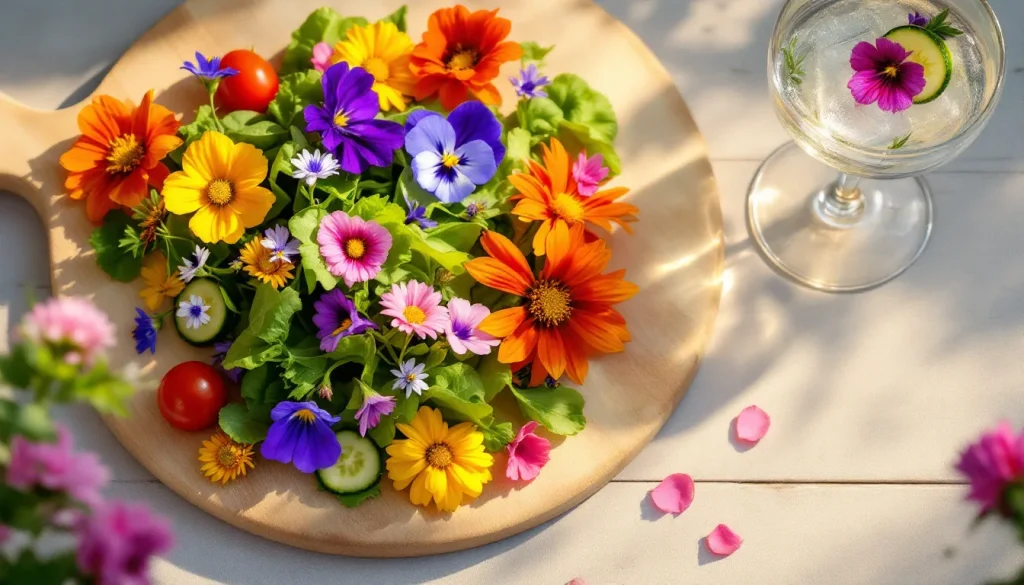
Edible flowers are blooms confirmed safe for humans to eat, including nasturtium, pansy, calendula, borage, rose, and the blossoms of herbs and vegetables like chive, basil, and zucchini. Flavors range from peppery (nasturtium) to sweet (violet) to cucumber-like (borage). Only eat flowers positively identified as edible, grown without pesticides, and never confuse them with toxic lookalikes like foxglove.
The list below covers 30 common varieties, grouped so you can match a bloom to a job. After the list you get the parts most guides skip: a poison-lookalike safety table, where to actually buy food-grade flowers, and how to clean, store, and preserve them.
A named list of 30 edible flowers by flavor group
Edible flowers split cleanly into sweet, savory or peppery, and herbal or floral tasting groups. Sweet flowers suit cakes and desserts, savory blooms suit salads and plates, and herb blossoms carry a milder version of the herb’s flavor. The table names each flower, its taste, and its best use so you can shop and cook with one reference.
Sweet and floral flowers (best for cakes, teas, and cocktails)
| Flower | Taste | Best use | Note |
|---|---|---|---|
| Rose | Perfumed, sweet, faintly fruity | Cakes, syrups, tea | Petals only, snip off the bitter white heel |
| Violet | Sweet, floral | Candied garnish, drinks | Classic for crystallizing |
| Pansy / viola | Mild, faintly grassy-sweet | Cake decorating, salads | Whole flower is edible |
| Lavender | Sweet, resinous, strong | Baking, syrups | Use sparingly, it turns soapy fast |
| Elderflower | Honeyed, muscat-like | Cordials, cocktails | Flowers only, the leaves and stems are toxic |
| Honeysuckle | Sweet nectar | Syrups, tea | Flowers only, berries of many species are poisonous |
| Hibiscus | Tart, cranberry-like | Tea, cocktails, jam | Deep red color |
| Cornflower | Mild, slightly sweet, clove hint | Cake and salad confetti | Brilliant blue petals |
Savory and peppery flowers (best for salads and plating)
| Flower | Taste | Best use | Note |
|---|---|---|---|
| Nasturtium | Peppery, like watercress | Salads, garnish | Leaves and seed pods are also edible |
| Calendula (pot marigold) | Peppery, slightly bitter | Salads, rice, as a saffron stand-in | Petals only, called “poor man’s saffron” |
| Borage | Cool cucumber | Salads, gin drinks, ice cubes | Star-shaped blue flower |
| Marigold (Tagetes, signet types) | Citrus to spicy | Salads, garnish | Use only signet/gem types, taste first |
| Dandelion | Mildly sweet young, bitter older | Fritters, salads, wine | Green base is bitter, use petals |
| Bee balm (bergamot) | Oregano-citrus | Salads, tea | Both petals and leaves |
| Chrysanthemum | Mild to sharp, tangy | Salads, stir-fry | Petals only, blanch first, some people react |
Herb and vegetable blossoms (edible and often overlooked)
Herb and vegetable plants produce edible flowers that taste like a softer version of the plant. If you grow herbs or vegetables, you already have edible flowers in the garden. These are some of the safest to start with because you know exactly what the plant is.
- Chive blossom: mild onion, purple pompom, great in vinegar and on eggs.
- Basil flower: concentrated basil with a slight bite, good on tomatoes.
- Zucchini and squash blossom: faint squash flavor, classic stuffed and fried.
- Cilantro (coriander) flower: lighter cilantro, delicate on tacos and ceviche.
- Dill flower: stronger dill, used in pickling.
- Sage flower: muted sage, purple-blue, good with poultry.
- Arugula (rocket) flower: peppery, mustard-like on salads.
- Fennel flower: sweet anise, sometimes sold as “fennel pollen.”
- Mustard flower: hot and peppery, yellow, good on grain bowls.
- Pea flower: mild pea (edible garden pea only, never sweet pea, which is toxic).
Other widely eaten blooms round out a 30-flower repertoire: apple and other fruit-tree blossoms, clover, fuchsia, snapdragon, gladiolus (bland, used as a cup for fillings), and tulip petals (remove the bitter base and taste first, since some people react).
Which edible flowers are safe, and which common flowers are poisonous?
The most dangerous mistake with edible flowers is eating a toxic lookalike or a decorative flower that is not food. Foxglove, lily of the valley, sweet pea, azalea, oleander, and daffodil are poisonous and cause reactions from nausea to cardiac effects. Never eat a flower unless you have positively identified it as edible. When unsure, do not eat it.
This is the single biggest gap in most edible-flower guides. Below is a lookalike safety table pairing edible flowers with the toxic plants people confuse them with.
| You want (edible) | Do not confuse with (toxic) | Why it matters |
|---|---|---|
| Garden pea flower | Sweet pea (Lathyrus) | Sweet pea seeds and flowers can cause lathyrism symptoms |
| Borage, other blue stars | Lily of the valley | Contains cardiac glycosides, can affect heart rhythm |
| Honeysuckle flowers | Foxglove | Foxglove (digitalis) is a serious cardiac poison |
| Squash / hibiscus cups | Azalea and rhododendron | Grayanotoxins cause vomiting and low blood pressure |
| Any trumpet-shaped bloom | Daffodil, oleander, angel’s trumpet | All toxic, some severely |
Three safety rules apply to every flower on this page. First, eat only flowers grown without pesticides or systemic chemicals. Second, introduce new flowers in small amounts, because pollen can trigger allergy or asthma in sensitive people, especially with daisy-family blooms like chrysanthemum and calendula. Third, for roses, calendula, and many others, eat the petals only and discard pistils, stamens, and any bitter white base.
This guidance is general and not medical advice. If you take heart or blood-pressure medication, or you have plant or pollen allergies, check with a clinician before adding new flowers to your diet.
Can I eat flowers from my garden or from a florist?
Eat flowers from your own garden only if you grew them without pesticides, fungicides, or systemic treatments and you know the plant is edible. Do not eat flowers from a florist, a garden-center nursery, or roadsides. Florist and nursery flowers are routinely treated with chemicals not approved for food and are grown for looks, not eating.
Nursery starter plants are often drenched in systemic insecticides such as neonicotinoids that move into the flower tissue and cannot be washed off. Roadside and lawn-edge flowers may carry herbicide or fertilizer runoff. If you want blooms specifically for eating, start seeds yourself or buy plants labeled untreated. Our guide to fall flowers to plant and the notes in where to buy pro lawn fertilizer can help you set up a clean, food-safe growing bed.
Where can I buy edible flowers, and does Whole Foods sell them?
Buy food-grade edible flowers from specialty growers, well-stocked grocery produce sections, and farmers markets. Whole Foods and other upscale grocers carry packaged edible flowers seasonally in the refrigerated produce or herb section, though stock varies by store and time of year. For guaranteed supply, order from specialty growers who ship nationwide.
Sourcing is the second big gap in most guides, so here is a concrete map of where to look.
| Source | What to expect | Best for |
|---|---|---|
| Grocery produce (Whole Foods, similar) | Clamshell packs of mixed micro-blooms, seasonal, near the herbs | Last-minute garnish, small quantities |
| Specialty growers (Gourmet Sweet Botanicals, Marx Foods, Fresh Origins) | Food-grade flowers shipped overnight, larger and more varieties | Events, cakes, reliable supply |
| Farmers markets and local flower farms | Fresh, seasonal, ask if grown for eating | Freshness, supporting local growers |
| Grow your own from seed | Nasturtium, calendula, borage, viola sprout fast and cheap | Cost, full control over chemicals |
Whichever source you choose, confirm the label says the flowers are grown for consumption. Decorative flowers sold near checkout or in the floral department are not food-grade, even at the same store. When ordering online, check the ship date and plan to use fresh flowers within two to three days.
How do you clean, prepare, and store edible flowers?
Clean edible flowers by shaking out insects, dipping gently in cool water, and drying on paper towel. Prepare them by removing pistils, stamens, and bitter bases where noted, using petals only for roses, calendula, and dandelion. Store fresh flowers in a single layer between damp paper towels in a sealed container in the refrigerator for two to five days.
Prep and storage is the third gap most pages skip. Follow this order.
- Harvest or unpack in the cool morning hours and keep flowers out of direct sun.
- Check each bloom for bugs, shaking or brushing gently rather than scrubbing.
- Swish briefly in a bowl of cool water, then lay on paper towel or a rack to air dry.
- Remove the reproductive parts: snip out pistils and stamens, and cut away any white heel at the petal base, which is where bitterness sits.
- Store in a rigid container lined with damp paper towel, sealed, in the fridge, and use within a few days.
The same principle that keeps a cut bouquet alive keeps culinary blooms crisp: cold, humidity, and minimal handling. Our guide on how to keep cut flowers fresh explains the cold-chain logic in more depth, and it applies directly to flowers headed for the plate.
How to preserve edible flowers: candying, drying, and freezing
Preserve edible flowers three ways. Crystallize (candy) them by brushing petals with lightly beaten egg white, dusting with fine sugar, and drying for 12 to 24 hours for a hard, shelf-stable garnish. Dry them flat or in a low oven for teas and baking. Freeze small whole flowers like borage and violas inside ice cubes for drinks.
- Crystallizing: best for violets, roses, and pansies; use pasteurized egg white or gum arabic if raw egg is a concern.
- Drying: spread petals on a rack or use a dehydrator at low heat; store in an airtight jar away from light.
- Freezing in ice: half-fill the tray, add the flower, freeze, then top up so the bloom sits centered and clear.
Best edible flowers for cakes, cocktails, and garnish
Match the flower to the job. For cakes and baking, use sturdy, sweet blooms like pansy, viola, rose petals, and crystallized violets that hold shape and color. For cocktails, use borage, elderflower, hibiscus, and small violas frozen in ice or floated. For garnish, use peppery nasturtium and bright calendula petals that add color and a flavor accent.
| Job | Top flowers | Why they work |
|---|---|---|
| Cake decorating and baking | Pansy, viola, rose petals, lavender, crystallized violet | Hold shape, sweet or neutral, strong color |
| Cocktails and drinks | Borage, elderflower, hibiscus, viola, lavender | Cool or floral notes, freeze well in ice |
| Salads and savory plating | Nasturtium, calendula, chive blossom, arugula flower | Peppery accent plus visual color |
| Garnish and finishing | Nasturtium, cornflower, marigold petals, borage star | Bright color, small, quick to place |
A few practical limits. Lavender and elderflower are potent, so a little goes a long way before a dish turns soapy. Press fresh flowers onto frosting just before serving, since most wilt within an hour. For color that survives baking, crystallized or dried petals outperform fresh ones inside batter.
Growing your own gives you the freshest, safest supply and the widest color range. Nasturtium, calendula, borage, and violas germinate quickly and tolerate dry spells, which pairs well with the water-wise ideas in our drought preparation guide.
Frequently Asked Questions
What flowers are edible?
Common edible flowers include nasturtium, pansy, viola, rose, violet, calendula, borage, lavender, hibiscus, elderflower, cornflower, and chrysanthemum. Herb and vegetable blossoms are also edible, including chive, basil, zucchini, sage, dill, and arugula flowers. Only eat blooms you have positively identified as edible, grown without pesticides, and never eat decorative florist or nursery flowers.
Which edible flowers are safe and which common flowers are poisonous?
Safe choices include nasturtium, calendula, borage, rose petals, viola, and herb blossoms. Poisonous flowers to avoid include foxglove, lily of the valley, sweet pea, azalea, rhododendron, oleander, daffodil, and angel’s trumpet. Several toxic plants resemble edible ones, so identify every flower before eating. When you cannot confirm a flower is edible, do not eat it.
What do edible flowers taste like?
Flavors vary widely by variety. Nasturtium and arugula flowers taste peppery, borage tastes like cucumber, and calendula is peppery and slightly bitter. Sweet blooms like violet, rose, and elderflower taste perfumed and honeyed. Herb blossoms carry a lighter version of the herb, so chive flowers taste mildly of onion and basil flowers taste like basil.
Where can I buy edible flowers, and does Whole Foods sell them?
Whole Foods and similar upscale grocers stock packaged edible flowers seasonally in the refrigerated produce or herb section, though availability varies by store. For reliable supply, order food-grade flowers from specialty growers such as Gourmet Sweet Botanicals, Marx Foods, or Fresh Origins, or buy at farmers markets. Confirm any flower is labeled grown for eating, not decorative floral stock.
Can I eat flowers from my garden or from a florist?
You can eat garden flowers only if you grew them without pesticides or systemic chemicals and confirmed the plant is edible. Do not eat florist or nursery flowers. They are treated with chemicals not approved for food and grown for appearance. Nursery plants often contain systemic insecticides in the flower tissue that washing cannot remove.
What are the best edible flowers for cakes and baking?
The best flowers for cakes are sturdy, sweet, or neutral blooms that hold shape and color: pansy, viola, rose petals, lavender, and crystallized violets. Press fresh flowers onto frosting just before serving, since most wilt within an hour. For color that survives oven heat, use crystallized or dried petals rather than fresh flowers inside batter.
Which edible flowers work best in cocktails and drinks?
Borage, elderflower, hibiscus, lavender, and small violas work best in drinks. Borage adds a cool cucumber note, elderflower brings honeyed sweetness, and hibiscus gives tart color. Freeze small whole flowers inside ice cubes by filling the tray halfway, adding the bloom, freezing, then topping up so the flower sits centered and clearly visible.
How do you clean, prepare, and store edible flowers?
Shake out insects, swish flowers briefly in cool water, and air dry on paper towel. Remove pistils, stamens, and bitter white bases, using petals only for roses, calendula, and dandelion. Store fresh flowers in a single layer between damp paper towels in a sealed container in the refrigerator, and use within two to five days.