
By the HMNDP Editorial Team, independent reporting on lawn care, landscaping, water, and the green-industry business.
Last reviewed: June 2026
Turf for balcony: the short answer
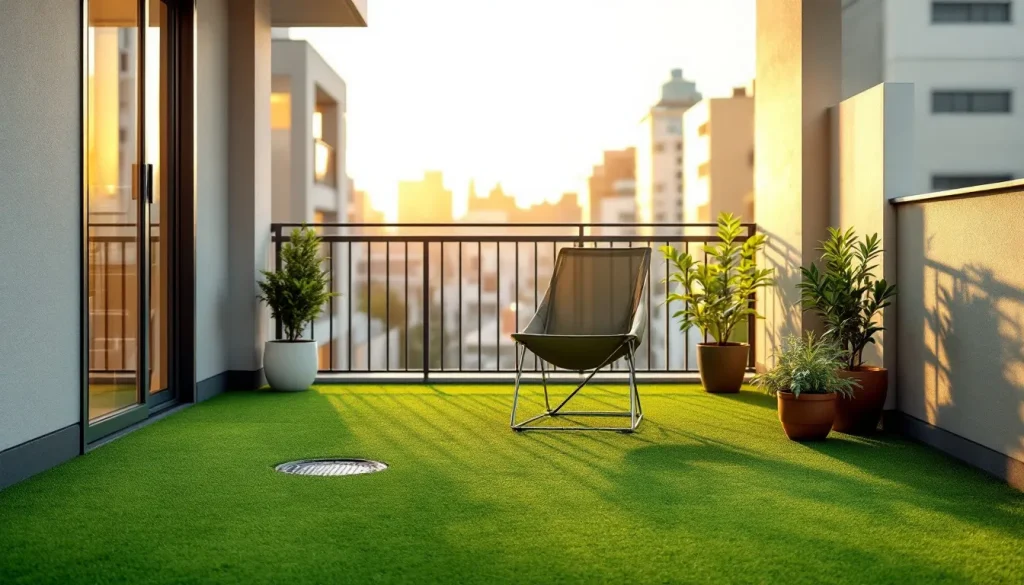
Turf for a balcony means artificial (synthetic) grass, because real sod cannot live on a hard concrete or tile floor without soil, roots, or ground drainage. Most apartment and condo dwellers buy a precut synthetic turf rug in a size like 6ft x 8ft, lay it loose over the existing floor, and trim it to fit with a utility knife. Expect roughly $150 to $250 for a large rug.
The purchase is easy. The parts that fail on a balcony are water drainage, deck damage, heat, and dog odor. Get those four right and a $200 rug can look sharp for years.
Why artificial turf, not real grass
Real sod needs 4 to 6 inches of soil, sunlight, and a way for water to leave the root zone. A balcony floor is solid concrete or tile with none of that, so live grass rots or dries out within weeks. Artificial turf is the only practical way to green a hard elevated floor.
Synthetic turf is a plastic carpet: nylon or polyethylene blades stitched into a backing. For the full material breakdown, see our primer on artificial grass basics. Balcony use narrows the choice to lighter, drainable, loose-lay products rather than the heavy sand-infilled turf used on open ground.
Turf rug vs roll vs interlocking tiles
Balcony turf comes in three DIY formats. A precut turf rug is the most common: bound edges, a fixed size, drop it and go. Bulk roll turf lets you match odd dimensions. Interlocking turf tiles snap together over the floor and lift out for cleaning. Renters usually want a rug or tiles, not glued roll.
| Format | Best for | Typical size | Install | Renter-friendly |
|---|---|---|---|---|
| Turf rug (precut) | Standard balconies | 6ft x 8ft, 5ft x 7ft | Loose-lay, trim edges | Yes |
| Roll turf | Long or odd shapes | Up to ~20ft x 6ft rolls | Cut to fit, optional tape | Yes, tape only |
| Interlocking tiles | Cleaning and pet zones | 12in x 12in tiles | Snap together, no adhesive | Yes, removable |
Sizes, cutting to fit, and quality specs
Measure your balcony floor in feet and add 2 inches on each cut edge. Turf trims easily: flip it over, mark the backing, and cut along a straightedge with a utility knife from the back so you slice the backing, not the blades. Buy slightly large and trim down rather than piecing scraps.
Judge quality by three specs. Pile height (blade length) around 18mm to 35mm looks realistic without matting flat. Face weight and stitch density signal durability. A multi-blade or fescue-style yarn with mixed emerald and olive tones plus tan thatch reads as real grass, while a single flat green looks like a bath mat.
- Pile height: 18mm to 35mm for balconies (short enough to stay upright under chairs).
- UV stabilized: required, so sun does not fade or brittle the plastic.
- Drainage backing: perforated holes every few inches so water passes through.
- Blade shape: multi-tone fescue or C-shaped blades for a natural look.
Price ranges and where to buy
Balcony turf is sold by the rug or by the square foot. A finished rug runs about $150 to $250. Bulk turf typically costs $2 to $7 per square foot depending on pile and face weight, with premium landscape-grade grass higher. Our full breakdown of artificial turf cost covers grades in detail.
| Buy option | Format | Rough price | Notes |
|---|---|---|---|
| Amazon | Precut rugs, tiles | $40 to $250 | Widest rug selection, fast returns |
| Home Depot / Lowe’s | Rugs and roll by the foot | $2 to $7 / sq ft | Cut to length in store |
| Turf specialists | Landscape-grade roll | $4 to $12 / sq ft | Higher face weight, longer warranty |
If you want to compare listings and grades before buying, our page on astro turf for sale tracks current product options.
Drainage on a solid concrete balcony (the part everyone skips)
This is the number one balcony turf failure. On open ground, water passes through the turf backing and soaks into soil. A balcony floor is non-permeable, so water that drains through the turf has nowhere to sink. It spreads sideways under the turf and runs to the balcony’s own slope and weep points.
The fix is to let the balcony do its job. Never seal turf edge-to-edge against the wall or railing base. Leave the floor’s built-in drainage channel or scupper clear so water reaches it. Turf with perforated drainage backing plus a clear path to the existing drain point is what stops pooling.
For balconies with a dead-flat floor or a poor drain, raise the turf. Lay a plastic drainage grid or interlocking deck tiles (the kind with an open underside) first, then the turf on top. That 3/4-inch air gap lets water flow to the drain and lets the concrete dry between rains, which prevents standing water that stains the neighbor’s balcony below.
Renter and landlord risk: install turf without damage
Renters lose deposits two ways: glue residue and trapped moisture that stains or rots the deck. Both are avoidable. Do a loose-lay or tile install, never permanent adhesive, and never trap water against the floor. A turf rug you can roll up and take with you protects both the deck and the deposit.
- Check your lease and HOA rules first. Some buildings ban floor coverings or fixed installs on balconies for drainage and fire reasons.
- Lay turf loose, or use double-sided outdoor turf tape only at seams, not the whole floor.
- Lift the turf every few weeks to let the concrete dry and to rinse out grit that holds moisture.
- On elevated balconies, keep weight low and skip heavy sand infill, which adds load and can exceed uplift limits in wind.
Weight and wind matter on an elevated deck. A loose lightweight rug can lift in a gust, so anchor corners with planters or clip-on rail fasteners rather than gluing. If you plan a permanent bonded install in an owned unit, review proper base prep in our artificial grass installation guide.
Heat and fire safety
Artificial turf absorbs sun and can get dangerously hot. In direct summer sun, synthetic grass surfaces can exceed 150F, hot enough to burn bare feet and paws, far above the air temperature. A south or west-facing balcony is the worst case. Rinse the turf with water to cool it and add shade before pets or kids use it midday.
Turf is plastic, so it melts and can ignite. Keep charcoal and gas grills, fire pits, and cigarettes off the turf, since a dropped ember can scorch a permanent hole. Put a metal or stone pad under any grill. Many leases already restrict open flames on balconies for this reason.
Turf for balcony for dogs
Turf makes a workable dog potty area on a balcony, but only with drainage and odor control built in. Dog urine drains through the turf just like rain and then sits on the concrete unless it can reach a drain. Trapped urine is what causes the ammonia smell people blame on the grass.
Use a pet-specific setup. Choose turf with a fully permeable “pee-through” backing and lay it over a drainage tray or grid tiles so urine flows to the drain, not into a puddle. Rinse the area daily and hose it weekly. An enzyme or antimicrobial turf cleaner (not just soap) breaks down the odor compounds soap leaves behind.
- Backing: flow-through / drainage-hole backing, not a solid latex sheet.
- Base: raised grid or tray so urine reaches the balcony drain.
- Odor: enzyme cleaner weekly, antimicrobial infill optional for heavy use.
- Removable: tiles or a rug you can lift and deep-rinse in a tub.
DIY installation in seven steps
A loose-lay balcony install takes about an hour and needs no power tools. The goal is a flat, drainable, removable surface that never traps water. Clean first, keep the drain clear, and trim from the backing side.
- Sweep and dry the balcony floor completely.
- If the floor is flat or drains poorly, lay drainage grid or open-back deck tiles first.
- Roll out the turf, blades pointing toward your main view for the fullest look.
- Trim edges from the backing side with a utility knife, leaving the drain channel clear.
- Join seams with outdoor turf tape only where two pieces meet.
- Weigh corners with planters or clip to the railing so wind cannot lift it.
- Rinse the turf, then lift it every few weeks to dry the floor underneath.
Frequently Asked Questions
What is the best artificial turf for a balcony?
The best balcony turf is a UV-stabilized synthetic rug or interlocking tile with 18mm to 35mm pile, a multi-tone fescue blade for a real look, and a perforated drainage backing. Lighter loose-lay products beat heavy sand-infill landscape turf because they are removable, drain freely, and stay under balcony weight and wind limits. For dogs, add a fully permeable pee-through backing.
How do you install artificial grass on a balcony without damaging it (for renters)?
Lay it loose or use snap-together tiles, never full-floor adhesive. Check your lease and HOA rules first. Keep the balcony drain clear, and lift the turf every few weeks so the concrete dries and grit rinses out. Weigh the corners with planters instead of gluing. A removable rug you can roll up protects both the deck surface and your deposit.
How does water and rain drain from turf on a solid concrete balcony?
Water passes through the turf’s perforated backing, then spreads sideways because concrete is non-permeable, and follows the balcony’s built-in slope to its drain or scupper. Never seal turf edges to the wall or block the drain channel. On flat floors, raise the turf on a drainage grid so a 3/4-inch air gap carries water out and prevents pooling.
Is artificial turf on a balcony good for dogs to pee on, and how do you control odor?
Yes, with the right setup. Choose turf with a fully permeable pee-through backing and lay it over a drainage tray or grid so urine reaches the balcony drain instead of pooling on concrete. Rinse the spot daily and hose weekly. Use an enzyme or antimicrobial cleaner, not just soap, because soap leaves the ammonia-causing compounds behind.
How much does balcony turf cost and what size do I need?
A finished turf rug runs about $150 to $250, and bulk turf costs roughly $2 to $7 per square foot for standard grades. Measure your floor in feet and add 2 inches per cut edge, then buy slightly large and trim down. Common precut sizes include 5ft x 7ft and 6ft x 8ft, with rolls up to about 20ft x 6ft.
Does artificial grass get too hot on a sunny balcony?
It can. In direct summer sun, synthetic turf surfaces can exceed 150F, far hotter than the air and enough to burn bare feet or paws. South and west-facing balconies are worst. Cool it by rinsing with water and adding shade from an umbrella or awning before pets or kids use it midday. Lighter blade colors run slightly cooler than dark ones.
Can you put artificial grass over concrete or tile, and do you glue it down?
Yes, turf lays directly over concrete or tile. Gluing is optional and usually a bad idea for renters. Loose-lay or interlocking tiles work fine and stay removable. If you own the unit and want a permanent bond, use outdoor turf adhesive only after the floor is clean, dry, and drainage-clear. Full-floor glue traps moisture and can stain the deck.
Will turf damage my balcony floor or trap moisture underneath?
Turf itself does not damage concrete, but trapped water can stain or degrade the surface over time. Prevent it by using drainage-backed turf, keeping the balcony drain clear, and lifting the turf periodically to let the floor dry. Avoid solid rubber-backed mats and full-floor glue on rentals. A raised drainage grid under the turf eliminates most standing-water risk.